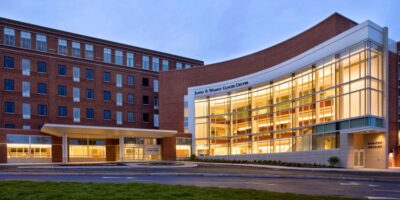
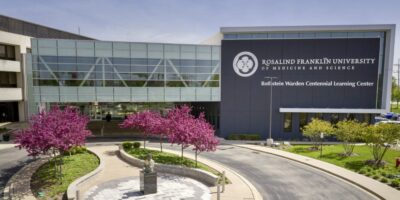
NYU Grossman School of Medicine is a private medical school in Manhattan, founded in 1841 and part of NYU Langone Health. It grants the MD degree, and it is one of the most selective medical schools in the United States. Its best-known feature is the Full-Tuition Scholarship, introduced in fall 2018, which covers tuition for every MD student regardless of merit or financial need.
This guide covers the 2026-2027 application cycle, for students who would start medical school in July 2027. Facts were checked on October 17 and 18, 2026.
“NYU Medical School” can mean one of two schools. This guide covers NYU Grossman School of Medicine on the Manhattan campus, the original NYU medical school. NYU Grossman Long Island School of Medicine in Mineola is a separate school with its own three-year, primary-care-focused MD, its own application and its own class profile. Both are tuition-free.
Getting into NYU Grossman is hard, but it is not a mystery. The school publishes its secondary questions, its interview format, its class profile and its full cost of attendance. Below, you will find each of those explained, starting with the programs NYU offers, then the statistics you need, then every 2026-2027 secondary essay with an original example and analysis, and finally how to prepare for the multiple mini interview.
Key Takeaways
- NYU Grossman is a three-year MD for everyone. Since 2023, every student finishes in three years or chooses an optional fourth year for research or a dual MD/master’s degree. A separate three-year MD directed pathway adds early conditional acceptance into one of 21 NYU Langone residency programs.
- Tuition is covered for all MD students. For 2026-27, tuition is $65,500 a year and the Full-Tuition Scholarship covers all of it. The school also covers the $9,325 student health insurance plan. Students still pay fees and living costs: $38,616 a year after the scholarship and insurance subsidy.
- The numbers are extreme. For the Class of 2027, 8,271 people applied, 821 were interviewed and 208 were accepted, a 2.50 percent acceptance rate. The median MCAT was 523 and the median GPA was 3.98. For the 2025 entering class, 8,385 people applied and 748 were interviewed.
- There are no prerequisites. NYU Grossman recommends a set of premedical courses but does not require any. You need a bachelor’s degree from an accredited U.S. or Canadian college by matriculation and an MCAT taken between January 2024 and September 12, 2026.
- Key 2026-27 dates: AMCAS due October 15, 2026; secondary and letters due November 10, 2026; interviews September through December; decisions for all MD applicants in January; directed pathway tertiary due February 2, 2027.
- The secondary has five essays of 2,500 characters each, plus short questions on academic fluctuations, time off, a CV upload and residency interests. Three of the five essays are new this cycle.
- Interviews are multiple mini interviews: eight virtual stations of about 7 minutes, including two rest stations, plus a 14-minute open station that works like a traditional interview.
- Next step: draft your five essays now, while you still have time to revise, and make sure your CV lists every publication, abstract and presentation.
Key Statistics About NYU Grossman School of Medicine

The table below brings together the figures applicants ask about most. Each row names its cohort or year, because NYU’s most detailed published class profile is for the Class of 2027, which entered in 2023, while its newest entering-class figures come from the July 2026 White Coat Ceremony for the Class of 2029.
| Metric | Value | Cohort or year | Source |
|---|---|---|---|
| School and degree | NYU Grossman School of Medicine, MD (also MD/PhD and dual MD/master’s) | Current | NYU Grossman MD Admissions |
| Type and location | Private; Manhattan, New York City | Current | NYU Grossman About Us |
| Applicants | 8,271 | Class of 2027 (entered 2023) | NYU Grossman By the Numbers |
| Interviewed | 821 (821 of 8,271 applicants, about 9.9 percent) | Class of 2027 | NYU Grossman By the Numbers |
| Accepted | 208; acceptance rate 2.50 percent (school-reported) | Class of 2027 | NYU Grossman By the Numbers |
| Matriculated | 106 (91 MD, 13 MD/PhD, 2 oral and maxillofacial surgery) | Class of 2027 | NYU Grossman By the Numbers |
| Median MCAT (range) | 523 (516-527) | Class of 2027 matriculants | NYU Grossman By the Numbers |
| Median undergraduate GPA (range) | 3.98 (3.79-4.0) | Class of 2027 matriculants | NYU Grossman By the Numbers |
| Average MCAT and GPA | 522.39 and 3.95 | Most recent incoming class (year not stated) | NYU Grossman Admissions Requirements |
| Entering class | About 100 students from 8,185 applicants; median GPA 3.98; median MCAT in the 99th percentile; 26 states; 14 languages | Class of 2029 (entered July 2026) | NYU Langone News, July 13, 2026 |
| Applications / interviewed / matriculated | 8,385 / 748 / 99 MD matriculants (interviewed/applications about 8.9 percent), plus 2 MD/PhD matriculants | 2025 entering class | AAMC MSAR |
| New York residents vs out of state vs international | Applications 1,146 / 6,806 / 433; interviewed 81 / 655 / 12; matriculated 21 / 76 / 2 | 2025 entering class | AAMC MSAR |
| Median MCAT and median science GPA | MCAT 523 (mean 522.6); science GPA 4.0 | 2025 entering class, accepted applicants | AAMC MSAR |
| Median MCAT section scores | Chemical and physical 131; CARS 130; biological and biochemical 131; psychological and social 131 | 2025 entering class, accepted applicants | AAMC MSAR |
| Waitlist | About 150 positions; 50 acceptance offers to waitlisted applicants | Typical cycle | AAMC MSAR |
| Deposit, early decision and deferral | No deposit; no early decision program; deferrals case by case | 2026-27 cycle | AAMC MSAR |
| Tuition | $65,500 per year, covered in full by the Full-Tuition Scholarship | 2026-27, all students (no residency difference) | NYU Grossman Cost of Attendance |
| Total cost of attendance | $104,116 per year (years 1-3) | 2026-27 | NYU Grossman Cost of Attendance |
| Cost after tuition scholarship and insurance subsidy | $38,616 per year (years 1-3); $37,486 (optional year 4) | 2026-27 | NYU Grossman Cost of Attendance |
| Graduates with medical school debt | 21 percent; average $67,752 | Class of 2024 | NYU Grossman By the Numbers |
| Three-year MD graduates with medical debt | 32 percent; average $56,717 | Most recent three-year MD graduating class | AAMC MSAR |
| Students receiving financial aid | 100 percent | 2024-25 | AAMC MSAR |
| MD students enrolled | 425 | Current | NYU Grossman MD Admissions |
| Accreditation | LCME, full accreditation; next survey 2030-31 | LCME directory updated October 14, 2026 | LCME |
| Application service and secondary fee | AMCAS; $110 secondary fee (AAMC Fee Assistance waives it) | 2026-27 cycle | NYU Grossman How to Apply |
| Directed residency pathway spots | 41 per year | Current | AAMC MSAR |
A few notes on reading these numbers. The 2.50 percent figure is an acceptance rate in the proper sense: accepted applicants divided by all applicants for the same class. The interview figure is interviewed divided by applicants, which tells you how hard the first screen is. Medians are the middle score of the class, not a minimum. The school does not publish a cutoff and does not screen applications on a minimum MCAT or GPA, and the range for the Class of 2027 shows that admitted students had MCAT scores as low as 516. For the 2025 entering class, the interview figure is interviewed divided by applications (748 of 8,385); no acceptance count is reported for that class, so no acceptance rate is given for it.
NYU’s Office of Admissions and Financial Aid processes more than 9,600 applications to the MD program each year.
Mission and Educational Priorities
NYU Langone Health, the academic medical center that includes NYU Grossman, describes its mission in three verbs: “to care, to teach, to discover.” It lists its values as performance, respect, integrity, diversity and excellence, which it shortens to PRIDE (NYU Langone Health, About Us).
The MD admissions office has its own mission statement, and it is the most useful text for applicants. NYU Grossman says it strives “to recruit and accept the most academically talented and interpersonally gifted student body, one with a collective ability and desire to deliver excellence in clinical care, research, and medical education to all members of society.” It adds that the committee looks for applicants “poised to become tomorrow’s physician leaders” and those “prepared to thrive in our culture of excellence” (NYU Grossman MD Admissions).
What does that mean in practice?
Academic talent is assumed, not sufficient. A median GPA of 3.98 means grades rarely separate applicants here. The mission pairs “academically talented” with “interpersonally gifted,” and the school says it considers “your life experience and service to others alongside your academic and leadership achievements.” Your essays and interview carry real weight because almost everyone in the pool has the numbers.
Three missions, one applicant. Clinical care, research and medical education all appear in the mission. You do not need to excel at all three, but you should be able to explain how your experiences point toward at least one, and how you would use NYU’s resources to grow in another.
Leadership is a stated priority. “Tomorrow’s physician leaders” is not a throwaway phrase. Leadership at NYU’s level usually means you took ownership of something that kept going: a clinic process you improved, a research question you carried, a community program you built and handed off.
The tuition-free model shapes the mission. NYU explains its Full-Tuition Scholarship as a way to let students “choose a specialty based on their talent and inclinations” rather than debt, and as a step that “will benefit society as a whole.” Several members of the Class of 2029 said free tuition let them focus on their goals without “pressure to pick something higher paying.” If you are drawn to a lower-paid specialty or to research, the school’s own framing gives you room to say so honestly.
Selection policies. NYU Grossman states that race and ethnicity data collected by AMCAS is not provided to admissions committee members or staff “for use in any aspect of the application selection process,” and that its programs “do not include preferences, quotas, or set asides.” Write about who you are and what you have done; the committee evaluates experiences and qualities, not categories.
A three-year curriculum asks for direction. Because the standard MD now takes three years, with clerkships starting in August of the second year, NYU’s model rewards students who can learn quickly and make career choices with good information. The secondary even asks for up to three residency specialties of interest, though NYU says those selections do not affect admission. You do not need to know your specialty, but you should show that you make decisions thoughtfully and adapt when your plans change.
Accreditation and Institutional Identity
NYU Grossman School of Medicine is accredited by the Liaison Committee on Medical Education (LCME), the accreditor for MD programs in the United States and Canada. The LCME directory, last updated October 14, 2026, lists NYU Grossman with full accreditation and its next survey in 2030-31 (LCME Directory of Accredited Programs). Accreditation confirms that the program meets national standards. It is not a ranking.
The school was long known as NYU School of Medicine, and older materials still use that name. It is part of New York University and of NYU Langone Health, which runs the hospitals where students train. The current dean, Alec C. Kimmelman, MD, PhD, is also chief executive officer of NYU Langone Health.
Two identity points matter for applicants:
- Manhattan and Long Island are separate schools. The LCME lists NYU Grossman Long Island School of Medicine in Mineola as its own accredited program, with initial accreditation in 2019. The two schools have different curricula, class sizes, applications and deadlines. An application to one is not an application to the other.
- The three-year curriculum is now the standard program. NYU began offering an accelerated three-year MD to select students in 2013. Since 2023, three years has been the standard for all students, with an optional fourth year. The Class of 2026 was the first whole class to graduate under what NYU calls the “C21: 3+1 Personalized Pathways” curriculum. Older descriptions of NYU as a four-year school with an optional three-year track are out of date.
The MD degree is also only one part of medical licensure. NYU notes that each state sets its own licensing requirements, and the LCME-accredited MD “fulfills only one component” of them. That is true at every U.S. school, and it matters mainly to students planning to practice outside New York.
Medical Programs and Affiliations
NYU Grossman offers several ways to earn an MD. Most applicants apply to the MD program through AMCAS and the NYU secondary. Some add a tertiary application for the directed pathway, and some later add a master’s degree. MD/PhD applicants follow their own route.
The three-year MD (standard for all students)
Every NYU Grossman MD student follows the Curriculum for the 21st Century: Personalized Pathways, known as C21. As of 2023, “every student now graduates in three years or elects to stay for an optional fourth year to pursue research or one of several dual degrees” (NYU Langone Health News). You do not apply separately for three years. You apply to the MD program, and three years is the default.
Why would a school cut a year? NYU’s own research compared 136 three-year graduates with 681 four-year graduates and found that the accelerated group performed as well as or better on virtually all major measures of skill and knowledge. The three-year students averaged 84 percent on preclerkship exams, against 83 percent for four-year students. Saving a year also saves a year of living costs and gets you into residency sooner.
The three-year MD directed pathway (early residency acceptance)
The directed pathway is a separate option layered on the three-year MD. It offers “early conditional acceptance into any one of 21 NYU Langone Health residency programs” (NYU Grossman three-year MD directed pathway). Students who meet graduation standards are ranked by their NYU residency program through the National Resident Matching Program, and if they rank NYU, they match there. They remain free to interview with and rank programs elsewhere. The pathway has 41 linked residency spots each year, so it is competitive even among NYU students.
The 21 residencies listed are anesthesiology (perioperative care and pain medicine), cardiothoracic surgery (integrated I-6), dermatology, emergency medicine, general surgery (Manhattan), internal medicine, neurology, neurosurgery, obstetrics and gynecology, ophthalmology, orthopedic surgery, otolaryngology-head and neck surgery, pathology, pediatrics, physical medicine and rehabilitation, plastic surgery, primary care, psychiatry, radiation oncology, diagnostic radiology, interventional radiology and urology (NYU Grossman direct progression list).
The school describes these ways to enter the directed pathway:
- At application. Submit the tertiary application, which asks you to name the residency program and write two essays about your interest in and qualifications for it. You can submit it with your secondary. The 2026-27 tertiary is due February 2, 2027, at 11:59 p.m. ET.
- As a PhD holder. Applicants who already hold a PhD can apply for specialized, research-focused residency programs.
- After you enroll. Matriculated students can opt in during the first year or halfway through the clerkship year. Students “pre-matriculate in July of stage one and opt-in to the directed pathway in February of stage two.”
Residency program directors review the tertiary materials and decide whom to interview. Directed-pathway students spend the six-week summer research opportunity between years one and two in the department of their intended residency, which gives them early access to mentors. If your interests change, you may be able to switch to another program that still has positions, or finish the MD on a four-year timeline.
The tertiary essay prompts for 2026-27 have not been published. The two essays cover your interest in and qualifications for the chosen residency program. Plan to write about why that specialty fits you and what you have done to test that choice.
Plus One dual MD/master’s degrees
NYU’s Plus One MD Dual Degree Program lets students earn an MD with a master’s from another NYU school. The current options are the MD/MBA in general management (NYU Stern), the MD/MPA in health policy and management (NYU Wagner), the MD/MPH in global health (NYU College of Global Public Health), the MD/MA in bioethics (NYU Center for Bioethics), the MD/MS in clinical investigation (Clinical and Translational Science Institute) and the MD/MS in biomedical informatics (Vilcek Institute of Graduate Biomedical Sciences). You indicate interest on AMCAS, but you apply to the master’s portion only after you matriculate. Learn more about the Plus One dual MD/master’s degrees.
Students interested in global health often look at the MD/MPH. If that is you, experience outside the United States can help you test the interest before you commit to an extra year; a medical internship in Peru, for example, combines clinical work with Spanish-language patient care.
MD/PhD (Medical Scientist Training Program)
The MD/PhD program runs through the Vilcek Institute of Graduate Biomedical Sciences. It is one of 49 Medical Scientist Training Programs in the United States recognized by the National Institutes of Health. MD/PhD students take USMLE Steps 1 and 2 before entering graduate school. The program director is Philipp Leucht, MD, PhD. You can read more about the NYU MD/PhD program. MD/PhD-specific secondary prompts and deadlines for 2026-27 have not been published, so confirm them with the program before you apply.
The Class of 2027 also included two oral and maxillofacial surgery (OMS) students, who earn the MD as part of OMS training. That route is tied to the OMS residency, not the standard AMCAS pool.
Clinical affiliations
Students train across NYU Langone and public and federal hospitals in New York City. The NYU Langone inpatient sites are Tisch Hospital, Kimmel Pavilion, NYU Langone Orthopedic Hospital, the Laura and Isaac Perlmutter Cancer Center, Rusk Rehabilitation, Hassenfeld Children’s Hospital and NYU Langone Hospital in Brooklyn. Affiliated sites include NYC Health + Hospitals/Bellevue, the VA NY Harbor Healthcare System, NYC Health + Hospitals/Gouverneur, the NYU Student Health Center and NYU Langone Hospital on Long Island (NYU Grossman clinical training sites).
NYU Grossman Long Island School of Medicine (a separate school)
NYU Grossman Long Island is a different school in Mineola. It offers a three-year, primary-care-focused MD with 24 students per entering class, a directed pathway into internal medicine, pediatrics or obstetrics and gynecology residencies at NYU Langone Hospital on Long Island, and its own AMCAS deadline (November 1, 2026), secondary (due November 16, 2026, $110 fee) and interview format (NYU Grossman Long Island How to Apply). Long Island’s secondary questions are different from Manhattan’s. Apply there only if primary care in one of those three fields is a real goal, since that focus shapes the whole curriculum.
Other NYU Langone programs
NYU Grossman also runs graduate medical education with hands-on training in more than 70 medical specialties, and the Vilcek Institute offers PhD programs and master’s programs in biomedical informatics, environmental health sciences and genome health analysis. These are separate from the MD. For college students, the Vilcek Institute runs a Summer Undergraduate Research Program, and NYU Langone’s Scientific and Technical Education Pathway Programs for Students (STEPPS) pairs aspiring physicians with faculty mentors based on their interests. NYU Grossman’s public education pages do not list a physician assistant degree.
Centers and institutes
Medical students can work with researchers across NYU Langone’s institutes, including:
- Institute for Innovations in Medical Education, which applies education science and informatics to teaching, assessment and personalized training
- NYSIM, the New York Simulation Center for the Health Sciences, a simulation center serving NYU Langone and the City University of New York
- Clinical and Translational Science Institute, which supports research from bench to bedside
- Institute for Systems Genetics and Institute for Translational Neuroscience
- Laura and Isaac Perlmutter Cancer Center, a National Cancer Institute-designated Comprehensive Cancer Center
- Transplant Institute, which covers heart, lung, kidney, liver, pancreas, bone marrow and face transplantation
Why some applicants prefer the Manhattan school to the Long Island school
Applicants often weigh NYU Grossman in Manhattan against NYU Grossman Long Island. Both are tuition-free, three-year programs, but they are built for different goals:
- Clinical range. Manhattan students rotate through a private academic hospital, a public safety-net hospital and a VA hospital within a few blocks. A 2026 class speaker described seeing “world-class innovative medical technology at Kimmel Pavilion,” then walking down to Bellevue and on to the VA.
- Urban patient mix. New York City brings patients from many cultural, ethnic and economic backgrounds, which the school says exposes students to a wider range of conditions.
- Research depth. Manhattan is home to the Vilcek Institute, the MD/PhD program and most of NYU Langone’s research institutes.
- Career options. The Manhattan directed pathway covers 21 residencies across medicine, surgery and diagnostic fields, and the Plus One program offers six dual degrees.
- Networking and professional development. Students learn from faculty across more than 70 specialties and have easy access to conferences, seminars and alumni in the city.
- City life. Manhattan offers museums, theaters, parks and restaurants within reach of campus, which many students value for balance during a demanding schedule.
The Long Island school is the better fit for applicants focused on primary care in a suburban community setting. Both schools are excellent choices; the question is which training model matches your goals.
Curriculum Overview
C21 has three stages. The authoritative description is the NYU Bulletin for 2026-2027 (NYU Bulletins, Medicine (MD)). The sequence below follows it.
| Stage and timing | What happens | Grading and assessment |
|---|---|---|
| Stage one, year 1 (July to May, about 11 months) | Foundations of Medicine (July to mid-September); Living Anatomy (mid-September to mid-October); Organ Systems modules (mid-October through May); Foundational Clinical Skills all year | Pass/fail |
| Summer after year 1 (six weeks) | Summer Research Fellowship: research or clinical scholarship and career exploration | Required experience |
| Stage two, year 2 (July to May) | One-week Transition to Clerkship in July; core clerkships from August in 4 blocks of 10 weeks, including 4 weeks of electives; two one-week Integrated Clinical Skills sessions (October and March) | Honors, high pass, pass, fail; NBME shelf exams; Comprehensive Clinical Skills Exam |
| USMLE | Step 1 and Step 2 CK after the clerkship curriculum | National licensing exams |
| Stage three, year 3 | Electives, advanced clerkships, a four-week critical care clerkship, a four-week acting internship (advanced medicine, surgery or pediatrics), an area of concentration, residency interviews, Senior Clinical Skills Exam (night on call) and a two-week Transition to Residency | Honors, high pass, pass, fail |
| Optional year (Plus One) | After stage two: a dual MD/master’s or a research year in a lab of your choice; USMLE Steps 1 and 2 are taken before it | Set by the program |
Stage one: preclerkship
Stage one lasts about 11 months and covers foundational science in biology, anatomy, physiology and pathophysiology. Foundations of Medicine opens the year and teaches the basic science that underlies clinical practice. Living Anatomy studies the body by region and system and connects anatomy with embryology and medical imaging, using physical and digital lab resources. The Organ Systems modules then cover cardiovascular, pulmonary, kidney, dermatology, rheumatology, gastrointestinal, endocrine and reproductive medicine, neurology and psychiatry.
Running alongside these is the Foundational Clinical Skills module, which puts students in clinical learning experiences with patients during the first year. The Bulletin describes a focus on bedside diagnosis, clinical reasoning, communication and conflict resolution, and “respectful, responsive care that addresses each patient’s needs, preferences, and values.” Notice how closely that language matches two of this year’s secondary essays: respect across differences and learning from feedback.
All preclerkship grades are pass/fail.
The summer research fellowship
The Summer Research Fellowship gives students an early, longitudinal scholarly experience in research or clinical scholarship and a chance to explore the clinical setting of possible careers. It runs for six weeks in the summer after the first year. For directed-pathway students, the project takes place in the department of their intended residency.
Stage two: the clerkship year
NYU starts clerkships in August of the second year, which the school notes is “months earlier than students at most other medical schools.” The year begins in July with a one-week Transition to Clerkship course. Core clerkships cover seven areas: ambulatory care, general surgery, neurology, medicine, obstetrics and gynecology, pediatrics and psychiatry, including a one-week neuropsychiatry integrated experience. Rotations run in four 10-week blocks, and the year includes four weeks of elective time for career exploration.
Clerkship students are part of the medical team. The Bulletin gives examples: assisting with labor and delivery, suturing at the end of surgical procedures, and placing IV lines or catheters during medicine. Students write notes, gather lab and imaging results, present cases and help build diagnostic and treatment plans.
Assessment is detailed. Supervisors evaluate students, observed structured clinical examinations (OSCEs) test skills, students submit write-ups and quizzes, and NBME shelf exams follow each major clerkship. Two Integrated Clinical Skills weeks, in October and March, include goals-of-care conversations, point-of-care ultrasound, patient handoffs and practice with feedback, often at the New York Simulation Center for the Health Sciences (NYSIM). The year ends with the Comprehensive Clinical Skills Exam, a series of standardized patient encounters. After the clerkship curriculum, all students take USMLE Step 1 and Step 2 CK.
Stage three: individualized exploration
Stage three is where students shape their training around their career. It includes electives and advanced clerkships, a four-week critical care clerkship in a specialty ICU, and a four-week acting internship in advanced medicine, advanced surgery or advanced pediatrics, during which students may take overnight call, admit patients and enter orders (NYU Grossman stage three). Students complete an area of concentration and residency interviews. The Senior Clinical Skills Exam is a simulated night on call in which the student acts as the intern. A two-week Transition to Residency course closes the curriculum.
Precision Education and mentoring
NYU calls its approach to individualized learning Precision Education. It uses technology and analytics to adjust learning to each student, including algorithms built on de-identified patient data for diagnostic practice and an app that lets students shadow faculty in any specialty. Students also receive continuous mentoring from a faculty member in their chosen specialty.
How the tracks differ
The three-year MD, the directed pathway and the four-year (Plus One) option share the same core curriculum. The directed pathway changes where you spend your summer research and adds early conditional residency acceptance. The optional fourth year adds a master’s degree or a research year after stage two. The MD/PhD separates the medical and graduate phases, with USMLE Steps 1 and 2 taken before the PhD.
What the curriculum means for your application
The C21 schedule moves fast. You start clinical skills in your first month, start clerkships in your second year and may interview for residency in your third. That pace rewards students who already know how to manage time, accept feedback and keep going through slow periods, which are the qualities two of the new secondary questions ask about. If you have a strong interest in a specialty, the directed pathway is worth a close look, but you do not need to know your specialty to thrive in the standard three-year track.
Admissions Requirements and Application Process
Eligibility
NYU Grossman accepts applications from U.S. citizens, permanent residents, individuals with Deferred Action for Childhood Arrivals (DACA) status and international applicants. Every applicant must hold a bachelor’s degree from an accredited college or university in the United States or Canada by the time of matriculation. NYU says there are “no exceptions to this requirement” (NYU Grossman How to Apply).
Students currently enrolled in any medical school, those who have completed medical school, and those who have withdrawn or been dismissed from any medical school are not eligible. NYU does not accept advanced standing transfers.
Coursework
NYU Grossman has no required prerequisites. It recommends these courses (NYU Grossman Admissions Requirements):
- Inorganic chemistry, organic chemistry and biochemistry, with lab
- General biology with lab
- General physics with lab
- Statistics
- Genetics
- English
Courses taken at schools of dentistry, nursing, veterinary medicine or pharmacy are considered as part of your application but do not earn credit. Community college courses are accepted when they sit alongside rigorous coursework at a four-year institution. If your undergraduate GPA is lower, NYU considers postbaccalaureate or graduate coursework, with at least 20 credit hours of that work. Courses should be taken within five years of your planned matriculation. “No prerequisites” does not mean “no science.” Almost every admitted student has completed this list, and the MCAT tests the same material. Our medical school prerequisites checklist can help you compare NYU’s recommendations with schools that do require specific courses.
MCAT
The MCAT is required. NYU asks you to take it no later than September of the year you apply and considers scores only from the three years before your expected matriculation. The school’s own example says a fall 2023 entrant could use a score from January 2020 or later. For a July 2027 entrant, that means a score from January 2024 through September 12, 2026, the last test date considered this cycle. The committee looks at your highest total score, and all of your scores are visible to it. There is no minimum MCAT or GPA screen; the MCAT is one of many factors used to judge academic readiness.
Experience
NYU does not publish minimum hours for clinical work, shadowing, research or service. The committee says it weighs “life experience and service to others alongside your academic and leadership achievements,” and the secondary asks for a CV with publications, abstracts and presentations. In practice, admitted students tend to show sustained clinical exposure, real research involvement and leadership with visible results. Shadowing is recommended but not required, as a way to confirm for yourself that medicine is the right career. In the 2025 entering class, 100 percent of matriculants reported research or lab experience, 94 percent physician shadowing or clinical observation, 93 percent medical or clinical volunteering, 91 percent community service, and 56 percent paid medical or clinical employment. If you need more direct patient contact, structured clinical internships for pre-med students can add hands-on experience such as taking vitals and assisting with intake under supervision.
Letters of evaluation
NYU requires either a premedical committee letter (preferred) or two letters from professors who taught you in courses, at least one in a science. Nontraditional applicants are encouraged to add two letters from colleagues they have worked with closely. All letters go through the AMCAS Letter Service and are due by November 10. Do not send letters directly to NYU. NYU accepts a committee letter, a letter packet or individual letters, from a minimum of two up to a maximum of eight. After you apply, you may also send a letter of interest or intent, and a notice of significant updates such as a publication, a major honor or new service work; these are added to your secondary application.
Assessments and background check
NYU does not list Casper, PREview or any other situational judgment test among its requirements, and it does not use PREview scores in admissions. Accepted applicants must meet the school’s technical standards and complete a criminal background check, at no added cost to the student.
The application, step by step
- AMCAS primary. NYU Grossman participates in AMCAS. Send one set of transcripts to AMCAS, not to NYU. If you are new to the service, start with our AMCAS application guide.
- Secondary. When you designate NYU Grossman, AMCAS forwards your application and NYU sends you instructions for its secondary through AMP, its secure online portal. Allow up to two weeks after AMCAS submission to receive it. NYU publishes the questions in advance (2026-27 secondary application materials, PDF). Essays must be submitted through the portal; NYU will not accept essays by e-mail or attachment.
- Fee. The secondary fee is $110, nonrefundable, paid by credit card. It is waived if you have AAMC Fee Assistance.
- Tertiary (optional). If you want the directed pathway, submit the tertiary with its two essays. You may submit it with your secondary. It is due February 2, 2027.
- Interview. Invitations begin in July, and interviews run September through December.
- Decision. All MD applicants are notified in January.
2026-27 timeline
| Date | Event |
|---|---|
| Spring and summer 2026 | AMCAS opens (dates set by AAMC); NYU’s secondary questions posted (PDF dated July 9, 2026) |
| June 29, 2026 | Application review begins; secondary can be submitted from this date |
| July 2026 | NYU begins sending interview invitations |
| September 2026 | Interview season begins; last month to take the MCAT for this cycle |
| October 1, 2026 | FAFSA opens |
| October 15, 2026 | AMCAS primary application due |
| November 10, 2026, 11:59 p.m. ET | Secondary application and letters of evaluation due |
| December 2026 | Interview season ends |
| January 2027 | All MD applicants notified of decisions |
| February 2, 2027, 11:59 p.m. ET | Three-year MD directed pathway tertiary due |
| February 19, 2027 | Accepted applicants may select “Plan to Enroll” in AMCAS |
| March 1, 2027 | FAFSA due |
| April 15, 2027 | Hold no more than three acceptances (waitlists may remain) |
| April 30, 2027 | “Commit to Enroll” available; withdraw from other acceptances and waitlists |
| April to May 2027 | Registration, health forms, housing and orientation information released |
| June 2027 | Commit to Enroll must be selected at least three weeks before orientation |
| July 2027 | Orientation and classes begin |
NYU encourages applicants to apply “as early as possible.” Because interview invitations start in July and the secondary is posted in advance, you can draft your essays before AMCAS verifies your application. Students still building experience before applying often use pre-med summer internships the summer before they submit, which gives them fresh material for the secondary.
Decisions, waitlist and deposits
NYU notifies all MD applicants in January rather than on a rolling basis, and it has no early decision program. Accepted students follow the AMCAS Choose Your Medical School Tool: “Plan to Enroll” from February 19, no more than three acceptances by April 15, and “Commit to Enroll” from April 30. Through these steps, accepted applicants may remain on other waitlists. You have until April 30 or one week after your acceptance, whichever is later, to respond to an offer, and NYU does not require a deposit. Requests to defer entry are decided case by case.
NYU’s waitlist typically holds about 150 applicants, and 50 acceptance offers have gone to waitlisted applicants in a cycle. Waitlisted applicants usually learn their status in mid-January, and offers from the waitlist can come up to the first day of orientation in July. If you are waitlisted, a short update letter with real news (a publication, an award, new clinical or service work) is the right way to stay in touch.
Tuition, Cost of Attendance and Financial Aid
NYU Grossman does not charge tuition to its MD students, but medical school in Manhattan is not free. Here is the full 2026-27 budget for years one through three (NYU Grossman 2026-27 Cost of Attendance).
| Item | Amount |
|---|---|
| Tuition | $65,500 |
| Full-Tuition Scholarship | -$65,500 |
| Fees | $4,550 |
| Student Health Insurance Plan | $9,325 |
| NYU Grossman health insurance subsidy | -$9,325 |
| Housing | $17,016 |
| Food | $9,096 |
| Miscellaneous (laundry, clothing, personal, other) | $6,324 |
| Total living expenses | $32,436 |
| Books and study materials | $1,166 |
| USMLE fees | $464 |
| Total cost of attendance (before scholarship and subsidy) | $104,116 |
| Cost after Full-Tuition Scholarship and health insurance subsidy | $38,616 |
The budget is 12 months per year and the same for every student, because NYU is private and does not charge different rates by state of residence. For an optional fourth year, the published four-year table shows lower educational costs ($500 for books and no USMLE fees), for a total of $102,986 and $37,486 after the scholarship and subsidy.
Full-Tuition Scholarship
Every student admitted to the MD program automatically receives the Full-Tuition Scholarship. No application, FAFSA or CSS Profile is needed for it. It is awarded regardless of merit or need, and keeping it requires satisfactory academic progress.
Health insurance
All students must be on NYU Grossman’s student health insurance plan, and NYU Langone covers its full cost. For 2026-27 that is $9,325 a year, which the school says saves students $27,975 over the course of their medical education. You will not receive a bill for it.
Debt-Free Scholarship (need-based)
Since 2021-22, NYU has offered a need-based Debt-Free Scholarship for costs beyond tuition, such as housing, food and books. Students apply using the FAFSA and the CSS Profile, and for those who qualify, NYU meets 100 percent of demonstrated financial need with scholarships instead of loans. Loans remain available to cover the expected family contribution if you prefer (NYU Grossman types of financial aid).
Merit full-cost scholarships
NYU also awards a limited number of full-cost-of-attendance scholarships that cover every item in the budget. All accepted students are considered automatically; no separate application is needed. These are awarded at or shortly after acceptance.
DACA and international students
DACA recipients and international students are not eligible for federal loans. They still receive the Full-Tuition Scholarship and can apply for the Debt-Free Scholarship by completing the CSS Profile.
Veterans’ benefits
NYU Grossman accepts the Post-9/11 GI Bill (including Yellow Ribbon), Dependents’ Educational Assistance, the Montgomery GI Bill, the Reserve Education Assistance Program and Vocational Rehabilitation.
Loans and the costs that remain
U.S. citizens and permanent residents can borrow Direct Unsubsidized Loans for costs not covered by scholarships. Federal student loan rules changed under the One Big Beautiful Bill Act; ask the financial aid office how the changes affect your borrowing limits.
Two situations change the math:
- Research years. NYU Grossman scholarships apply only to years in which you are a full-time student doing coursework required for the MD. They do not apply to research years. Research-year students can file a FAFSA for federal loans to cover fees and living costs.
- Dual-degree years. During master’s semesters, aid is handled by the graduate school that runs the master’s, and you are charged that school’s tuition. NYU encourages dual-degree students to schedule financial counseling.
What graduates owe
For the Class of 2024, 21 percent of students graduated with medical educational debt, and the average debt among them was $67,752 (NYU Grossman By the Numbers). Among the most recent graduating class that finished the three-year MD, 32 percent had medical educational debt, with an average of $56,717. In 2024-25, 100 percent of NYU Grossman students received some form of financial aid, which reflects the Full-Tuition Scholarship every MD student receives. The school’s financial aid office is at 577 First Avenue, 2nd Floor, New York, NY 10016, and can be reached at [email protected].
What this means for you
If you would otherwise pay full price at another private school, NYU Grossman can save you close to $200,000 in tuition over three years. Your remaining budget is mostly New York City living costs. Complete the FAFSA and CSS Profile on time (the FAFSA is due March 1) if you may need help beyond tuition, and compare aid offers by the cost after scholarships, not by sticker tuition. Contact [email protected] with questions.
Campus Facilities and Student Life
NYU Grossman’s campus sits along the East River in Manhattan, in a biomedical corridor that includes NYU Langone’s main hospitals and Bellevue a few blocks away. The school describes it as “Midtown Manhattan,” and students reach the city’s museums, theaters and restaurants easily (Life at NYU Grossman).
Study, teaching and research spaces
Beyond the hospitals, students use NYU Langone’s Science Building, the Joan and Joel Smilow Research Center, the Martin Kahn Teaching and Learning Center, NYSIM (the New York Simulation Center for the Health Sciences) and the NYU Health Sciences Libraries. NYSIM is where many Integrated Clinical Skills sessions and the night-on-call senior exam take place.
Housing
MD and MD/PhD students are eligible to live in Jan and Marica Vilcek Hall at 334 East 26th Street. Single students are guaranteed housing when they first matriculate, and housing for couples and families may be available (NYU Grossman MD and MD/PhD student housing).
Vilcek Hall offers shared suites and studios. Suites have two or four bedrooms, a common area, a kitchenette and a bathroom (four-bedroom suites have two). Suites are single-sex, with a few voluntary exceptions. The building has a laundry room, fitness center, lounge, study room and music room, with 24-hour security in the lobby. Apartments can be furnished at no extra charge on request, except studios. There is no storage space in the building, and smoking and pets are not allowed.
Housing applications are reviewed in the order received, so apply as soon as you are eligible. Each spring, current students can enter a housing lottery to change rooms, and each fall Vilcek Hall residents can request a bed exchange. Students who live off campus may be able to use NYU as a lease guarantor under certain conditions. The 2026-27 budget sets housing at $17,016 a year.
Accessibility and support
NYU maintains accessible housing for students with disabilities, reviewed case by case through the Office of Student Affairs. Vilcek Hall has accessible routes to common areas and 11 fully accessible suite layouts, plus 4 suites with communication upgrades for residents who are hard of hearing. The Associate Dean for Student Affairs, Victoria C. Dinsell, MD, leads the student affairs office.
Community and culture
The Class of 2029 came from 26 states and collectively speaks 14 languages. The Class of 2027 included students fluent in Arabic, Bengali, Chinese, French, German, Hebrew, Italian, Spanish and Ukrainian, with an average age of 23 (range 20 to 30). The Class of 2029 welcome story profiled a former Peace Corps volunteer, a former Army combat medic, a Division I gymnast and a transplant-lab perfusionist, which shows how many students arrive after time away from school.
NYU’s MD Admissions section also includes a Student Ambassador Program and a Revisit program for admitted students. If you are admitted, use them to ask current students about daily life before you commit.
Student community
Students run more than 80 student-formed organizations around medical specialties, community service, culture, athletics and personal interests, and the MD/PhD program has its own student groups. If a group you want does not exist, students can start one. The elected School of Medicine Student Council represents students and student organizations. Mentoring is built into the curriculum, with each student paired with a faculty member in their chosen field. Community engagement is part of daily life: students serve New York City’s diverse population through Bellevue, Gouverneur, the VA and student-run service projects.
Clinical Rotations and Research Opportunities
Where students rotate
NYU’s training sites cover three very different kinds of care:
- Private academic hospitals: Tisch Hospital and Kimmel Pavilion, NYU Langone Orthopedic Hospital, Perlmutter Cancer Center, Rusk Rehabilitation and Hassenfeld Children’s Hospital.
- Public hospitals: NYC Health + Hospitals/Bellevue and NYC Health + Hospitals/Gouverneur.
- Federal care: the VA NY Harbor Healthcare System, where students care for veterans.
NYU Langone Hospital in Brooklyn and NYU Langone Hospital on Long Island add community settings. The school stresses that New York City exposes students to “an extraordinarily diverse group of patients” and “a wider range of pathophysiological conditions than they might encounter elsewhere.” The Class of 2026 speaker described seeing advanced technology at NYU Langone, walking “a few blocks down” to care for patients at Bellevue, and then a few blocks further to the VA. Most core sites are close together on the East Side, so travel between rotations is usually short.
Core rotations and electives
Core clerkships cover ambulatory care, general surgery, neurology, medicine, obstetrics and gynecology, pediatrics and psychiatry, in four 10-week blocks. The clerkship year includes four weeks of elective time, so you start exploring specialties during your second year. Stage three adds a critical care clerkship, an acting internship, advanced clerkships and electives, and an area of concentration.
Research
Research is required. Every student completes an area of concentration with two core research experiences, the six-week Summer Research Fellowship after year one, and a stage three scholarly project. NYU Grossman received $541.6 million in direct federal research grants and contracts in fiscal year 2024, so labs and mentors are easy to find. Grading supports this: the preclerkship year is pass/fail, core clerkships are graded honors, high pass, pass or fail without comparison to peers, and students are not ranked. Students who want more can take a full research year in a lab of their choice after stage two, or earn an MD/MS in clinical investigation or biomedical informatics. MD/PhD students complete a full PhD through the Vilcek Institute.
NYU Langone’s research programs are large and visible. The Class of 2029 welcome story described one student who chose NYU after working as a perfusionist in a transplant lab and pointed to the school’s xenotransplantation work and its face, hand and eye transplant programs. You do not need prior research in a specific field, but the CV question means your research output (publications, abstracts and posters) will be read closely.
Mentorship
Mentoring is part of the design. Every student has continuous mentoring from a faculty member in their chosen specialty. Directed-pathway students get early access to residency faculty through their summer project, rotations and electives. Dual-degree students work with Plus One advising, led by Assistant Dean Kelly Ruggles.
Match outcomes
In Match 2026, all of NYU Grossman’s graduating students matched, at programs across the country (NYU Grossman Match Day results). NYU Grossman itself was the most frequent destination; internal medicine alone placed 14 graduates there. The Class of 2026 had 157 graduates, including 31 three-year pathway graduates, 13 MD/PhD graduates and 7 dual MD/master’s graduates, and 50 students matched at NYU Langone Health locations (NYU Langone News, Graduation 2026).
Specialty plans at graduation lean toward internal medicine. Across the three most recent graduating classes surveyed through July 2025, internal medicine or a subspecialty was the most common intention each year, at 25.0, 25.8 and 27.4 percent of graduates. Pediatrics ranged from 7.1 to 11.0 percent, psychiatry from 3.6 to 11.8 percent, and anesthesiology from 3.6 to 8.2 percent. Among 2025 graduating seniors, 21 percent reported a global health experience during medical school.
Service and pipeline programs
NYU Langone runs pipeline programs for future physicians. One example is the Scientific and Technical Education Pathway Programs for Students (STEPPS), which pairs aspiring physicians with faculty by interest. A Class of 2029 student, a former Army combat medic who studied at Hunter College, joined STEPPS and was connected to the trauma service at Bellevue before applying. If you are a college student in New York City, it is worth checking which NYU Langone pathway programs are open to you.
Notable Alumni, Faculty, Leadership and Admissions Staff
These profiles are drawn from NYU Grossman and NYU Langone pages checked in October 2026. Titles change, so confirm them before you mention anyone in an essay or interview. Knowing who leads the school helps you understand its priorities. It does not mean anyone will review your application personally.
School leadership
Alec C. Kimmelman, MD, PhD, Dean and Chief Executive Officer. Dr. Kimmelman became dean of NYU Grossman and CEO of NYU Langone Health in 2025. He joined NYU Langone in 2016 as chair of radiation oncology and later directed the Laura and Isaac Perlmutter Cancer Center, where he was also associate dean of cancer research. A radiation oncologist and physician-scientist, he is known for research on the metabolism of pancreatic cancer and has more than 100 peer-reviewed publications. He earned his MD and PhD at the former Mount Sinai School of Medicine. At the Class of 2029 White Coat Ceremony, he told students to “hold on to that why,” advice that fits this year’s essay on long-term goals (NYU Langone leadership profile).
Joan F. Cangiarella, MD, Executive Vice President and Vice Dean for Education, Faculty, and Academic Affairs, Chief Academic Officer. Dr. Cangiarella is the founding director of NYU’s three-year MD program, and she led the 2015 effort to win a Josiah Macy Jr. Foundation grant that created the Consortium of Accelerated Medical Pathway Programs, now over 40 schools. Her portfolio includes undergraduate and graduate medical education, the medical school admissions process and accreditation. She is a triple NYU alumna: bachelor’s degree from NYU in 1986, MD from NYU in 1990, and pathology residency at NYU Langone in 1994. She holds the Elaine Langone Professorship of Pathology. If you want to understand why three years became standard, her work is the place to start (NYU Langone leadership profile).
Marc Triola, MD, Senior Associate Dean for Medical Education. Dr. Triola is listed among NYU Grossman’s undergraduate medical education deans (NYU Grossman deans). In NYU’s coverage of its three-year MD, he said that Precision Education, the school’s data-driven approach to individualized learning, “factors in the complex mechanisms underlying each student’s goals and needs.” Applicants interested in medical education, informatics or the MD/MS in biomedical informatics will find his work relevant.
Victoria C. Dinsell, MD, Associate Dean for Student Affairs. Dr. Dinsell leads student affairs, the office that handles student support, housing accommodations and many parts of daily student life. It is the office to know once you enroll.
Joseph Ravenell, MD, Associate Dean, Office of Professional Development. Dr. Ravenell leads the Office of Professional Development, one of the dean’s offices at NYU Grossman. It is a useful office to know if you plan an academic career.
Admissions and financial aid staff
Rafael Rivera, Jr., MD, MBA, Senior Associate Dean for Admissions and Financial Aid. Dr. Rivera oversees the Office of Admissions and Financial Aid. He is a pediatric radiologist who completed residency in diagnostic radiology (2000) and a pediatric radiology fellowship (2001) at NYU Medical Center, after earning his MD at Cornell in 1995, and he earned an MBA from NYU in 2015. He has co-authored research on the cost of three-year versus four-year MD programs and on methods for screening medical school applications. Members of the Class of 2029 described receiving their acceptance call from “Dean Rivera” (NYU Langone provider profile).
Katie Allen, Director of Admissions and Financial Aid. Katie Allen co-oversees the office with Dr. Rivera. The financial aid team also includes Alecia Young, assistant director of financial aid, and Anne Holtzman, program manager of admissions and financial aid. Questions go to [email protected] or 212-263-5290.
Program faculty
Philipp Leucht, MD, PhD, Director, MD/PhD Program. Dr. Leucht directs the MD/PhD program at the Vilcek Institute. He is the Raj-Sobti-Menon Associate Professor of Orthopedic Surgery, associate professor of cell biology and vice chair for research in orthopedic surgery, so his own career combines surgery and laboratory science (NYU MD/PhD leadership).
Bo Shopsin, MD, PhD, Associate Director, MD/PhD Curriculum and Programming. Dr. Shopsin is an NYU MD/PhD alumnus (2001) and associate professor in the Departments of Medicine and Microbiology. He is a good example of an NYU MD/PhD graduate who built a career at the school.
Kelly Ruggles, Assistant Dean and Director of Plus One Advising. Assistant Dean Ruggles is the contact for the Plus One dual MD/master’s program. Applicants interested in the MD/MBA, MD/MPA, MD/MPH, MD/MA or MD/MS options can see from her role that NYU treats dual-degree planning as a guided process.
Alumni
Danielle Ofri, MD, PhD (NYU MD/PhD, 1993). Dr. Ofri is a clinical professor of medicine at NYU Grossman and an attending physician at Bellevue. She is editor-in-chief and a co-founder of the Bellevue Literary Review and the author of six books about medicine, including “What Doctors Feel,” “When We Do Harm” and “Singular Intimacies: Becoming a Doctor at Bellevue.” Her PhD in pharmacology at NYU studied opiate receptor signaling. Her writing on the doctor-patient relationship is useful reading for the respect and feedback essays (NYU Grossman faculty profile).
Jonas Salk, MD (NYU, 1939). Salk developed the killed-virus polio vaccine. As a medical student, he was recruited into a biochemistry laboratory and mentored by Thomas Francis, MD, whose pursuit of a killed-virus vaccine shaped Salk’s research agenda. The caption under his 1939 NYU graduation photo read: “Seems to have researched in every laboratory on First Avenue” (NYU Langone Health Magazine).
Albert Sabin, MD (NYU). Sabin developed the live-virus oral polio vaccine. As a first-year NYU medical student in 1926, he caught the attention of William Hallock Park, MD, a department chair and later dean, and in Park’s lab he developed a rapid method for typing pneumococci that Park called “the Sabin method.” Salk and Sabin are a reminder that NYU’s research culture has long welcomed students into labs early.
Admissions Statistics and Class Profile
Class of 2027: the most detailed published profile
NYU’s By the Numbers page describes the Class of 2027, which entered in 2023 (NYU Grossman MD Admissions By the Numbers).
| Measure | Class of 2027 | What it means |
|---|---|---|
| Applicants | 8,271 | All applicants to the MD program that cycle |
| Interviewed | 821 | Interviewed/applicants: about 9.9 percent |
| Accepted | 208 | Acceptance rate (accepted/applicants): 2.50 percent |
| Matriculated | 106 (91 MD, 13 MD/PhD, 2 OMS) | Students who enrolled; not an acceptance figure |
| Median MCAT (range) | 523 (516-527) | Middle score of matriculants |
| Median GPA (range) | 3.98 (3.79-4.0) | Middle undergraduate GPA of matriculants |
| Gender | 51 percent men, 49 percent women | Matriculants |
| Average age (range) | 23 (20-30) | Matriculants |
Three ratios come out of this funnel, and they tell different stories:
- Interview rate: about 1 in 10. Getting an interview is the hardest step. Most applicants with excellent numbers are not invited.
- Acceptance after interview: about 1 in 4. Of 821 interviewed, 208 were accepted, roughly 25 percent. The interview matters a great deal.
- Yield: about half. Of 208 accepted, 106 enrolled. Many admitted students also hold offers from other top schools.
Class of 2028 and Class of 2029
NYU’s news stories give the newer classes in less detail. The Class of 2028, welcomed in September 2024, had 106 students at its White Coat Ceremony with a median GPA of 3.98 and a median MCAT of 523 (NYU Langone News, Class of 2028). The Class of 2029, which entered in July 2026, has about 100 students selected from 8,185 applicants, with a median GPA of 3.98 and a median MCAT score in the 99th percentile; it comes from 26 states and speaks 14 languages (NYU Langone News, Class of 2029). Interview and acceptance counts for the Classes of 2028 and 2029 are not published.
2025 entering class: applications, interviews and residency
The fullest count for a recent class covers the 2025 entering class. It shows how few applicants from any state reach the interview stage.
| Measure | New York residents | Out of state | International | Total |
|---|---|---|---|---|
| Verified applications | 1,146 | 6,806 | 433 | 8,385 |
| Interviewed | 81 | 655 | 12 | 748 |
| Interviewed/applications | 7.1 percent | 9.6 percent | 2.8 percent | 8.9 percent |
| Matriculated (MD) | 21 | 76 | 2 | 99 |
| Deferred | 1 | 0 | 0 | 1 |
Two MD/PhD students, both from out of state, also matriculated. No acceptance count is published for this class, so its acceptance rate cannot be calculated; the matriculant count is not an acceptance figure. Accepted applicants in the 2025 entering class had a median MCAT of 523 (mean 522.6) and a median science GPA of 4.0. Their median section scores were 131 in chemical and physical foundations, 130 in critical analysis and reasoning, 131 in biological and biochemical foundations, and 131 in psychological, social and biological foundations. Plan for CARS as seriously as the science sections.
The matriculants’ backgrounds are also useful for planning. In the 2025 entering class, 71 percent majored in science or math, 1 percent held a graduate degree, two students came from postbaccalaureate programs, and 11 percent reported disadvantaged status. Sixty-four matriculants were 19 to 23 years old, 34 were 24 to 29, and one was 30 to 39, so a gap year or two is common.
Averages and ranges
For its most recent incoming class (the year is not stated), NYU reports an average MCAT of 522.39 and an average GPA of 3.95. Averages slightly below the medians are normal when a few students have lower scores. The Class of 2027 ranges matter more for planning: no matriculant had an MCAT below 516 or a GPA below 3.79. If you are below those marks, NYU is a reach even with a strong story, and you should build your school list accordingly.
Total enrollment
NYU Grossman has 425 medical students enrolled. When the Class of 2027 entered, total enrollment across all classes was 422. Class sizes of about 100 to 106 per year, with three-year completion for most students, are consistent with those totals.
Enrollment and graduates
The MD program enrolls 425 students. The May 2026 graduating class had 157 students, including 31 three-year pathway graduates, 13 MD/PhD graduates and seven dual MD/master’s graduates. All graduating students matched in 2026.
Residency mix
NYU is private and has no in-state requirement. The Class of 2029 came from 26 states, and international and DACA applicants are eligible. In the 2025 entering class, 21 of 99 MD matriculants were New York residents, 76 came from out of state and 2 were international. New York residents were interviewed at a slightly lower rate than out-of-state applicants (7.1 percent against 9.6 percent), so living in New York is not an advantage at NYU Grossman.
Tips and Strategies for Admission
Everyone who reaches NYU’s interview pool has strong grades and scores. These strategies focus on what separates applicants after that.
1. Treat the secondary as five separate interviews
NYU’s five essays ask about a long-term goal, difficult feedback, respect across differences, an ethical dilemma and a non-academic accomplishment. They are behavioral questions, the kind that interviewers ask to predict how you will act. Use five different stories. If two essays draw on the same experience, the committee learns less about you. Before you write, list ten experiences and match each to the essay where it best fits.
2. Go beyond “tuition-free” when you explain your interest
There is no “Why NYU” essay this cycle, but the 14-minute open station of the MMI works like a traditional interview, where questions about fit are common, and your essays can still show it. Every applicant knows NYU is tuition-free. Show that you understand the three-year curriculum, clerkships that begin in August of year two, the range of sites from Tisch to Bellevue to the VA, the Summer Research Fellowship, or a Plus One degree that fits a goal you already have. If the directed pathway interests you, know which of the 21 residencies you would choose and why.
3. Make your contribution concrete
NYU’s class is about 100 students. In a group that size, each person shapes the culture. Show the committee one specific thing you will add: teaching peers, organizing a clinic workflow, bringing a language, a research skill or a perspective from work outside medicine. Point to proof from your past, not a promise. The respect essay (Essay 3) is a natural place to show how you work with people unlike you.
4. Build depth in clinical experience
NYU does not publish hour minimums, but its mission stresses clinical care and its curriculum puts you in clinical settings during the first year. Choose experiences where you have real responsibility and repeated patient contact rather than a long list of brief roles. Pre-med internships that include supervised hands-on tasks, such as vitals, intake and triage, give you material for the feedback and ethics essays, because you will have worked inside a care team.
5. Show research output, not just research hours
The secondary asks for a CV “ensuring it includes up-to-date publications, abstracts, and presentations.” That wording tells you NYU values completed scholarly work. If you have a poster or abstract in progress, finish it before you apply. If you do not have research output, show depth elsewhere and be honest about what you learned from the research you did.
6. Use your gap years well
The Class of 2027 had an average age of 23 and a range of 20 to 30, so many students took time off. NYU’s secondary asks how you spent that time and why. A gap year spent as a research coordinator, scribe, medic or teacher reads well when you can explain what it taught you. Many applicants also look at internships for pre-med students during a gap year to add clinical responsibility. Avoid unexplained months; the time-off question covers before, during and after college.
7. Choose letter writers who saw you act
NYU prefers a committee letter. If your school does not offer one, two professors (one in science) are the minimum, and nontraditional applicants should add two letters from close work colleagues. Pick writers who can describe how you handled responsibility or feedback, since that matches what NYU’s essays and interview test.
8. Prepare early for a January decision
NYU sends all decisions in January. That means a long wait after a fall interview. Submit your secondary well before the November 10 deadline, complete interviews by December, and plan your other applications assuming you will not hear from NYU until the new year.
9. Consider NYU’s sister school and similar programs carefully
If primary care in internal medicine, pediatrics or obstetrics and gynecology is your real goal, NYU Grossman Long Island may fit better than Manhattan. If you are interested in tuition-free or three-year programs more generally, look at other schools with those features as well, and judge each on its own curriculum. Our related guides below can help.
Secondary Application Questions, Example Responses and Analysis
NYU Grossman posted its 2026-2027 secondary questions in a PDF dated July 9, 2026 (NYU Grossman secondary application materials). Every applicant who designates NYU Grossman on AMCAS receives the secondary. It has six short items and five essays.
The five essays are all required, and each has a limit of 2,500 characters. Characters include spaces and punctuation, so 2,500 characters is usually about 380 to 450 words. Draft in a word processor that counts characters with spaces, then paste into the AMP portal and check the count there. The short questions on academic fluctuations and time off have no stated limit; aim for brevity anyway. The secondary is due November 10, 2026, at 11:59 p.m. ET, with a $110 fee.
The examples below are original teaching examples written for this guide. Each is labeled “Illustrative example, not an actual applicant essay.” Do not copy them. Use them to see how a complete answer is built, then write from your own experiences. For prompts at other schools, see our medical school secondary essay prompts database.
Short question 1: Academic fluctuations (optional)
If applicable, please comment on significant fluctuations in your academic record.
Limit: none stated. Who answers: applicants with a significant rise or fall in grades.
What it asks. NYU wants the facts behind a change in your grades and evidence that the cause is resolved. This is not a place for a long personal essay. If your record is steady, leave it blank.
Approach. Name the term and courses, state the cause in one or two sentences, take responsibility for any part you controlled, and end with what your grades looked like afterward.
Illustrative example, not an actual applicant essay
My GPA dropped to a 2.9 in the spring of my sophomore year, when I earned a C in Physics I and a C+ in Organic Chemistry II. That semester my father was hospitalized twice for complications of diabetes, and I worked about 30 hours a week at a grocery store to cover his share of our rent. I commuted home every weekend to take him to dialysis because no one else in the family drove.
I should have reduced my course load and did not. I thought dropping a class would delay graduation, and I did not know my school allowed a reduced load for family hardship. Once I spoke with my advisor that summer, I took twelve credits each term, scheduled lab courses on days I was not working, and used office hours every week.
From junior year on, my science GPA each semester has been 3.8 or higher, including an A in Biochemistry and an A- in Physics II. My father is now stable on home dialysis, which I helped him learn to manage. I learned to ask for help early, and I learned that protecting my schoolwork sometimes means saying no to good reasons.
Analysis. The response names the exact semester, grades and GPA, so the reader does not have to guess. It explains the cause (a parent’s illness and heavy work hours) in plain terms without asking for sympathy. It owns a decision the applicant controlled: not reducing the course load. It ends with evidence of recovery, a 3.8 or higher science GPA each term with named courses, and a brief statement of what changed. Mistakes to avoid: blaming professors, explaining every B, or using this space for a second personal statement.
Short question 2: Time off (if applicable)
If you have taken any time off from your studies- before, during, or after college- please describe what you did during that time and your reasons for doing so.
Limit: none stated. Who answers: anyone who took time off before, during or after college, including gap years.
What it asks. Two things: what you did and why. Many applicants answer only the first.
Approach. Give a short timeline with months and years, one line on each main activity and your reason for choosing it, and a closing sentence that connects the time to your readiness for medicine. Keep the detail for your CV and AMCAS activities. If you are deciding how to use time before applying, structured pre-med gap year programs are one option to weigh alongside full-time clinical or research jobs.
Illustrative example, not an actual applicant essay
After graduating in May 2024, I took two years before medical school.
From June 2024 to the present, I have worked full time as a clinical research coordinator in a heart failure clinic. I screen patients for eligibility, consent participants under the investigator’s supervision, schedule study visits and enter data. I chose this job because I wanted to see how clinical evidence is produced, not just read about it, and because I wanted steady contact with patients who have chronic illness.
On Saturday mornings since September 2024, I have volunteered at a free clinic, where I check patients in and take vital signs under a nurse’s supervision. I took this role to stay close to direct patient care while my weekday job focused on research.
I also used the time to take the MCAT in April 2026, after studying around my work schedule, and to complete an evening statistics course I did not take in college.
I took this time because I wanted to apply with a clearer reason than “I like science.” Two years of watching patients manage heart failure at home gave me that reason.
Analysis. The answer gives dates for every activity, so there are no unexplained gaps. Each activity comes with a reason, which is the part of the prompt most applicants skip. The roles show steady patient contact (research coordination with consent under supervision, and vital signs at a free clinic) without overstating responsibility. The final sentence ties the time off to a clearer motivation. Mistakes to avoid: listing activities with no reasons, leaving months unaccounted for, and apologizing for taking time off.
Short question 3: Optional reporting information
At your option, please provide the following information not contained in the AMCAS primary application. Answers to the following questions will not be included in the application materials reviewed by committee members and are used for reporting purposes following completion of the admissions cycle. a. Single or Married Student b. Member of the LGBTQ+ community c. Child of a Physician
Limit: selection fields. Who answers: optional for all applicants.
What it asks. Three optional data points. NYU states that the answers are not included in the materials committee members review and are used for reporting after the cycle ends.
Illustrative example, not an actual applicant essay (worked response pattern)
a. Single or Married Student: Single
b. Member of the LGBTQ+ community: Prefer not to answer (or leave blank)
c. Child of a Physician: No
Analysis. These are reporting fields, not essays. Answer accurately or leave them blank; either choice is fine because committee members do not see them. Do not add explanations, and do not try to use these fields to strengthen your application.
Short question 4: Residency specialties of interest
NYU Grossman School of Medicine allows all our students to accelerate their medical educational training. To guide our curricular efforts focusing on early career exploration for our students, please a. select up to three residency specialties currently of interest to you. Please note that your selections do not impact your admissions decision, they are not binding, and you may select “Undecided” if you are unsure of your future career path. b. (3 drop down “select a field of interest”)
Limit: up to three dropdown selections. Who answers: all applicants.
What it asks. NYU uses your choices to plan early career exploration in its three-year curriculum. It says the selections do not affect admission and are not binding.
Illustrative example, not an actual applicant essay (worked response pattern)
Field of interest 1: Internal Medicine
Field of interest 2: Emergency Medicine
Field of interest 3: Undecided
Analysis. Choose fields you have actually explored, in any order, and keep them consistent with your essays and activities so your application reads as one story. “Undecided” is a legitimate answer. If you plan to apply to the directed pathway, your first choice should match the residency you name in the tertiary.
Short question 5: CV upload
Please upload your most recent CV, ensuring it includes up-to-date publications, abstracts, and presentations.
Limit: file upload. Who answers: all applicants.
What it asks. A current CV. The emphasis on publications, abstracts and presentations tells you what NYU wants to see listed precisely.
Illustrative example, not an actual applicant essay (worked response pattern)
CV outline (upload as a PDF):
Contact information and education (degree, major, graduation date)
Clinical experience (role, site, dates, hours per week, one line on duties)
Research experience (lab or group, principal investigator, dates, your role)
Publications: Lastname A, Applicant B, Lastname C. Title. Journal. Year;Volume:Pages. (Label each item published, accepted or submitted.)
Abstracts and presentations: Applicant B, Lastname C. Title. Poster, Name of Meeting, City, Month Year.
Service and leadership (organization, role, dates, a measurable result)
Teaching, employment, honors, languages and skills
Analysis. Use standard citation format for scholarly work, with your name in bold and accurate status labels (published, accepted, submitted, in preparation). Keep dates and roles consistent with AMCAS. Upload a PDF so formatting holds. Mistakes to avoid: listing “in preparation” papers as submitted, padding with duplicate entries, and letting the CV contradict your primary.
Short question 6: Cell phone number
Cell Phone Number
Limit: text field. Who answers: all applicants.
Illustrative example, not an actual applicant essay (worked response pattern)
(555) 555-0142 (a personal cell number you will answer through the end of the cycle)
Analysis. Use a number you will answer through the whole cycle, with a voicemail greeting that states your name. Members of recent classes describe getting their acceptance call directly from the admissions dean, so answer unknown New York numbers in January.
Essay 1: A long-term goal
Tell us about a long-term goal you pursued over several years. What obstacles did you encounter, and what sustained your motivation when progress was slow?
Limit: 2,500 characters. Who answers: all applicants (required).
What it asks. Three parts: a goal you pursued for several years, the obstacles, and what kept you going “when progress was slow.” That last phrase is the heart of the prompt. NYU wants to see persistence when there was no quick reward.
Approach. Choose a goal that took years, not a semester. It does not need to be medical; a degree finished while working, an instrument, a language, a sport or a family responsibility can all work. Spend most of your words on obstacles and on what sustained you. Be specific about the slow stretch. End with what the effort taught you and how you will use it.
Illustrative example, not an actual applicant essay
At nineteen I was a full-time pharmacy technician with fourteen college credits and a plan that looked silly on paper: finish a biology degree at night, one or two classes a term, without quitting the job that paid my rent. It took six years.
The first obstacle was time. I worked the 2 p.m. to 10:30 p.m. shift, so I took 7 a.m. classes and studied in my car before work. The second was money. I paid per credit, which meant a failed course cost me twice. That happened in my second year, when I failed Organic Chemistry I after a month of covering a coworker’s shifts. I had to decide whether the degree was a real goal or a story I told customers.
The third obstacle was quieter. Progress was slow enough that it stopped feeling like progress. Friends from high school graduated, then started jobs, while I was still eleven courses short. Some semesters I finished a single class and felt I had gone nowhere.
What sustained me was the counter. Every shift, I watched patients make decisions with incomplete information. A man with new heart failure asked me whether his water pill could wait until after a family wedding. A mother asked whether a generic inhaler was “weaker.” I could not answer clinical questions, but I could get the pharmacist, and I could see how much a clear explanation changed someone’s face. I wanted to be the person who could give that explanation and own the decision behind it.
I also changed how I measured progress. I kept a spreadsheet with every course I needed and colored each one when it was done. On bad nights I looked at the colored rows instead of the blank ones. When I retook organic chemistry, I asked my manager for a fixed schedule for the term and earned an A. That conversation taught me that asking for structure is not weakness.
I graduated this May at twenty-five. The degree matters, but the habits matter more: planning around a schedule I did not control, recovering from a failure I caused, and staying patient with a goal that had no shortcut. I expect to rely on those habits in a compressed three-year curriculum where the clerkship year starts in August of second year, and where I will need to keep learning while the work keeps moving.
Analysis. The goal is clearly long-term: six years, with the time frame stated in the first paragraph. The essay names three distinct obstacles (time, money and the slow pace itself), which answers the second part of the prompt in full, and it includes an honest failure that the applicant caused and then fixed. The motivation section answers the third part with two concrete sources: patients at the pharmacy counter and a simple tracking system for slow semesters. It does not rely on a vague passion for medicine. The ending links the habits to NYU’s compressed three-year curriculum and its August clerkship start, which shows the applicant understands the school without turning the essay into a “Why NYU” statement. Mistakes to avoid: picking a goal you reached in a few months, listing achievements instead of obstacles, and skipping the “progress was slow” part, which is what the prompt is really testing.
Essay 2: Difficult feedback
Medical training demands continuous improvement. Share an example of feedback you received that was difficult to hear. How did you act on it, and what changed as a result?
Limit: 2,500 characters. Who answers: all applicants (required).
What it asks. Feedback that stung, what you did with it, and the result. The first sentence explains why NYU asks: medical training is a long series of evaluations, and the school wants students who improve from them.
Approach. Choose feedback that was fair and specific, from someone who saw your work. Show your first reaction honestly, then the concrete steps you took. Include any setbacks while you adjusted. End with a measurable or observable change, ideally one other people noticed.
Illustrative example, not an actual applicant essay
Three months into my job as an emergency department scribe, the attending I worked with most stopped me after a shift. “Your notes are clean,” she said, “but they are your story, not the patient’s.” She pulled up a chart from that afternoon. A woman had told us her chest pain started “when I was carrying laundry up the stairs, and then it went away, and then it came back while I was sitting.” I had written “exertional chest pain, intermittent.” The doctor said the detail about the pain returning at rest was the most important part, and I had smoothed it away.
It was hard to hear because I was proud of my notes. Other scribes asked to see my templates. I had confused tidy with accurate.
I asked her what to change, and she suggested two things. First, write the patient’s own words for the chief complaint and any symptom that changes over time. Second, read the history back to her before she saw the patient, so she could catch what I had filtered. I added a third step myself. Each week I chose five of my charts, compared them with the rough notes I jotted at the bedside, and marked every place I had paraphrased something that mattered.
The first two weeks were slower and messier. My notes got longer, and twice the doctor told me I had swung too far and was quoting irrelevant details. We settled on a rule: quote the patient when the wording carries clinical meaning, summarize when it does not.
By the end of the quarter, the number of corrections she made to my histories dropped from several per shift to almost none. More important, I started hearing differently. I noticed when a patient’s timeline did not fit the chief complaint, and I learned to ask, “What happened next?” instead of assuming. When our department hired four new scribes, the doctor asked me to teach the history section of their training, and I built it around the chart she had shown me.
I now look for feedback before I think I need it. That habit seems essential at a school that assesses clerkship students through supervisor evaluations, observed structured clinical exams and shelf exams, and that schedules Integrated Clinical Skills weeks around practice and feedback. I would rather hear the hard comment in October than discover the problem in residency.
Analysis. The feedback is quoted and specific, and the essay shows exactly why it mattered with a clinical detail: pain that returned at rest. The applicant explains why it was hard to hear (pride in work others admired), which answers the first part of the prompt honestly. The action section lists concrete changes, including one the applicant added independently, and admits an overcorrection, which makes the growth believable. The result is both measurable (fewer corrections) and observable by others (being asked to train new scribes). The closing connects the habit to NYU’s assessment structure: supervisor evaluations, OSCEs, shelf exams and Integrated Clinical Skills weeks built around practice and feedback. Mistakes to avoid: choosing trivial feedback, presenting the person who gave it as unfair, or skipping what changed as a result.
Essay 3: Defining respect
Conflicts arise daily from differences in perspectives, priorities, worldviews, and traditions. How do you define respect? Describe a situation where you found it challenging to remain respectful while facing differences.
Limit: 2,500 characters. Who answers: all applicants (required).
What it asks. Two parts: your definition of respect and a situation where staying respectful was hard. The word “challenging” matters. NYU wants a real test, not a mild difference of opinion.
Approach. Open with a short, personal definition in your own words. Then tell one story in which your definition was tested. Show what you felt, what you chose to do and why, and how the relationship continued. Respect does not require agreement, and the strongest essays often end without either side changing its mind.
Illustrative example, not an actual applicant essay
I define respect as treating a person as someone whose dignity does not depend on agreeing with me. It means I listen long enough to understand what someone believes and why, I keep my own boundaries, and I do not let a difference of opinion turn into contempt. Respect is not silence. It is how I handle conflict.
I tested that definition while tutoring adults for the high school equivalency exam at a community center. One of my students was a retired truck driver in his sixties who needed the credential to qualify for a part-time job. He was funny and stubborn, and he worked harder on math than anyone in the room.
During a reading lesson, the practice passage was about immigration policy. He said that people like my parents, who came here without papers, were “taking what belongs to people who were born here.” He did not know my family’s history. I felt my face get hot, and for a moment I wanted to end the session.
Instead I asked him to tell me where his view came from. He talked about the factory in his town that closed, the friends who never found work again, and his feeling that nobody in power had cared. I did not agree with his conclusion, but I understood the loss underneath it.
Then I told him, calmly, that my parents were among the people he was describing, that they had worked two jobs each for twenty years, and that I was the first in my family to finish college. I said I was not asking him to change his opinion, but I wanted him to know who he was talking to. He was quiet for a long time. Then he said, “Well, that’s not who I meant,” and we both knew it was not quite true. We went back to the passage and practiced identifying the author’s argument, which suddenly felt very relevant.
We kept working together for four more months. He passed the math section on his second attempt and brought me a card. We never settled our argument, and I do not think we needed to.
What I learned is that respect required two things at once: curiosity about him and honesty about me. If I had stayed silent, I would have protected the session but not the relationship. If I had lectured him, I would have lost both. As a physician in a city where patients bring every worldview to the exam room, I expect to need both again.
Analysis. The definition comes first and is specific enough to test: dignity not based on agreement, listening, boundaries, and no contempt. The situation is genuinely challenging because the comment was personal, and the applicant names the physical reaction honestly. The essay shows two respectful moves, curiosity about the student’s experience and honesty about the applicant’s own family, which match the definition given at the start. It resists a neat resolution, which makes it more credible. The final paragraph explains what the applicant learned and connects it to practicing medicine in a city where patients bring every worldview. This also reflects NYU’s emphasis on respectful, responsive care in Foundational Clinical Skills. Mistakes to avoid: picking a low-stakes difference of opinion, casting the other person as a villain, or giving a definition that the story never tests.
Essay 4: An ethical dilemma
Describe a situation in which you faced an ethical dilemma or pressure to compromise your values. How did you navigate the situation, and hat guided your decision.
The word “hat” in the final sentence appears that way in the school’s posted prompt; it reads as “what guided your decision.”
Limit: 2,500 characters. Who answers: all applicants (required).
What it asks. A real dilemma or real pressure, how you handled it, and the values or reasoning behind your choice. The prompt asks for two things after the story: your actions and what guided them.
Approach. Choose a situation where the right choice had a cost, such as a relationship, a grade or a reward. Show that you understood the other person’s position. Describe the steps you took in order, including how you raised the concern. Then name the principle that guided you in plain words. Avoid stories where you only witnessed someone else’s misconduct.
Illustrative example, not an actual applicant essay
In my second year as a research assistant in a cell biology lab, I ran a set of experiments measuring how a drug candidate affected cell survival. Two of my nine replicates looked very different from the others. The postdoctoral fellow I worked under, who was preparing a poster for a national meeting, looked at the graph and told me to “drop the two weird ones” before the lab meeting that afternoon. He said they were probably pipetting errors and that including them would make the result look weaker than it was.
I felt real pressure. He was the person who trained me, wrote my evaluations and would likely write one of my letters. He was also exhausted and kind, not malicious. But I had no evidence that those two runs were errors. I had followed the same protocol, and my notebook showed nothing unusual.
I asked myself what would happen if he were wrong. If the drug truly behaved inconsistently, removing those points would hide the exact signal that someone deciding whether to keep studying it would need. The poster was small, but the habit was not. I did not want to become someone who decided which data counted by how it looked.
I did not refuse in front of the group, and I did not go over his head first. I asked to talk privately before the meeting. I told him I was not comfortable removing the points without a documented reason, and I offered two options: present all nine replicates with the outliers marked, or rerun the experiment that week to see whether the pattern held. He was frustrated and said I was making it harder than it needed to be. I said I understood, and that I would put in the extra hours for the repeat.
At lab meeting, we showed all nine points. Our principal investigator asked about the two outliers, and the postdoc explained that we were repeating the run. The repeat produced one more outlier at the same concentration. That turned out to matter: it pointed to a solubility problem at higher doses, which changed how the lab designed the next study.
What guided my decision was simple. Data are a promise to the people who will rely on them later, including patients I will never meet. I also learned that integrity works best when it comes with a path forward, not just a refusal. The postdoc and I still work together, and he now asks me to review his figures before they leave the lab.
Analysis. The dilemma is real: a trusted supervisor asks for something that would make results look cleaner, and refusing could cost the applicant a letter. The essay treats the postdoc fairly (“exhausted and kind, not malicious”), which shows maturity. The actions are concrete and proportionate: a private conversation first, two constructive options, and a willingness to do extra work. The outcome shows why integrity mattered (the repeat revealed a solubility problem), but the essay does not depend on being proven right. The final paragraph answers the second question directly by naming what guided the decision and adds a second lesson about pairing integrity with a path forward. Mistakes to avoid: dilemmas with an obvious answer and no cost, essays that only report someone else’s wrongdoing, and endings that never name the guiding value.
Essay 5: A non-academic accomplishment
Some of the most meaningful achievements are non-academic in nature. Describe the personal accomplishment that makes you most proud. Why is this important to you?
Limit: 2,500 characters. Who answers: all applicants (required).
What it asks. A personal, non-academic accomplishment and why it matters to you. The second question carries as much weight as the first.
Approach. Pick something outside grades, test scores and research papers. Take pride in it openly. Teddy Roosevelt’s well-known “The Man in the Arena” passage is a useful reminder that effort in a hard, uncertain task counts for more than an easy win. A triathlon, a family role, a creative project or a community effort can all work. Spend at least a third of your characters on why it is important to you.
Illustrative example, not an actual applicant essay
The accomplishment I am proudest of is getting the heat fixed in my grandmother’s apartment building, and the eighteen months of meetings, phone calls and paperwork it took.
My grandmother lives in a sixty-unit building where many tenants are over seventy and several speak only Spanish or Haitian Creole. For two winters, the heat failed for days at a time. People used ovens to stay warm. When I visited one January, I found my grandmother in a coat in her kitchen, telling me it was “not so bad.”
I was a college junior with no experience in housing law. I started by knocking on doors with a clipboard, asking neighbors to write down the dates and indoor temperatures when the heat went out. Most people were polite and doubtful. A few told me complaints never worked. I learned to ask small: “Would you write down the temperature every morning for one week?”
Over the next months, eleven households kept logs. I recruited a neighbor who spoke Creole and my cousin who spoke Spanish to translate flyers and help at meetings. We met in the lobby because there was no other space. A legal aid clinic showed us how to file complaints with the city, and our logs became the evidence. Inspectors came twice. The owner replaced the boiler the following fall.
The new boiler is not the reason I am proud. I am proud because the tenants who doubted it would work now run the association without me. They elected a president, a retired bus driver, who calls me only to share news. When the hot water failed last spring, they had a log going within a day.
This matters to me for two reasons. First, I learned that a problem everyone accepts as permanent is often a problem nobody has organized. Second, I learned to measure my work by what keeps going after I leave. That is how I want to think about patient education and community health: success is when the patient or the community can carry the work forward.
I also learned something about my grandmother. She had told me the cold was “not so bad” because she did not want to be a burden. Many patients will say the same thing. I want to be the kind of doctor who hears what sits underneath that sentence, and who asks the next question.
Analysis. The accomplishment is non-academic, specific and clearly the applicant’s own work: organizing tenants, collecting logs, recruiting translators and using a legal aid clinic. The essay shows the effort over eighteen months, including doubt from neighbors. It locates the pride in something deeper than the boiler: the association runs without the applicant. That answers “why is this important to you” with two clear lessons and a third, personal one about the grandmother’s “not so bad,” which connects naturally to listening to patients. Mistakes to avoid: choosing an accomplishment that is really academic, describing a team result without your role, and spending all the space on what happened with no space on why it matters.
Prompts NYU used in earlier cycles
NYU’s 2026-27 secondary differs from earlier years. Earlier cycles asked, among other questions, what you envision for your medical career and whether your plans require a dual degree; what uniquely qualifies you to make an impact on the NYU Grossman community; and a choice of one question among your proudest accomplishment, respect, and working through a challenge with a colleague or family member. If you applied before, do not reuse those essays. The 2026-27 respect and accomplishment questions are reworded, and the long-term goal, feedback and ethics essays are new.
Program-specific prompts
There is no separate reapplicant essay on the 2026-27 secondary. The directed pathway tertiary requires two essays on your chosen residency; its 2026-27 prompts have not been published. MD/PhD-specific essays for 2026-27 have not been published either. Watch the portal and the program pages for those questions.
Interview Format and Preparation
Congratulations if you have received an interview invitation from NYU Grossman. Invitations begin in July, and interviews run from September through December.
The format
NYU uses the multiple mini interview (MMI), a format first developed at McMaster University. Instead of one long interview, you rotate through a series of short conversations with different interviewers (NYU Grossman multiple mini interview):
- Eight virtual stations. At each one, the interviewer presents an open-ended question verbally, and you talk for about 7 minutes.
- Two rest stations. Two of the eight stations are rest stations, giving you a short break.
- One open station of 14 minutes. The open station is similar to a traditional one-on-one interview. Expect questions about you, your application and your interest in NYU.
- About 1 hour and 15 minutes in total.
- Trained interviewers: faculty, staff and students.
For the 2026-27 cycle, the MMI is online. There are no regional or in-person interview options. Check your invitation for the technology requirements for your interview day. Applicants invited to interview also confirm that they have reviewed NYU’s technical standards, which cover six areas: behavioral and social attributes; communication; ethics and professionalism; intellectual, conceptual, integrative and quantitative abilities; motor skills; and observation.
NYU explains its reasons. Research shows that having applicants meet many interviewers instead of one or two reduces the chance that one person’s bias affects scoring, and MMI scores have been shown to predict performance on clinical clerkships, professionalism measures and later clinical exams. The format lets you show “relatability, maturity, empathy, and reliability,” qualities that grades and scores do not capture.
What the stations test
NYU says the questions are situational and that “there are no right or wrong answers.” Interviewers evaluate “your decision-making, critical-thinking, and communication skills as they relate to healthcare and social issues,” including “your thought process and your ability to improvise.” The AAMC’s guide to participating in multiple mini interviews explains the general format well.
How to prepare
The advice below is general practice guidance based on the confirmed format, not NYU’s scoring rules.
- Practice thinking aloud. Because interviewers are judging your reasoning, say how you are weighing the situation: who is affected, what you know, what you need to find out, and what options you have.
- Use a simple structure. Restate the issue, identify the stakeholders, consider two or three options and their trade-offs, choose one, and explain how you would follow up.
- Rehearse in 7-minute blocks. Time yourself. Many applicants run out of material at three minutes or run long at ten.
- Prepare for the open station like a traditional interview. Know your application, your five essays, and two or three specific reasons NYU fits you. Common medical school interview questions about motivation, teamwork and challenges are good practice here.
- Reset after each station. Each station is a fresh start. A weak answer at one station does not follow you to the next.
- Test your setup. Use a quiet room, a stable connection, a neutral background and a working camera and microphone.
- Have questions ready. Interviewers may give you time to ask them something, especially in the open station. A thoughtful question about the three-year curriculum, mentoring or a clinical site shows care and attention.
The MMI also has advantages for you. You get several chances to make a good impression, and the short breaks and rest stations make it less draining than a single hour-long interview.
Long Island interviews are different
If you also apply to NYU Grossman Long Island, prepare separately. Its virtual interview has two parts: an MMI circuit of about an hour, including a standardized-patient station and a short traditional interview station, and an interactive team-based group activity of about an hour (NYU Grossman Long Island interview process).
A note on nerves
If you are nervous about interviewing at NYU, so is everyone else. Applicants with 4.0 GPAs and top MCAT scores feel the same pressure, because no one is guaranteed a seat. NYU notes that applicants often say they enjoyed the MMI once it was over. Preparation helps, and the time you spend understanding the school now is time well spent.
Frequently Asked Questions
Is NYU Grossman really tuition-free?
Yes. Since fall 2018, every NYU Grossman MD student has received a Full-Tuition Scholarship that covers tuition, regardless of merit or financial need. For 2026-27, tuition is $65,500 a year and the scholarship covers all of it. NYU also covers the $9,325 student health insurance plan. Students still pay fees of $4,550 and living costs, so the 2026-27 cost after the scholarship and insurance subsidy is $38,616 a year for years one through three. Need-based Debt-Free Scholarships can cover much of that for students who qualify, and a limited number of merit scholarships cover the full cost. Keep in mind that scholarships do not apply during research years.
What is the difference between NYU Grossman and NYU Long Island?
They are two separate LCME-accredited medical schools. NYU Grossman School of Medicine is the original NYU medical school, in Manhattan, with about 100 students per class. Its MD now takes three years for all students, with an optional fourth year for research or a dual degree, and its directed pathway offers early acceptance into 21 residencies. NYU Grossman Long Island School of Medicine, in Mineola, has 24 students per class and a three-year MD focused on primary care, with a directed pathway into internal medicine, pediatrics or obstetrics and gynecology. Both are tuition-free, but they have separate applications, deadlines, secondaries, interviews and class profiles. This guide covers Manhattan.
Does NYU offer a 3-year accelerated MD?
Yes, and it is now the standard. Since 2023, every NYU Grossman student graduates in three years or chooses an optional fourth year for research or a dual MD/master’s degree. You do not need a separate application for three years. The separate option is the three-year MD directed pathway, which gives early conditional acceptance into one of 21 NYU Langone residency programs. It requires a tertiary application with two essays about your chosen residency, due February 2, 2027. You can submit it with your secondary or opt in after you enroll.
Does NYU use AMCAS?
Yes. NYU Grossman uses AMCAS for its primary application, due October 15, 2026. After you designate NYU, it sends you instructions to complete the secondary through AMP, its online portal, usually within two weeks. The secondary is due November 10, 2026, and costs $110 unless you have AAMC Fee Assistance.
What is the median MCAT and GPA at NYU Grossman?
For the Class of 2027, the most detailed published profile, the median MCAT was 523 (range 516 to 527) and the median undergraduate GPA was 3.98 (range 3.79 to 4.0). The Class of 2028 had the same medians, 523 and 3.98. The Class of 2029, which entered in July 2026, had a median GPA of 3.98 and a median MCAT in the 99th percentile. Accepted applicants in the 2025 entering class had a median MCAT of 523 and a median science GPA of 4.0. These medians are among the highest of any U.S. medical school. They are not minimums, but very few admitted students fall outside the published ranges.
Does NYU accept international applicants? DACA?
Yes to both. NYU Grossman accepts U.S. citizens, permanent residents, DACA recipients and international applicants. Every applicant needs a bachelor’s degree from an accredited college or university in the United States or Canada by the time they enroll, with no exceptions. DACA and international students are not eligible for federal loans, but they receive the Full-Tuition Scholarship and can apply for the need-based Debt-Free Scholarship through the CSS Profile.
What is NYU Grossman’s acceptance rate?
For the Class of 2027, NYU accepted 208 of 8,271 applicants, an acceptance rate of 2.50 percent. It interviewed 821 applicants, about 1 in 10, and about 1 in 4 interviewees received an offer. The Class of 2029 was selected from 8,185 applicants, but NYU has not published its interview or acceptance counts. For the 2025 entering class, 748 of 8,385 applicants were interviewed (about 8.9 percent) and 99 enrolled in the MD program; no acceptance count was published for that class, so its acceptance rate is not known. Do not confuse the acceptance rate with the share of applicants who enroll; 106 of 8,271 enrolled in the Class of 2027.
How does NYU Grossman School of Medicine rank among other medical schools?
NYU Grossman is widely regarded as one of the top research medical schools in the United States, but rankings change every year and use different methods, so check the current edition of any ranking you rely on. Its health system is highly rated: Vizient has ranked NYU Langone No. 1 for quality care for five years in a row, and U.S. News & World Report includes it on its Best Hospitals Honor Roll. For your decision, curriculum, cost, clinical sites and fit matter more than a single rank.
How many secondary essays does NYU Grossman require for 2026-27?
Five required essays of up to 2,500 characters each: a long-term goal, difficult feedback, defining respect, an ethical dilemma and a non-academic accomplishment. The secondary also includes optional questions on academic fluctuations and time off (no stated limit), optional reporting questions, up to three residency interests, a CV upload and your cell phone number. Three of the five essays are new for 2026-27.
When is the NYU Grossman secondary due, and what does it cost?
The 2026-27 secondary is due November 10, 2026, at 11:59 p.m. ET. Letters of evaluation are due the same day through the AMCAS Letter Service. The fee is $110, nonrefundable, paid by credit card, and it is waived with AAMC Fee Assistance. Because NYU starts inviting applicants to interview in July, submitting much earlier than the deadline is wise.
Does NYU Grossman have prerequisites?
No. NYU Grossman does not require specific courses. It recommends inorganic, organic and biochemistry with lab; general biology with lab; general physics with lab; statistics; genetics; and English. You must hold a bachelor’s degree from an accredited U.S. or Canadian school and take the MCAT. In practice, completing the recommended courses is the best preparation for both the MCAT and the curriculum.
How many letters of recommendation does NYU Grossman require?
NYU requires a premedical committee letter, which it prefers, or two letters from professors who taught you in courses, with at least one in a science. Nontraditional applicants are encouraged to add two letters from colleagues who know their work well. NYU accepts up to eight letters in total. All letters go through the AMCAS Letter Service by November 10, 2026. Do not send letters to NYU directly.
What is the NYU Grossman interview like?
NYU uses an online multiple mini interview of about 1 hour and 15 minutes, with no regional or in-person option. You rotate through eight stations, two of which are rest stations, and spend about 7 minutes at each speaking with a faculty member, staff member or student about an open-ended, situational question. One open station lasts 14 minutes and works like a traditional one-on-one interview. Interviews run from September through December.
Does NYU Grossman require Casper or PREview?
NYU Grossman does not list Casper, PREview or any other situational judgment test among its admission requirements for 2026-27. Its requirements are a bachelor’s degree from an accredited U.S. or Canadian school, the MCAT, letters of evaluation through AMCAS, the secondary and, if invited, the MMI. If NYU adds a test, it will appear in your secondary instructions.
When does NYU Grossman send admissions decisions?
NYU notifies all MD applicants of its decision in January. It does not use rolling admissions and has no early decision program. Accepted students can select “Plan to Enroll” from February 19, 2027, must hold no more than three acceptances by April 15, 2027, and can “Commit to Enroll” from April 30, 2027. Waitlisted applicants usually hear in mid-January, and waitlist offers can come up to the first day of orientation. Classes begin in July 2027.
Does NYU Grossman have a waitlist, and how many people get in from it?
Yes. The waitlist typically holds about 150 applicants, and 50 acceptance offers have gone to waitlisted applicants in a cycle. Status is usually shared in mid-January, and offers can come as late as the first day of orientation in July. NYU accepts letters of intent and update letters, which are added to your secondary application, so send one when you have real news.
Does NYU Grossman require a deposit, and can I defer?
NYU does not require a deposit to hold your seat. You have until April 30 or one week after your acceptance, whichever is later, to respond to an offer. Requests to defer your start are reviewed case by case, so ask the admissions office early if you plan a deferral.
Does being a New York resident help at NYU Grossman?
No. NYU is private and has no in-state requirement. In the 2025 entering class, 81 of 1,146 New York applicants (7.1 percent) and 655 of 6,806 out-of-state applicants (9.6 percent) were interviewed, and 76 of the 99 MD matriculants came from outside New York. International applicants are eligible too; 12 of 433 were interviewed and 2 enrolled.
Is housing guaranteed at NYU Grossman?
Single MD and MD/PhD students are guaranteed housing in Vilcek Hall, at 334 East 26th Street, when they first matriculate. Housing for couples and families may be available. Applications are reviewed in the order received, so apply early. The 2026-27 budget includes $17,016 a year for housing.
Can I take a fourth year or earn a dual degree, and is it still tuition-free?
Yes, you can choose an optional fourth year for a Plus One dual MD/master’s degree or a research year after stage two. The rules on cost differ. During master’s semesters, you are charged tuition by the school that grants the master’s, and its aid policies apply. During a research year, NYU Grossman scholarships do not apply, though you can borrow federal loans for fees and living costs. Plan these years with the financial aid office before you commit.
How much clinical experience do I need for NYU Grossman?
NYU does not publish a minimum number of hours. Its mission emphasizes clinical care and service, and its curriculum puts students with patients in the first year, so sustained, hands-on clinical experience is expected of competitive applicants. Focus on roles where you work with patients over time and take on real tasks under supervision. If you need more of that experience, healthcare internships abroad and roles such as scribing, EMT work or clinical research coordination can all help. Be ready to write about what you learned, since several secondary essays draw on these experiences.
Does NYU Grossman accept transfer students?
No. NYU Grossman does not accept advanced standing transfers. Students who are enrolled in, have completed, or have withdrawn or been dismissed from any medical school are not eligible to apply.
Related Medical School Guides
New York has more medical schools than almost any other state, and many NYU applicants apply to several. Start with our overview of medical schools in New York, then compare these guides:
- NYU Grossman Long Island School of Medicine guide: the separate three-year, primary-care-focused NYU school in Mineola, with its own application and secondary.
- Guide to NYU Grossman School of Medicine and NYU Langone Health: a second companion guide covering NYU Grossman, NYU Langone and the Long Island campus.
- Columbia Vagelos College of Physicians and Surgeons guide: another highly selective private MD program in Manhattan, often on the same school lists as NYU.
- Albert Einstein College of Medicine guide: a private New York City MD school in the Bronx, useful to compare for applicants weighing tuition and urban clinical training.
- CUNY School of Medicine guide: a New York City option with a BS/MD pathway, relevant for students still in or entering college.
- SUNY Downstate guide: a public SUNY MD school in Brooklyn, worth comparing for New York residents.
- Hofstra Zucker School of Medicine guide: a Long Island MD program with a different curriculum model, a useful comparison if you are also considering NYU Long Island.
- University at Buffalo Jacobs School of Medicine guide: a public SUNY MD school in western New York that broadens a New York list beyond the city.
These schools differ in mission, cost and selectivity. None of them is a “safety,” and each deserves its own research.
How International Medical Aid Can Help
NYU Grossman’s secondary asks you to write about persistence, feedback, respect and ethics. Those essays are easier to write, and more convincing, when you have spent real time inside a care team. International Medical Aid (IMA) runs pre-health internships for students preparing for medical school and other health careers.
IMA offers medical internships abroad in Kenya and other sites. Interns work under supervision, taking vital signs, doing patient intake and triage, and helping with direct patient care. Our pre-med internships abroad are built for students who want hands-on clinical responsibility, and many participants are college students looking for medical internships for undergraduates that fit a summer or a gap year.
Keep a short journal of patient encounters while you are there, so you finish with specific moments and lessons you can describe in an essay or an MMI open station. An internship abroad does not replace clinical experience at home, and it does not give anyone an advantage at NYU or any other school. IMA has no affiliation with NYU Grossman. What it can give you is real experience to reflect on honestly.
Next step: if your application needs more direct patient care, look at IMA’s internship options and choose dates that fit your application timeline.
Final Thoughts and Sources
NYU Grossman offers something few schools can: a tuition-free, three-year MD in one of the busiest clinical settings in the world. That is why it is so hard to get in. Your grades and MCAT will likely need to be near the Class of 2027 medians of 3.98 and 523 to be competitive, but the essays and the MMI are what separate admitted students from the rest of a very strong pool. Draft your five essays early, use five different experiences, and submit well before November 10, 2026.
You have great potential, and careful preparation shows. Good luck. We are rooting for you.
Sources
Facts in this guide were checked on October 17 and 18, 2026. Statistics are labeled with their cohort or academic year.
AAMC Medical School Admission Requirements (MSAR), NYU Grossman School of Medicine profile, 2026 edition (2025 entering class data; accessed October 18, 2026): applications, interviews and matriculants by residency, accepted-applicant MCAT and science GPA medians, waitlist, deposit, deferral, letters, MCAT and coursework policies, interview format, directed pathway spots, aid and three-year MD debt, specialty intentions, global health participation and federal research funding.
NYU Grossman School of Medicine: MD Admissions By the Numbers (Class of 2027 profile; Class of 2024 debt).
- NYU Grossman: MD Admissions Timeline, 2026-27 Application Schedule.
- NYU Grossman: Secondary Application Materials for MD Degree Program (PDF dated 07092026).
- NYU Grossman: How to Apply; Admissions Requirements; MD Admissions; Multiple Mini Interview.
- NYU Grossman: 2026-27 Cost of Attendance; Affordability and Financial Aid; Types of Financial Aid.
- NYU Grossman: Three-Year MD Directed Pathway and direct progression list; Plus One dual MD/master’s degrees; MD Curriculum; clinical training sites; stage three; Match Day 2026 results; deans; MD and MD/PhD housing; Life at NYU Grossman.
- NYU Bulletins 2026-2027: Grossman School of Medicine, Medicine (MD) (curriculum stages and MD/PhD).
- Vilcek Institute: MD/PhD alumni and MD/PhD leadership.
- NYU Langone News: Class of 2029 White Coat Ceremony (July 13, 2026); Class of 2028 (September 16, 2024); three-year MD graduates (Winter 2025); Graduation 2026; NYU Langone Health Magazine on Salk and Sabin (Fall 2020).
- NYU Langone: About Us (mission and PRIDE values); leadership profiles of Alec C. Kimmelman and Joan F. Cangiarella; provider profile of Rafael Rivera.
- LCME: Directory of Accredited MD Programs (updated October 14, 2026).
- NYU Grossman Long Island School of Medicine: How to Apply and Interview Process pages (Long Island facts only).
- AAMC: What It’s Like to Participate in Multiple Mini Interviews.