Applying to medical school starts with a primary application, and which one you use depends on the kind of school you want. Most MD programs take the American Medical College Application Service (AMCAS). Nearly every DO program takes the American Association of Colleges of Osteopathic Medicine Application Service (AACOMAS). Public medical schools in Texas, plus Baylor College of Medicine, use the Texas Medical and Dental Schools Application Service (TMDSAS), which covers both MD and DO programs in that state.
The three services ask for much of the same information: your coursework, test scores, experiences, letters and a personal essay. But they enter that information in different ways, charge different fees, run on different calendars and set different limits. If you plan to apply to both MD and DO programs, or to Texas schools and out-of-state schools, you will probably fill out two or even three of these applications in the same year. This guide explains how each one works for students starting medical school in 2027, where they overlap and where they differ, so you can plan your summer and avoid the mistakes that send applications back for corrections.
Key Takeaways
- Three services, three kinds of schools. AMCAS serves most U.S. MD programs, AACOMAS serves all accredited U.S. DO programs except the two Texas osteopathic schools, and TMDSAS serves Texas public medical schools (MD and DO) and Baylor College of Medicine.
- Fees are structured differently. For 2027 entry, AMCAS costs $180 for the first school and $48 for each additional school. AACOMAS costs $198 for the first school and $60 for each additional school. TMDSAS charges a flat $235 for any number of schools and offers no fee waivers.
- The calendars are not the same. The 2027 AMCAS application opened May 5, 2026, with submissions from May 28. AACOMAS opened May 4, 2026, and stays open until August 2, 2027. TMDSAS opened May 1, 2026, and its medical submission deadline was October 1, 2026, with no extensions.
- The main essay is about the same length in each. AMCAS and AACOMAS allow 5,300 characters; TMDSAS allows 5,000 characters and adds a required 2,500-character Personal Characteristics essay.
- Coursework rules differ in the details. All three count every attempt at a repeated course. AMCAS and AACOMAS have you type in every course from your transcripts; TMDSAS has you enter all courses too, but asks for official transcripts only when it requests them.
- Letters work differently. AMCAS and AACOMAS each accept up to 10 letters. TMDSAS asks for three letters or one committee letter or packet, plus one optional letter.
- Start early with all of them. Verification can take weeks in the busy summer months, and every service warns that late or incorrect materials can cost you deadlines.

The Three Application Services at a Glance
The table below puts the most important numbers side by side. Each row shows the cycle it applies to. Every school also sets its own deadline, secondary application and fee, so use this table to plan and then confirm each school’s rules.
| Item | AMCAS (MD) | AACOMAS (DO) | TMDSAS (Texas MD and DO) | Sources |
|---|---|---|---|---|
| Who uses it | Most U.S. MD programs; 155 schools and programs tentatively for the 2027 cycle; all MD-granting schools except MD programs at Texas public schools | All accredited U.S. osteopathic programs except UNT Texas College of Osteopathic Medicine and Sam Houston State University College of Osteopathic Medicine | 14 Texas medical schools (12 MD, 2 DO), plus dental, podiatry and veterinary schools | AAMC 2027 AMCAS cycle slides; AACOMAS Help Center, Participating Programs (2026-2027); TMDSAS homepage |
| Application opened | May 5, 2026 (submissions from May 28, 2026) | May 4, 2026 | May 1, 2026 (submissions from May 15, 2026) | AAMC 2027 AMCAS Workbook and cycle slides; AACOMAS Help Center, Cycle Dates; TMDSAS Deadlines (EY2027) |
| First release to schools | June 26, 2026 | After verification, on a rolling basis | Applications normally processed in 2 to 4 weeks | AAMC 2027 cycle slides; AACOMAS Help Center; TMDSAS About the Application |
| Final deadlines | Set by each school; regular MD deadlines in the AAMC tool run from July 1, 2026 to March 1, 2027; Early Decision Aug. 3, 2026 | Set by each school; the cycle closes Aug. 2, 2027 | Oct. 1, 2026 for medical applications; Aug. 1, 2026 for early programs | AAMC deadlines tool; AACOMAS Help Center, Cycle Dates; TMDSAS Deadlines (EY2027) |
| Fee | $180 including one school; $48 each additional school | $198 including one school; $60 each additional school | $235 flat for any number of schools | AAMC About the AMCAS Program; AACOM The Application Process; TMDSAS About the Application |
| Fee help | AAMC Fee Assistance Program: all AMCAS fees waived for one submission with up to 20 schools | Limited $198 fee waivers for qualifying low-income applicants | No fee waivers | AAMC; AACOMAS Help Center, Fees and Fee Waivers; TMDSAS |
| Main essay | Personal Comments Essay, 5,300 characters | Personal statement, 5,300 characters | Personal statement, 5,000 characters, plus Personal Characteristics essay, 2,500 characters, and one optional 2,500-character essay | 2027 AMCAS Applicant Guide; AACOMAS Help Center, Personal Statement; TMDSAS Application Guide: Essays |
| Experiences | Up to 15 entries, 700 characters each; up to 3 Most Meaningful with 1,325 more characters each | Experiences entered by type, with dates, a description and average weekly hours; current and in-progress experiences only | Activities by category, 300 or 500 characters each; up to 3 Most Meaningful Activities, 500 characters each | 2027 AMCAS Applicant Guide; AACOMAS Help Center, Experiences; TMDSAS Application Guide: Activities |
| Letters | Up to 10 letters | Up to 10 evaluations; a committee letter counts as one | Three letters or one committee letter or packet, plus one optional letter | 2027 AMCAS Applicant Guide; AACOMAS Help Center, Evaluations; TMDSAS Application Guide: Letters |
| Transcripts | Official transcripts from every U.S. and Canadian school; due within 14 days of each school’s deadline | Official transcripts from every school attended, sent directly to AACOMAS | Only when TMDSAS requests them, usually after interviews | 2027 AMCAS Applicant Guide; AACOMAS Help Center, Sending Official Transcripts; TMDSAS Application Guide: Transcripts |
| Repeated courses | All attempts count in AMCAS GPAs | All attempts count; academic forgiveness is ignored | All attempts entered | 2027 AMCAS Applicant Guide; AACOMAS Quick Start Guide and FAQs; TMDSAS Application Guide: Coursework |
| Professional coursework entry | Not offered | Professional Transcript Entry: $85, $110 or $160 by number of transcripts | Not offered | AACOMAS Help Center, PTE |
Part 1: The Differences Between MDs and DOs
If you want to become a physician in the United States, there are two degrees that lead there. You can become a Doctor of Medicine (MD) or a Doctor of Osteopathic Medicine (DO). Both are full medical degrees. Graduates of both go on to residency training and can be licensed to practice medicine in every specialty.
The degrees have different traditions, though. MD programs teach allopathic medicine, which centers on diagnosing and treating disease. DO programs teach the same core sciences and clinical medicine, and they add osteopathic principles that look at the whole person, including how the body’s systems work together, plus hands-on osteopathic manipulative treatment. Both kinds of programs are excellent. To read more about how the two degrees compare, check out our guide to MD vs. DO and the major differences between them. For more on the osteopathic side, IMA also explains what osteopathic medicine is and how it is different, and our article on how MDs, DOs and chiropractors differ clears up a common point of confusion.
It’s okay if you haven’t decided which degree you want. It’s not always an easy decision. Many applicants apply to both MD and DO programs in the same year, and that is completely normal. While you decide, it’s a good idea to get to know the different applications, because the choice of degree decides which service you use. Whatever type of program you apply to, you will complete two applications for each school: a primary application, sent once through a central service, and a secondary application, sent to each school separately.
The size of each system also shapes your planning. The AAMC lists 155 schools and programs as tentative AMCAS participants for the 2027 cycle. The September 2026 directory of the Commission on Osteopathic College Accreditation lists colleges of osteopathic medicine operating at 75 sites with about 41,176 students. TMDSAS lists 14 medical schools. Most applicants who apply broadly use AMCAS for MD schools and AACOMAS for DO schools, and Texas residents usually add TMDSAS.
Part 2: Primary and Secondary Applications
For a Doctor of Medicine (MD) program, you’ll usually submit your primary application through the American Medical College Application Service, which IMA covers step by step in our AMCAS application guide.
For a Doctor of Osteopathic Medicine (DO) program, you’ll submit your primary application through the American Association of Colleges of Osteopathic Medicine Application Service (AACOMAS). IMA also has a shorter guide to applying to medical school with AACOMAS if you want the essentials first.
If you’re applying to public medical schools in Texas, MD or DO, or to Baylor College of Medicine, you’ll use TMDSAS instead, which our TMDSAS application guide explains section by section. A few Texas schools also accept AMCAS, but only for MD/PhD and JD/MD applicants. Private Texas schools outside TMDSAS make their own choice: for example, the Anne Burnett Marion School of Medicine at TCU uses AMCAS.
For all three services, your secondary application goes directly to each program. Schools usually send secondaries after they receive your primary application, often with their own essay questions and fee. Many schools post their questions early, so you can draft answers before invitations arrive. IMA’s Medical School Secondary Essay Prompts Database collects them in one place. If you want one-on-one help with secondaries, see our Admissions Consulting blog and services page. We also publish definitive guides on how to get into individual medical programs. We cover both MD and DO programs, and we explain each school’s secondary application, since every school’s process is different.
Here are some of the schools we’ve covered:
- St. George’s University School of Medicine
- George Washington University School of Medicine and Health Sciences
- Vanderbilt University School of Medicine
- Sidney Kimmel Medical College at Thomas Jefferson University
- Lake Erie College of Osteopathic Medicine in Pennsylvania
- Western University of Health Sciences College of Osteopathic Medicine of the Pacific
- Wake Forest School of Medicine
- Stritch School of Medicine at Loyola University Chicago
- Drexel University College of Medicine
- Yale School of Medicine
- Georgetown University School of Medicine
- Perelman School of Medicine at the University of Pennsylvania
- NYU Grossman School of Medicine
- UCLA David Geffen School of Medicine
- Washington University School of Medicine in St. Louis
- Johns Hopkins University School of Medicine
- Warren Alpert Medical School of Brown University
St. George’s University is a Caribbean school, so check its own admissions page for how it accepts applications. For Texas, see our guides to Baylor College of Medicine, the UNT Texas College of Osteopathic Medicine and Sam Houston State University College of Osteopathic Medicine, all of which take TMDSAS applications.
If one or more of the programs you want to apply to aren’t listed here, bookmark our blog. We add and update school guides often. And don’t be afraid to look at schools you didn’t know were out there. Most applicants apply to a broad list of programs to improve their chances of getting in, and our guide to how many medical schools you should apply to helps you decide how many is right for you. Before you build that list, it also helps to read Premed 101: how to prep yourself for applying to any medical school in the US and check our medical school prerequisites checklist.
Part 3: AMCAS vs. AACOMAS vs. TMDSAS
DO and MD programs don’t admit students in very different ways, but their primary applications differ a lot. Many elements appear in all three services, such as coursework, test scores, experiences, letters and essays, but you enter them differently. In this section, we break down the differences between AMCAS, AACOMAS and TMDSAS. This should help you most if you’re planning to apply to both MD and DO programs (which is completely okay to do) or to Texas schools along with schools in other states.
Who are the applications for?
AMCAS is only for applicants to a first-year entering class at participating U.S. medical schools. If you’re already in medical school and want to transfer, or you’re seeking advanced standing, you’ll need to contact the program you want to join directly. If you applied before and weren’t accepted, you can still use AMCAS to apply again. If you submitted a previous year’s application, most of your information rolls over, but you must confirm every section and send new transcripts and letters, because AMCAS does not keep them from year to year. Our guide to reapplying to medical school explains how to strengthen a second application.
AACOMAS is the application for first-year entry to nearly every U.S. osteopathic program. Transfer and advanced-standing rules for students already enrolled in a college of osteopathic medicine are set by each college, so check the transfer page of the college you want to attend before you start. If a college does ask you to use AACOMAS, include the medical school you’ve been attending and the coursework you’ve already completed in the appropriate sections, since AACOMAS requires you to report every institution you attended.
TMDSAS is the application for first-year entering classes at Texas public dental, medical, podiatry and veterinary schools and at Baylor College of Medicine. Texas residents and nonresidents both apply through it. TMDSAS also runs a match for Texas resident medical applicants who have interviewed at a TMDSAS school, which is something neither AMCAS nor AACOMAS does.
Deadlines
All three services post their own calendars, and every school sets its own deadline within them. Here are the key dates for students starting medical school in 2027.
AMCAS dates for the 2027 cycle: The application opened May 5, 2026. Submission began May 28, 2026, and AMCAS made its first transmission of verified applications to medical schools on June 26, 2026. School deadlines in the AAMC’s deadline tool for regular MD programs run from July 1, 2026 to March 1, 2027, and most fall in the fall: November 2, 2026 is the most common date, followed by October 15, 2026. The Early Decision Program deadline was August 3, 2026, for both the application and all official transcripts. Your application must be submitted by 11:59 p.m. ET on a school’s deadline date, and AMCAS does not grant deadline extensions for any reason. Official transcripts for regular MD applicants must arrive within 14 calendar days of each school’s deadline. You can look up each school’s date in the AAMC participating schools and deadlines tool, and IMA’s AMCAS 2027 timeline, month by month shows how to spread the work out.
AACOMAS dates for the 2026-2027 cycle: The cycle opened May 4, 2026, and closes August 2, 2027, at 11:59 p.m. ET. That last date is the final day to submit any AACOMAS application, but individual colleges close much earlier, so the real deadline for you is the earliest deadline among your schools. The full list of transcript, evaluation and verification cutoffs is on the AACOMAS cycle dates page.
TMDSAS dates for Entry Year 2027: The application opened May 1, 2026, and submission opened May 15, 2026. The submission deadline for medical applications was October 1, 2026, at 11:59 p.m. CST, with every section complete and payment entered. Letters of evaluation should be uploaded or postmarked by October 15, 2026. Early Decision and certain special programs had an earlier August 1, 2026 deadline. Unlike AMCAS and AACOMAS, TMDSAS has one firm medical deadline for every school, which makes its calendar the least flexible of the three. The TMDSAS deadlines page lists every date in the cycle.
All three services use 11:59 p.m. as the cutoff for submission, but the time zone differs: AMCAS and AACOMAS use Eastern Time, and TMDSAS uses Central Time. Specific deadlines vary by school, so check each program’s requirements and confirm the date inside the application itself, since schools can change deadlines during the cycle. Because many schools review applications on a rolling basis, applying near a deadline is not the same as applying on time. IMA explains what rolling admissions means for medical school applications, and if you’re thinking about committing to one school early, read whether applying Early Decision really improves your chances.
Fees and Fee Assistance
The fee structures are one of the clearest differences among the three services, and they add up quickly if you apply widely.
AMCAS charges a $180 processing fee that includes one medical school designation, plus $48 for each additional school. Applying to 20 MD schools through AMCAS costs $1,092 before any secondary fees. You pay by credit card only, and tax is added where it applies. If you qualify for the AAMC Fee Assistance Program, your award waives all AMCAS fees for one submission with up to 20 medical school designations, as long as you submit by December 31, 2027. The award is not retroactive, so wait for your approval before you submit.
AACOMAS charges $198 for the first college and $60 for each additional college. Applying to 10 DO programs costs $738. AACOMAS offers a limited number of fee waivers worth $198, first come, first served, to applicants whose household income falls below the 2026-2027 low income levels, which start at $31,920 for a household of one and rise by $11,360 for each additional person.
TMDSAS charges a flat, non-refundable fee of $235 no matter how many schools you choose. It accepts credit cards only and does not grant fee waivers. For an applicant to many Texas schools, that makes TMDSAS the least expensive of the three; for an applicant to one or two Texas schools, it can be the most expensive.
On top of these primary fees, most schools charge a secondary application fee, and interviews and travel add more. Our guide to the cost of medical school covers what comes after admission.
Entering Your Coursework
All three services ask you to type in your coursework by hand, course by course, from your transcripts. This is the most time-consuming part of each application and the most common reason applications are sent back.
AMCAS asks you to list every course you have attempted at every U.S., U.S. territorial and Canadian college you attended, exactly as it appears on your official transcript, in chronological order. That includes repeated courses, failed courses, withdrawals, incompletes, remedial courses and college-level courses you took in middle or high school. AMCAS then checks your entries against your transcripts. The most common reasons AMCAS returns an application are failing to include original grades and credit hours for repeated courses, failing to list 10 or more courses, credits or grades as they appear on an official transcript, and failing to list coursework in chronological order. If AMCAS returns your application, the date you resubmit it is the date that counts toward school deadlines, so accuracy matters.
AACOMAS requires you to report every college you’ve attended, whether or not it relates to medical school. If you took dual-credit courses, summer courses or community college courses, list those in addition to the college where you’ve earned or are earning your bachelor’s degree. You must enter all U.S. and English Canadian coursework in the Transcript Entry section, including every attempt at a repeated course. Leave no stone unturned when detailing the coursework you’ve completed. AACOMAS is also the only one of the three that will enter your coursework for you, for a fee, through its Professional Transcript Entry service (more on that below).
TMDSAS asks you to enter all courses attempted as they appear on your official transcripts, including repeated courses, failed or withdrawn courses and college courses you took in high school (dual credit). It uses its own course types, such as DC for dual credit and AP for Advanced Placement, and it assigns a Pre-Freshman status to college credit earned in high school.
International Colleges
None of the three services is a way to apply to medical schools outside the United States. AMCAS, AACOMAS and TMDSAS send applications only to the U.S. schools that participate in them. Caribbean and other international medical schools have their own admissions processes, so check each school directly.
Coursework from colleges outside the United States and Canada is handled differently by each service:
- AMCAS does not accept transcripts from international evaluation services. Courses you took independently at a foreign school are listed only if the credit was transferred to a U.S. or Canadian school, and courses from an official study abroad program sponsored by a U.S. or Canadian school are listed under that sponsoring school. Schools that want your foreign transcripts may ask for them directly during the secondary stage. Some schools located overseas but accredited by a U.S.-recognized accreditor, such as U.S. institutions with campuses abroad, count as American colleges overseas, and AMCAS requires their transcripts.
- AACOMAS does not take foreign coursework in its Transcript Entry section. If a program requires it, you can request a foreign transcript evaluation from one of AACOMAS’s approved evaluation vendors, and AACOMAS has separate instructions for French Canadian, study abroad and overseas U.S. transcripts.
- TMDSAS reviews study abroad and foreign transfer coursework under its own rules and asks for foreign coursework transcripts as part of its transcript process.
If you studied abroad or started college in another country, read the foreign coursework instructions for each service before you begin. These rules decide which grades count toward your GPA, and they are easy to get wrong.
Transcripts
You’ll need official transcripts with your primary application, but you cannot send them yourself. Every service requires that transcripts come directly from the school that issued them.
AMCAS requires one official transcript from each U.S., U.S. territorial or Canadian college where you attempted coursework, even if you earned no credit there or the credit transferred to another school. It accepts transcripts mailed by your registrar or sent electronically through approved vendors: the National Student Clearinghouse, Parchment and Certree. AMCAS prefers electronic transcripts. Don’t send a paper copy if you’ve requested an electronic one, and include your AAMC ID and transcript ID on the request. AMCAS does not accept transcripts sent by fax or email, and you must submit new transcripts every year you apply.
AACOMAS requires an official transcript from every institution you attended, sent directly to AACOMAS. Student copies and copies you send yourself are not accepted, and transfer credit listed on another school’s transcript does not replace the original transcript from the school where you took the course. Transcripts usually post to your application within five business days after AACOMAS receives them.
TMDSAS works differently. Do not send transcripts to TMDSAS unless it requests them. Requests usually go out after interviews, to applicants who receive offers, although applicants in special or assured programs, applicants with foreign coursework and some others send them earlier. That saves time at the start of the cycle, but it also means your self-reported coursework must be accurate, because it will be checked later.
AMCAS Types of Courses on Transcripts
Here is a list of the codes you’ll see in the coursework section of your AMCAS application. Courses with these course types carry no value or weight in your AMCAS GPA:
- AU: Audited courses
- CC: Courses that you are currently taking or that you expect to take
- DG: Multiterm courses (an incomplete series, for which your grade is deferred until you finish the course in a later term)
- EX: Exempt courses
- NR: Courses with no recorded grade because of a school error
- W: Courses you officially withdrew from or dropped
AMCAS also uses special course types. Pass/fail courses, Advanced Placement credit, CLEP credit and other test credit generally do not go into your AMCAS GPA; their hours are reported to schools as supplemental hours. Many transcript notations that are not technically Advanced Placement, such as credit by exam, placement exams and test-out credit, are also entered as AP in AMCAS.
How Your GPA is Recorded
Colleges record grades in different ways. For this reason, AMCAS, AACOMAS and TMDSAS each convert your grades into one standard system so that schools can compare applicants fairly. When you type in your grades and coursework, don’t be alarmed if your calculated GPA looks unfamiliar. The system isn’t changing your grades. It’s just reading them in a standard way.
A few rules explain most of the differences between your transcript GPA and your application GPA:
- Repeated courses. AMCAS counts grades for all attempts of a repeated course, even if your school replaced the first grade. AACOMAS also includes every attempt and ignores academic forgiveness policies. TMDSAS asks you to enter every attempt, too. If your school replaced an F with a later A, both grades will count in all three systems.
- Plus and minus grades. AMCAS counts plus and minus grades even if your school does not, and gives A+ and A the same 4.0 weight.
- Failed courses. AMCAS includes grades and credit hours for every failed course, even if your school leaves them out of its own GPA.
- Academic bankruptcy and forgiveness. Courses removed by academic bankruptcy or forgiveness policies still have to be entered in AMCAS and AACOMAS.
The result is that your AMCAS GPA almost always differs from the GPA on your transcript, and your AACOMAS and TMDSAS GPAs can differ from your AMCAS GPA too. Schools see the service’s GPA, so use it when you compare yourself with a school’s averages.
What to Enter for Your Courses: AMCAS
The following must be listed or included in AMCAS:
- College-level courses taken in middle or high school, even if no college counted them toward a degree
- Every attempted course, including repeated, failed, withdrawn and incomplete courses
- Colleges where you registered, even if you didn’t earn any credit
- Courses that didn’t count toward a degree
- Extension program courses, if the extension division provided a separate transcript
- Correspondence and home study programs
- Military education and Joint Services Transcripts
- American colleges overseas
- U.S. and Canadian medical school coursework
Much of the advice in the AACOMAS section below also applies to AMCAS, especially listing schools you attended briefly and entering credits exactly as they appear on your transcript. If you need help with the experiences section that comes after coursework, read IMA’s strategic guide to the AMCAS Work and Activities section.
What to Enter for Your Courses: AACOMAS
For AACOMAS, begin with the high school from which you graduated. There is no need to send your high school transcripts or to list the courses you took. Simply give the name of the high school listed on your diploma, or note that you earned a GED or were home schooled.
List all community college or university-level courses you have taken. Even if you attended a college for only one semester, list the college and the courses you took.
- For narrative transcripts that do not show letter grades, follow the AACOMAS instructions for entering those courses and check the result against your transcript.
- For semester, trimester and quarter credits, type in credits as they’re listed on your transcript.
- For unit credits, convert units using the conversion your school publishes on its transcript or website, since schools define a unit differently.
- For test credits, you may list anything included on your transcript, such as Advanced Placement, International Baccalaureate, CLEP and any courses you “tested out of.”
- For Advanced Placement courses, only list a course as AP if your transcript states that it is.
- For honors courses, list them as honors only if your transcript clearly says so.
- Only list a course as repeated if you took the same course (with the same course title and prefix) again at the same college. Report every attempt and enter the credit hours attempted each time.
If all of this feels overwhelming, you’ll be relieved to know you don’t have to do it yourself. AACOMAS offers a service the other two don’t: Professional Transcript Entry (PTE). For the 2026-2027 cycle, the cost depends on how many transcripts you have:
- 1 to 3 transcripts: $85
- 4 to 6 transcripts: $110
- 7 or more transcripts: $160
PTE takes time. You must submit and pay for your application, and AACOMAS must receive all your transcripts, before work starts. Work begins within 10 business days, entry can take up to 10 business days, and after you approve the coursework it can take up to another 10 business days to reach the verification queue. PTE enters only what appears on your official transcripts, so you still need to review and approve every entry.
What to Enter for Your Courses: TMDSAS
TMDSAS follows the same basic rule as the other two: enter every course you attempted, exactly as it appears on your transcript. A few points are specific to TMDSAS:
- Credit hours. Most Texas schools report credit in semester hours. If your school uses quarter hours or units, check the conversion printed on your transcript. TMDSAS gives examples, such as Austin College and Duke University counting one unit as four semester hours and Northwestern University counting one unit as 2.66 semester hours.
- Dual credit and AP. Enter college courses taken in high school with the DC course type. Enter AP credit that appears on your official transcript with the AP course type. If your AP credit appears as a lump sum, you’ll need a letter from your registrar breaking it down by course.
- Failed and withdrawn courses. These must be added to the application, even if you repeated them.
- Study abroad and foreign coursework. These are exceptions to the general rule and have their own instructions.
TMDSAS also has a Chronology of Activities section that asks you to account for your time from high school graduation to the August you start medical school, with no gap longer than three months. Neither AMCAS nor AACOMAS asks for a full timeline in that form.
Work, Activities and Letters of Evaluation
Experiences. AMCAS gives you up to 15 Work/Activities entries, each with a 700-character description. You may mark up to three as Most Meaningful, which gives you an extra 1,325 characters for each to explain why the experience mattered to you. TMDSAS sorts activities into categories (such as research, healthcare, community engagement, leadership and employment), with 300 or 500 characters per entry depending on the category, and asks you to name your most meaningful activity and up to three in total, 500 characters each. AACOMAS has you choose an experience type for each entry, such as healthcare experience, research, non-healthcare employment or non-healthcare volunteer work, then add dates, a description of your duties and your average weekly hours. It recommends focusing on experiences from the last 10 years at the college level and above, asks you to enter only current and in-progress experiences (not planned ones), and does not let you count the same hours under two experience types. Across all three, the same habits help: keep a running log of dates, hours and a supervisor’s contact information, and describe what you did and learned rather than just listing titles.
Clinical experience carries weight in every one of these applications. If you need more hands-on patient contact before you apply, supervised clinical internships for pre-med students are one way to add it, and the hours belong in your experiences section with a supervisor who can confirm them.
Letters. AMCAS allows up to 10 letters on your application, and most MD schools take letters through the AMCAS letter service. Letter writers upload through the AAMC Letter Writer Portal or Interfolio, using your AAMC ID and the AMCAS Request ID for that letter. A committee letter or packet counts as one letter. AACOMAS lets you request up to 10 evaluations; a committee letter counts as one, and extra letters go directly to programs. TMDSAS asks medical applicants for three individual letters or evaluation forms, or one health professions committee letter or packet, with the option of one more letter. Letters do not hold up verification in AMCAS, and you can submit your application before they arrive, but many schools won’t review your file until they have them. IMA’s guide to medical school letters of recommendation explains whom to ask and when.
Personal Statement
- The AMCAS Personal Comments Essay limit is 5,300 characters, including spaces. If you apply to MD-PhD programs, you also write an MD-PhD Essay of up to 3,000 characters and a Significant Research Experience Essay of up to 10,000 characters.
- The AACOMAS personal statement limit is 5,300 characters, including spaces, line breaks and punctuation, for all applicants.
- The TMDSAS medical personal statement limit is 5,000 characters, including spaces. TMDSAS also requires a Personal Characteristics essay of up to 2,500 characters and offers one optional essay of up to 2,500 characters. MD/PhD and DO/PhD applicants write two more essays of up to 5,000 characters each.
- All of these limits include spaces.
In AMCAS, this section is called the Personal Comments Essay. In AACOMAS and TMDSAS, it’s called your personal statement. These essays are very similar. Because the limits are counted in characters instead of words, your spaces and punctuation count too. You can write your essay in advance and paste it into the text box, or write it in the text box. Either way, keep an eye on your character count so you can focus on what’s most important. Draft in plain text, since bold, italics, bullets and indents don’t carry over, and proofread carefully: you cannot change the essay after you submit.
AMCAS asks you to write an essay about why you have chosen medicine. Its applicant guide suggests thinking about why you selected the field, what motivates you to learn more about medicine and what you want schools to know that isn’t elsewhere in your application, and it says you may also discuss hardships or explain significant changes in your academic record. AACOMAS asks for a similar essay, focused on why you want to become a doctor of osteopathic medicine. Because the same statement goes to every program, AACOMAS recommends keeping it general rather than focusing on one school or one specialty, since interests change over time. TMDSAS’s personal statement asks you to explain your motivation to seek a career in medicine, and its new Personal Characteristics prompt for Entry Year 2027 asks you to “Describe your personal qualities, characteristics, skills, or strengths, and how they will contribute meaningfully to the lives of others.”
All three services allow some use of AI tools. AMCAS says you may use them for brainstorming, proofreading or editing, but your final essay must reflect your own work and experiences, and TMDSAS member schools take a similar position. Plagiarism or misrepresentation can lead to an investigation in any of them.
If you are applying through more than one service, you can usually build all versions from one core story. Trim the TMDSAS version to 5,000 characters, and for AACOMAS, make sure your essay explains why osteopathic medicine in particular fits you.
To read example essays for MD applicants, see IMA’s AMCAS personal statement examples. For a DO example, our AACOMAS application guide includes a statement from a young man who was inspired by his paralyzed mother’s doctor. If you’re unsure how much to write, read our guide to how long a personal statement should be.
Submitting Your Application
Once every part of your application is filled out, it’s time to review it and submit it. Review it the way you would proofread an essay or a resume before sending it to an employer. Print a copy, check every date and grade against your transcripts, and read your essays one last time. After you submit, changes are very limited in all three services.
Each service tracks your application with statuses:
- AMCAS: After you submit, AMCAS confirms it received your application. When all your transcripts have arrived, your application is marked Ready for Review and enters the verification queue. During Under Review, AMCAS checks your coursework against your transcripts. If it finds problems it can’t resolve, it Returns the application to you to correct and resubmit. Once verified, your application, with your AMCAS GPAs, goes to your schools. In peak season, verification may take six to eight weeks.
- AACOMAS: After you submit, AACOMAS waits for your transcripts and then verifies your U.S. and English Canadian coursework. Your status moves to Complete and then Verified. If there are significant errors, your application is returned as Undelivered, and you must correct and resubmit it.
- TMDSAS: TMDSAS normally takes two to four weeks to process a submitted application and sends you an email when it has been processed and released to your schools.
Keep an eye on your application. You can usually add schools later, as long as their deadlines haven’t passed, but you can’t edit most sections. If you have any questions, reach out directly to AMCAS (202-828-0600, Monday to Friday, 9 a.m. to 7 p.m. ET), AACOMAS (617-612-2889, Monday to Friday, 9 a.m. to 5 p.m. ET) or TMDSAS for help.
Before you begin any of these applications, check out our definitive guides:
- The American Medical College Application Service (AMCAS)
- The American Association of Colleges of Osteopathic Medicine Application Service (AACOMAS)
- The Texas Medical and Dental Schools Application Service (TMDSAS)
After You Submit: Secondaries, Interviews and Offers
Once your primary application reaches your schools, the process looks similar across all three services: secondaries, then interviews, then offers. The rules for offers differ, though.
MD schools through AMCAS set their own secondary and interview timelines and make decisions on their own schedules. Most participating schools also take part in the AAMC-facilitated criminal background check service, so expect that step if you’re accepted.
DO schools through AACOMAS follow AACOM’s traffic guidelines for how long you have to accept an offer with a deposit. If you’re accepted before November 15, you have until December 14. If you’re accepted between November 15 and January 14, you have 30 days. If you’re accepted between January 15 and April 30, you have 14 days. If you’re accepted on or after May 1, a school may ask for an immediate deposit.
Texas schools through TMDSAS began extending offers to medical applicants on October 15, 2026. Texas residents who interview at a TMDSAS school enter the TMDSAS Match, which asked them to rank schools by January 29, 2027, and released results on February 12, 2027, when rolling admissions began. Applicants holding more than one medical offer must choose one and withdraw from the others by April 30, 2027.
If you apply through more than one service, you may hold offers under different rules at the same time. Keep a calendar of every deposit and decision date so you don’t lose a seat by accident.
Applying Through More Than One Service
Many applicants use two services, and Texas residents who also apply out of state sometimes use all three. Here is how to manage that without doubling your work.
- Build one master document. Keep every course, grade, credit hour, activity, date, hours count and supervisor contact in one place. You’ll enter the same coursework in each service, and consistent entries across applications matter.
- Order your transcripts once, to each service. AMCAS and AACOMAS each need their own official transcripts. TMDSAS needs them only when requested. Request AMCAS and AACOMAS transcripts as early as your registrar allows.
- Plan your letters around the strictest rule. If you’ll use TMDSAS, line up three strong letters or a committee packet first, then add letters for AMCAS and AACOMAS, which each accept up to 10.
- Write one core essay and adapt it. Keep your main story the same, cut it to 5,000 characters for TMDSAS, and make the AACOMAS version speak to osteopathic medicine. Write the TMDSAS Personal Characteristics essay as its own piece.
- Submit early in each service. AMCAS verification may take six to eight weeks in peak season, TMDSAS processing normally takes two to four weeks, and AACOMAS suggests submitting well ahead of your deadlines. Submitting in June or early July gives you room to fix problems.
- Budget for every fee. Add up primary fees, secondary fees, interview travel and deposits for each service before you finalize your school list.
Summer is the busiest application season, so many applicants finish their clinical hours before May. If you need more patient-facing experience before you apply, pre-med summer internships in the year before your application can fit that schedule, and taking a gap year is common too.
International Medical Aid
Here at International Medical Aid, our #1 priority is you. Everything we do is designed to help you succeed. That’s why we work with experienced advisors, and why we publish detailed guides to medical schools such as Yale, Perelman and UCLA.
If you need help with your application, we’re here for you. Through our medical school admissions consulting, we can review your primary and secondary applications for AMCAS, AACOMAS and TMDSAS, go over your personal statements and conduct a mock interview with you.
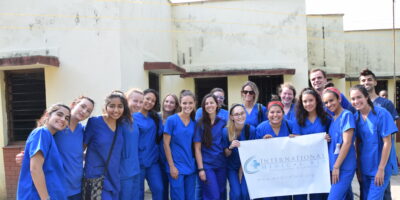
If you’re still deciding whether you want to be a doctor, consider going abroad with us. IMA’s pre-med internships take place in Mombasa, Kenya, and Cusco, Peru, where interns work in clinics and hospitals with patients who have limited access to care. Under the supervision of local medical staff, interns take vitals, do intake and triage and help with direct patient care. These internships for pre-med students show you how medicine works in a different health system, and they give you real experiences to describe in your activities and essays.
Our pre-med internships abroad serve as medical internships for undergraduates at any stage of college, and they also work as pre-med gap year programs if you’re taking time off before applying or getting ready to reapply. They’re part of a wider set of pre-health internships and healthcare internships abroad that also include nursing, pre-PA and mental health programs. Visit our page on medical internships abroad to learn more.
Don’t hesitate to reach out to us if you have questions or need help. International Medical Aid is rooting for you!
Frequently Asked Questions
What is the difference between AMCAS, AACOMAS and TMDSAS?
They are the three centralized primary application services for U.S. medical schools. AMCAS, run by the AAMC, handles most MD programs. AACOMAS handles nearly every DO program. TMDSAS handles Texas public medical schools, both MD and DO, plus Baylor College of Medicine. Each has its own fees, calendar, essay limits, letter rules and coursework verification.
Can I apply to MD and DO schools in the same year?
Yes. Many applicants do. You’ll submit AMCAS for MD schools and AACOMAS for DO schools, and if you apply to Texas public schools, TMDSAS as well. Each application is separate, with its own fee, essays and letters, so start early and keep your coursework and experiences consistent across them.
How much does each application cost for 2027 entry?
AMCAS costs $180 including one school, plus $48 for each additional school. AACOMAS costs $198 including one school, plus $60 for each additional school. TMDSAS charges a flat $235 for any number of schools. Most schools also charge their own secondary application fees.
Are there fee waivers?
AMCAS has the AAMC Fee Assistance Program, which waives all AMCAS fees for one submission with up to 20 schools if you’re approved before you submit. AACOMAS offers a limited number of $198 fee waivers to qualifying low-income applicants. TMDSAS does not offer fee waivers.
When do the applications open?
For students starting medical school in 2027, TMDSAS opened May 1, 2026 (submissions from May 15), AACOMAS opened May 4, 2026, and AMCAS opened May 5, 2026 (submissions from May 28). Each service opens again in spring for the next cycle.
What are the deadlines?
AMCAS and AACOMAS deadlines are set by each school. For the 2027 AMCAS cycle, regular MD deadlines run from July 1, 2026 to March 1, 2027, with most in October and November. The AACOMAS cycle stays open until August 2, 2027, but most DO schools close far earlier. TMDSAS has one medical submission deadline: October 1, 2026 for Entry Year 2027.
Which Texas medical schools use AMCAS instead of TMDSAS?
Texas public medical schools and Baylor College of Medicine use TMDSAS for their MD and DO programs. Five TMDSAS schools (UT Southwestern, McGovern, Long, Texas A&M and Texas Tech in Lubbock) also accept AMCAS, but only for MD/PhD and JD/MD applicants. Private schools outside TMDSAS choose their own service; for example, the Anne Burnett Marion School of Medicine at TCU uses AMCAS.
Do Texas osteopathic schools use AACOMAS?
The UNT Texas College of Osteopathic Medicine and Sam Houston State University College of Osteopathic Medicine use TMDSAS, not AACOMAS. Other osteopathic programs in Texas that are not TMDSAS members use AACOMAS, so check each school’s admissions page.
How long is the personal statement in each service?
AMCAS allows 5,300 characters, AACOMAS allows 5,300 characters and TMDSAS allows 5,000 characters, all including spaces. TMDSAS also requires a 2,500-character Personal Characteristics essay, and MD-PhD applicants in AMCAS write two additional essays of 3,000 and 10,000 characters.
How many letters of recommendation can I send?
AMCAS allows up to 10 letters, and AACOMAS allows up to 10 evaluations, with a committee letter counting as one in each. TMDSAS asks for three letters or one committee letter or packet, plus one optional letter. Individual schools often have their own requirements, such as a science faculty letter or, at some DO schools, a letter from a DO.
Do repeated courses count in my GPA?
Yes, in all three. AMCAS counts grades for every attempt of a repeated course even if your school replaced the grade, AACOMAS includes all coursework regardless of academic forgiveness policies, and TMDSAS asks you to enter every attempt. That’s why your application GPA may be lower or higher than the GPA on your transcript.
Do I send transcripts to TMDSAS?
Not at first. TMDSAS asks you not to send transcripts unless it requests them, which usually happens after interviews. Applicants in special or assured programs and those with foreign coursework may need to send them earlier. AMCAS and AACOMAS, by contrast, need official transcripts from every college you attended before they can verify your application.
Can I use AMCAS or AACOMAS to transfer to another medical school?
AMCAS is for applicants to a first-year class only; transfer and advanced-standing applicants contact schools directly. Osteopathic colleges set their own transfer rules, so if you’re already in medical school, start with the admissions office of the college you want to join.
How much clinical experience do I need before applying?
None of the three services sets a minimum. Each school has its own expectations, and most want real patient-facing experience alongside shadowing and service. Supervised programs such as IMA’s internships, where interns take vitals, do intake and triage and help with direct care, can add hands-on hours you can describe in any of the three applications.
Sources
- Association of American Medical Colleges (AAMC): About the AMCAS Program (2027 application status, 2027 application fees, Fee Assistance Program); AMCAS Program-Participating Medical Schools and Deadlines (2027 cycle); 2027 AMCAS Applicant Guide; 2027 AMCAS Application Workbook; Supporting Applicants through the 2027 AMCAS Application Cycle (cycle dates and tentative participation). Checked November 13, 2026.
- AACOMAS Applicant Help Center (Liaison): Application Cycle Dates (2026-2027); Application Fees and Fee Waivers (2026-2027 cycle awards); Participating Programs and Eligibility (2026-2027); Quick Start Guide and FAQs; Evaluations; Personal Statement; Professional Transcript Entry Service; Sending Official Transcripts; Verification and GPA Calculations. Checked November 12 and 13, 2026.
- American Association of Colleges of Osteopathic Medicine (AACOM): The Application Process (2026-2027 fees and traffic guidelines); Application Instructions (customer service). Checked November 12 and 13, 2026.
- Commission on Osteopathic College Accreditation: Colleges of Osteopathic Medicine directory, September 2026.
- Texas Medical and Dental Schools Application Service (TMDSAS): About the Application; Deadlines and Important Dates (Entry Year 2027); homepage; Application Guide sections on Coursework, Essays, Letters of Evaluation, Biographical Information and Activities, and Transcripts (Entry Year 2027). Checked November 13, 2026.
See more of our guides in your Google results: add International Medical Aid as a preferred source on Google.