Last updated: November 2026
Medical mission trips are short volunteer trips where a team travels to an underserved community to run clinics, health education and outreach alongside local and visiting clinicians. High school students can join programs that accept teens, usually ages 15 to 18, where they support licensed providers with tasks that match their training. Whether a trip is worth it depends on supervision, local partnerships and what you actually do each day.
If you are in high school and want a longer, more structured option than a one-week trip, our high school medical internships abroad place students ages 15 and up in hospitals and clinics in Kenya and Peru for two to twelve weeks, with a mentor and 24/7 local staff.
What Is a Medical Mission Trip?
A medical mission trip is an organized trip, often a week or two, in which volunteers travel to a community with limited access to care and help deliver it. Teams usually set up temporary clinics, run pharmacy and triage stations, and teach health education. Global Brigades, a large student brigade program, says most of its brigades last 7 to 10 days and run in Belize, Guatemala, Honduras, Panama, Ghana and Greece (Global Medical Brigades).
The word “mission” comes from church-based medical missions, and many trips are still organized by faith groups. Today the term also covers secular student brigades, teen service-learning trips, volunteer placements and supervised internships abroad. They all bring visitors into a health setting in another country, but they differ a great deal in age limits, supervision and what a student does.
What Types of Medical Mission Trips Are There?
There are five common types: faith-based short-term missions, university student brigades, teen service-learning trips, independent volunteer placements and supervised internships abroad. The table compares who runs each one, who can go and what students do. Ages and roles vary by trip and country, so confirm the details with the organization before you apply.
| Type | Example | Who can go | What students do | Typical length |
|---|---|---|---|---|
| Faith-based short-term mission | Church and diocesan medical teams | Set by each church or group; many take teens with a parent or youth leader | Clinic support, logistics, prayer and community programs | About one to two weeks |
| University student brigade | Global Medical Brigades | Pre-health and health students, alumni and professionals through campus chapters | Mobile clinic support, shadowing local doctors, pharmacy help, health workshops | 7 to 10 days |
| Teen service-learning trip | MEDLIFE high school trips | High school groups; age rules vary by trip | Assisting at mobile clinics, infrastructure and education projects | About one week |
| Independent volunteer placement | IVHQ teen programs | 16 and 17 year-olds on select programs with parental consent | Varies by project; medical roles for minors are limited | One week or longer |
| Supervised internship abroad | IMA high school internship (Kenya and Peru) | Ages 15 and up; apply from 14 | Hospital rotations, vitals and patient interviews under supervision, mobile clinics, lectures | 2 to 12 weeks, most do 4 |
Sources for the table: MEDLIFE high school trips and IVHQ teen volunteer programs, plus the Global Brigades page cited above.
Can High School Students Go on Medical Mission Trips?
Yes, but fewer programs accept them than accept college students. Many medical trips set 18 as the standard minimum and make exceptions only for groups or teens traveling with a parent. MEDLIFE runs high school service-learning trips to Peru, Ecuador, Costa Rica, Tanzania and Guatemala, and IVHQ allows 16 and 17 year-olds on select programs with parental consent.
Global Brigades lists pre-med, nursing and physician assistant students, alumni and health professionals as its volunteers, so it fits best once you reach college. For teens who want a placement in a working hospital, our program accepts students from 15, and HOSA members can apply through the HOSA and IMA partnership. Our guide to global health internships for high school students covers what to expect in more detail.
What Do Students Do on a Medical Mission Trip?
Students usually help with intake and registration, take vital signs, support pharmacy stations, assist with health education, and shadow doctors and nurses during consultations. On a well-run trip, every task happens under a licensed provider and matches the student’s training level. Students do not diagnose, prescribe or perform invasive procedures, at home or abroad.
On our high school internship, interns work under supervision within their training level and assist with noninvasive tasks. They rotate through departments such as general medicine, pediatrics, emergency care, surgery and women’s health, join community outreach and attend skills sessions. To see how that plays out day by day, read what a supervised week in Kenya looks like, or the firsthand account from HOSA students Sarah and Sid. Outreach-focused roles are covered in community outreach and health education roles for teens abroad, and oral health work in dental public health projects teens can join.
What Is the Difference Between a Mission Trip, a Volunteer Program and an Internship Abroad?
A mission trip is a short team trip built around a clinic or service project. A volunteer program places you with a local organization, often for a week or more, in whatever role it needs. An internship abroad is an education-focused placement in a hospital or clinic, with rotations, a mentor, lectures and a set schedule that builds week to week.
- Main goal: mission trips focus on service during a short window; volunteer programs on the host’s needs; internships on structured learning in clinical settings.
- Setting: mission trips often run temporary clinics; internships place you inside working hospitals and clinics.
- Length: mission trips are usually a week or two; internships often run several weeks, which gives you time to follow patients and departments.
- Supervision: internships assign mentors and set clear limits on what each intern can do.
For a side-by-side look at staying home versus going abroad, see local vs abroad medical programs for high school students and how international medical internships differ from US ones.
How Do You Judge a Medical Mission Trip?
Judge a trip by who supervises you, how it works with local health workers, and what you will be allowed to do. A good program names its local partners, explains its supervision ratios, sets clear limits on student tasks, has a safety and emergency plan, and offers some follow-up care after the team leaves.
- Does the program partner with local hospitals, clinics or ministries of health, or does it run its own clinic only while visitors are present?
- Who supervises students, and how many students does each supervisor oversee?
- What are students allowed to do, in writing? Look for “within your training level” and “under licensed supervision.”
- What happens in a medical emergency, and is there staff on call 24/7?
- Where do students live, and who is responsible for them outside clinic hours?
- What preparation is required: vaccinations, cultural training, language basics? The CDC Travelers’ Health pages list vaccines by country.
- Does the program teach cultural humility and respect for local clinicians?
Preparation matters as much as the program. Our timeline and checklist for preparing for a medical internship abroad walks through documents, vaccines and packing, and our guides on cultural competency in global medical programs and cultural humility for high school students abroad cover how to work respectfully in another health system.
Are Medical Mission Trips Worth It for College Applications?
They can be, when you can explain what you did and what you learned. Admissions readers look for sustained commitment and reflection more than travel alone. A trip that connects to your ongoing interests, such as a health club, local volunteering or a HOSA project, reads as part of a story rather than a one-off.
Our guide on how colleges view global health experience explains how to describe an abroad program in your activities list and essays. If you want a project to pair with travel, the HOSA Health Literacy Ambassador project guide shows how to plan one in your own community. Later on, the same experience can feed into pre-health study abroad, covered in the value of study abroad for pre-med students.
Pros and Cons of Medical Mission Trips for Pre-Med Students
Medical mission trips for pre-med students are popular, but are they worth it? After all, you’re traveling to a country you’ve likely never been to, trying to help people you don’t know who often speak a different language and may not respond well to a foreigner trying to help them.
Yet there are also benefits. You gain medical experience in a different country, helping individuals who might not otherwise receive medical care.
Let’s look at the pros and cons of medical mission trips. We hope this blog helps you determine whether medical mission trips for college students are right for you individually. And if you’ve ever searched for “medical schools near me,” our medical school guides are linked at the end.
Pros – Benefits of Medical Mission Trips:
- Medical mission trips get you out of your comfort zone. Generally speaking, medicine will get you outside your comfort zone. You’ll work with people you might not otherwise work with and deal with medical situations you might not imagine encountering.
This is even more true in a foreign country, where you’ll be exposed to diseases and illnesses that aren’t native to you. Of course, you’ll receive immunizations to protect yourself from foreign illnesses. You’ll also be communicating differently, especially since a different language will likely be spoken. You might have to communicate through a translator, and you’ll hear foreign words you don’t understand.
- Medical mission trips can be character-building. A medical mission trip is primarily about serving the medical needs of a community far from home. Medical mission trips are often planned and scheduled for communities that don’t have access to good healthcare. Serving the members of these communities often produces feelings of sympathy, causing you to respond with compassion and selflessness, which will build your character.
- Medical mission trips provide clinical experience. There’s no substitute for real-world experience, and medical mission trips for pre-med students provide you with exactly that. You’ll have opportunities to practice medicine at a basic level, such as taking vitals or writing down the patient’s history. These are opportunities you wouldn’t get until later on in your pre-med journey, making medical mission trips more than worth it for many pre-med students.
- Medical mission trips can help you form lasting friendships. It’s a new experience traveling all over the world to provide medical care to those who need it. Because you’re in a new environment serving people with vastly different backgrounds from your own, you’ll be more inclined to connect and interact with other members of your medical mission team. It’s not uncommon to form life-long friendships as you serve others together.
- Medical mission trips can nail down your desire to become a doctor. If you’ve been questioning whether medicine is the right career path for you, there’s no better way to find out than by going on a medical mission trip. You’ll either realize how much you want to become a doctor or that it isn’t the right path for you. Immersing yourself in caring for others is the best way to understand yourself.
- Medical mission trips allow you to travel. Some of us really enjoy traveling, and going on a medical mission trip will provide that experience. Oftentimes, the program fees you must pay to go on the trip are less expensive than they would be for you to plan a trip to go abroad, whether it would be for a medical mission trip or another reason. If you’ve been looking for the opportunity to travel and you think you want to practice medicine, a medical mission trip might be exactly what you’ve been needing.
- Medical mission trips can be fun. Not only will you gain valuable experience on your medical mission trip, but you’ll have the opportunity to have fun. Many medical mission trips include activities to help you bond with other members of the team and give you free time when you’re allowed to do whatever you’d like. While hard work is definitely part of the experience, it’s not all work.
Cons – Risks of Medical Mission Trips:
- Natives can become dependent on foreign aid. Communities that don’t have accessible healthcare will be grateful for medical missionaries who provide the healthcare they might not otherwise receive. However, the knowledge that you’re coming might cause the local natives to rely on medical missionaries instead of developing healthcare resources that would eliminate their need for medical missionaries to come to them. This isn’t an issue everywhere, but it is in some places and is something to be aware of if medical missions are on your heart.
- Communities who receive medical missionaries are very grateful for the service they receive. Because they are so thankful, it’s easy to develop a savior complex, where you feel the need to constantly take care of others and neglect yourself in the process. You’re only there for a short time, so you want to provide as much care as possible. But you still need to take care of yourself.
- There are ethical issues to consider. Strict laws dictate what pre-med students are and aren’t allowed to do, but those lines are blurred when you leave the United States and travel to a third-world country with limited medical care. You’ll have more opportunities to participate in medical care than you would in a clinic in California. However, this could be considered an ethical issue with a pre-med student providing more medical care than they are qualified to give. This could also cause issues if a native gets injured or becomes ill because of the care provided by a student without enough experience. This situation can be altogether avoided by going on a medical mission trip where pre-med students are only allowed to provide the same care as they would in the United States.
- Medical mission trips are expensive. While medical missions can cost a lot less than some other trips, they are still expensive and require saving up a lot of money to be able to go, which is something not everyone can do.
- Medical mission trips take you away from home, where care may be needed. As much as foreign countries need help with their medical care, there is plenty of need close to home. Many universities have programs specifically designed for students who will practice medicine in the area, with a specific emphasis on underserved communities. Going abroad means that less doctors are available for local needs, causing the underserved to travel farther and pay more for the medical care they need. You might decide that it’s still worth it to go on a medical mission, but this is worth considering.
- Incorrect diagnoses are higher. Doctors use a lot of technology to provide diagnoses for their patients. In many cases, it’s not possible to travel with all that technology due to lack of room or financial restraints. While doctors can diagnose some illnesses without the aid of blood work, CT scans, and other diagnostic imaging, there is a higher chance of misdiagnosis. This can result in prolonged health issues or an underlying issue not being treated. This could still be better than not receiving medical care at all, but it is an issue to consider.
- Medical tourism isn’t as high quality as local medical care. This is a Catch-22 since you’ll be providing care the natives might not otherwise receive but at a lower quality. It’s important to weigh the pros and cons and determine if it’s a good idea to go.
Go on a Pre-Med Shadowing Study Abroad Program With International Medical Aid
As you can see, there are pros and cons to medical mission trips for pre-med students. You’ll have once-in-a-lifetime experiences but not without risks.
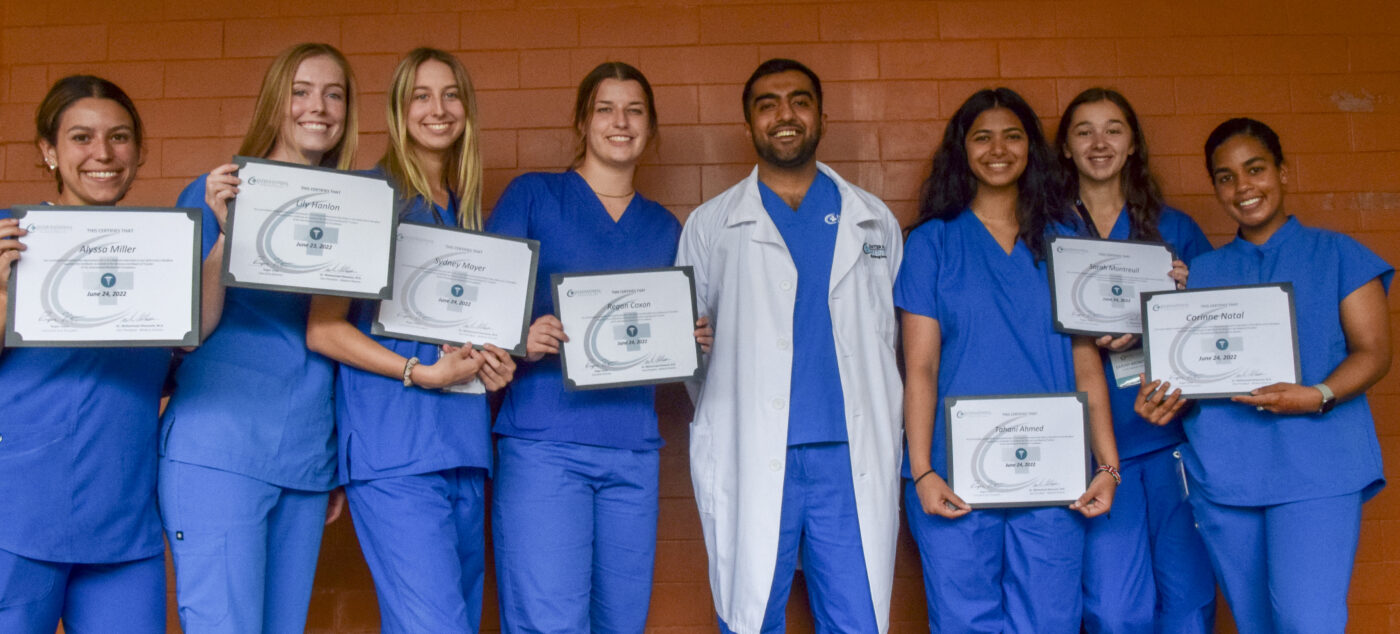
But what if we told you there’s an option in between staying close to home and going on a medical mission trip for college students? That’s right. International Medical Aid provides a pre-med shadowing study abroad program where you get to travel to countries all over the world and shadow medical professionals as they provide medical care to underserved communities that wouldn’t otherwise get medical attention.
There are no ethical issues because you won’t provide a level of care beyond what you’re qualified to give. Instead, your focus will be on getting to know patients, paying close attention to how the nurses and doctors treat the local natives, and gaining a world of experience with your fellow pre-med students. Our programs integrate shadowing, community service, didactic experiences, and more, providing you with an amazing experience you won’t get anywhere else.
International Medical Aid provides this opportunity on a regular basis. We also provide medical school admissions consulting. We can help you through any stage of your medical school journey, from writing your personal statement to reviewing your application prior to submitting it to conducting mock interviews that will prepare you to meet with admissions committees. With medical school admissions experts ready to help you, our medical school admissions consulting allows you to take your application to the next level.
Have you ever searched for “medical schools near me”? On our blog, we provide comprehensive guides to medical schools all across the United States. No matter where you are, you’re sure to find a school near you!
Continue forward on your medical school journey with International Medical Aid!
Are There Medical Mission Trip Options for Future Nurses and Doctors?
Yes. Nursing students and licensed nurses have their own volunteer routes, and so do medical students and physicians. Our guide on how to volunteer abroad as a nurse compares options for licensed nurses and pre-nursing students. For physicians, the guide to Doctors Without Borders and alternatives explains what Doctors Without Borders looks for and what students can do in the meantime. You can also read about our partnership with HOSA-Future Health Professionals.
More Guides on Medical Mission Trips, Volunteering and Internships Abroad
- Global health internships for high school students
- Local vs abroad medical programs for high school students
- International vs domestic medical internships for high school students
- Medical internship in Kenya: a supervised week
- How to prepare for a medical internship abroad
- How colleges view global health experience
- Community outreach and health education roles for teens abroad
- Dental public health projects teens can join
- Cultural competency in global medical programs
- Cultural humility for high school students abroad
- How to volunteer abroad as a nurse
- Study abroad for pre-med and pre-health students
- Doctors Without Borders and alternatives
- HOSA and IMA: global pre-health internships for high school students
- What HOSA students Sarah and Sid learned in Kenya
- HOSA Health Literacy Ambassador community project guide
- IMA and HOSA partnership
- Medical volunteer abroad for high school students: what you actually do