Health is a basic need, yet access to quality healthcare remains uneven worldwide. Many nations continue to face serious challenges in establishing and maintaining robust systems capable of addressing infectious and preventable diseases. This is why global health initiatives (GHIs) were formed to provide coordinated responses to widespread health concerns.
Why Do a Medical Internship Abroad?
Global health initiatives work to build and strengthen national capabilities so that countries can effectively handle high-burden diseases such as malaria, tuberculosis, and HIV/AIDS, as well as emerging threats like COVID-19, through resources like the COVID-19 Technology Access Pool. Preventive measures remain at the heart of these efforts, ranging from mass immunization campaigns to public education drives, sanitation improvement, and health promotion strategies. These programs depend on motivated individuals who can contribute meaningfully while learning from seasoned professionals.
Participating in these initiatives through a structured internship can be life-changing for aspiring healthcare providers. International Medical Aid (IMA) integrates its overseas programs with global health initiatives so interns learn clinical and public health practices and develop cultural sensitivity and global awareness. This makes internships an excellent entry point for students who want to understand healthcare from an international perspective and strengthen their applications for medical school.
An Internship Abroad Lets You Experience Working in Another Setting
Healthcare delivery varies dramatically across borders, shaped by culture, funding, infrastructure, and available workforce. By engaging in a medical internship abroad, you see firsthand how doctors, nurses, midwives, and allied health professionals provide vital care, often with limited resources. These settings highlight the importance of adaptability and resourcefulness, skills that future physicians must master.
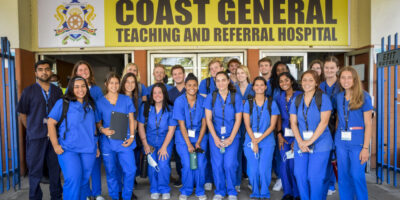
Imagine being placed in a community clinic in rural Peru. The patient volume may be high, diagnostic equipment may be limited, and staff must rely on creative solutions. Here, you witness resilience and innovation in action. Alternatively, a placement in an urban hospital in Kenya provides exposure to a teaching environment where you observe surgeries, ward rounds, and multidisciplinary teamwork in a high-demand setting.
These contrasting experiences reveal that no two systems are alike. You learn to approach patient care with cultural humility, recognizing that adequate healthcare is not only about access to technology but also about communication, education, and community engagement. The lessons you gain in these pre med programs environments will prove invaluable as you return to your home country with a broadened perspective on care delivery.
An Internship Abroad Provides Insightful Lessons
Internships abroad are more than observation—they are immersive learning opportunities. By working closely with experienced physicians and nurses, you gain insights that classroom training alone cannot offer. These professionals often practice in high-pressure, low-resource environments where clinical decision-making requires efficiency and creativity.
You may observe how healthcare workers manage infectious disease outbreaks or learn how preventive strategies are implemented at a grassroots level. For example, local practitioners may emphasize community education on handwashing, vaccination, or maternal care, giving you a clearer picture of the intersection between public health and clinical medicine.
This is an opportunity to ask questions, learn protocols, and reflect on how these approaches can be applied in different contexts. Even if healthcare delivery in your home country is more technologically advanced, lessons about resource prioritization, patient-centered care, and cultural respect are universal. These lessons align directly with the competencies that admissions committees value when evaluating applicants’ average clinical hours for medical school. By leveraging your internship experience, you demonstrate a deep understanding of what it means to serve as a future physician.
An Internship Abroad Helps You Decide Your Career Path With Confidence
The medical field offers numerous career paths, from pediatrics and internal medicine to surgery, public health, and global health policy. Without real-world experience, it can be difficult to determine which specialization resonates with your interests and strengths.
An internship abroad gives you exposure to diverse roles. You might participate in hygiene education workshops for children, assist in vaccination drives, or observe trauma care in emergency departments. Each of these experiences provides a taste of different medical responsibilities. As you try on these “different hats,” you clarify where your passion lies.
Working in maternal and child health clinics inspires some students’ commitment to obstetrics or pediatrics. For others, exposure to tropical medicine or infectious disease sparks an interest in global health research. Whatever path you choose, your internship serves as a testing ground, giving you confidence in your decision. Students who use their internship to refine their career direction often return home more focused, benefiting their academic journey and preparation for the best pre med programs.
An Internship Abroad Boosts Your Soft and Hard Skills
Hard and soft skills are equally important in healthcare. A medical internship abroad provides opportunities to strengthen both.
- Practical Skills: You move beyond theory and apply knowledge in real clinical environments. Whether assisting with patient intake, learning about diagnostic procedures, or participating in community health campaigns, you practice applying your training in unfamiliar conditions.
- Interpersonal Skills: Interns interact with patients and colleagues from diverse cultural backgrounds, which enhances communication, empathy, and teamwork. These interpersonal skills are highly valued in medical school and beyond.
- Problem-Solving Skills: Resource-limited environments often require creative thinking. You may observe how physicians improvise when standard equipment is unavailable, which teaches resilience and critical problem-solving.
- Confidence: Living and working abroad forces you to rely on yourself. Navigating new environments builds self-assurance, which will serve you well during clinical rotations and beyond.
Developing these traits is not optional for aspiring physicians; it is essential. Admissions committees often weigh how many volunteer hours for medical school applicants have, but they also consider the quality of those hours. Internships abroad demonstrate both quantity and depth of experience.
An Internship Abroad Expands Your Personal and Professional Network
Networking is a critical part of any career, and medicine is no exception. An overseas internship exposes you to peers, faculty, and healthcare workers from around the world. These relationships often extend beyond the program, leading to academic collaborations, mentorship, or future employment opportunities.
Your fellow interns may one day become colleagues in medical school or professional practice. The physicians you shadow may provide recommendation letters that strengthen your applications to pre med programs. And if your experience profoundly impacts you, you may even consider returning to your host country to work in a professional capacity.
Networking in a global context expands not only your career opportunities but also your worldview. You learn to engage with people across borders and develop a professional identity that is internationally relevant.
An Internship Abroad Exposes You to Different Customs and Cultures
Traveling provides undeniable benefits for mental, emotional, and physical well-being. Research shows that exposure to new environments promotes creativity, resilience, and problem-solving. During an overseas internship, you are not just traveling for leisure; you are immersing yourself in the daily realities of another culture.
In your free time, you might explore historical landmarks, sample traditional foods, or learn local customs. These experiences enrich your internship by helping you connect more deeply with the community you are serving. More importantly, cultural immersion enhances your ability to provide compassionate care to patients from diverse backgrounds—a skill that is increasingly important in today’s interconnected healthcare landscape.
An internship abroad combines professional training with personal growth. The lessons you gain outside the hospital walls are just as valuable as those learned inside. As NBC has reported, travel has scientifically proven benefits for overall well-being (NBC News). When paired with a structured internship, these benefits compound, leaving you more prepared for both life and career.
Final Thoughts
An overseas medical internship is more than an educational experience—it is a transformative journey that shapes your career, character, and worldview. You gain exposure to healthcare in another setting, learn lessons from experienced professionals, and explore different career paths with clarity. You also strengthen your soft and hard skills, expand your network, and immerse yourself in customs and cultures that broaden your understanding of humanity.
For students preparing for medical school, these internships provide experiences that far exceed the expectations of average clinical hours for medical school. By participating in programs offered through International Medical Aid, you not only build a strong foundation for your medical career but also contribute meaningfully to communities in need.