How It Works
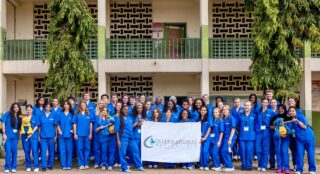
International Medical Aid (IMA) expands access to healthcare in underserved communities across Africa, South America, and the Caribbean while helping future medical professionals gain meaningful clinical exposure.
Our programs give students supervised access to shadowing doctors abroad in hospitals, clinics, and community outreach settings. This allows you to contribute responsibly while growing the clinical skills and confidence needed for a competitive medical school application.
Becoming a physician, nurse, or other healthcare provider demands more than good grades. Medical schools expect applicants to have observed patient care closely, asked smart questions, and confirmed that this field is truly the right fit. That is why our internships focus on structured learning in real healthcare environments. You will observe how physicians make decisions, how teams communicate when resources are limited, and how compassionate care works in diverse cultural settings.
Your role remains observational. This protects patients and supports ethical participation. Unlike informal shadowing, your hours and activities are fully documented and verified, helping you show admissions committees that your clinical experience is legitimate and meaningful.
With IMA, your clinical exposure builds toward your long-term goal without guesswork. You will gain insight, mentorship, and confidence while making a positive contribution to local healthcare teams.
Pre-Med Shadowing Abroad
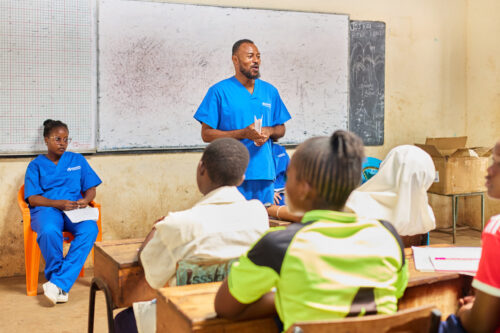
Students with pre med shadowing abroad experience gain a clear advantage on medical school applications. Immersive programs through International Medical Aid (IMA) and similar organizations let motivated undergraduates observe real healthcare in action. By shadowing doctors in hospitals overseas, interns confirm their passion for medicine and collect valuable experience with diverse patient populations.
This kind of global health experience for medical school exposes students to conditions and treatment approaches rarely seen in the U.S., strengthening clinical judgment and cultural competence. Participants often return with meaningful stories and insights—much more than they would from textbooks—giving them strong material for applications and interviews.
Competitive Edge
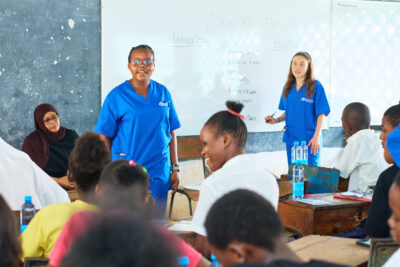
Immersive international internships make your application stand out. Learning to adapt in a new system builds resilience and cross-cultural communication skills that admissions committees value. Students who shadow doctors abroad demonstrate initiative and global perspective. Overseas shadowing builds core competencies that medical schools highly value.
Skills & Exposure
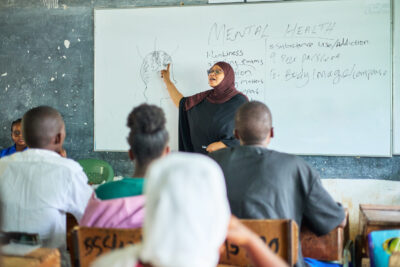
Immersive international internships make your application stand out. Learning to adapt in a new system builds resilience and cross-cultural communication skills that admissions committees value. Students who shadow doctors abroad demonstrate initiative and global perspective. Overseas shadowing builds core competencies that medical schools highly value.
Mentorship & Certification
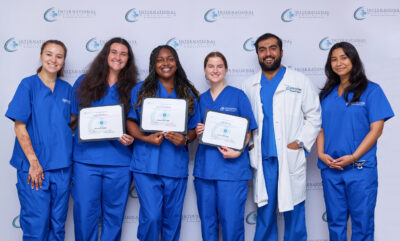
Participants work alongside licensed doctors and nurses in public hospitals. Each intern has a dedicated mentor who provides continual feedback. Mentors ensure you are under professional supervision at all times and guide you through every question. You’ll keep a log of your observation hours and receive an official certificate of completion. IMA even validates each day’s shadowing abroad hours through its U.S. medical director, so you get verified shadowing hours documentation that can be included in your application.
Resume and Network
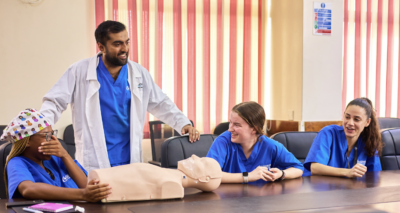
Completing a structured overseas internship (IMA’s programs range from general medicine to nursing or PA training) clearly signals your commitment. IMA graduates report that their international internship “strengthen(s) [the] medical school application” and provides “great discussion points in interviews and essays”. You’ll also gain mentors who can write stronger recommendation letters because they’ve observed you in the hospital setting.
AAMC-Aligned Ethics
These programs are carefully designed. IMA’s ethical medical internships for pre-med students follow AAMC guidelines, meaning you won’t be asked to do anything beyond an American pre-med’s scope. Interns only observe and assist under licensed supervision – exactly what they would be allowed to do in the U.S. – so there are no ethical shortcuts.
For instance, coordinators instruct participants to “only observe doctors and not practice any medicine” overseas. In practice, you may take patient histories, note symptoms, and shadow rounds, but you won’t be asked to perform invasive procedures or replace local staff. Under this structured approach, students safely build confidence in an international clinic or hospital environment.
How the Program Works
Safe, Structured Learning
Affordable & Fully Supported
What You'll Gain
04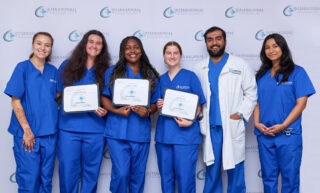
Doing a shadowing experience for medical school in a new country shows you’re serious about learning. Admissions advisors view it as a sign of maturity — students who go the extra mile to explore the medical field stand out in applications and interviews.
In practical terms, you will develop fundamental clinical skills: taking vitals, conducting basic patient interviews, following cases, and demonstrating those skills with official logs and certificates.
With real patient exposure, confirmed mentorship, and documented proof of your hours, you’ll enter medical school not just with an impressive story, but with demonstrated readiness to succeed in medicine.
Key Takeaways
- Stand Out on Applications: International internships add depth to your résumé and essays.
- Confirm Your Interest: Observing specialists abroad helps you decide on a medical path.
- Build Real Skills: Leave with clinical skills — vitals, patient charts, and more — that lectures cannot teach.
- Ethics & Safety: Only observe under licensed supervision, following the same rules as in the U.S.
- Full Documentation: Certificates and hour logs give you verified shadowing hours documentation to share with schools.
Meeting Medical School Expectations
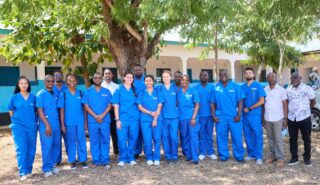
Medical school admissions committees expect clinical experience for medical school application to be formal and verifiable, not just anecdotal. In other words, applicants need verified shadowing hours documentation to prove their time in clinics. Top programs often require well over 100 hours — University of Chicago asks for ~200 hours, Columbia/Baylor ~150 — and they want evidence of those hours. Casual, unrecorded observation will not suffice. IMA’s programs ensure shadowing experience for medical school is rigorous: every internship includes daily logs signed by physicians, hospital placement records, and a certificate at completion. This official paperwork matches exactly what admissions committees look for.
200+
Hours required by top medical schools
100%
Hours verified & signed by supervisors
24/7
On-site support throughout your program
Verified Hour Logs
Program Certificates
Ethical, Supervised Clinical Shadowing Abroad
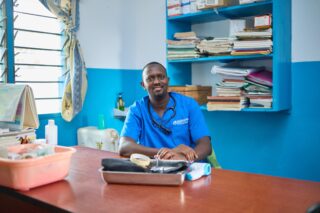
Unlike informal local shadowing, reputable study-abroad internships maintain strict ethical medical internships for pre-med standards. International Medical Aid (IMA) adheres to a rigorous code of ethics — participants never perform tasks beyond their training, and patient welfare is paramount. All clinical rotations are supervised in international clinical settings: you shadow licensed doctors, nurses, and physician assistants in real hospital wards under the guidance of IMA staff and hospital mentors.
Clinical shadowing abroad under IMA is fully overseen. Interns wear official scrubs and work side-by-side with attending physicians and nurses. Because these programs are structured, you won’t just “sit and watch” — you observe rounds and procedures in major hospitals and even practise medical Spanish in a supervised setting. This meets high medical internship supervision standards — every patient encounter and task is monitored — and makes your pre med experience for application truly stand out.
IMA’s structured approach ensures that your pre-med experience is documented exactly as medical schools expect. You’ll receive a completion certificate and recommendation letter confirming the skills and hours you’ve earned. In short, schools want depth and documentation — an applicant with “40 hours in ER, peds, surgery” (logged and signed) is preferred over someone with 100 unspecified hours.
What Admissions Committees Look For
Here is what IMA’s programs deliver:
- Schools look for genuine, supervised shadowing — not informal observation.
- IMA's Pre-PA, Pre-Nursing, and Peru internships are designed to meet those criteria.
- Every clinical hour abroad is verified and documented, giving students and parents confidence that this global shadowing experience will strengthen a medical school application.
Why International Clinical Experience Matters
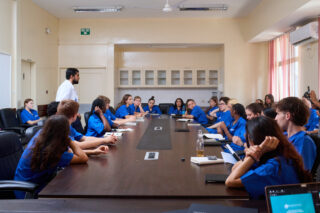
Gaining clinical exposure abroad delivers concrete benefits for a pre-med student and strengthens your medical school application. Admissions committees look for hands-on learning and motivation; international medical internships signal both. Shadowing abroad exposes you to diseases and resource-limited practices you’d never see otherwise, building problem-solving skills and empathy — and providing memorable stories for your essays and interviews.
Each program is strictly ethical: participants observe under licensed mentors and never diagnose or treat unsupervised. IMA follows AAMC guidelines on clinical shadowing, so your role is educational. These programs give you a true global health experience for medical school — confirming your passion for medicine with concrete, supervised practice and a unique international perspective.
Key Advantages of Shadowing Abroad
Hands-On Observation
Shadow doctors, nurses, and allied health professionals on ward rounds, in outpatient clinics, and in emergency settings — with a front-row seat to internal medicine, OB/GYN, paediatrics, and more. You observe care delivery under pressure, without the resources U.S. hospitals often take for granted.
Cultural Competence
Living and learning in a new country improves adaptability and cultural awareness — two qualities admissions committees increasingly value. Understanding patient care in a cross-cultural setting sets your experience apart from standard clinical shadowing at home.
Mentorship & Verified Documentation
All shadowing is done under strict supervision. Mentors include licensed doctors who offer insights, feedback, and letters of recommendation. You receive verified shadowing hours documentation to support your AMCAS, AACOMAS, or CASPA applications
Standout Experience
These are not volunteer trips. IMA’s ethical medical internships for pre-med are structured clinical programs that show real initiative. You leave with a clear understanding of healthcare’s challenges — and how you want to contribute to the field.
Structured Shadowing That Counts
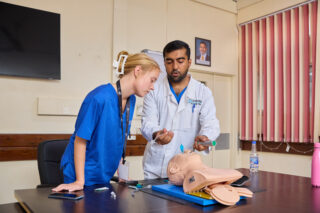
Many students struggle with how to get shadowing opportunities that are both meaningful and accepted by medical schools. IMA makes this easy. You apply once, and IMA handles hospital placement, mentorship matching, housing, meals, and transport. Programs are designed to meet the standards of leading medical schools, PA programs, and nursing programs.
These pre-medical internships abroad provide structured clinical learning that is safer, more consistent, and easier to document than piecing together local volunteer hours. You'll be immersed in actual patient care environments — shadowing ethically and gaining cross-cultural medical insights that matter.
Whether you’re exploring general medicine or focusing on a particular path, such as pre-PA or pre-nursing, IMA offers direct tracks like:
Pre-Med Internships Abroad

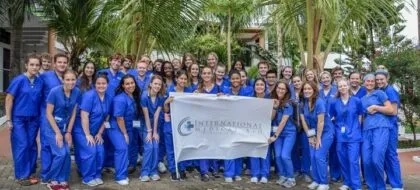
Pre-med internships abroad for undergraduates, gap year students and medical students. Shadow physicians on hospital rounds, attend global health lectures and clinical simulations and join community clinics in Mombasa, Kenya and Cusco, Peru. Housing, meals, transport, insurance and 24/7 support are included.
Nursing and Pre-Nursing Internships Abroad
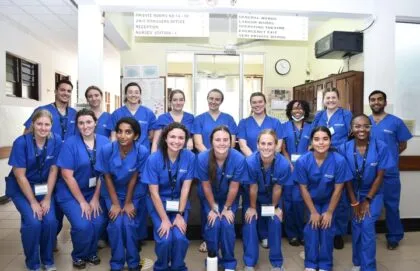
Nursing internships abroad for pre-nursing students, nursing students, recent graduates and licensed nurses. Shadow nurses on hospital wards, attend global health lectures and simulations and join community clinics in Mombasa, Kenya and Cusco, Peru. Housing, meals, transport, insurance and 24/7 support are included.
Physician Assistant and Pre-PA Internships Abroad
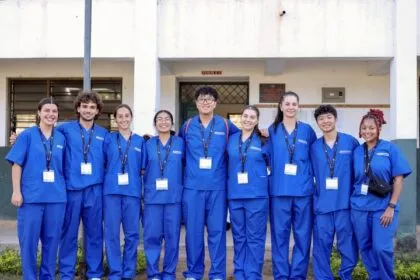
Pre-PA and physician assistant internships abroad for pre-PA undergraduates, PA students, recent graduates and licensed PAs. Shadow clinicians in hospitals in Mombasa, Kenya and Cusco, Peru, attend global health lectures and join community clinics. Housing, meals, transport, insurance and 24/7 support are included.
Benefits of Shadowing a Doctor Abroad
Many students ask what is shadowing a doctor and what they are expected to do during clinical hours. In simple terms, shadowing is supervised observation. You watch how physicians evaluate patients, make decisions, and communicate with families. You learn the real responsibilities of healthcare providers in different settings. That is the value of shadowing physicians: you see medicine as it truly works.
In IMA programs, shadowing in hospitals happens in departments such as emergency medicine, general surgery, pediatrics, and obstetrics. Interns may observe triage, patient interviews, and clinical procedures. You do not perform any task that would require a medical license in the United States. You do record what you learn, take notes on cases, and track all clinical hours in your logbook.
What to Do When Shadowing a Doctor
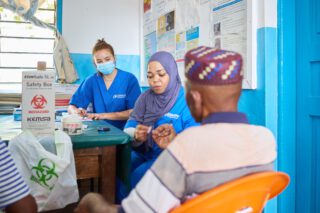
You will follow your supervising physician on their schedule. During rounds, you will stand near the bedside and observe the medical team assess symptoms and discuss next steps. You will not interrupt care. If the physician invites you to ask a question, you may do so at an appropriate moment. That is a key part of what to do when shadowing a doctor: be present, attentive, and professional.
There are times when you may be asked to help with simple tasks that are safe for pre‑meds. These tasks may include:
- Helping organise charts and supplies
- Recording vital signs under supervision
- Assisting with non‑clinical community health outreach
- Participating in public health education events
This is how you gain patient care experience while still respecting the boundaries of your training.
- 7:00AM Breakfast and transportation to hospital site
- 8:00AM Morning rounds with a supervising physician
- 10:30AM Observation in specialty clinics such as pediatrics or surgery
- 12:30PM Lunch break
- 1:30PM Continue clinical observation and case discussions
- 4:00PM Group debrief and reflection with mentor
- 6:00PM Return to residence housing
Shadowing Different Specialists and Preparing for Each Day
IMA provides exposure to a wide range of healthcare fields because medical schools expect applicants to understand more than one specialty. This is where physician shadowing abroad can stand out compared to local programs that only allow observation in a single clinic.
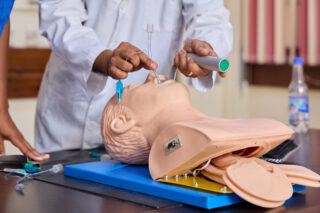
Shadowing a Surgeon
If you are interested in surgery, shadowing a surgeon gives you a close look at how operating rooms function. Students observe pre‑op checks, sterile field preparation, and case review discussions. During procedures, interns stand back and watch the surgical team communicate clearly and quickly under pressure.
Shadowing in surgery also strengthens observation skills. You learn to note vital signs, monitor patient status changes, and follow each step of an operation — helping you decide whether to pursue a surgical path in the future.
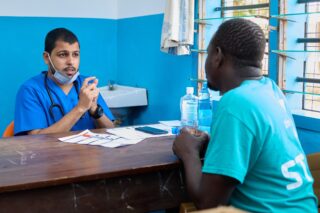
Can You Shadow a Psychiatrist?
Yes. Can you shadow a psychiatrist? This is one of the most common questions from students who are considering mental health careers. Psychiatry shadowing offers a different type of clinical exposure. Instead of procedures, you observe conversations, emotional assessments, and behavioural health treatment plans. You see how psychiatrists collaborate with psychologists, nurses, and families.
Observing this environment teaches empathy, confidentiality, and how to communicate with vulnerable populations. It is a key part of building well‑rounded shadowing experience for medical school.
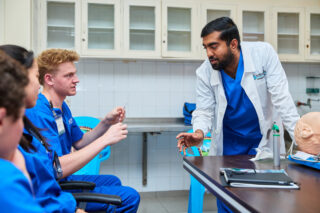
Other Areas You May Observe
- Emergency medicine
- Paediatrics
- OB/GYN
- Internal medicine
- Community health outreach
This allows students to explore different career interests while completing job shadowing doctors requirements.
Preparing for Your
Clinical Shadowing
Students sometimes stress about how to prepare for shadowing abroad. Here are the essentials to help you arrive confident and professional.

Students sometimes stress about how to prepare. Here is a simple checklist covering what to bring when shadowing a doctor overseas:
Closed‑toe shoes and clean scrubs
Small notebook and pen for reflection and case notes
Water bottle to stay hydrated during long hours
Identification and hospital badge at all times
Respectful attitude toward patients and staff
If you ever feel unsure, your mentor will guide you. Being prepared shows professionalism — something medical schools expect.
Students often ask how do you shadow a doctor in a way that reflects medical professionalism. The answer is:
Listen more than you talk
Maintain patient privacy
Introduce yourself only when permitted
Follow staff instructions immediately
Stay focused on learning, not taking photos or using your phone
These habits show maturity and readiness for higher‑level training.
Yes. Do medical students shadow? Absolutely. Even after admission, medical students shadow before they begin clinical rotations. This means your time observing doctors now is preparing you for the expectations you will face in medical school.
If you continue onto IMA's advanced program tracks like Physician Assistant Internships Abroad or Nursing Internships Abroad, your experience can grow along with your goals.
By combining specialty exposure with clear preparation, IMA ensures your physician shadowing experience is both professional and impressive when reviewed by admissions committees.
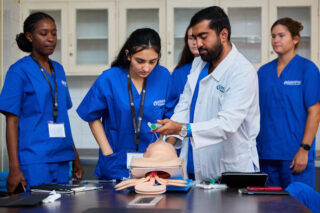
How to Get Shadowing Experience and Clinical Hours for Med School
You can pursue several pathways:
Personal Networks
Use personal networks (family doctor, referral from a professor)
Contact Clinics
Contact clinics directly to ask about shadowing opportunity availability
Structured Programs
Apply to structured programs like IMA's international medical internships abroad
Options 1 and 2 work for some students, but opportunities can be limited and documentation may be inconsistent. With IMA, your placement is guaranteed and every hour counts.
When students ask how to shadow doctors, the answer is simple: follow a system that respects patients and physicians. IMA prepares you before you enter the hospital so you know how to introduce yourself, protect privacy, and observe respectfully.
Programs also cover professional expectations when shadowing in hospitals, including:
Arriving on time and prepared
Wearing clean attire and maintaining a calm presence
Watching how the care team communicates
Asking questions only at appropriate moments
These behaviours show that you take your shadowing physician experience seriously.
Schools want proof that you understand patient care environments. The best way to gain clinical experience for medical school application is to engage in rotations where doctors are teaching and supervising.
IMA interns log time in:
Emergency and trauma units
Paediatric and maternity wards
Internal medicine and surgical departments
This provides direct patient care hours — even if most tasks are observational — because you are following real cases and seeing how diagnoses are made.
Admissions teams differentiate between direct patient contact hours and general hospital volunteering. With IMA, you are present at the bedside watching medical decisions unfold, so your experience supports what schools want to see. Every hour of clinical shadowing is validated through hospital and mentor signatures.
Students who worry how to shadow a physician without a connection now have a clear solution. Through IMA's established partnerships, you gain access to professional environments that would otherwise be difficult to arrange.
If you are applying through AMCAS, AACOMAS, or CASPA, documentation matters. IMA ensures your shadowing experience for medical school is supported by:<br />
A Signed Certificate
Official program completion certificate issued by IMA upon finishing your internship.
A Detailed Hour Log
Dates, hours, and specialties verified by your supervising physician.
Physician Endorsement
Supervisor letter confirming the skills and clinical hours you earned.
This proof helps you meet program-specific direct patient care requirements. Instead of sending unanswered emails to clinics, you can start developing practical skills that will matter when you enter medical school.
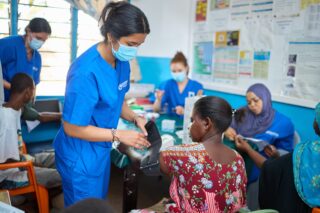
Clinical Experience vs Shadowing: What Counts for Med School?
Many students misunderstand what admissions committees consider real clinical experience for medical school application. Schools want proof that you spent time in patient care settings and that you understand how healthcare works. They look for depth, consistency, and supervision. Shadowing is part of this, but not the only requirement.
Shadowing is observation. You are watching licensed physicians interact with patients and teams. That is important because it exposes you to the decision-making side of medicine. It shows schools that you have seen what doctors truly do each day. This qualifies as shadowing experience for medical school and is expected of serious applicants.
Clinical experience can include supervised patient interaction. Examples include recording vitals under supervision, assisting with non-invasive tasks, or supporting public health outreach. These activities demonstrate responsibility and communication skills within a healthcare environment. That is why many medical schools specifically ask for hands-on clinical experience in addition to shadowing.
Programmes like International Medical Aid give pre-med students both forms of experience. You may observe medical rounds in the morning and participate in supervised community health sessions in the afternoon. This combination helps you build stronger pre med clinical experience than passive volunteering alone.
Admissions teams review your logs to make sure your hours include:
Hospital Volunteer Programs and Clinical Volunteer Opportunities
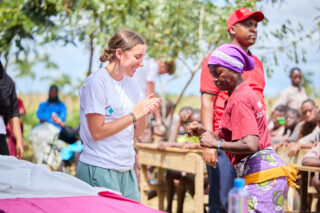
Not all experience has to come from job shadowing. Many students gain early exposure through hospital volunteer programs or supervised clinical volunteer opportunities. Schools understand that most pre-meds start with entry-level involvement, but they still expect that the time spent supports learning and patient interaction.
Volunteering that involves simple movement of supplies or general hospitality can be included as clinical service hours, as long as students are working inside patient care areas and observing how the care team operates. Assisting with health education events or greeting patients in waiting areas are examples of acceptable early patient care experience.
However, admissions committees look at intent and environment. Hours that focus only on administrative work — far from medical decision-making — may not be strong enough to count as clinical experience. That is why many pre-meds choose international programmes that offer deeper involvement.
IMA offers options that blend volunteering with shadowing through medical internships abroad. In community settings, interns may help distribute supplies, reinforce hygiene education, or assist with non-clinical public health activities. In hospitals, the focus shifts back to observation. This balance allows students to gain experience while respecting professional boundaries.
Clinical volunteering also introduces students to challenges they must be comfortable facing as physicians: fear, uncertainty, illness, and recovery. Learning this early helps applicants confirm that they are choosing medicine for the right reasons.
Global Health Internships and Medical Volunteer Abroad Options
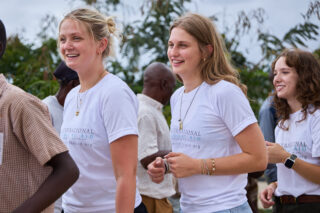
Many future physicians want more than observation. They want to understand how healthcare systems function in different parts of the world. Global health internships give pre-med students that broader view. These programmes strengthen cultural awareness and prepare students for a career where patients come from many backgrounds.
Through organisations like International Medical Aid, students can participate in medical volunteer abroad placements that complement their daily hospital shadowing. These activities are structured, supervised, and designed for learning — not for replacing trained staff.
Examples of tasks during healthcare internships abroad include:
- Supporting intake procedures during outreach clinics
- Assisting with hygiene and nutrition education programme
- Participating in vaccination or health screening campaigns
- Observing how medical teams adapt to limited resources
These experiences build resilience, teamwork, and adaptability. They also give students compelling examples to discuss in medical school interviews, showing they\'ve seen healthcare delivered under real-world constraints.
Pre-Med Internships Abroad
Pre-med internships abroad for undergraduates, gap year students and medical students. Shadow physicians on hospital rounds, attend global health lectures and clinical simulations and join community clinics in Mombasa, Kenya and Cusco, Peru. Housing, meals, transport, insurance and 24/7 support are included.
Nursing and Pre-Nursing Internships Abroad
Nursing internships abroad for pre-nursing students, nursing students, recent graduates and licensed nurses. Shadow nurses on hospital wards, attend global health lectures and simulations and join community clinics in Mombasa, Kenya and Cusco, Peru. Housing, meals, transport, insurance and 24/7 support are included.
Ethical Standards
IMA programs follow strict ethical medical internships for pre-med guidelines. Students never perform tasks they would not be legally allowed to do in the United States. Staff monitor every interaction to ensure patient safety and appropriate student involvement.
Financial Aid & Support
Financial aid and scholarships are available to help students access opportunities abroad. Structured housing, transportation, and 24/7 supervision are included — reducing both risk and stress.
Why It Matters
Completing a pre med volunteer abroad program demonstrates real initiative. Admissions reviewers recognize that not every applicant seeks experience outside their comfort zone. International participation shows maturity, adaptability, and a strong desire to serve — qualities medical schools respect.
Do Clinical Hours Abroad Count for Med School?
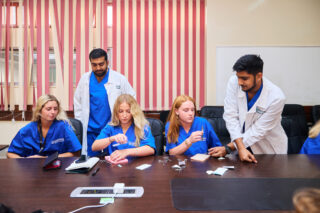
One of the most common questions students ask is whether clinical hours abroad count for med school admissions. The answer is yes, as long as the hours are supervised, structured, and properly documented. However, informal volunteer tourism programmes do not count — only educational programmes that follow accepted clinical standards will be recognised.
Admissions offices care about the quality of your experience, not just the location. They want evidence that you:
Community Outreach and Public Health Engagement
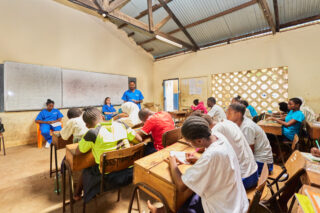
In addition to hospital experience, interns participate in supervised community engagement that shows how healthcare extends beyond the walls of a clinic. These activities help future medical professionals understand the preventative side of care, which is a growing emphasis in U.S. medical education.
Depending on your placement location, supervised outreach may include supporting hygiene education for children in local schools, assisting with nutrition guidance where malnutrition is common, helping with screening events for conditions like hypertension or diabetes, observing vaccination campaigns and community health programmes, and learning how local leaders participate in improving health access.
These experiences reinforce the importance of communication and teamwork. You see firsthand how many health challenges are driven not only by illness, but also by environment, economic stability, and education. Understanding these issues prepares you to advocate for your future patients more effectively.
Community activities also help build confidence speaking with patients and families from diverse backgrounds. You will learn how to adapt your communication style depending on age, culture, and emotional state. These are foundational skills for compassionate medical practice, and they are difficult to gain through shadowing alone.
Public health exposure gives meaning to what you observe inside the hospital. You connect individual patient stories to broader healthcare issues — a perspective that helps you stand apart in medical school interviews and future clinical training.
Why Documentation Matters
Medical schools must be able to confirm that your time in the hospital reflects true clinical experience for medical school application.
They expect:
- Supervisor signatures
- Rotation documentation
- Accurate logs of clinical hours
- Proof of your involvement in patient-focused settings
IMA provides official clinical shadowing documentation so admissions reviewers know your hours are valid and relevant.
Why Documentation Matters
Schools appreciate global health experience because it shows:
- Initiative beyond local opportunities
- Adaptability in unfamiliar environments
- Understanding of healthcare challenges worldwide
Your experience abroad demonstrates that you’re learning with purpose — not just checking a box. When reviewers see that you contributed responsibly in a structured international setting, it strengthens your entire application.
Where You May Complete Your Clinical Experience
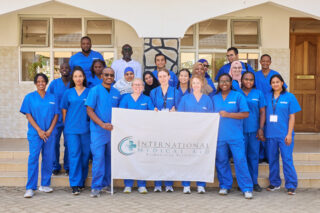
East Africa
Since 2012, we have had a presence in East Africa, in the areas of Kenya, Tanzania, and Uganda. The poverty levels are much too high and there is still a significant shortage of resources available. IMA develops cultural bridges between tribal leaders and governmental entities to provide ongoing care in the areas we serve.
Even hospitals considered more modern for the region lack supplies and technology. Locations such as Kenya are still overrun with communicable diseases such as Malaria, Haemorrhagic Fever, and HIV/AIDS. All safety precautions are taken when dealing with these patients.
Beyond treatment, we provide the means to educate the people of these areas. The basis of our organisation was to provide access to resources in medicine and hygiene in populations most in need.

South America
IMA began its mission to bring medical care to underserved areas in 2012 in Ecuador. Despite growth in the region, less than half the population has access to medical care. A Universal Health Care system is in place, but due to corruption and fragmentation, there are too many areas still lacking — with an estimate of only 1.5 beds per 1,000 members of the population in the most underserved areas.
Our efforts have extended into Colombia, which is in a transitional state. An estimated 6 million people are displaced due to violence. Beyond normal healthcare needs, the country is beginning to deal with large numbers of conditions normally found in more developed regions, including obesity and heart disease.
The needs in South America differ greatly from those in Africa and the Caribbean, but they are all in serious need of care. As long as there is a need for medical intervention in countries less resourced than the U.S., interns who support our efforts remain essential.
Caribbean
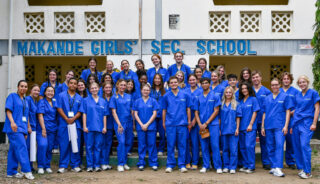
The challenges in Haiti are well documented due to the devastating earthquake in 2010, which brought an already seriously impoverished area further elements of devastation. This area is our most recent target to provide the medical interventions we have brought to other countries.
In Haiti, we are still at the stages of surveying the areas for its most important needs, while developing relationships with speed. The challenges in Haiti are very similar to those we see in Africa. Incidents of communicable diseases are high and there are vast shortages of supplies and medical facilities.
Unfortunately, the publicity that brought in funds shortly after the earthquake has slowed, leaving the country in dire need of care.
Cultural Learning and Professional Growth
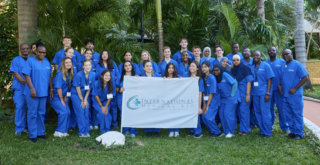
Students learn more than medicine in these placements. Working in another country exposes future clinicians to different social norms, languages, and beliefs about health. You may shadow a physician who adjusts their communication style for every patient. Small details matter. In some settings, only same-gender medical professionals speak with patients during private care. In others, extended families participate in healthcare decisions.
This kind of cultural competence is an essential part of medical professionalism today. Admissions teams increasingly look for applicants who understand how background, faith, and tradition influence care. By seeing how global clinicians approach challenges with limited technology, you gain resourcefulness and strong clinical awareness that supports your future.
Students often say that shadowing abroad teaches them how to listen first. You will learn when to step back and observe quietly, and when to ask a mentor for guidance.
During your internship, mentors help you develop confidence when talking with patients. Every interaction is supervised so you always remain within approved training limits, but you still begin to understand how clinicians support patients in uncertain moments. That is a skill that carries directly into medical school and your future career.
Preparing for Cultural Differences
Preparing You For A Career In Healthcare
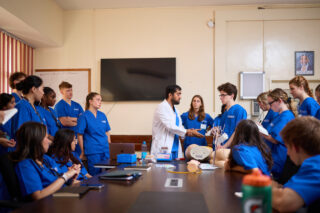
Our goal is to provide you with broad exposure to the various areas within medicine and healthcare. An IMA volunteer internship will introduce you to the nuances of the healthcare field. You will find yourself developing your bedside manner with patients. You will shadow doctors, observe surgeries, and begin to form your personal network with those you encounter in the healthcare field — including your mentors, personal counsellors, and other students in your group.
Medical Internship Abroad Application Process
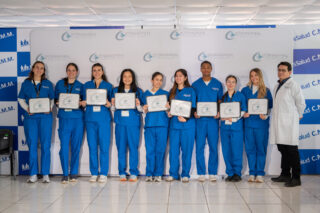
Many students worry that applying to an international clinical programme will be complicated. Medical internship abroad application process requirements are actually very straightforward, especially when working with a structured provider. International Medical Aid simplifies each step so students and parents know exactly what to expect.
-
1
Submit the Online Application
Share basic academic info, your desired healthcare track, and where you're interested in going.
-
2
Speak With an Advisor
A short conversation helps match you with the right country and clinical setting based on goals, availability, and comfort level.
-
3
Secure Your Placement
Once accepted, your hospital assignment is confirmed. This avoids the stress of how to get shadowing opportunities on your own.
-
4
Pre-Departure Preparation
IMA helps with health clearances, travel insurance, visas (if needed), packing lists, and cultural expectations so you feel prepared before leaving home.
-
5
Clinical Training Begins
Upon arrival, interns complete orientation, meet mentors, and start rotations with supervision from licensed clinicians — ensuring responsible clinical shadowing from day one.
What to Expect After Arrival
Students enter a structured schedule that blends hospital time with public health outreach. Every day includes logged clinical exposure, faculty mentorship, and transportation support from staff. This gives students the chance to learn confidently — without worrying about logistics.
This consistency is why shadowing hours accepted for medical school carry more weight when they are verified through IMA. Documentation is prepared throughout the programme, not reconstructed months later.
Entering With the Right Mindset
A meaningful international experience requires curiosity, humility, and respect. Students should arrive ready to watch, listen, and ask questions. Medical schools want to see evidence of maturity and thoughtful reflection — and this kind of programme is the ideal environment to develop those qualities.
Rotations and Real-Time Learning With Healthcare Teams
Every student arrives with different interests. Some want exposure to surgery, others want to build confidence around patient communication, and many are still deciding what type of physician they want to become. IMA’s rotation structure supports all of these goals by giving interns supervised access to multiple departments instead of limiting them to a single specialty.
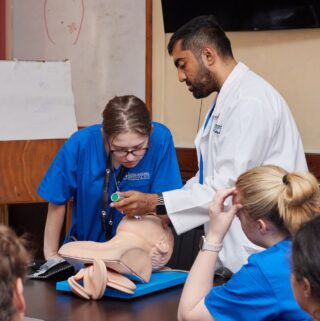
Hospital exposure
Common rotation departments
- Emergency and trauma care
- Maternal and newborn services
- Pediatrics
- General medicine and surgery
- Internal medicine and infectious disease
- Public hospital outpatient clinics
Observing multiple departments helps you compare different medical roles and better understand where you may thrive in the future.
Tailored pathways
Specialty-aligned opportunities
If you already have a direction, you can shadow mentors in more focused tracks:
Learn from clinical officers who serve roles similar to physician assistants
Observe bedside care, wound dressing, and patient comfort strategies
Monitor oral health interventions in community settings
Shadow psychiatrists and social workers evaluating behavioral conditions
Participate in supervised health promotion activities in surrounding communities
These experiences provide clarity — instead of guessing what a field is like, you see the work as it actually happens.
Specialty Focus
Our goal is to give you the opportunity to observe and shadow physicians in the specialties you have chosen or are interested in, including Emergency Medicine, OB/GYN, Pediatrics, Internal Medicine, General Surgery, ENT, Epidemiology, Orthopedics, Ophthalmology, and region-specific tropical medicine.
Week 1
- Sample schedule A
- Emergency
- Sample schedule B
- General Surgery
- Sample schedule C
- Internal Medicine
Week 2
- Sample schedule A
- Neurosurgery
- Sample schedule B
- Orthopedic Surgery
- Sample schedule C
- Pathology
Week 3
- Sample schedule A
- Obstetrics & Gynaecology
- Sample schedule B
- Intensive Care
- Sample schedule C
- General Surgery
Week 4
- Sample schedule A
- Cardiology
- Sample schedule B
- Pediatrics
- Sample schedule C
- Cardiothoracic Surgery
Week 5
- Sample schedule A
- Dermatology
- Sample schedule B
- Obstetrics & Gynaecology
- Sample schedule C
- Obstetrics & Gynaecology
Week 6
- Sample schedule A
- Tropical Medicine
- Sample schedule B
- Radiology
- Sample schedule C
- Oncology
| Sample Schedule A | Sample Schedule B | Sample Schedule C | |
|---|---|---|---|
| Week 1 | Emergency | General Surgery | Internal Medicine |
| Week 2 | Neurosurgery | Orthopedic Surgery | Pathology |
| Week 3 | Obstetrics & Gynaecology | Intensive Care | General Surgery |
| Week 4 | Cardiology | Pediatrics | Cardiothoracic Surgery |
| Week 5 | Dermatology | Obstetrics & Gynaecology | Obstetrics & Gynaecology |
| Week 6 | Tropical Medicine | Radiology | Oncology |
Patient Interaction With Professional Boundaries
Clinical observation teaches more than medicine. You begin to understand how healthcare workers approach illness, uncertainty, and cultural considerations in every conversation. Interns observe patient interviews, care discussions, and provider communication with family members.
Our goal is to properly introduce you to the etiquette involved with patient interaction. By directly interacting with the patients, you will begin to develop your own style of bedside manner. However, at no time are you to attempt to, nor will you be allowed to, perform any duties or answer any questions that reach above your level of training. These guidelines are set in place by the Association of American Medical Colleges and protect both IMA's liability as well as your own.
Interns do not:
- Diagnose patients
- Provide treatment
- Perform procedures
- Offer medical advice
Reflection and Mentorship
At the end of each day, mentors guide interns through short reflection sessions. You discuss cases observed, clinical decisions made by providers, and the emotional challenges that come with patient care. These reflections help you develop the professional communication and empathy that medical schools expect.
Community Outreach
Beyond the walls of the hospital, each intern will participate in various community outreach activities. These can include visits to schools and community centres, homes for the elderly, or other groups. These can be teaching experiences where you demonstrate hygiene that is lacking among the population. This is where you will best develop more of your cultural education.
Healthcare Policy
Our goal is to help you develop a thorough understanding of healthcare policy and observe the differences that exist between the various healthcare models in both developed and developing healthcare systems. Seeing some of them in action provides you with an incomparable experience.
AMCAS Clinical Experience Criteria Explained
Many applicants are unsure how to classify their activities when preparing for AMCAS. Accurate reporting is essential. Anything listed as AMCAS clinical experience should involve real exposure to patients and teams delivering care.
For your application to be credible, your record of clinical experience for medical school application should show:
- Work near or with patients
- Accountability to a licensed supervisor
- Understanding of medical workflows
- Consistent involvement over time
Shadowing counts in its own category. It does not replace the need for clinical participation. Schools expect applicants to gain both observation and interaction. IMA supports proper classification by providing logs, letters, and full descriptions of rotations. This ensures your experiences meet what AMCAS defines as clinical experience while also demonstrating direct patient contact hours even when observation-focused.
Programme Options: Hospital Internships and Study Abroad Tracks
IMA also supports public health internships abroad for students interested in preventive care and community wellness. All of these qualify as study abroad medical programmes that combine clinical shadowing, professional mentorship, and meaningful involvement in global health efforts.
Keeping You Safe
Safety, Housing, and Supervision
Parents often have the most important questions: Is IMA safe? and Is International Medical Aid legit? The answer to both is yes. Hospitals and housing sites are carefully selected, and students are supervised throughout every clinical and community activity. Safety isn’t just a feature of the programme — it is the foundation.
Support From the Moment You Arrive
From airport pickup to housing orientation, students have staff with them every step of the way. IMA maintains on-site teams that:
- Provide secure transportation to and from clinical sites
- Stay in the same housing communities as interns
- Assist with health, travel, or personal concerns
- Maintain direct communication with families if needed
Parents appreciate knowing that their student is never left trying to figure things out alone in a new environment.
Safe, Comfortable Housing
Interns live in supervised residences with other students. Rooms are clean and set up for privacy and rest — important after long days in the hospital. Meals and water are provided safely, so health and comfort remain a priority. Evening check-ins and established curfews ensure accountability.
Families often say they are surprised by how supported their student feels while abroad.
Professional Supervision in Clinical Settings
Students never walk into a hospital alone. Staff coordinate schedules and escort groups into each department. While shadowing, you are under supervision in international clinical settings at all times. Physicians and licensed staff are responsible for teaching and protecting both students and patients.
This structure also protects student career goals. Because every activity meets medical internship supervision standards, schools can trust that the experience is educational and ethical.
Prepared for the Unexpected
Even with strong planning, travel always comes with unknowns. That is why IMA:
- Reviews hospital and regional safety conditions continually
- Has emergency medical protocols in place
- Maintains backup housing and clinic options
- Keeps communication open with local authorities
Parents have peace of mind knowing there is a plan for every scenario — including those that never happen.
Extra
Adventures Beyond Medicine
Our goals are to give you the opportunity to enjoy your downtime while you are on your internship. At IMA, we believe that each internship should be a well-rounded experience in every way, and enjoying the culture outside of the hospital is an important aspect of the experience itself.
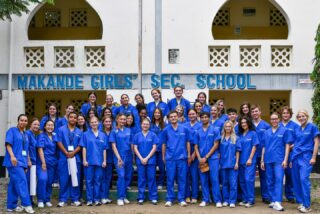
Caribbean
Discover the vibrant culture, history, and natural beauty of the Caribbean. Explore local markets, historic sites, and coastal landscapes that reveal the resilience and spirit of the communities you serve.
IMA Reviews and Proof of Credibility
Families considering international placements often search for IMA reviews to verify programme quality. Past participants consistently report that the experience helped them become more independent, confident, and prepared for medical school expectations.
Parents looking into whether is IMA safe or is International Medical Aid legit find reassurance in several facts:
- Programmes operate inside established healthcare facilities
- Students are supervised and supported at all times
- Housing, meals, and transportation are organised by staff
- Documentation confirms hours and responsibilities
- Programme structure follows accepted U.S. guidelines for pre-health education
Students also mention that mentors provide detailed letters that help distinguish their applications from others who only have casual shadowing experience. These reports confirm the impact, structure, and personal growth that come with participating in supervised international healthcare settings.

Hear From Our Alumni
Don’t just take our word for it—listen to the experiences of our past healthcare and pre-health interns. Our alumni have pursued successful careers, using the skills and knowledge gained during their internships to make meaningful contributions to their communities.
Here are some of our alumni's success stories:
Tyra Dennis
North Carolina A&T State University
Kayla McBride
University of Georgia
Grace Munoz
Stockton University
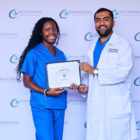
Ija Mumford
Howard University
Alumni Experiences & Testimonials
Five words. That’s it. The ultimate definition of short and sweet. At the end of each week during debriefing, we were asked to present the group with five words that encompassed our experience in our respective departments. Every Friday, this…
Globally Trusted, Alumni Approved






Premier Partner

Frequently Asked Questions
We welcome questions about our programs and respond within 24 hours.
Thank you for your request
We appreciate your interest in our program. Our team will review your message and get back to you as soon as possible. If you have any urgent questions, feel free to reach out to us directly at our contact information provided on our website.