The AAMC premed competency updates for 2026 represent the most significant revision to the competency framework in years, and they matter because admissions committees at MD-granting schools use these competencies as a shared rubric for evaluating who is ready for medical school. If you are applying in 2026 or later, your application will be read through this updated lens. That means understanding what shifted, what stayed the same, and what you should actually do about it is not optional; it is part of building a competitive application.
The core competencies for entering medical students were originally developed by the AAMC to describe the personal qualities, skills, and knowledge that admissions committees value. They are not a checklist you attach to your application. They are the categories of readiness that reviewers use when they read your personal statement, evaluate your experiences, score your interviews, and decide whether you belong in their incoming class. When the AAMC updates these competencies, it signals that the profession’s understanding of what makes a good future physician has evolved, and schools adjust accordingly.
What the AAMC Core Competencies Are and Why They Get Updated
The AAMC groups its core competencies into broad categories. The framework that has been in place includes interpersonal competencies (such as teamwork, cultural competence, ethical responsibility, and service orientation), intrapersonal competencies (such as resilience, self-awareness, and capacity for improvement), thinking and reasoning competencies (critical thinking, scientific inquiry, quantitative reasoning, written communication), and science competencies (knowledge of living systems and human behavior). These categories reflect what medical educators believe students need before they walk into a lecture hall or clinical rotation on day one.
Updates happen because healthcare itself changes. The physician workforce shortage, projected by the AAMC to reach tens of thousands of primary care doctors within the next decade, has pushed schools to recruit students who show genuine commitment to underserved communities and population health. Growing recognition of health inequities has placed more weight on cultural humility and structural awareness. The increasing complexity of team-based care means communication and collaboration skills carry more weight than they used to. The AAMC’s core competencies page provides the official framework and any revisions as they are finalized.
When the AAMC revises these competencies, it is not inventing new expectations out of thin air. It is formalizing what many schools have already started prioritizing in their holistic review. The update gives those priorities a shared vocabulary that all member schools can reference.
What Is Changing in the 2026 Competency Revision
The 2026 updates refine and, in some cases, expand the competency categories to reflect current priorities in medical education. While the exact final language of every competency should be confirmed through official AAMC publications (which are the only authoritative source), several directional shifts are clear based on AAMC communications and the broader trajectory of medical education reform.
Greater Emphasis on Structural and Systemic Awareness
Previous versions of the competencies addressed cultural competence and service orientation. The updated framework places more explicit weight on understanding how systems, structures, and social determinants affect health outcomes. This is not just about being “aware” of disparities. It is about demonstrating that you have thought critically about why certain populations face worse outcomes and what role physicians play within those systems.
For your application, this means that experiences where you encountered structural barriers to care, whether in a domestic clinical setting, a community health organization, or a global health program, carry real weight. But only if you can articulate what you observed and what it taught you. A line on your activity list that says “volunteered at a free clinic” is not enough. A reflection on how you watched uninsured patients delay care until emergencies forced them through the ER, and what that taught you about access, is much closer to what reviewers want to see.
Expanded Definitions of Communication and Collaboration
The updated competencies broaden what counts as effective communication. Earlier versions focused on clear verbal and written skills. The revision recognizes that communication in medicine increasingly involves working across disciplinary boundaries, engaging with patients whose health literacy varies widely, and functioning within teams where hierarchy and role clarity matter. Collaboration is no longer just “plays well with others.” It includes the ability to receive feedback, adjust your approach, and contribute meaningfully when you are not the most experienced person in the room.
This is worth paying attention to because it changes how you should describe team-based experiences. If you worked on a research team, do not just describe the project. Describe how you handled disagreements about methodology, how you communicated findings to people outside your discipline, or how you adapted when a senior researcher redirected your work.
Resilience, Adaptability, and Honest Self-Assessment
Intrapersonal competencies have always included resilience and self-awareness, but the 2026 revision gives these more prominence. Medical schools are paying closer attention to whether applicants can honestly evaluate their own strengths and limitations, tolerate ambiguity, and recover from setbacks without pretending they never happened. This reflects growing concern about physician burnout and the recognition that students who cannot manage stress constructively are at higher risk during training.
For applicants, this means your personal statement and secondary essays should not present a polished, obstacle-free narrative. Admissions committees are more interested in seeing that you have faced genuine difficulty, responded thoughtfully, and grown from it. That growth does not need to be dramatic. It just needs to be real.
How These Updates Change Your Application Strategy
Understanding the competencies in theory is one thing. Translating them into a stronger application is another. Here is where most students make mistakes: they treat the competencies as a list of boxes to check rather than a framework for presenting who they are.
Build Experiences That Generate Real Evidence
The most common problem admissions committees describe is applicants who list activities without connecting them to anything meaningful. The updated competencies make this problem worse for students who rely on surface-level involvement, because the bar for what counts as evidence of competence has gone up.
You do not need a dozen activities. You need a handful of sustained, meaningful ones where you can describe what you did, what was difficult, what you observed, and how it shaped your thinking. Clinical exposure matters, but so do research, community engagement, and leadership roles where you had real responsibility. If you have participated in a structured clinical observation program, what you took away from that experience is what matters, not the number of hours alone. A useful resource for thinking about this is our breakdown of what clinical hours applicants are actually logging, which puts your own experience into realistic context.
Write About Competencies Without Naming Them
One of the most effective strategies is to demonstrate the competencies through specific stories without ever using the AAMC’s exact terminology. If you write “I demonstrated cultural competence by volunteering at a clinic,” you have said nothing. If you describe a moment where you worked with an interpreter to understand a patient’s concerns about a treatment plan, and what that taught you about assumptions in clinical communication, you have shown cultural competence, communication skills, and reflective capacity without labeling any of them.
Admissions committees read thousands of essays. The ones that stand out are concrete, specific, and honest. The ones that blend together are abstract, generic, and performative. For guidance on strengthening your written application materials, the advice in strategies to make your medical school application stand out is worth reviewing.
Match Experiences to the Right Competency Category
Think about your activity list and your most meaningful experiences in terms of the four competency categories: interpersonal, intrapersonal, thinking and reasoning, and science. You do not need every activity to cover every category, but you do need coverage across all four. If every experience on your application demonstrates scientific thinking but none of them demonstrate service orientation or teamwork, that is a gap.
This exercise also helps you identify where you need to build more evidence before you apply. If you have strong research and academics but limited exposure to working with diverse populations or functioning on healthcare teams, that tells you where to invest your remaining time.
What Admissions Committees Actually Do With These Competencies
It helps to understand the mechanics. At most MD-granting medical schools, your application is reviewed holistically. That means reviewers are not scoring you on a single scale. They are looking across your entire file, including GPA, MCAT, activities, essays, letters of recommendation, and interview performance, for evidence that you possess the qualities described by the core competencies.
Some schools use the AAMC competencies directly in their rubrics. Others have developed their own frameworks that overlap significantly. Either way, the competencies influence how reviewers interpret your file. When a reviewer reads about your research experience, they are not just noting that you did research. They are asking whether the description shows critical thinking, intellectual curiosity, collaboration, and the ability to handle failure. When they read about your volunteer work, they are looking for service orientation, empathy, and cultural awareness, not just the fact that you showed up.
The AMCAS application guide outlines how the centralized application process works, and understanding its structure helps you see where competency evidence fits in each section, from the personal statement to the work and activities entries to the most meaningful experience descriptions.
This is also why the “most meaningful” designations on AMCAS matter so much. You get three of them, and each one comes with extra space to write. Those three entries should be chosen not just for their impressiveness but for their ability to demonstrate competencies that matter to you and that connect to your reasons for pursuing medicine.
Where Global Health and Cross-Cultural Experiences Fit
The updated emphasis on structural awareness, cultural humility, and communication across differences gives global health experiences a clearer role in applications, but only if those experiences are approached and described properly.
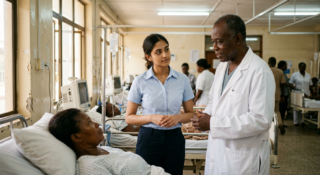
Observing healthcare delivery in a resource-limited setting can provide powerful evidence of several competencies at once. You see how systemic factors shape patient outcomes. You work alongside professionals whose training, tools, and daily realities differ from what you have encountered in the US. You confront your own assumptions. You learn to function in unfamiliar environments. All of this maps directly onto the interpersonal and intrapersonal competencies that the 2026 framework highlights.
But this only works if the experience is structured, supervised, and reflective. Admissions committees can tell the difference between a student who spent two weeks observing in a well-organized clinical program and a student who did something loosely defined and cannot articulate what they learned. The structure matters. The mentorship matters. The reflection matters.
If you are considering global health exposure as part of your pre-med preparation, the starting point is understanding how the AAMC core competencies connect to clinical readiness and then evaluating whether a given program gives you the kind of structured, supervised experience that produces real competency evidence, not just a line on your resume.
It is also worth noting what these experiences are not. They are not opportunities to practice medicine. In any reputable program, students observe, assist within clearly defined and supervised boundaries, and learn from qualified professionals. That is exactly what admissions committees want to hear about: a student who understood their role, respected the limits of their training, and still gained substantial insight.
Practical Steps Between Now and Your Application
If you are applying in the 2026 cycle or later, here is what to do with this information.
First, read the competencies yourself. Go to the AAMC website and read the full, official descriptions. Do not rely on summaries from forums or social media. The language matters, and you need to understand what each competency actually describes so you can recognize it in your own experiences.
Second, audit your current experiences. Map each activity on your list to the competency categories it best supports. Identify gaps. If you have no evidence of teamwork, find a way to get some. If you have no clinical exposure, prioritize it. If you have experiences but have never reflected on what they taught you, start writing about them now. You will need those reflections when you draft your personal statement and activity descriptions.
Third, plan your remaining time strategically. You do not need to pad your application with filler activities. You need depth. One sustained, meaningful commitment is worth more than five short-term ones. If you have two years before you apply, that is enough time to build something real. If you have six months, focus on deepening what you already have rather than starting something new that you cannot meaningfully describe.
Fourth, practice talking about your experiences out loud. Interview preparation is part of competency demonstration. If you cannot explain clearly and honestly what you did, what you learned, and why it matters, the competency evidence exists in your head but not in your application.
Fifth, get feedback from people who know you. Advisors, mentors, letter writers, and even peers can help you see blind spots. You may think your strongest competency evidence comes from research, but someone who has watched you lead a student organization might point out that your best stories are about teamwork and conflict resolution.
What This Means for Students Starting Their Pre-Med Path
If you are earlier in your pre-med timeline, the 2026 updates are actually good news. You have time to build experiences intentionally, with the competency framework in mind. You do not have to scramble to retrofit your application to fit new expectations.
Start by choosing activities that genuinely interest you and that place you in situations where you will grow. The competencies reward authenticity. A student who spent two years tutoring kids in a low-income neighborhood because they cared about educational equity will have more compelling evidence of service orientation, communication, and resilience than a student who did thirty different things for thirty hours each.
Pay attention to how you respond to challenge, discomfort, and failure. Those responses are your intrapersonal competency evidence. Write about them in a journal. Talk about them with mentors. Do not wait until application season to try to remember what you felt and what you learned.
And finally, remember that these competencies describe qualities, not credentials. You do not earn cultural competence by attending a workshop. You develop it by engaging meaningfully with people whose lives and perspectives differ from yours, over time, with humility and genuine curiosity. That is what the 2026 updates are really asking you to show.
Frequently Asked Questions
Do the 2026 AAMC competency updates change what courses I need to take?
The core competencies describe personal qualities, skills, and perspectives rather than specific coursework requirements. Prerequisite courses for medical school are set by individual schools and are separate from the competency framework. That said, how you engage with your coursework, including scientific reasoning, critical thinking, and written communication, can serve as evidence of thinking and reasoning competencies. Check individual school requirements for any course changes.
Will admissions committees ask about the competencies directly during interviews?
Some schools incorporate competency-based questions into their interview formats, particularly in MMI (Multiple Mini Interview) stations. Others assess competencies indirectly through behavioral and situational questions. You do not need to memorize the competency names, but you should be prepared to discuss experiences that demonstrate the qualities they describe, such as teamwork, ethical reasoning, resilience, and cultural awareness.
How do I show competency evidence if I have limited clinical experience?
Clinical experience is one source of competency evidence, but it is not the only one. Research, community engagement, leadership roles, employment, and even personal challenges can demonstrate qualities like critical thinking, communication, adaptability, and service orientation. The key is being able to reflect on what you did, what was difficult, and what you took from the experience. Admissions committees value quality and depth of reflection over sheer volume of clinical hours.