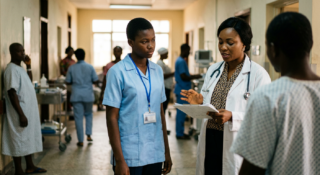
These programs place students in real clinical environments where they observe patient care, learn from working professionals, and begin to understand what a career in medicine, nursing, dentistry, or another health field actually demands on a daily basis. For students who think they want to work in healthcare, this kind of structured exposure can sharpen that interest or redirect it before college applications and major declarations lock anything in. Clinical internships for high school students give early-career learners a chance to see healthcare from the inside, not from a textbook, a YouTube video, or a career day panel.
But the phrase “clinical internship” means different things depending on the program, the setting, and the student’s age. For high school students specifically, the scope of these experiences is narrower than what a college junior or graduate student would encounter, and for good reason. Understanding those boundaries is important for both students and parents. A well-structured internship respects a student’s developmental stage while still offering meaningful, professionally relevant learning. The key is knowing what realistic expectations look like and how to find a program that meets them.
What Clinical Internships for High School Students Actually Involve
The most important thing to understand about clinic-based internships at the high school level is that students observe and support, not practice medicine. No credible program will ask a teenager to diagnose a patient, administer medication, or perform a procedure. What students do instead is watch experienced clinicians work, ask questions in appropriate moments, assist with basic logistical tasks, and participate in structured debriefs or educational sessions designed to help them process what they have seen.
A typical day in a well-run program might begin with orientation or a brief from a supervising clinician, followed by rotations through different areas of a clinic or hospital. Students might observe patient consultations, watch a pharmacy in operation, sit in on a triage process, or shadow professionals in a specific department. In the afternoon, they might join a community health education session or participate in a reflection exercise led by a mentor. The value is not in doing clinical work. It is in learning how clinical work happens and beginning to understand the decisions, ethics, and human dynamics involved.
Some programs also incorporate journaling, case study discussions, or group seminars. These elements help students move beyond passive observation into active learning. For students who are genuinely considering a healthcare career, this kind of reflection is where much of the real development happens. It helps them articulate what they saw, what surprised them, and what they want to understand more deeply. That ability to reflect is exactly what college admissions committees and, later, medical school reviewers want to see when they read about a student’s clinical exposure.
How These Experiences Differ from Shadowing and Volunteering
Students and parents often use the words “shadowing,” “volunteering,” and “internship” interchangeably, but they describe different levels of structure and engagement. Shadowing typically means following a single clinician for a few hours or days, watching them work, and asking questions. It is valuable but limited in scope. Volunteering in a healthcare setting often involves non-clinical tasks like greeting patients, delivering supplies, or helping with administrative duties. Both are worthwhile, but neither offers the kind of structured, guided exposure that a true internship provides.
A clinical internship, by contrast, usually includes defined learning objectives, a set schedule, mentorship from healthcare professionals, and some form of evaluation or reflection built into the program. The student is not just present in a clinical space; they are expected to engage with the material, participate in educational components, and demonstrate professional behavior. For a more detailed comparison of how these different types of experience are viewed by admissions committees, IMA has written about the differences between shadowing and internship experiences at the high school level.
This distinction matters when it comes to college and professional school applications. Admissions reviewers at medical, PA, dental, and nursing schools look for evidence of meaningful engagement, not just hours logged. According to the AAMC’s overview of what medical schools look for in applicants, experiences that demonstrate sustained curiosity, ethical awareness, and genuine interaction with healthcare environments carry more weight than a long list of brief, superficial exposures.
Where to Find Legitimate Programs
Finding a clinical internship as a high school student takes more effort than finding a summer job, primarily because healthcare settings have strict rules about who can be present in clinical areas and under what conditions. There are several places to look, each with its own strengths and limitations.
Local Hospitals and Health Systems
Many large hospital systems run structured volunteer or internship programs for high school students, particularly during the summer. These programs often have application deadlines, minimum age requirements (usually 16 or older), and onboarding processes that include orientation, background checks, and health screenings. The quality varies. Some are genuinely educational, with rotations and mentorship. Others are closer to volunteer programs with a medical backdrop. Students should ask specific questions: What departments will I rotate through? Who supervises me? Is there an educational component, or am I primarily doing administrative work? IMA has a helpful guide on how high school students should approach hospitals about internship options that walks through this process in detail.
University-Affiliated Pre-Med Programs
Some universities offer summer programs for high school students that include a clinical component. These are often competitive and may carry a program fee. They can be excellent, but students should verify what the clinical component actually involves. A program that promises “clinical exposure” but delivers only lectures and lab tours is not the same as one that places students in supervised observation at a working clinic.
Structured International Programs
Programs like those offered by International Medical Aid place students in healthcare settings abroad, with built-in mentorship, supervision, and educational programming. These experiences tend to offer more direct observation time than many domestic volunteer programs because the clinical environments are structured specifically around the student’s learning. For families considering this route, IMA’s high school internship programs provide details on the structure, supervision, and daily schedule.
Community Health Centers and Private Practices
Smaller clinics and community health centers sometimes accept high school interns on a case-by-case basis, especially if a student has a personal connection to a physician or administrator. These can be valuable but tend to be less structured. Students in these settings should take extra responsibility for defining their own learning goals and checking in regularly with their supervisor.
What Parents Should Ask Before Approving Any Program
Parents are right to ask hard questions about any program that places a minor in a clinical environment. This is not an area where vague reassurances are acceptable. Here are the specific items to verify before a student enrolls.
Supervision and Staff Qualifications
Who is directly supervising the student during clinical hours? Is that person a licensed healthcare professional? What is the student-to-supervisor ratio? These questions matter because a student should never be left unsupervised in a clinical area. In well-run programs, a qualified professional is present at all times when students are in patient care environments, and there is a clear chain of communication if a student feels uncomfortable or confused.
Safety Protocols and Emergency Procedures
What happens if a student gets sick or injured? Is there insurance coverage? What are the protocols for infection control, and does the program provide orientation on topics like hand hygiene and personal protective equipment? For international programs, parents should also ask about in-country emergency contacts, proximity to medical facilities, and procedures for communicating with families back home.
Housing and Daily Logistics
For residential or travel-based programs, parents should know where students are staying, who else is in the housing, the rules regarding curfews and free time, and how meals are handled. These details matter, and any program that is reluctant to share them should be treated with caution.
Boundaries Around Patient Interaction
A responsible program will be explicit about what students are and are not allowed to do. Students should never be in a position where they are expected to provide medical advice, handle medications, or perform any clinical task without direct supervision. If a program’s marketing language suggests otherwise, that is a red flag.
The Bureau of Labor Statistics Occupational Outlook Handbook for healthcare occupations is a useful resource for families who want to understand the training and licensure required for various healthcare careers, which provides helpful context for why high school students are limited to observation and support roles.
How to Make the Most of a Clinical Internship
Getting into a program is only the first step. What a student does with the experience, during and after, determines its real value.
Before the Internship
Students should research the clinical setting they will be entering. If the program is in a hospital, read about how hospitals are organized. If it is in a community health center, look into what primary care involves. Understanding the basics ahead of time means the student can observe more thoughtfully and ask better questions. Students should also review basic clinical ethics, including patient confidentiality and informed consent. IMA has published a resource on clinical ethics for high school students in medical settings that is worth reading before any clinical placement.
During the Internship
Show up on time. Dress appropriately. Be respectful to every person in the building, from the receptionist to the lead physician. Ask questions when appropriate and stay quiet when it is not. Keep a journal. Write down specific observations, not generic summaries. Note the things that surprised you, the moments that made you uncomfortable, the interactions that made you think differently about healthcare. These details will be invaluable later when writing application essays or preparing for interviews.
After the Internship
Reflect seriously on what you experienced. Did the internship confirm your interest in healthcare, or did it raise doubts? Both outcomes are valuable. If you observed something that changed your thinking, write about it while the memory is fresh. If you built a relationship with a supervisor or mentor, stay in touch. A thoughtful thank-you note goes a long way, and that relationship may eventually become a reference or a source of guidance as you move through college and beyond.
What Admissions Committees Actually Care About
A clinical internship on a high school transcript is a positive signal, but it is not a golden ticket. Medical schools, PA programs, dental schools, and nursing programs want to see that a student engaged meaningfully with the experience, not just that they showed up. According to the AAMC’s holistic review framework, admissions committees evaluate experiences based on the depth of a student’s reflection, the ethical awareness they demonstrate, and the way the experience fits into a broader pattern of genuine commitment to healthcare.
This means a student who completes a two-week internship and writes a thoughtful, specific essay about a single patient interaction they observed will likely make a stronger impression than a student who lists 200 hours of clinical time but cannot articulate what they learned. Quality matters more than quantity. Honesty matters more than polish. And the ability to describe what you do not yet know, what confused you, what you want to understand better, is often more compelling than a confident summary of everything you think you figured out.
For high school students, the goal is not to build a medical school resume at 16. It is to start developing the habits of observation, reflection, and ethical thinking that will serve them throughout their education. A good clinical internship gives them the raw material to begin that process. What they do with it from there is up to them.
Frequently Asked Questions
Do clinical internships for high school students involve hands-on patient care?
No. In any reputable program, high school students observe and support within clearly defined boundaries. They do not diagnose, treat, or perform procedures on patients. Direct supervision by licensed healthcare professionals is standard, and students are expected to respect the scope of their role at all times. Programs that suggest otherwise should be carefully evaluated.
Will a clinical internship guarantee admission to medical school or other health programs?
It will not. No single experience guarantees admission to any professional program. A clinical internship can strengthen an application by demonstrating genuine interest, initiative, and the ability to reflect on healthcare experiences. But admissions decisions are based on a full picture of a student’s academic record, test scores, experiences, essays, and personal qualities.
What should parents look for when evaluating a program’s safety and supervision?
Parents should ask about the student-to-supervisor ratio, the qualifications of supervising staff, emergency protocols, insurance coverage, infection control training, housing arrangements (for residential programs), and communication procedures. A trustworthy program will answer these questions directly and in detail. If a program is vague about supervision or safety, that is a reason to look elsewhere.