Dental school international experience can strengthen an application when it is supervised, ethical and well described. No dental school requires it, but admissions committees look for the qualities it can build: cultural awareness, adaptability, and an honest grasp of oral health disparities. What counts is what you observed, how you reflect on it and how clearly you report it.
Conversations about international experience in dental school admissions have changed over the past several years. Committees still weigh grades and the DAT, but they also read closely for evidence of who you are as a future clinician: how you communicate, how you handle unfamiliar settings and whether you understand that oral health depends on far more than what happens in the chair. Structured international clinical experience is one clear way to show those qualities, and our guide to what to expect on a dental internship describes what that kind of placement looks like day to day.
This is not about checking a box or padding a resume. The interest reflects something broader in dental education: a growing recognition that effective dentists need to understand how oral health connects to social determinants, how resource constraints shape treatment decisions and how to communicate with patients whose backgrounds differ from their own. For pre-dental students preparing an application for an upcoming cycle, understanding this matters. It can shape how you choose experiences, how you reflect on them and how you present yourself to admissions committees.
Key Points
- No U.S. dental school lists international experience as a requirement. It is one way, not the only way, to show the qualities schools look for.
- ADEA AADSAS has no single “international” category. You choose an experience type, such as Dental Shadowing (In-Person) or Dental Experience, based on what you actually did.
- Each dental school decides how it counts hours earned abroad, so check with each program before you apply.
- Committees respond to specific observations and honest reflection, not to how far you traveled.
- Ethical programs keep pre-dental students within clear limits under licensed dentists. That boundary protects patients and makes your account more credible.
What Is Actually Changing in Dental School Admissions
The ADEA Official Guide to Dental Schools is the standard reference for what U.S. and Canadian dental schools expect from applicants, and it has long pointed applicants toward qualities beyond grades: professionalism, ethical reasoning, communication and a commitment to patient-centered care. Those qualities have always mattered, but they receive more attention now as the profession reckons with oral health disparities at home and abroad.
The ADEA AADSAS application makes this visible. When dental schools collect letters of evaluation through ADEA AADSAS, evaluators rate applicants on 10 characteristics, including critical thinking, integrity, interpersonal skills, maturity, motivation to pursue dentistry, professional demeanor and self-awareness, according to ADEA’s applicant resources and FAQs. Most of those traits cannot be shown on a transcript. They show up in how you describe your experiences and how others describe you.
The need behind that attention is real. The World Health Organization estimates that oral diseases affect nearly 3.7 billion people, and it notes that most low- and middle-income countries do not have enough services to prevent and treat them. Untreated tooth decay in permanent teeth is the most common health condition counted in the Global Burden of Disease 2021 study.
Gaps exist inside the United States too. The CDC reports that about 57 million Americans live in a dental health professional shortage area, about 67% of them in rural communities, and that untreated cavities are about twice as common among working-age adults with no health insurance (43%) as among those with private coverage (18%). Dental schools know that graduates who have only seen patients in well-resourced clinics may not be ready for the full range of settings they will work in.
This awareness shows up in how admissions committees evaluate applicants. No dental school publishes a requirement for international experience, but the qualities that international clinical exposure builds, such as adaptability, cross-cultural communication and a grounded understanding of health equity, are exactly what committees look for when they review personal statements, experience descriptions and interview answers. The applicant who can explain what they observed in an under-resourced dental unit abroad, and what it taught them about access and prevention, stands out from the applicant who lists shadowing hours without meaningful reflection.
Competition gives this extra weight. ADEA reports that the dental school applicant pool reached its highest level in a decade for the 2025 entering class, and that applicant growth is beginning to outpace available seats. When many applicants have similar grades and DAT scores, thoughtful experience is one of the ways a file becomes distinct.
How International Clinical Exposure Strengthens a Dental Application
The value of international experience for dental school admissions is not about the destination itself. It is about what the experience shows about you as a future clinician. Admissions committees read for evidence of specific traits, and structured international clinical programs provide a setting where those traits become visible.
Cultural Competence That Goes Beyond a Classroom
Cultural competence courses are standard in most dental curricula now, but admissions committees recognize the difference between learning about cultural humility in a lecture hall and practicing it in a setting where you are the outsider. Working alongside local dental professionals in a country where you do not share the language, customs or health care assumptions forces a kind of learning that is hard to replicate at home. You learn to listen more carefully, to check your assumptions and to respect the expertise of clinicians who work with far fewer resources than you are used to seeing.
Language is part of this. In IMA’s hospital dental units, the Mombasa program runs in English with daily medical Swahili lessons, and in Cusco the dental team works in Spanish. Even a little effort in the local language changes how patients and staff respond to you, and it gives you something concrete to reflect on later.
Exposure to Conditions and Systems You Would Not See at Home
Pre-dental students who shadow in U.S. dental offices gain valuable exposure, but the range of conditions and the systemic context tend to be narrower. In many international settings, students observe advanced stages of disease, such as untreated caries, severe periodontal disease or oral signs of systemic conditions like malnutrition, that are less commonly seen in American practices. This exposure builds clinical awareness and shows why prevention and access matter so much.
Seeing how different health systems work is just as important. Watching a dental clinic operate with limited supplies, fewer specialists and patients who may have traveled hours for care gives students a perspective on resourcefulness and prioritization that is useful in clinical training. If this side of dentistry interests you, our guide to public health dentistry for pre-dental students looks at how community programs reach the patients clinics miss.
Evidence of Commitment, Not Just Interest
There is a meaningful difference between saying you are interested in serving underserved populations and showing that you have spent time in a setting where that work happens. Admissions committees can tell the difference. An applicant who has taken part in a structured international dental program and can speak specifically about what they observed, what surprised them and what they are still thinking about shows a level of commitment that is hard to fake.
For students building a dental school application, this kind of substantive experience can be the difference between a personal statement that reads as generic and one that reads as grounded and genuine. If you are thinking about how earlier health career experiences compare, this post on dental internships for high school students interested in health care careers offers a useful look at how structured clinical exposure builds over time.
What Admissions Committees Actually Want to Hear
Having the experience is only half the equation. The other half is being able to talk about it well. This is where many applicants stumble. They describe the setting in broad terms, mention that it was eye-opening and move on. That is not enough.
Specificity Over Sentiment
Admissions committees respond to specific observations and honest reflection. Instead of writing, “I saw the effects of poverty on oral health,” describe what you actually observed. Maybe you watched a dentist perform several extractions on a teenager who had never received preventive care, and it made you think differently about what early intervention means when there is no system to support it. Maybe you noticed that patient education in that setting looked completely different from what you had seen in the U.S., and it changed how you think about a dentist’s role in a community.
The point is not to dramatize the experience. It is to show that you were paying attention, that you thought critically about what you saw and that it shaped how you understand dentistry as a profession.
Here is the difference in practice:
| Generic | Specific |
|---|---|
| “The experience opened my eyes to global oral health.” | “Most patients I saw in the dental unit came in with pain, not for checkups, and the dentist spent part of every visit explaining how to prevent the next problem.” |
| “I helped underserved patients.” | “I helped run oral hygiene lessons for school children, and I watched how the dental team adapted its message when supplies like floss were not available.” |
| “It confirmed my passion for dentistry.” | “Watching one dentist manage a full day of extractions with limited instruments made me want to understand prevention well enough to reduce how often that happens.” |
Honest Reflection on Limitations
Strong applicants also acknowledge what they did not know, what they could not do and what made them uncomfortable. If you struggled with a language barrier and had to rely on local staff to communicate with patients, say so, and talk about what that taught you about communication in clinical care. If you were frustrated by the limits on what you could contribute as a pre-dental student, use that to explain why you are motivated to pursue clinical training.
Admissions committees are not looking for applicants who present themselves as saviors. They are looking for people who are honest, curious and capable of learning from complexity.
Connecting the Experience to Your Goals
The most effective applications tie international experience to a clear and realistic understanding of what the applicant wants to do as a dentist. You do not need to commit to global health as a career. You should be able to explain how what you learned informs the kind of dentist you want to become, whether that is someone who practices in a rural community, someone who advocates for policy change or someone who treats every patient with greater awareness of the barriers they may have faced before walking into the office.
For a practical look at how admissions committees evaluate readiness across health professions, this piece on how admissions committees really evaluate your readiness offers relevant insight, even though it focuses on medical schools. The evaluation principles overlap significantly.
Reporting International Experience in ADEA AADSAS
ADEA AADSAS does not collect resumes. Instead, you report experiences in its Experiences section, and the category you choose matters.
Which Experience Type Fits an International Placement?
According to the ADEA AADSAS Experiences guidance, the categories include:
| Experience type | ADEA AADSAS definition, in short | How an international placement might fit |
|---|---|---|
| Dental Shadowing (In-Person) | Time spent officially following and observing a dental professional in an office or clinic | Time beside a licensed dentist in a hospital dental unit |
| Dental Experience | Paid or unpaid work in a dental field where you observed patient care, interacted with practitioners or had responsibility for patient care | Structured dental work beyond following one dentist, if your duties fit the definition |
| Volunteer | Volunteer work done outside of the dental field | Non-dental service you did during the same trip |
| Academic Enrichment | Programs sponsored by colleges, universities or other not-for-profit organizations | Only if your program fits this definition |
What Rules Shape How You Enter It?
A few rules from the same guidance shape how you enter it:
- ADEA AADSAS has no preference about which category you choose, and your actual duties should decide it. It is not guaranteed that every school will accept the experience the way you categorized it.
- You cannot repeat hours between experience types. If one placement included both shadowing and community work, split the hours and duties between entries.
- Enter only completed hours, not planned ones, and the average weekly hours during the dates you list.
- Each entry asks for a supervisor that programs can contact to verify the experience.
- You can mark up to six experiences as your most important.
ADEA also asks applicants to name the type of dentist they shadowed, such as a general dentist or an orthodontist, in the description. On IMA’s dental internships abroad, records list your role, shifts and total hours and are validated by IMA’s U.S.-based Medical Director, and for pre-dental students these hours are typically counted as shadowing. Each dental school still decides how to count hours earned abroad, so check before you apply. Our guide to planning and documenting dental shadowing hours walks through the log to keep while you are there.
What Ethical International Clinical Experience Looks Like
Not all international programs are equal, and admissions committees are becoming more discerning about the quality of experiences applicants describe. A poorly structured trip that amounts to voluntourism can hurt your application if it raises ethical red flags.
Supervision and Boundaries Matter
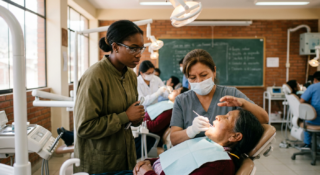
In any legitimate international dental program, pre-dental students observe and assist within clearly defined limits. They do not perform procedures. They do not treat patients independently. They work under the supervision of licensed local dental professionals and respect the clinical protocols of the host facility. This is not a limitation; it is a sign that the program takes patient safety and student learning seriously.
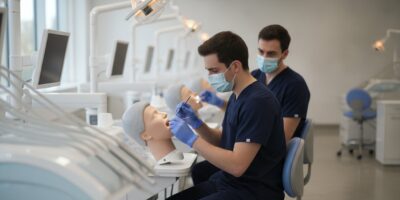
At IMA, pre-dental interns shadow licensed dentists in public hospital dental units as they examine, treat and teach patients, and they follow exams, preventive care and treatment under supervision. Pre-dental students do not examine, clean or treat anyone’s teeth. Outside the dental unit, interns join community medical clinics and help with oral hygiene lessons that show school children how to brush and prevent common infections. Our guide to the responsibilities of a pre-dental intern covers these limits in more detail.
When you describe your experience in an application, being clear about your role, that you observed, assisted where appropriate and learned from professionals, strengthens your credibility. Admissions committees are wary of applicants who describe doing things abroad that they would never be permitted to do in a U.S. clinic.
Structure, Reflection and Mentorship
The best programs include more than clinical observation. They build in structured reflection, mentorship from experienced professionals and chances to process what you are seeing in a supported environment. Journaling, group discussions and guided debriefs help students move from surface-level observation to the kind of thoughtful analysis admissions committees value.
Programs that partner with established local clinics and respect local health systems are also more credible. Admissions committees can tell when an applicant took part in a well-organized program versus a loosely supervised trip with unclear objectives. Safety is part of that structure: IMA has maintained a 100% safety record for all high school and pre-health interns, and its programs include orientation on conduct and the guidelines for shadowing abroad before the first shift.
Avoiding the Voluntourism Trap
If a program markets itself mainly as an adventure or a chance to “make a difference” without describing its clinical structure, supervision model or educational framework, proceed with caution. Admissions committees are aware of voluntourism, and they are not impressed by it. What impresses them is evidence that you took part in something thoughtful, supervised and ethically grounded.
Demand for dentists will keep competition for seats steady. The Bureau of Labor Statistics projects that employment of dentists will grow 6% from 2025 to 2035, faster than the average for all occupations, with about 4,800 openings a year. That makes it even more important to choose experiences that build your competence and character, rather than ones that simply look good on paper.
How to Choose the Right International Experience as a Pre-Dental Student
With more programs available than ever, choosing wisely means asking the right questions. Not every international clinical program will serve your goals or meet the ethical standards that dental schools expect.
What Questions Should You Ask Before You Commit?
Before enrolling in any program, find out who supervises students in clinical settings and what their qualifications are. Ask what the typical daily structure looks like and how much time is spent in the clinic versus other activities. Ask whether the program includes reflection and mentorship. Ask how the program relates to the local community and health system, and whether it has long-term partnerships with host facilities.
A short checklist helps:
- Who supervises you, and are they licensed where they practice?
- What exactly may a pre-dental student do, and what is off limits?
- How are your hours recorded, and who signs or validates them?
- What does a typical day include besides the dental unit?
- How long has the program worked with this hospital or clinic?
- What support is available on site, day and night?
You should also consider how the program fits into your overall application timeline. A two-week experience during a gap year is different from a summer program during your junior year, and when you go affects how you can write about it. Planning early gives you time to take part, reflect and build the experience into your narrative before you submit.
Fit Matters More Than Prestige
The “best” international experience is the one that fits your goals, your readiness and your schedule. A student who is interested in oral health prevention in underserved communities will get more out of a program focused on community health education than one focused on surgical observation. A student who wants to understand health systems will benefit from a program that includes exposure to public health infrastructure, not just clinical settings.
Think honestly about what you hope to learn, what you are prepared for and what kind of support you need. If you have never traveled internationally before, a program with strong logistical support, structured housing and clear communication channels will help you focus on learning rather than logistics. If you are still deciding whether dentistry is the right field at all, our guide on whether dentistry is right for you can help you frame that question first.
For more on how structured clinical experiences factor into health professions admissions broadly, this article on what schools will ask you about verified hours is worth reading. While it focuses on medical school, the principle of verifiable, well-documented experience applies across health professions.
Making International Experience Count in Your Dental School Application
If you are applying to dental school in an upcoming cycle, here is the practical takeaway: international clinical experience can meaningfully strengthen your application, but only if you approach it with the right expectations and put in the work to reflect on it honestly.
Start by looking at the qualities dental schools and evaluators weigh, and assess whether your current application has gaps in areas like cultural awareness, service or adaptability. If it does, a structured international experience may be one of the best ways to address those gaps.
When you return, do not let the experience sit passively on your list. Write about it in your personal statement with specificity and honesty. Practice talking about it in mock interviews. Think about how it connects to the rest of your application, your coursework, your domestic shadowing and your volunteer work, and present a coherent picture of who you are and why you want to be a dentist. Seeing the whole dental team at work helps too; our Dental Hygiene Month guide to team learning shows what pre-dental students can learn from hygienists.
Most importantly, choose an experience that is ethical, well supervised and educationally sound. The dental profession is moving toward greater awareness of equity, cultural responsiveness and global oral health. Showing that you have already started building those qualities, through real experience rather than abstract claims, is one of the strongest signals you can send to an admissions committee. If you are a current dental student rather than a pre-dental student, our guide to whether dental students do internships explains how your options differ.
Frequently Asked Questions
Do Dental Schools Require International Clinical Experience for Admission?
No dental school currently lists international experience as an admissions requirement. The qualities it can build, including cultural awareness, adaptability and an understanding of health disparities, are valued by admissions committees. International experience is one strong way to show those qualities, but it is not the only way.
Will International Dental Shadowing Count Toward My Total Shadowing Hours?
It depends on the school and how the experience is documented. Some schools accept international hours as part of your overall dental exposure, while others may categorize them separately. Check with each school’s admissions office, and make sure any hours you report are accurately documented and verifiable.
How Should I Describe My International Experience in My Dental School Personal Statement?
Focus on specific observations, honest reflection and what you learned rather than broad generalizations. Describe particular moments that shaped your understanding of dentistry, oral health access or patient care. Be clear about your role, and connect the experience to your goals as a future dentist. Committees value specificity and self-awareness over dramatic storytelling.
Which ADEA AADSAS Category Should I Use for Dental Shadowing Abroad?
Choose the category that matches your actual duties. Time spent following and observing a dentist usually fits Dental Shadowing (In-Person), while broader dental work may fit Dental Experience. ADEA AADSAS has no preference, and you cannot repeat the same hours across categories.
Can Pre-Dental Students Treat Patients on an International Program?
No. In an ethical program, pre-dental students work under licensed dentists and do not perform procedures. On IMA’s dental program, pre-dental students do not examine, clean or treat anyone’s teeth; they shadow dentists, follow care in the dental unit and help with community oral hygiene lessons.
Is a Two-Week Dental Program Abroad Long Enough to Matter?
It can be, if you go with clear learning goals and reflect on what you see. Committees care more about what you learned and how well you describe it than about the number of weeks. Longer stays give you time to see more cases and settle into the unit’s routine.