
Gap year clinical experience is now the usual path into medicine: in the AAMC’s 2025 survey of entering medical students, 72.7% said a year or more had passed since they graduated from college. A well-planned gap year adds sustained clinical work, service and reflection to your application, and it gives you time to test your choice.
Many pre-med students take a gap year between their undergraduate studies and medical school. It is an intentional break from the traditional academic sequence, usually a year or two, in which you pursue experiences outside the classroom. If you are still deciding which experiences belong in that year, start with our guide to what internships a pre-med student should do.
How Common Gap Years Are Before Medical School
Gap years are very common. The AAMC’s Matriculating Student Questionnaire asks every new medical student how many years have passed since college graduation. In the 2025 survey, 27.3% of respondents had come straight from college. Almost half (49.9%) had taken one to two years, 15.4% had taken three to four years and 7.4% had taken five years or more.
The reasons are as varied as the students. Some need time to finish prerequisites or raise their grades. Others want more clinical hours, a research position, a job that pays the bills or a chance to decide whether medicine is really right for them. A gap year is not a sign that you fell behind. For most matriculants, it is part of the plan.
How Matriculants Spend the Time Between College and Medical School
The same AAMC survey asks students who took time off how they spent it. Respondents could choose more than one answer. In 2025:
| Activity during the gap | Share of respondents |
|---|---|
| Worked at another career | 50.7% |
| Worked or volunteered in research | 49.5% |
| Worked to improve finances | 41.3% |
| Helped fulfill family obligations | 23.5% |
| Pursued graduate studies | 16.9% |
| Continued coursework to fulfill premedical requirements | 9.8% |
| Worked or volunteered internationally | 7.7% |
Two lessons stand out. First, most students combine more than one activity, usually a job or research position plus clinical and service work. Second, the strongest gap years are built around something sustained rather than a series of short, disconnected experiences.
Strengthening Academic Foundations
If your undergraduate GPA is not where you would like it to be, a gap year can give you time to strengthen your academic record. You can take additional upper-level science courses or earn credits that show you can handle a demanding course load. Research the specific policies of the schools you are targeting first. Some schools treat retaken classes differently when they look at your record, and the application service may calculate your GPA in its own way.
A gap year can also hold a master’s degree in a related field, such as public health or the biomedical sciences. A graduate program shows continued commitment to academic work and broadens your knowledge base, which can make you a much stronger candidate.
Can a Gap Year Include Research?
Yes, and for many students it does. A gap year is a natural time to work in a lab, contribute to ongoing studies or even lead a small project of your own. Research gives you valuable hands-on experience, and it matters most if you are drawn to research-focused medical careers. Our guide to how many research hours you need for medical school explains how research fits alongside clinical work.
Gaining Clinical Experience
Clinical experience is a cornerstone of a medical school application, and a gap year is the best chance many students get to build it. Volunteer in hospitals or clinics, or take a paid patient care role. These experiences expose you to the realities of patient care and let you work alongside healthcare professionals in their daily routines. Whether you are assisting nurses, comforting patients or observing procedures, this firsthand work strengthens your understanding of medicine and can solidify your commitment to it.
Nearly every entering medical student has this kind of experience. In the 2025 AAMC survey, 95.5% of respondents had shadowed a physician or other healthcare professional, and 90.1% had volunteered in the healthcare field. A gap year lets you add depth to those experiences instead of just ticking a box.
Shadowing physicians and other healthcare professionals also gives you a unique perspective on different medical specialties. By following doctors on their rounds, you gain a deeper understanding of the skills and knowledge a medical career requires.
Comparing Longitudinal Work, Service and Short Placements
Not every experience does the same job in your application. Use this comparison to plan the mix.
| Type of experience | What it shows | Typical commitment | What to watch |
|---|---|---|---|
| Longitudinal clinical work (scribe, medical assistant, EMT, CNA) | Reliability, growing responsibility, comfort with patients | Months, several shifts a week | Training or certification may take time before you start |
| Ongoing service or volunteering | Commitment to others over time | A few hours a week for many months | Choose one or two settings and stay with them |
| Research position | Inquiry, persistence, teamwork | Full time or part time for a year or more | Know what you contributed and be ready to explain it |
| Short intensive placement (a few weeks) | Exposure to a new setting, adaptability | Two to twelve weeks | Works best added to sustained activities, not in place of them |
A short placement can be a highlight of your year. It is most convincing when it sits next to work you kept doing week after week.
Fitting Application Timing and MCAT Study Into the Year
A gap year has a calendar, and the application cycle sets it. Decide early whether you will apply at the start of your gap year or partway through it, because that choice determines when your MCAT, your letters and your experiences need to be ready.
If you plan to test during the year, protect a block of study time and do not stack it against a demanding clinical schedule or travel. Our guide to choosing an MCAT date around a clinical internship walks through how to fit both on one calendar. Leave room for secondary applications and interviews as well, since those can arrive in clusters.
Developing Leadership and Service Skills
Medical schools look for applicants who show leadership potential and a commitment to serving others. Look for gap year opportunities that let you lead organizations related to healthcare, such as pre-med groups, community health projects or health advocacy groups, so you build those skills while working with people who share your goals.
Engaging in community service projects related to healthcare further demonstrates your dedication to service and social responsibility. In one study of medical students who volunteered at a community health fair, students saw the event as a chance to improve their clinical procedural and communication skills. Whether you volunteer at a free clinic, help organize health screenings for underserved populations or take part in public health campaigns, these experiences show your commitment to making a positive impact.
Imagine a student who volunteers with a mobile clinic to understand health inequities better. By helping provide basic medical care to underserved communities, they regain a sense of purpose in healthcare and feel inspired to advocate for public health. That is the kind of story a gap year can give you, and it is far more persuasive than a list of hours.
Exploring Alternative Career Paths
A gap year can help you decide on the right career path, especially given the range of options in and around medicine. Many students find that time away from coursework clarifies what they want to do.
Apart from clinical medicine, working in healthcare administration or policy can expose you to the business and regulatory side of healthcare and the challenges and opportunities facing the industry. Interning at research institutions or pharmaceutical companies can offer a view of medical research and drug development. If the year confirms that medicine is your path, your commitment will be easier to explain. If it points you somewhere else, it has saved you years.
Where an International Experience Fits
An international clinical placement can be a valuable part of a gap year, as long as it adds to your sustained commitments rather than replacing them. In the AAMC survey, 7.7% of students who took time off worked or volunteered internationally during the gap.
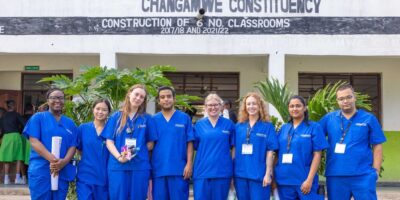
IMA’s pre-med internships abroad are open to gap year students and recent graduates as well as undergraduates. The Kenya program runs year-round, so you can go in the fall, winter or spring for 2 to 12 weeks, and IMA describes a gap year internship as working best as one block inside a bigger plan that also holds a job, research or MCAT preparation. Under licensed supervision, interns develop fundamental clinical skills such as taking vital signs and conducting basic patient interviews, and they rotate through hospital departments one at a time. Hours are logged daily, signed by the supervising physician and validated by IMA’s U.S. Medical Director, and each medical school decides how to classify them.
Three Sample Gap-Year Calendars
These examples show how the pieces can fit together. They are illustrations to adapt, not advisor-approved templates.
| Calendar | Fall | Winter | Spring | Summer |
|---|---|---|---|---|
| A: Clinical job first | Start a scribe or medical assistant job | Keep the job; begin MCAT study | Take the MCAT; continue the job | Submit applications; keep working and volunteering |
| B: Research plus clinical | Full-time research position | Add weekly hospital volunteering | Two to four week clinical placement abroad | Apply while continuing research and volunteering |
| C: Academic repair | Upper-level science coursework | Coursework plus weekly clinical volunteering | Finish coursework; MCAT study | Take the MCAT; apply the following cycle |
Whichever calendar you choose, keep one or two activities running the whole year so your application shows continuity.
Personal Growth and Reflection
A gap year can also support personal development. Traveling or living in another country, for example, lets you learn a new language, meet new people and adapt to a new environment. It can prompt new ways of thinking and push you out of your comfort zone. Working in a resource-limited setting can deepen your appreciation of cultural differences and how they shape care.
Use the time to reflect on why you want to become a physician. Journaling, conversations with mentors or simply time away from coursework can help you check that your career choice aligns with your values and goals. Those reflections will feed directly into your personal statement and interviews.
Final Thoughts
A gap year can be a strong stepping stone on your path to becoming a physician. It is a chance to strengthen your application, grow personally and gain skills and experience that will sustain your commitment through a demanding career.
The path to becoming a doctor is a marathon, not a sprint. Use the time to invest in yourself and make sure your plans match your motivations. If you are considering a clinical internship during your gap year, start planning now and apply now to build a strong foundation for medical school.
Frequently Asked Questions
How Many Medical Students Take a Gap Year?
Most of them. In the AAMC’s 2025 Matriculating Student Questionnaire, 72.7% of new medical students said a year or more had passed since they graduated from college, and almost half had taken one to two years.
Does a Gap Year Hurt My Medical School Application?
No. A gap year is common and can strengthen your application when you use it for sustained clinical work, service, research or coursework. What matters is what you did with the time and what you learned from it.
What Is the Best Clinical Experience for a Gap Year?
Experience you can sustain over months is usually the strongest, such as a scribe, medical assistant, EMT or CNA role, or regular hospital volunteering. Shadowing and a short intensive placement add depth when they sit alongside that steady commitment.
Can I Do an International Internship During My Gap Year?
Yes. Many gap year students add a supervised placement abroad as one block within the year. IMA’s Kenya program runs year-round for 2 to 12 weeks, so it can fit around a job, research or MCAT study.
Should I Take the MCAT During My Gap Year?
Many students do. Choose a test date that leaves protected study time and does not clash with travel or a heavy clinical schedule, and make sure your score will be ready for the application cycle you plan to enter.
How Long Should a Gap Year Be?
It depends on what you need to accomplish. In the 2025 AAMC survey, 49.9% of entering students had taken one to two years after college, 15.4% three to four years and 7.4% five years or more.