Introduction
Working with patients as a physician assistant can be tremendously fulfilling. However, as your career as a physician assistant (PA) develops, you may be prepared for different duties. You can try to further your education and obtain an MD to pursue a career as a doctor of medicine. By being aware of the additional requirements, you can be part of the best PA to MD bridge programs.
In this article, we go through the benefits of changing careers from PA to MD as well as concrete measures you can take in PA to MD programs for 2026 and beyond.
History and Scope
The physician assistant position was initially conceptualized in the United States in the middle of the 20th century. The first academic curriculum for educating physician assistants was established in 1965, with a graduating class of 1967, and was inspired by the rapid training for doctors during World War II.
Since then, physician assistant careers have progressively increased in popularity and competition throughout the United States. Currently, as of October 2023, the Accreditation Review Commission on Education for the Physician Assistant (ARC-PA) reports more than 300 accredited physician assistant programs in the United States.
The profession is expanding rapidly, with more healthcare systems and medical practitioners seeking to recruit physician assistants to diversify the availability of healthcare and cut expenses involved with only employing physicians. As a result, the job prospects for qualified physician assistants are currently quite appealing, and this trend is projected to continue well into 2026.
With many nations developing and embracing academic programs to start, including physician assistants in the health sector, the function has also begun to acquire traction in global healthcare systems. For instance, Canada graduated its first academic PA class in 1984 from the Canadian Forces Medical Services School.
Since then, as of 2024, Canada has five civilian university PA programs, including McMaster University, the University of Toronto, the University of Manitoba, and the University of Calgary, in addition to its military program. To address the high costs and long wait times in Canadian healthcare, there is, in fact, an increasing interest in extending physician assistant employment. As a result, it can be a highly lucrative and rewarding job for those who want to work in healthcare.
What is a PA?
A PA is a certified medical professional who interacts with patients under the direction of a doctor. Physician assistants can evaluate patients, dispense medication, and request tests.
They can recommend lifestyle changes to patients, stitch wounds, set bones, administer vaccinations, and manage patient records, much like doctors.
In some ways, a physician assistant is an extension of the supervising doctor, a resident that stays in the office and helps the doctor simplify patient care while concentrating on the trickier cases and treatments.
In light of this, becoming a physician assistant can open the door to a fulfilling career that prioritizes patient care while removing some of the more challenging aspects of working in medicine, such as assuming accountability and obligations for treatments and managing the administrative facets of a medical profession.
However, physician assistants play a crucial part in the healthcare sector since they reduce some pressure on doctors by taking on jobs that they can monitor without having to be there in person.
As a result, they can aid in enhancing healthcare accessibility and decreasing patient wait times. Also, even though most physician assistants work in ambulatory clinical settings, such as general care, many also do so in hospitals and other specializations, giving people intrigued by the field a wide range of potential practice areas.
What is a Doctor?
A doctor is a certified medical practitioner with a Doctor of Medicine degree. Doctors examine patients, make medical diagnoses, and prescribe medications. They can treat patients autonomously. When necessary, they might also carry out specific surgical treatments. Many medical professionals have specialties in particular fields and can fully treat and diagnose patients.
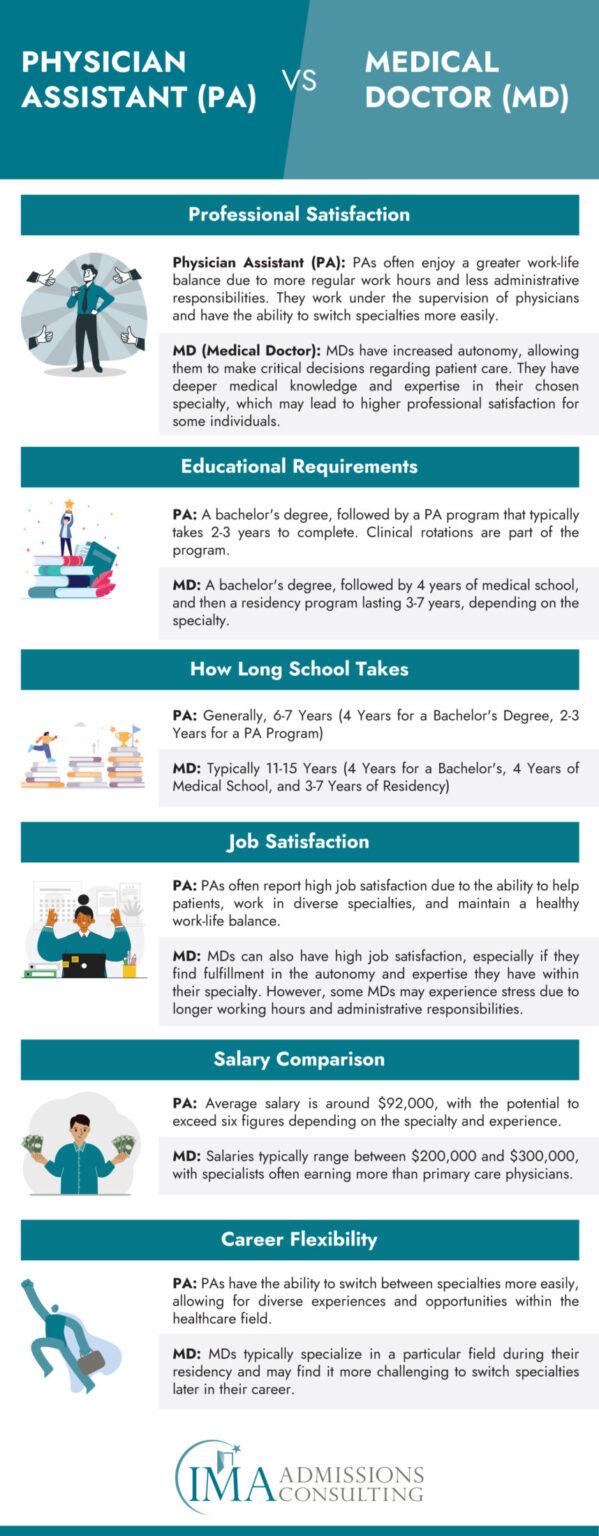
PA VS MD: What’s the Difference
Physician assistants and doctors undertake almost similar tasks and responsibilities. Both of them go to school for several years before working with patients one-on-one, diagnosing illnesses and providing treatments. But they are not nearly the same.
Knowing the distinctions between a doctor and a physician assistant will help you make the best career decision if you’re considering a career in the healthcare industry for 2026 and beyond. Let’s look at what makes them unique and how to decide which to pursue.
Educational Requirements for PA vs MD
Long before either profession starts practicing, a PA and a doctor differ from one another. Both medical doctors and physician assistants are required to take science-related courses. They both study the same subjects, although an MD might need more rigorous coursework and programs. With MDs, the fees, grade standards, and duration could also be more demanding.
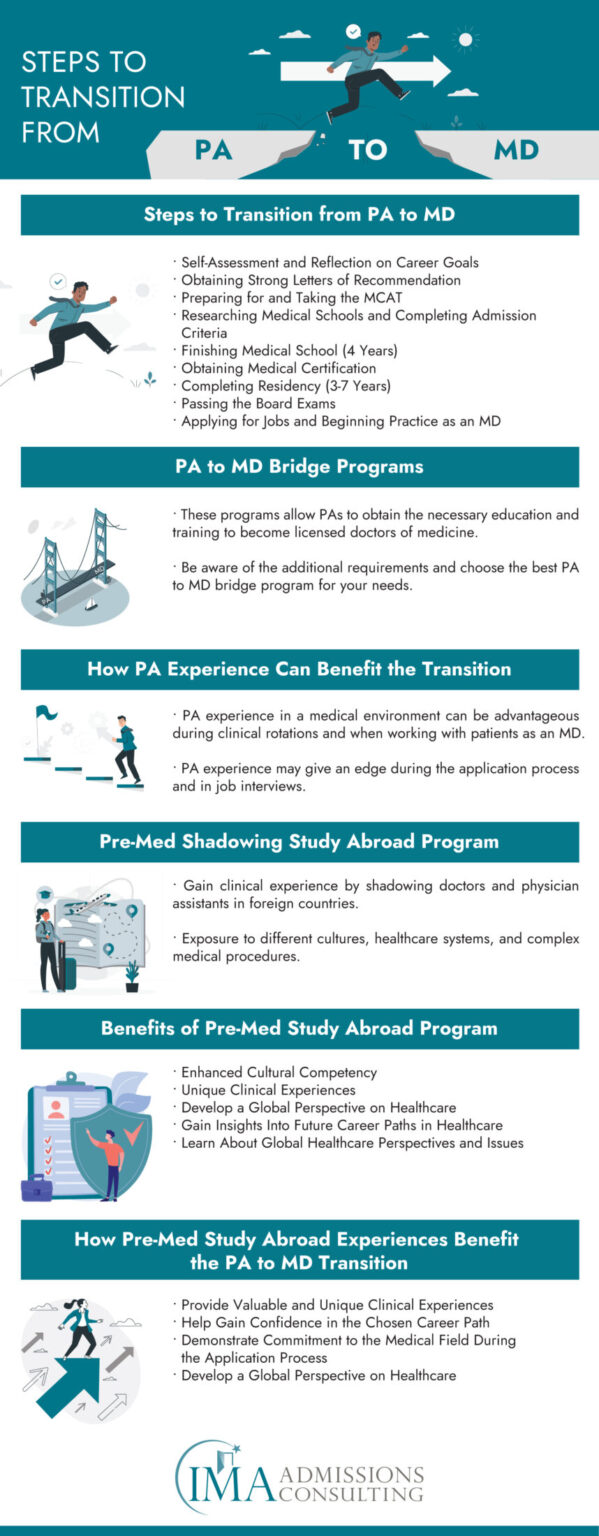
The criteria are strict and the coursework is more difficult. Physicians need to undergo 3–7 years of residency training in addition to obtaining and maintaining national and state board certification. Overall, becoming a physician generally involves 4 years of undergraduate study, 4 years of medical school, and then 3 to 7+ years of residency training, potentially with additional fellowship training. This totals 11-15+ years post-high school, or 7-11+ years post-bachelor’s degree.
Although PA criteria are less demanding, they nevertheless shouldn’t be ignored. The educational requirements for PAs typically last between 24 and 27 months for the entire program, with small variations across states and particular institutions. This program includes a significant clinical year of supervised practice, integrated within the curriculum rather than being an additional year post-graduation. PAs must also meet ongoing education requirements to keep their credentials.
PA schools frequently demand top grades and considerable clinical experience. For the 2022-2023 Central Application Service for Physician Assistants (CASPA) cycle, the average cumulative GPA for accepted applicants was 3.6, and the average science GPA was 3.5. While many PA programs no longer require the GRE, some still do, and competitive scores for accepted applicants often fall in the range of 305-310 (verbal + quantitative). The MCAT is generally not a requirement for PA school. PAs must also demonstrate substantial patient care experience (PCE); for the 2022-2023 CASPA cycle, the average direct PCE hours for accepted applicants was approximately 2,750 hours, exceeding the commonly cited minimum of 2,000 hours. This experience can be gained through roles such as EMT, medical assistant, or volunteer work in hospitals and clinics.
On the contrary, MDs have greater grade expectations. For applicants accepted to medical school in the 2023-2024 application cycle, the average overall GPA was 3.77 and the average science GPA was 3.70. Medical schools do not require GRE scores, but they demand a competitive MCAT score; the average MCAT score for accepted applicants in the 2023-2024 cycle was 512. While there isn’t a specific minimum hour requirement for clinical experience, it is highly recommended and considered crucial for competitive medical school applications to demonstrate an understanding of the medical profession. This experience can include shadowing, volunteering, or direct patient exposure. In general, students must finish at least seven to eleven years of schooling and medical training post-bachelor’s degree to become doctors.
Regarding “PA to MD bridge programs” in Texas, it is important to note that as of 2026, there are no formalized programs that offer a distinct, accelerated, or significantly different application pathway or curriculum specifically for Physician Assistants. PAs interested in pursuing an MD in Texas must apply through the traditional medical school application services, such as TMDSAS for public schools, and meet the standard competitive admissions requirements. Their PA experience is considered a strong asset in the application process, highlighting a deep understanding of patient care and the medical environment.
PA vs MD Job Functions
There’s a lot of convergence in job functions between a doctor vs PA. In terms of identifying and treating illnesses and diseases, they both provide direct patient care. They both look over the patient’s medical history to advise treatments and recommend medications. Each one also conducts and implements clinical guidelines and provides patient counseling.
One of the most significant distinctions is that doctors can work independently, whereas a doctor directly supervises PAs. Moreover, PAs can support doctors during procedures but not carry them out independently. PAs operate as part of a healthcare team, collaborating with physicians and other medical professionals to deliver comprehensive patient care. Their ability to manage a wide range of patient conditions, from diagnosis to treatment, makes them invaluable in many clinical settings. Here is the scope of their roles:
Under the direction of a doctor, physician assistants primarily serve as diagnosticians on the healthcare team. They can conduct physical exams, gather medical histories, lab results, imaging data, and other data to diagnose diseases and develop a treatment strategy. PAs are permitted to do office duties but generally not surgical procedures as the primary surgeon. Also, they have the ability to administer drugs, although controlled narcotics or prescriptions that need a doctor’s prescription often require a physician’s co-signature or direct oversight, depending on state regulations.
On the other hand, medical doctors can do the tasks that PAs can without any delegation or oversight from a person of higher rank. They are able to diagnose medical disorders independently, recommend medications, perform procedures, and treat patients. Doctors often take on cases that are more complex, rare, or require advanced surgical intervention or highly specialized diagnostic interpretations. Their extensive training allows them to lead treatment teams, make ultimate decisions regarding patient care, and manage complex interdisciplinary cases, offering a broader and deeper scope of autonomous practice.
PA vs MD Flexibility and Control
An MD supervises every PA at work. Although PAs sometimes operate solo, they must cooperate with doctors in complex medical situations. This collaborative model allows PAs to focus intently on patient care without the full burden of ultimate legal responsibility for a patient’s entire course of treatment, which remains with the supervising physician. This structure often contributes to a more predictable work schedule.
Even though PAs aren’t allowed to start their own medical enterprises, MDs frequently own clinics and offices. Nonetheless, they have numerous obligations and responsibilities beyond direct patient care, including business management, legal compliance, and staff supervision. Because they frequently manage more complicated diseases, uncommon medical cases, and procedures, MDs must also be available on call. Therefore, they can arrange schedules but must be prepared to work unexpected shifts in case of emergencies, often leading to less control over their personal time compared to PAs.
PA vs MD Education Cost
Education cost for doctors is higher since it requires a number of additional years of school to qualify to be a doctor. For the 2023-2024 academic year, the average annual tuition and fees for public medical schools were $42,668 for residents and $61,541 for non-residents. For private medical schools, the average annual tuition and fees were $64,054 for residents and $66,134 for non-residents. Given that medical school typically lasts four years, the total tuition costs alone can range from approximately $170,000 to over $260,000, not including living expenses, books, and other fees. For the 2024-2025 academic year, which serves as a current benchmark for 2026 planning, the Geisinger Commonwealth School of Medicine reported tuition for Pennsylvania residents as $64,760, with total estimated expenses reaching approximately $109,240. For non-residents, tuition was $71,788, with total estimated expenses of around $116,268. These figures highlight the substantial financial commitment required for an MD education.
Although expensive, PA school is still considerably less so than attending medical school. A 24-27 month PA program’s tuition and fees varied significantly. For the 2022-2023 admissions cycle, the average tuition and fees for an entire PA program were approximately $55,301 for residents at public institutions and $96,081 for all students at private institutions. Non-resident tuition at public institutions is typically higher. This means that while PAs incur significant educational debt, the overall burden is generally less than that of physicians. You can check out this breakdown for more details on PA school expenses.
PA vs MD Job Satisfaction and Lifestyle
Most PAs maintain structured work environments. According to the 2023 AAPA Salary Report, the median work week for Physician Assistants was 40 hours, with 82% of PAs working 40 hours or more per week. They keep more regular schedules, often allowing for a better work-life balance, increasing stability and job satisfaction rates. This predictability can be a significant draw for individuals prioritizing personal time and family commitments while still pursuing a challenging and rewarding career in healthcare.
Unfortunately, doctors have less control over their schedules because they have to oversee and run clinics as well as work every day in hospitals. According to Medscape’s Physician Burnout & Depression Report 2023, 77% of physicians reported working 41 or more hours per week, with 34% working 61 or more hours per week. Average work hours for physicians often range between 50-60 hours weekly, including on-call duties and administrative tasks. Due to their busy medical schedules, MDs put in more than 60 hours a week, which can lead to higher rates of burnout and less personal time compared to PAs. This demanding lifestyle is a critical factor for many considering the transition from PA to MD.
Salary
A doctor’s earning potential can easily offset the hefty cost of study, although it takes many years to reach peak earning. The median annual wage for physicians and surgeons was $229,300 in May 2022, according to the U.S. Bureau of Labor Statistics. More recent reports, such as Doximity’s 2023 Physician Compensation Report, indicate an average physician salary of $357,744, with significant variation by specialty and location. Doctors generally make between $200,000 and $300,000 annually, with many specialists earning significantly more. The real income will change depending on the specialty, practice area, bonuses, and profit sharing. Specialists typically have higher salaries than primary care physicians (PCPs).
Comparatively, the PA wage is substantially lower, yet it’s still a highly competitive and comfortable income. The median annual wage for physician assistants was $126,010 in May 2022, according to the U.S. Bureau of Labor Statistics. The 2023 AAPA Salary Report indicated a median base salary of $120,000 for PAs. While this is less than an MD, it can easily exceed six figures, especially with experience and specialization. For a detailed look, you can explore PA salary ranges in the USA. In the following ten years, it is anticipated that there will be significant job growth for both doctors and PAs, ensuring robust demand for qualified professionals in both fields for 2026 and beyond.
Benefits of Transitioning from a PA to MD
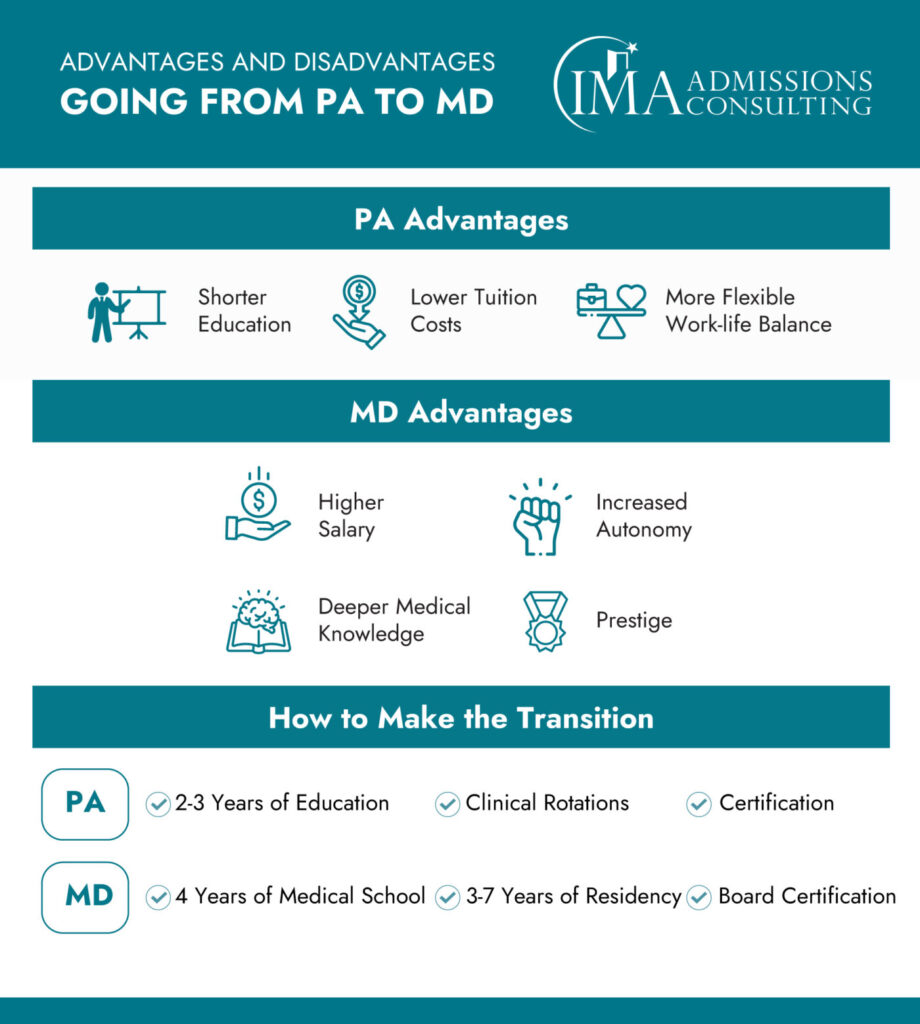
Being aware of the advantages of enrolling in a physician assistant to MD program can assist you in deciding whether it is the best career move. Here are some of the benefits of transitioning from a PA to MD:
Autonomy
Despite the fact that doctors and PAs have many duties in common, doctors often have more freedom in their work. A PA works under the direction of a doctor to carry out job responsibilities like patient examinations and treatment plan creation. While PAs are highly skilled and can exercise a great deal of independence within their scope of practice, the ultimate legal responsibility and the ability to operate a medical practice independently rest with the physician. Physicians undertake more complex responsibilities, such as performing operations, and operate more independently than PAs. This autonomy extends to decision-making, patient management, and the ability to establish one’s own clinical practice without the need for direct supervision.
Specialization
The most common medical specialties for doctors are internal medicine, family practice, and pediatrics. However, an MD degree opens the door to a vast array of highly specialized fields, from neurosurgery to cardiology, oncology, and countless others. They emerge proficient in their chosen field after extensive residency and often fellowship training, and can identify and manage complex medical conditions within that specialization. On the other hand, PAs frequently work in primary care and may seek assistance from experts on particular medical conditions, though they can also specialize. An MD path allows for deeper and more comprehensive training in a specific medical or surgical discipline, granting the physician a more defined role as an expert in that area.
Salaries
Generally, doctors can earn more attractive incomes than PAs due to their expanded scope of practice, greater responsibility, and longer, more intensive training. According to May 2022 BLS data, PAs make a median of $126,010 a year compared to physicians, who make a median of $229,300. More recent data from Doximity (2023) indicates an average physician salary of $357,744. Doctors can frequently earn significantly more money by specializing in a particular branch of medicine, especially in high-demand surgical or procedural specialties. Medical professionals’ average salary can vary depending on their area, employment, level of expertise, and specialty choice. The substantial investment in time and finances required for an MD education often translates into a higher long-term earning potential, which is a key consideration for PAs looking to transition.
Disadvantages of Transitioning from a PA to MD
On the other hand, the independence of the MD profession in comparison to the PA can sometimes be considered a drawback. Since many self-employed physicians’ medical practices are fundamentally their companies, this structure can frequently result in an excessive amount of responsibility related to the upkeep and management of the business in lieu of the actual practice of medicine. This includes administrative tasks, financial management, human resources, and navigating complex regulatory environments, all of which can detract from direct patient care and add to the overall workload.
While physician assistants can frequently have a typical 40-hour weekday with a pleasant work/life harmony, a physician is much more inclined to put in long hours, often 50-60+ hours per week, and can develop burnout while managing every part of their medical business. This demanding schedule extends beyond clinical hours, encompassing on-call duties, continuing education, and administrative burdens, making it challenging to maintain personal well-being and balance family life. The increased pressure and potential for burnout are significant factors that PAs must carefully weigh before committing to the MD path.
Similarly, the independence of giving medical care singly might also result in a difficult situation. Since physician assistants always act in the doctor’s place, they are only accountable to the doctor who supervises them. In comparison, the doctor always assumes ownership of the treatment, regardless of whether they provide it directly or delegate it to others. As a result, the doctor is always responsible for the care and any issues that may arise as a result of it. A physician’s employment includes a significantly higher degree of accountability and stress than a PA’s, along with the duties related to managing the many facets of the practice. This heightened legal and ethical responsibility can be a heavy burden for some, contrasting sharply with the collaborative and supervised nature of PA practice.
By switching from being a PA to MD, you can also lose some of the freedom related to the field of medicine you can work in. Since physician assistants often receive on-the-job training for the specific medical specialties in which they specialize, they frequently wind up practicing in several areas of medicine during the course of their careers. The flexibility to switch specialties or practice areas with relative ease is a notable advantage of the PA profession. In contrast, medical doctors select their specialty at the residency phase of their study, a commitment that typically lasts three to seven years. Once a specialty is chosen and training completed, changing subspecialties can be very challenging, often requiring starting over with new residency or fellowship training. This means the MD path, while offering deeper specialization, often comes with less professional mobility between broad medical fields.
The major drawback of enrolling physician assistants in medical doctor programs is the time, money, and effort required to make a move. A career as a PA doesn’t offer shortcuts on the path to becoming a fully licensed MD. This implies that if you are dedicated to switching from a PA to MD, it will take a while to prepare your approval process, you will have to quit working full-time to attend school, you will have to pay a high tuition rate for medical school, and it will take a while to complete a residency (and possibly a fellowship if you choose to pursue a subspecialty) prior to being licensed to practice autonomously. Given these factors, you must carefully assess your dedication and interests before transitioning from a PA to MD.
Can PAs Become Doctors?
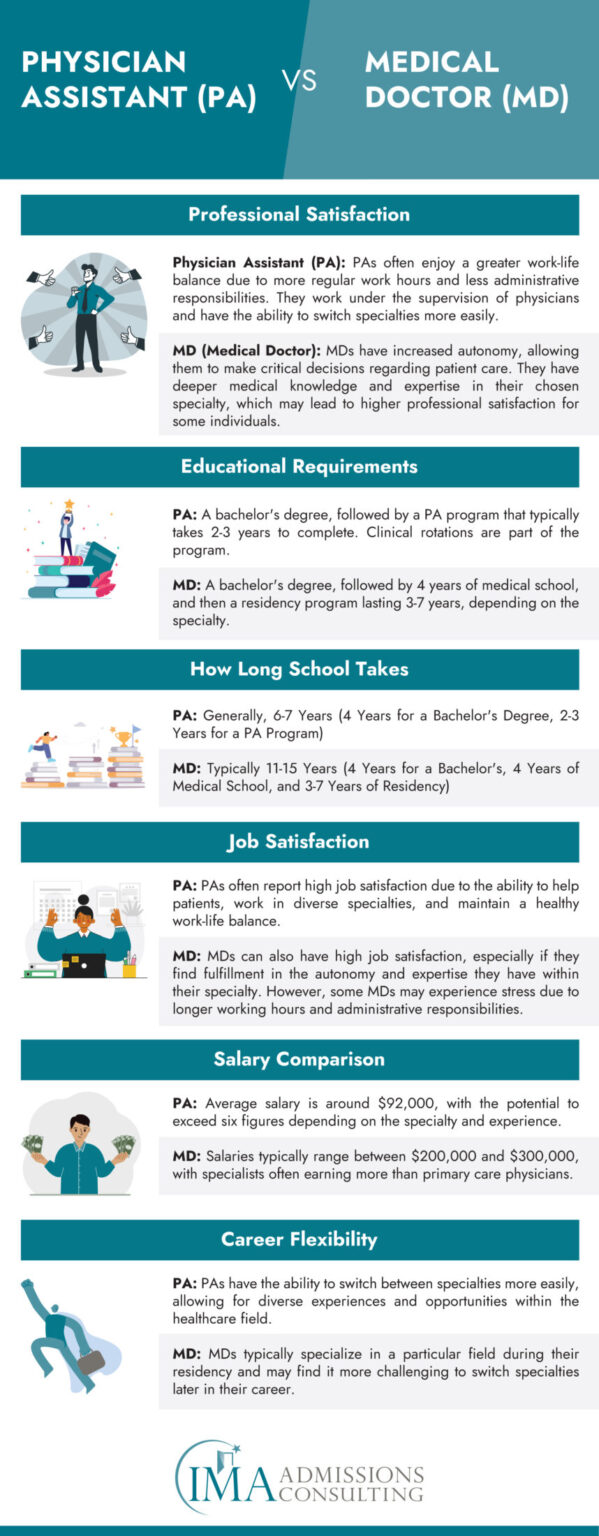
So, can a Physician assistant become a doctor? Yes, PA to MD shift is feasible. Here are the steps you can take to change from a PA to MD:
Reflect Your Career Path
To join physician assistant to medical doctor programs, be certain that you want to become a doctor before submitting an application to medical school. If you wish to have more independence and responsibility, you might be ready for this exciting job shift. Like becoming a PA, being a doctor also takes time, effort, and commitment. Think about whether you want to practice general medicine or concentrate on a particular branch of medicine. This self-reflection phase is crucial. Consider not just the perceived benefits, but also the significant sacrifices involved, including potential loss of income during schooling, increased debt, and a more demanding lifestyle. Speaking with physicians, especially those who may have transitioned from other healthcare roles, can provide invaluable insight into the realities of the profession and help solidify your decision for 2026 and beyond.
Recommendation Letters and MCAT
Your initial steps of transitioning from PA to MD will probably start around two years before the year in which you expect to gain admission, just like they do for the majority of other potential students applying to medical school. You must begin planning at this point for who you will ask for letters of recommendation for medical school. Most medical school applications need at least a few letters of recommendation from professors, which might be tricky if you graduated from college years ago and are now working as a physician assistant. Seeking letters from physicians you’ve worked with as a PA, or from supervisors who can speak to your clinical aptitude and professionalism, can be highly impactful. If you need to refresh academic connections, consider taking a post-baccalaureate course or re-engaging with former professors.
When you begin to get ready for the MCAT, it will be critical to take a second look at your individual requirements for medical school. Since PA schools typically do not require the MCAT, your preparation for a physician assistant to medical doctor programs will be heavily centered on succeeding on this exam. It is very likely that you will have completed the science courses that are required for the MCAT all through your undergraduate program. However, the sheer amount of years that have passed between receiving your bachelor’s degree before embarking on a career as a physician assistant and your ongoing practices to apply to medical school will presumably present a challenge for you. The three knowledge-based sections of the MCAT, notably the MCAT biology, chemistry, and psychology, include a variety of topics, therefore it will be crucial for you to set up time to review them. Despite the fact that some of your skills and knowledge from working as a physician assistant will be useful in these areas, you will probably need to refer back to your textbooks and dedicated study materials to refresh your memory. Many PAs find success with structured MCAT prep courses or by joining study groups to maintain accountability and address knowledge gaps effectively.
Similar to that, you must start getting ready for the difficult fourth MCAT section, the Critical Analysis and Reasoning Skills (CARS). This section focuses on your reading comprehension and analysis skills even if it does not assess your prior knowledge. As a result, it is a very difficult section of the MCAT and necessitates a strong MCAT CARS approach that includes continual active reading, exposure to difficult literature, and vocabulary practice. One of the greatest methods to get ready for the MCAT CARS is to practice with the examples offered by the AAMC because the passages and questions on the exam are fairly dissimilar from the texts we come across on a daily basis. The AAMC also provides full-length practice tests that simulate the actual exam experience, which are invaluable for identifying areas for improvement and building stamina. The average MCAT score for accepted applicants in the 2023-2024 cycle was 512, highlighting the need for thorough preparation. Though few and far between, there are several medical schools that do not require the MCAT, but these are often highly competitive and may have other rigorous requirements.
The MCAT should ideally be completed with enough time remaining in your schedule to allow for a retest if necessary. Waiting until you are prepared to complete the test well is crucial, though. It is preferable to wait until you can take a practice MCAT and get a score in a competitive range before deciding this. Remember that while your PA experience is a strong asset, a competitive MCAT score is still a non-negotiable gateway for most medical schools. For additional strategies on preparing your application, consider reading our guide on how to strengthen your PA school application, many principles of which apply to medical school as well.
Research Medical Schools
As you transition from PA to MD, look for medical colleges that fit your criteria. For instance, some medical schools offer accelerated 3-year MD programs that allow you to complete your education more quickly, though these are intense and highly selective. While there are no specific “PA to MD bridge programs” in the sense of a shortened curriculum due to prior PA training, many medical schools value the maturity, clinical experience, and commitment that a PA applicant brings. This experience can be a significant advantage during interviews and when writing your personal statements.
Since applying to medical school is expensive and time-consuming, it is vital to only concentrate on institutions that you’re strongly contemplating enrolling and that you can have moderate to high success with. Along with contrasting your GPA and MCAT score (if available) to the figures of the enrolling class, you can also evaluate your past experiences to the profile of prospective candidates. Here, your prior experience working as a physician assistant in a medical environment will be a significant addition to your background. You should keep in mind that, in addition to your career history in healthcare, numerous medical schools also place significant emphasis on community service and volunteer experience. It is therefore crucial to establish these components of your medical school application. When researching schools, look for those that demonstrate an appreciation for non-traditional students and those with substantial clinical backgrounds, as they may be more receptive to an applicant with prior PA experience. You might also explore resources such as BS-MD program guides for a broader understanding of combined degree pathways, though these are typically for high school students.
Before considering a physician assistant to medical doctor programs, it is vital to evaluate your potential student loan debt after medical school to set a budget for your study. Consider your current student debt as well as the lifestyle you wish to lead while in school when creating your budget. This may aid in your decision of the medical school you should attend, especially given the considerable difference in tuition costs between public and private institutions, and between resident and non-resident fees.
Complete Admission Criteria
You might need to finish a certain number of requirements before being accepted to transition from PA to MD. They normally vary by institution, and on occasion, the admissions requirements may be satisfied by your prior training as a PA or your prior schooling. To be sure you have the necessary credentials, carefully review the various entry requirements for the institutions you are interested in attending. This includes specific prerequisite courses in biology, chemistry, physics, and sometimes humanities or social sciences, all with laboratory components. Your undergraduate transcripts will be closely scrutinized.
The Medical College Admissions Exam is another requirement for most medical schools (MCAT). Although the knowledge you gained while working as a PA can be useful for this exam, it’s crucial to prepare effectively to receive the best score. Medical schools may also need you to submit a personal statement that articulates your motivations for pursuing an MD, how your PA experience has shaped your perspective, and what you hope to achieve as a physician. Strong letters of recommendation, as discussed earlier, are also essential. Furthermore, many programs require multiple mini-interviews (MMI) or traditional interviews to assess your interpersonal skills, ethical judgment, and suitability for the medical profession. A background check may also be required, as is standard for healthcare professionals.
Finishing Medical School
A big number of medical school PA to MD programs last for four years. They are divided into two sections: pre-clerkship instruction and clinical rotations. In the course of instructions, you receive education in the form of lectures and labs in the classroom, covering foundational sciences like anatomy, physiology, biochemistry, pharmacology, and pathology. This intensive period builds the theoretical knowledge base essential for medical practice.
After completing your first two years of medical school, you will work in a real medical environment during clinical rotations, gaining experience by helping patients across various specialties such as internal medicine, surgery, pediatrics, obstetrics/gynecology, and psychiatry. When you work with patients frequently as a PA, you may have a distinct advantage during these rotations, possessing practical skills and an understanding of clinical workflow that many traditional medical students may still be developing. This experience can help you integrate theoretical knowledge with real-world patient care more effectively.
Get a Medical Certification
The qualifications for changing from PA to MD are somewhat similar to those for PA licensing. By passing the United States Medical Licensing Examination, you can obtain this license (USMLE). There are three sections to the test. USMLE Step 1 is typically taken after the second year of medical school, covering foundational sciences. USMLE Step 2 Clinical Knowledge (CK) and Clinical Skills (CS, though CS has been discontinued in its previous format) are taken during the fourth year, assessing clinical knowledge and patient care skills. The last part, USMLE Step 3, is finished once you have graduated, usually during the first or second year of residency, and focuses on the independent practice of medicine.
Depending on where you are, you can take the exam a different number of times. You can apply to become an MD with your state’s licensing board after passing the USMLE. Normally, your application contains evidence that you completed a recognized medical education program and passed the USMLE. To be part of physician assistant to medical doctor programs, a background check may be required in some places as an additional requirement. According to current regulations, the majority of states require that you renew your license annually or biennially, along with fulfilling continuing medical education (CME) requirements.
Finish Your Residency
Postgraduate residency training is typically completed by aspiring doctors in three to seven years, depending on the chosen specialty. Primary care specialties like family medicine or internal medicine are often three years, while surgical specialties or subspecialties can extend to five, seven, or even more years. As you complete your residency, you gain extensive hands-on experience as a doctor, working under supervision to diagnose, treat, and manage patients, putting all of your skills to use. This period is highly demanding but essential for developing independent clinical judgment and procedural proficiency within your chosen field.
Pass the Board Test
Earning at least one certification from a specialty board recognized by the American Board of Medical Specialties (ABMS) allows almost all doctors to become board certified. Board certification signifies that a physician has met rigorous standards in their specialty, including comprehensive training and successful completion of a demanding examination. By passing the test specific to your field of practice, such as surgery or internal medicine, you can obtain this certification. This is typically done after completing residency. As long as you meet the requirements, you can obtain board certification in as many different fields as you like, though this is rare and involves additional, extensive training and examination for each.
Job Applications
As you near the end of your residency or fellowship, start searching for jobs. Make a medical resume or CV that highlights your education, accomplishments, and publications. Adding your experience as a PA can give you an edge from other applicants as it exhibits additional experience in patient care, understanding of clinical workflows, and often a level of maturity and professionalism that can be highly valued by potential employers. Leverage your network from both your PA and MD training to explore opportunities and gain insights into different practice settings.
Start Practicing as an MD
Once you’ve completed the state’s license requirements, you’ll have converted from physician assistant to doctor in legal terms. Please keep in mind that you have to adhere to the continuing medical education standards in these PA to MD programs. This includes regularly participating in educational activities to stay current with medical advancements and maintain your licensure and board certifications. You will have the opportunity to work with patients who depend on your medical knowledge no matter what kind of medical practice you select, carrying the full responsibility and autonomy of a physician, ready to make a profound impact on healthcare for 2026 and beyond.
How Long are PA to MD Programs?
Unlike doctors, physician assistants are not expected to have extra certifications or undergo extensive training to switch specialties, which interests many students choosing between the two occupations. After earning an undergraduate degree, becoming a PA can take an additional 24-27 months, including integrated clinical rotations. In contrast, becoming an MD typically requires an additional 4 years of medical school followed by 3–7+ years of residency training, totaling 7-11+ years post-bachelor’s degree. While a PA degree is less expensive, a practicing PA’s pay is also considerably lower than that of an MD. This longer and more costly educational pathway for MDs reflects the greater depth of training, increased autonomy, and expanded scope of practice that physicians ultimately achieve.
Recent Trends and Evolving Landscape for PAs and MDs (2025-2026)
The healthcare landscape is continuously evolving, driven by an aging population, technological advancements, and shifting public health needs. For both Physician Assistants and Medical Doctors, these trends signify both opportunities and challenges as we look towards 2026. The demand for healthcare professionals continues to outpace supply, creating robust job markets for both roles. However, the nature of their practice and their educational pathways are adapting to these changes.
One significant trend is the increasing complexity of medical care. Advances in diagnostics, therapeutics, and personalized medicine mean that conditions previously difficult to treat are now manageable, but require a deeper, more specialized understanding. This often reinforces the need for MDs, particularly those in highly specialized fields, to lead complex cases and drive innovation. Concurrently, the scope of practice for PAs has been steadily expanding in many states, allowing them to take on greater responsibility and manage a wider range of conditions, especially in primary care and underserved areas. This evolution highlights the growing reliance on both professions to address the diverse healthcare needs of communities.
Another important development is the emphasis on interprofessional collaboration. Modern healthcare models increasingly prioritize team-based care, where PAs, MDs, nurses, and other allied health professionals work together seamlessly to provide patient-centered care. This collaborative environment often leverages the distinct strengths of both PAs and MDs, with PAs providing essential frontline care and continuity, while MDs oversee complex cases, perform specialized procedures, and guide the overall treatment strategy. For PAs considering the transition to MD, understanding this collaborative trend is vital, as it emphasizes that even as a physician, effective practice often means leading and participating in a team.
The growth in accredited PA programs, now exceeding 300 nationwide as of October 2023, demonstrates the profession’s vitality and ongoing commitment to producing highly skilled providers. However, medical school admissions remain highly competitive, with applicants needing to meet stringent academic requirements, as evidenced by the average GPA of 3.77 and MCAT score of 512 for accepted applicants in the 2023-2024 cycle. These statistics underscore that while the healthcare sector needs more professionals, the pathway to becoming an MD remains rigorous and selective. PAs planning an MD transition in 2026 must be prepared to meet these high academic benchmarks, even with their valuable clinical background.
Strategic Planning for a PA to MD Transition
Transitioning from a Physician Assistant to a Medical Doctor is a significant undertaking that requires meticulous strategic planning, far beyond simply applying to medical school. It involves a thorough assessment of personal and professional readiness, careful financial foresight, and a disciplined approach to academic preparation. For PAs considering this path in 2026, understanding these strategic elements is crucial for a successful and sustainable transition.
Assessing Your Readiness
Beyond the desire for greater autonomy, a PA should engage in deep self-reflection about their true motivations and resilience for the MD path. Consider the realities of medical school’s intensity, the emotional and intellectual demands of residency, and the long-term commitment to a physician’s demanding lifestyle, which often includes 50-60+ hour work weeks and significant on-call responsibilities. Evaluate your personal circumstances, including family commitments, financial obligations, and support systems. The transition involves a substantial period of reduced income and increased stress, so a robust personal support network and clear communication with loved ones are indispensable. Reflect on whether the increased responsibility and specialization genuinely align with your long-term career fulfillment, or if the flexibility and collaborative nature of the PA role might be a better fit for your personal values and lifestyle goals.
Leveraging Your PA Experience
Your experience as a PA is one of your strongest assets when applying to medical school, setting you apart from many traditional applicants. It provides a credible foundation for your motivation to pursue an MD. When crafting your applications, personal statements, and during interviews, articulate how your PA experience has deepened your understanding of patient care, sharpened your clinical reasoning skills, and exposed you to the limitations of your current scope of practice, driving your desire for more comprehensive training and autonomy. Highlight specific instances where you’ve demonstrated leadership, critical thinking, empathy, and collaborative skills within a healthcare team. Emphasize your understanding of ethical dilemmas, patient communication, and the realities of medical practice, all of which come from your direct patient care experience. This practical background can demonstrate a level of maturity and preparedness that is highly valued by admissions committees. For more insights on showcasing your strengths, refer to our article on pre-physician assistant programs that put you ahead of the competition, as many concepts apply to medical school applications as well.
Academic Refreshers and MCAT Preparation
For PAs who have been out of an intensive academic setting for several years, a structured academic refresher is often necessary before tackling the MCAT and medical school prerequisites. This might involve enrolling in post-baccalaureate programs, taking advanced science courses at a local university, or undertaking dedicated MCAT preparation courses. Focus on strengthening foundational knowledge in biology, chemistry, physics, and biochemistry, which are heavily tested on the MCAT. Utilize resources from the AAMC, including practice tests and question banks, to familiarize yourself with the exam format and content. Given that the average MCAT score for accepted applicants in 2023-2024 was 512, achieving a competitive score demands consistent and rigorous study. Creating a realistic study schedule that accommodates your work and personal life is essential. Consider online resources or tutors who specialize in guiding non-traditional applicants, as they can provide strategies tailored to your unique situation. This dedicated academic preparation will not only boost your MCAT score but also re-familiarize you with the pace and rigor of advanced science coursework, preparing you for the demands of medical school itself.
Mentorship and Networking
Connecting with physicians who were PAs themselves, or other non-traditional medical students and residents, can provide invaluable guidance and support throughout your transition. Seek out mentors who can offer realistic perspectives on the journey, share strategies for balancing studies with personal life, and provide insights into specific medical school programs or specialties. Networking with current medical students and faculty can also offer practical advice on navigating the application process, preparing for interviews, and understanding the culture of different institutions. These connections can be a vital source of encouragement, practical tips, and professional opportunities, helping to demystify a complex path and build a community of support around your aspirations for 2026 and beyond.
Pre-Med Shadowing Study Abroad Program
Studying abroad is a common element of the college experience for many people. Unfortunately, many pre-med students have fewer options that meet their needs due to the intensity and particular challenges of the pre-med programs.
Although it is not necessary to study abroad in order to enter medical school, having the chance to learn about medicine in another nation and work as a physician assistant overseas can help pre-med students become better doctors.
Pre-Med Study Abroad: What is It?
Pre-med students also have the chance to shadow doctors and gain clinical expertise to a larger depth, breadth, and amount of hours as compared to experiences in the US, in addition to the normal study abroad experiences like traveling. Pre-medical study abroad trips might span a few weeks during college breaks and take place in a nation with a unique health care delivery system.
Benefits of Pre-Med Study Abroad
Although pre-med students are not permitted to practice medicine while studying abroad, they are nonetheless gaining invaluable clinical experience. Here are a few more advantages of studying abroad for pre-medicine:
- Experience Various Cultures: A pre-medical study abroad PA to MD programs allows students to get fully immersed in both the local culture and the healthcare industry. With other programs, it can be challenging to maintain this equilibrium.
- Shadow Complex Procedures: Complex operations cannot usually be shadowed by students in the United States. Pre-Med Shadowing Study Abroad Program permits students to observe operations and other advanced work they may not otherwise be able to see. This exposure can be particularly enlightening for PAs considering the MD path, as it offers a glimpse into advanced surgical techniques and specialized medical interventions.
- Decide Your Future in Healthcare: Pre-medical study abroad PA to MD programs frequently assist students in identifying their areas of passion. There are limits to what you can learn in a classroom, so observing in a foreign country might help you decide whether you’re psychologically and physically capable of pursuing a career in the medical field. More importantly, this experience can assist you in sharpening your career focus and gaining confidence in your selected course of action, whether that’s remaining a PA, pursuing an MD, or exploring other healthcare roles.
- Learn About Global Healthcare: Pre-medical study abroad exposes students to aspects of global healthcare that are not possible to learn about in a traditional classroom setting. You will confront many problems in your future profession, and success depends on having a global perspective on healthcare, understanding what is effective in other nations and what is not. Speaking intelligently on the state of universal healthcare is also helpful while applying to medical schools. This broader understanding can enhance your medical school application and make you a more well-rounded physician.
Frequently Asked Questions About the PA to MD Pathway (2026)
Does my PA experience shorten the MD pathway?
No, your Physician Assistant experience, while highly valuable, does not typically shorten the formal MD pathway in the United States. Medical schools require completion of the full four-year curriculum, followed by a 3 to 7+ year residency. There are no established PA to MD “bridge programs” that significantly accelerate this timeline. However, your clinical experience can make you a more competitive applicant, providing a mature perspective and practical understanding that many traditional pre-med students lack. It can also give you an advantage during clinical rotations in medical school, as you will already be familiar with patient interactions and clinical environments.
Are there specific medical schools that favor PA applicants?
While no medical schools formally “favor” PA applicants or have specific PA-only admission tracks, many institutions highly value the maturity, extensive clinical experience, and demonstrated commitment to healthcare that PAs bring. Schools that emphasize community engagement, service, or welcoming non-traditional applicants may be particularly appreciative of your background. Your ability to articulate how your PA experience has prepared you for the responsibilities of an MD, and why you are choosing to pursue further training, will be key to distinguishing yourself in the application process. It is advisable to research schools known for supporting non-traditional students and to highlight your unique journey in your personal statement and interviews.
What are the biggest financial considerations for a PA becoming an MD?
The financial implications of transitioning from a PA to an MD are substantial. Firstly, you will likely incur significant lost income during the four years of medical school, as it is difficult to work full-time while studying. Secondly, medical school tuition and living expenses are considerable, averaging over $40,000 annually for public in-state tuition and over $60,000 for private or out-of-state, totaling hundreds of thousands in debt over four years. Lastly, while residency provides a stipend, it is significantly lower than a PA’s salary. It is crucial to create a detailed financial plan, explore scholarship opportunities, and understand the long-term debt burden before embarking on this path. Considering the full cost of PA school, as detailed in our article on PA school scholarships vs. loans, can offer a comparative financial perspective.
How challenging is the MCAT for a practicing PA?
The Medical College Admission Test (MCAT) presents a significant challenge for a practicing PA, especially if several years have passed since your undergraduate science coursework. While your clinical experience provides context for some biological concepts, the MCAT is a comprehensive exam covering biology, chemistry, organic chemistry, physics, and psychology/sociology, requiring strong foundational academic knowledge. Many PAs find they need extensive review and dedicated study time, often requiring 6-12 months of preparation, possibly with structured courses or tutoring, to achieve a competitive score. The average MCAT score for accepted applicants in 2023-2024 was 512, emphasizing the high bar for performance. This academic re-engagement is a critical component of the transition process.
Will I lose my PA license while in medical school?
You typically won’t “lose” your PA license during medical school, but you will likely cease active practice as a PA. Most medical students do not have time to work clinically while pursuing their MD. Maintaining your PA license generally involves fulfilling continuing medical education (CME) requirements and paying renewal fees, which some PAs choose to do even if not actively practicing, to keep their options open. However, state regulations vary, and you should check with your state’s medical and PA licensing boards for specific rules regarding inactive status or maintaining licensure while enrolled in medical school. Actively practicing as a PA in any significant capacity is generally not feasible or advisable during the intensive medical school curriculum and clinical rotations.
Final Thoughts
It’s crucial to consider the big picture while deciding between a career as a PA and one as a doctor. Along with your job responsibilities, you should consider how long it will take you to qualify for the practice, how much it will cost, and how much money you can anticipate to make in total after completing a PA to MD programs. While the journey from PA to MD is challenging, it is a testament to an individual’s deep commitment to medicine and a desire for an expanded scope of practice and autonomy. The significant investment in time, effort, and finances can lead to profound professional fulfillment and higher earning potential, making it a worthy pursuit for those who are truly dedicated.
No matter your stats, whether you are conventional or non-traditional, a first-time or repeat candidate, whether you have exceptional or average experience, and most importantly, no matter your age, gender, or cultural background, International Medical Aid is here to assist you at every step of your medical school admissions consulting process to present your best self for 2026. By providing grounded, ethical, and knowledgeable guidance, we help you understand what is realistic, what to watch out for, and how to think about fit, timing, and preparation, empowering you to make smart and informed decisions about your future in medicine.