A postbaccalaureate pre-med program is one of the most direct routes into medicine for people who didn’t major in science during their undergraduate years or who need to strengthen an academic record before applying to medical school. These programs exist specifically to help students complete prerequisite coursework, build a credible science GPA, and demonstrate to admissions committees that they can handle the rigor of a medical curriculum. For career changers, a well-chosen post-bacc can compress years of uncertainty into a focused, structured timeline.
But not all postbaccalaureate programs work the same way, and the differences between them are significant. Some programs offer direct linkage agreements with medical schools. Others provide advising, mentorship, and composite recommendation letters. Still others are informal, self-directed plans where a student simply enrolls in prerequisite courses at a local university without any institutional support. Understanding these distinctions is essential before committing time and money to a path that will shape the next several years of your career.
What a Postbaccalaureate Pre-Med Program Actually Is
A postbaccalaureate program, at its simplest, is a set of courses you take after earning a bachelor’s degree to fulfill medical school prerequisites or improve your academic record. Most students who enter these programs fall into one of two categories: career changers who completed non-science undergraduate degrees and need foundational coursework in biology, chemistry, physics, and organic chemistry; or academic enhancers who have the prerequisites but earned grades too low to be competitive for medical school admission.
Career-changer programs assume you have little or no science background. They typically run one to two years and cover the full sequence of courses that medical schools require. Academic enhancer programs, on the other hand, assume you already have the coursework and focus on giving you the chance to prove, through upper-level science classes, that your earlier grades don’t represent your true ability.
Most formal post-bacc programs award a certificate of completion rather than a degree. This is an important distinction. A post-bacc certificate is not a master’s degree, and it is not the same as a Special Master’s Program (SMP). SMPs are graduate-level programs that simulate the first year of medical school and are generally designed for students whose academic profiles carry higher risk. If you are unsure whether a post-bacc or an SMP is the better fit, the key question is whether you need to complete prerequisites or whether you need to prove you can handle graduate-level science. Those are different problems with different solutions.
Formal Programs vs. DIY: What the Difference Means for Your Application
The most consequential decision most career changers face is whether to enroll in a formal postbaccalaureate program or to build their own path by taking prerequisite courses independently at a university, sometimes called the “DIY” approach. Both can work, but the advantages and trade-offs are real.
Formal Post-Bacc Programs
Formal programs offer structured advising, cohort-based learning, committee letters of recommendation, and sometimes clinical placement support. The committee letter is worth highlighting: most formal post-baccs provide a composite letter of recommendation that carries significant weight with medical school admissions committees. This letter signals that a program reviewed your work closely and is willing to vouch for your readiness. For non-traditional applicants who may not have long-standing relationships with science faculty, this can be a meaningful advantage.
Formal programs also tend to create a built-in peer community. You will be surrounded by other career changers, which provides accountability and shared understanding that can be hard to find when you are the only 28-year-old in an introductory chemistry lecture. The trade-off is cost. Tuition for well-known postbaccalaureate programs can range from $20,000 to over $60,000 depending on the institution, length, and whether you qualify for financial aid.
The DIY Path
A DIY post-bacc means enrolling in prerequisite courses at a university, often a state school or local four-year institution, without being part of a formal program. The cost savings can be substantial. In-state tuition at a public university for the same courses might be a fraction of what a formal program charges. You also have more flexibility in pacing, since you can take courses part-time while continuing to work.
The disadvantages are real, though. You will not receive a committee letter. You will need to find your own pre-med advising, secure your own clinical experience, and build relationships with faculty on your own. None of this is impossible, but it requires more initiative and a clear plan. Admissions committees are not inherently biased against DIY students, but a formal program’s structure can make it easier to present a coherent, well-supported application.
How Linkage Agreements Work and Why They Matter
Linkage agreements are formal partnerships between a postbaccalaureate program and one or more medical schools. If you are accepted into a post-bacc with a linkage agreement, you may be guaranteed or given a conditional acceptance to a partner medical school, provided you meet specific benchmarks. Those benchmarks typically include maintaining a minimum GPA (often 3.6 or higher), achieving a competitive MCAT score, and completing the program in good standing.
Linkage agreements can significantly reduce the uncertainty of the medical school application process. Instead of applying broadly and waiting through a full cycle, a student with a linkage may be able to transition directly from the post-bacc into medical school, sometimes without a gap year. Well-known programs with active linkage agreements include Bryn Mawr, Goucher, and Johns Hopkins, among others. Partner medical schools have historically included institutions such as Weill Cornell, Case Western Reserve, and Philadelphia College of Osteopathic Medicine (PCOM).
That said, linkage agreements are competitive. Not every student admitted to a post-bacc program will qualify for a linkage track, and the GPA and MCAT thresholds are firm. It is also worth noting that linkage agreements can change from year to year. Before choosing a program based on a specific linkage, verify the current status of that partnership directly with the program. The AAMC Postbaccalaureate Program Database is a reliable starting point for identifying programs and their current affiliations.
What Admissions Committees Actually Think About Post-Bacc Work
Medical school admissions committees generally view successful postbaccalaureate work as strong evidence of academic maturity. This is especially true for non-traditional applicants. If you spent five years working in marketing, education, or finance and then completed a rigorous science curriculum with a high GPA, that pattern tells a clear story: you made a deliberate decision, you followed through, and you can handle the material.
Your post-bacc grades are typically averaged into your undergraduate GPA when you apply through AMCAS. This means strong performance in a post-bacc can meaningfully raise your cumulative and science GPAs, which is one of the primary reasons academic enhancer programs exist. However, your original transcript does not disappear. Admissions committees will see both your earlier grades and your post-bacc grades, and they will evaluate the trajectory.
A common concern for career changers is whether admissions committees will view them differently than traditional applicants. The honest answer is that many schools actively value non-traditional backgrounds, but you need to be prepared to articulate why you are pursuing medicine and how your previous career informs that decision. If you are preparing for medical school interviews, understanding how to frame this transition is critical. Resources on strong questions to ask during a medical school interview can help you prepare for both sides of that conversation.
It is also worth knowing that some osteopathic medical schools place a strong emphasis on holistic review, which can work in favor of applicants with diverse work histories. If you are considering the DO path, researching specific programs and their admissions philosophy is a smart step. For example, the admissions process at Kansas City University’s College of Osteopathic Medicine illustrates how some schools evaluate non-traditional candidates.
Building Clinical Experience During or After a Post-Bacc
A post-bacc program covers the academic prerequisites, but medical schools expect more than coursework. You will also need clinical experience, and for career changers, this is often the piece that requires the most planning. Clinical hours, whether through shadowing, volunteering, or structured programs, demonstrate that you understand what a career in medicine actually looks like and that your decision is grounded in real exposure, not just an idea.
Most clinical experience at the pre-med level is observational. This is important to understand clearly. Shadowing a physician means watching, asking questions, and reflecting on what you see. It does not mean performing procedures, diagnosing patients, or providing hands-on care. The AAMC’s guidelines on clinical experiences reinforce that ethical, well-supervised exposure is what matters, not the volume of tasks you performed.
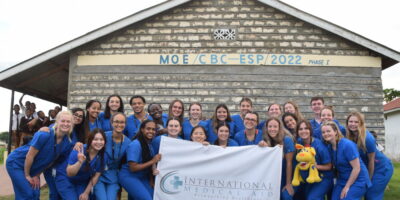
For students in a formal post-bacc, some programs facilitate clinical placements or connect students with local hospitals and clinics. For DIY students, this is your responsibility. Options include hospital volunteer programs, community health center placements, free clinic work, or structured global health programs. Some post-bacc students use a gap period between completing coursework and starting medical school to participate in programs like those offered by International Medical Aid, where structured clinical observation and global health exposure can provide the kind of meaningful experience that strengthens an application. Any clinical hours, whether domestic or international, should be strictly observational and conducted under appropriate supervision.
Beyond clinical exposure, many applicants benefit from broadening their understanding of healthcare systems and public health frameworks. Work or volunteer experience in underserved communities, public health research, or health policy can round out an application. The Bureau of Labor Statistics Occupational Outlook for Physicians and Surgeons provides useful context on the profession’s scope and demand, which can help you think more concretely about where you want to practice and why.
Choosing a Program: What to Evaluate Before You Commit
Choosing the right postbaccalaureate program requires honest self-assessment. Start by identifying which category you fall into. Are you a career changer who needs prerequisites, or an academic enhancer who needs to raise a GPA? That distinction narrows your options immediately.
Cost and Financial Aid
Tuition varies widely. Some programs offer limited financial aid; others do not. Federal student loans may be available for certain programs but not all. Ask each program directly about aid eligibility and whether their students typically qualify for loans. Factor in living expenses, opportunity cost (time away from a salary), and the total length of the program.
Location and Format
Some programs are full-time and in-person. Others offer evening or part-time schedules designed for students who are working. A small number of programs have started offering hybrid formats, though the science lab component usually requires in-person attendance. If you have geographic constraints or cannot leave a job entirely, a part-time or evening program may be the realistic option.
Advising and Committee Letters
If a program offers a committee letter, ask how it works. Who writes it? Is it based on faculty input, advising sessions, or both? How is it delivered to medical schools? A strong committee letter can be a significant asset, but a weak or generic one will not help much.
Linkage Availability
If a linkage agreement is important to you, verify which medical schools are current partners and what the specific requirements are. Ask for data on how many students in recent cohorts actually used the linkage and were accepted. Do not assume that a listed linkage is still active without confirming it.
Track Record
Ask programs for their medical school acceptance rates. Formal post-bacc graduates from well-established programs have historically achieved acceptance rates well above the national average, with some programs reporting rates exceeding 90%. But be careful with how those numbers are presented. Ask whether the rate includes all students who started the program or only those who completed it and applied. Those are very different figures.
Ethical and Academic Integrity Considerations
Post-bacc programs are high-stakes academic environments, and any breach of academic integrity carries severe consequences. Cheating, plagiarism, or misrepresentation in a post-bacc program is not just an academic violation; it can be reported on your AMCAS application and effectively end a medical career before it starts. Medical schools take these reports seriously, and a documented integrity violation is extraordinarily difficult to overcome.
This applies equally to clinical settings. Whether you are shadowing domestically or participating in an international program, you must respect the boundaries of your role. You are an observer, not a practitioner. Misrepresenting your clinical experiences on an application, such as overstating your level of involvement, is both unethical and risky. Admissions committees are experienced at identifying inflated descriptions, and the consequences of dishonesty are not worth the perceived benefit.
If you are a career changer applying to Texas medical schools, the application process through TMDSAS has its own specific requirements and timeline. Understanding that process early can help you avoid common mistakes. The TMDSAS application process differs from AMCAS in several important ways, and knowing those differences matters.
How to Make the Most of a Post-Bacc Year
A postbaccalaureate program is not just about checking boxes. It is a chance to build the habits, relationships, and perspective that will carry you through medical school and beyond. Here is what that looks like in practice.
First, take your coursework seriously from day one. Your post-bacc GPA will be scrutinized closely because it represents your most recent academic work. There is no warm-up period. Admissions committees will look at your grades in each course, not just the cumulative number.
Second, build real relationships with faculty. You will need strong letters of recommendation, and those letters need to come from people who know you well enough to write something specific and substantive. Attend office hours. Ask questions. Be present.
Third, plan your MCAT preparation early. Many students take the MCAT toward the end of or shortly after their post-bacc program. Integrating MCAT study with your coursework, rather than treating it as a separate project, is more efficient and less overwhelming.
Fourth, use any available time between your post-bacc and medical school enrollment to strengthen the non-academic parts of your application. Clinical experience, community involvement, research exposure, and personal reflection all matter. This is where a structured program, whether domestic or international, can add real substance to your application.
Finally, be honest with yourself throughout the process. A post-bacc is a significant investment of time and money, and not every student who starts one will end up in medical school. That is not a failure; it is a data point. If your grades or MCAT scores are not where they need to be after a genuine effort, seek honest advising about your options rather than continuing to invest without a realistic path forward.
Frequently Asked Questions
Is a post-bacc the same as a master’s degree?
No. Most postbaccalaureate pre-med programs award a certificate, not a degree. You are completing undergraduate-level prerequisite courses after already holding a bachelor’s degree. Special Master’s Programs (SMPs) are a separate category that involves graduate-level coursework and is designed for students who need to demonstrate they can handle medical school-level material. The two serve different purposes and target different academic profiles.
How are post-bacc grades calculated on my medical school application?
When you apply through AMCAS, your post-bacc course grades are typically factored into your undergraduate GPA, including your cumulative GPA and your science GPA (BCPM). This means strong post-bacc performance can raise a lower undergraduate GPA. However, your original transcript remains visible to admissions committees, so they will see both your earlier record and your recent work.
Can I do a DIY post-bacc and still be competitive for medical school?
Yes, but it requires more planning. Without a formal program, you will not receive a committee letter, and you will be responsible for arranging your own advising, clinical experience, and letters of recommendation. Many successful medical students have taken the DIY route, particularly when cost is a major factor. The key is having a clear plan, strong performance in your courses, and a well-organized application that compensates for the lack of institutional support.