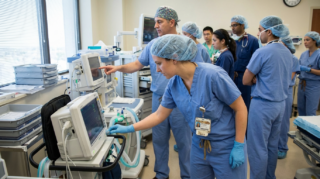
An anesthesiologist is a medical doctor responsible for managing a patient’s pain, vital organ function, and physiological stability before, during, and after surgery. If you are asking what does an anesthesiologist do, the short answer is this: they are the physician in the operating room whose primary job is keeping the patient alive while the surgeon operates. That means controlling the airway, regulating blood pressure and heart rhythm, managing fluid balance, dosing medications in real time, and responding to emergencies that can develop within seconds. It is one of the most demanding and highest-paying specialties in medicine, and it requires years of focused training in physiology, pharmacology, and procedural skill.
For pre-med students weighing specialty options, anesthesiology is worth understanding early. The field combines deep knowledge of how the body works under stress with hands-on procedural competence and fast decision-making. It also offers a wide range of subspecialties, from pediatric anesthesia to chronic pain management, each with distinct clinical demands and compensation levels. This article walks through the daily responsibilities of an anesthesiologist, the full education timeline, the subspecialties available, current salary data for 2026, and practical advice for students building toward this career.
What an Anesthesiologist Actually Does in a Day
The popular image of anesthesiology, someone who puts a mask over a patient’s face and waits, is one of the most persistent misconceptions in medicine. The reality is far more involved. An anesthesiologist’s day typically starts before most of the surgical team arrives, with pre-operative assessments of scheduled patients. During these assessments, the anesthesiologist reviews the patient’s medical history, current medications, allergies, and any prior reactions to anesthesia. They evaluate airway anatomy, cardiovascular status, and pulmonary function to build an anesthetic plan specific to that patient and that procedure.
Once in the operating room, the anesthesiologist is responsible for inducing anesthesia, which involves administering a carefully calculated combination of intravenous agents, inhaled gases, and sometimes regional nerve blocks. After induction, the physician secures the airway, often by placing an endotracheal tube, and connects the patient to ventilatory support. From that point until the patient wakes up, the anesthesiologist monitors and adjusts hemodynamics (blood pressure, heart rate, cardiac output), oxygenation, ventilation, body temperature, and anesthetic depth continuously. They respond to bleeding, arrhythmias, allergic reactions, and changes in surgical conditions in real time.
After surgery, the anesthesiologist manages emergence from anesthesia and oversees the patient’s transfer to the post-anesthesia care unit (PACU). They ensure the patient can breathe independently, that pain is controlled, and that no immediate complications from the anesthetic are developing. In many hospitals, the anesthesiologist also handles acute pain consultations, epidural placements for labor, and emergency airway management elsewhere in the facility. Some days are entirely spent in the OR. Others include intensive care unit rotations or pain clinic sessions, depending on the anesthesiologist’s practice setting and subspecialty.
The profession’s unofficial motto is “Vigilance,” and it is not decorative. The anesthesiologist’s constant monitoring is what prevents intra-operative crises from becoming fatal events. Understanding this is important for any pre-med student who shadows in an OR and wants to write meaningfully about the experience, whether for AMCAS work and activity entries or in a personal statement. If you need guidance on presenting clinical observations in your application, the AMCAS work and activities section with examples is a useful reference.
Anesthesiologist Schooling: The Full Education and Training Timeline
Becoming an anesthesiologist requires one of the longer training paths in medicine. Here is the realistic timeline, broken into its major stages.
Undergraduate Education (4 Years)
Like all physicians, anesthesiologists begin with a four-year bachelor’s degree. There is no required major, but most successful applicants complete rigorous coursework in biology, chemistry, organic chemistry, physics, biochemistry, and mathematics. Strong performance in physiology and pharmacology courses is especially relevant to anesthesiology. During undergrad, students should also focus on building clinical exposure, research experience, and meaningful extracurricular involvement. If you are comparing undergraduate programs, a look at factors that distinguish strong pre-med programs can help you evaluate your options.
Medical School (4 Years)
After completing the MCAT and the application process, students enter a four-year MD or DO program. The first two years are primarily didactic, covering anatomy, physiology, pathology, pharmacology, and other foundational sciences. The third and fourth years consist of clinical rotations across specialties, including surgery, internal medicine, pediatrics, and elective rotations. Students interested in anesthesiology should try to schedule an anesthesiology elective during their fourth year, as direct exposure to the specialty helps solidify interest and strengthens residency applications.
Anesthesiology Residency (4 Years)
Anesthesiology residency is four years long. The first year, sometimes called the clinical base year or internship year, typically includes rotations in internal medicine, surgery, emergency medicine, and critical care. The remaining three years are dedicated to clinical anesthesia training, where residents gain progressively independent experience with general anesthesia, regional anesthesia, obstetric anesthesia, pediatric anesthesia, cardiac anesthesia, neuroanesthesia, and pain management. Residents learn to manage airways, place central lines and arterial catheters, perform nerve blocks, and handle complex intra-operative emergencies. By the end of residency, a physician is eligible to sit for board certification through the American Board of Anesthesiology.
Fellowship (1 Year, Optional)
For physicians who want to subspecialize, an additional year of fellowship training follows residency. Fellowships are available in areas such as cardiac anesthesia, pediatric anesthesia, regional anesthesia and acute pain, critical care medicine, pain medicine, and neuroanesthesia. Completing a fellowship typically increases earning potential and opens doors to academic or highly specialized clinical positions.
The total timeline from the start of college to independent practice is a minimum of 12 years, or 13 if a fellowship is pursued. This is a significant commitment, and it is worth weighing that investment against your priorities and long-term goals early in your pre-med journey.
Anesthesiology Subspecialties and What Sets Them Apart
Anesthesiology is not a monolithic field. Once you complete residency, you can practice as a general anesthesiologist or pursue fellowship training in a subspecialty that aligns with your clinical interests. Each subspecialty carries distinct responsibilities, patient populations, and practice environments.
Cardiac Anesthesiology
Cardiac anesthesiologists manage anesthesia for open-heart surgeries, heart transplants, ventricular assist device placements, and other complex cardiovascular procedures. They must have expert-level knowledge of cardiac physiology, transesophageal echocardiography (TEE), and hemodynamic management during cardiopulmonary bypass. This subspecialty carries the highest compensation in the field, with 2026 averages reported in the range of $590,000 to $595,000 annually.
Regional Anesthesia and Acute Pain Medicine
This subspecialty focuses on nerve blocks, epidurals, spinal anesthetics, and other techniques that provide targeted pain relief without general anesthesia. Regional anesthesiologists play a critical role in enhanced recovery after surgery (ERAS) protocols, which aim to reduce opioid use and speed patient recovery. Average 2026 compensation for this subspecialty is approximately $557,000.
Critical Care Medicine
Anesthesiologists who fellowship in critical care work in intensive care units, managing the most severely ill patients in the hospital. Their training in airway management, hemodynamic support, and pharmacology makes them well suited for this environment. The 2026 average salary for critical care anesthesiologists is approximately $548,000.
Pain Medicine
Pain medicine anesthesiologists treat patients with chronic pain conditions using interventional procedures (nerve blocks, spinal cord stimulators, joint injections) and medication management. This subspecialty often involves outpatient clinic work rather than the OR, which appeals to some physicians seeking a different lifestyle balance. The 2026 average salary is approximately $539,000.
Pediatric Anesthesia
Pediatric anesthesiologists care for infants, children, and adolescents undergoing surgery. Dosing, airway anatomy, and physiological responses differ substantially in pediatric patients, making this a distinct clinical discipline. The 2026 average salary is approximately $538,000.
Neuroanesthesia
Neuroanesthesiologists manage cases involving brain and spinal cord surgery, where precise control of intracranial pressure, cerebral perfusion, and neurological monitoring is essential. This is a smaller subspecialty, often concentrated in academic medical centers with active neurosurgical programs.
Anesthesiologist Salary in 2026: What the Numbers Actually Look Like
Compensation in anesthesiology is among the highest in medicine. According to available 2026 data, general anesthesiologists earn an average annual salary between $400,000 and $525,000, with variation based on geography, practice type, experience, and whether the physician takes call. Experienced specialists in private practice or high-demand settings may earn $590,000 or more, particularly in cardiac anesthesia.
Geographic location plays a significant role. States with large surgical volumes and growing populations, such as California, New York, and Texas, tend to offer higher compensation and more open positions. Rural and underserved areas may also offer competitive salaries to attract physicians willing to practice outside major metropolitan centers. The Bureau of Labor Statistics occupational data for physicians and surgeons provides a broader look at physician compensation trends and job outlook, including anesthesiology.
It is worth noting that high compensation comes with significant context. Anesthesiologists carry substantial educational debt after 12 or more years of training. They also bear serious liability in their daily work, as errors in airway management or drug dosing can be immediately life-threatening. The salary reflects not just expertise, but the weight of that responsibility. For students interested in how anesthesiology compares to other high-earning medical specialties, the list of highest-paid physician specialties provides a useful comparison.
How Competitive Is the Anesthesiology Match?
Anesthesiology residency has become increasingly competitive over the past several years. In the 2026 NRMP Match, the specialty had a fill rate of approximately 95.6%, reflecting strong demand for positions. This means nearly all available residency spots were filled, and applicants without strong applications risk going unmatched.
Residency selection committees generally look for applicants who demonstrate composure under pressure, strong foundational knowledge in physiology and pharmacology, and procedural aptitude. Step scores matter, but so do clinical evaluations, letters of recommendation from anesthesiologists, and evidence of genuine interest in the field. A well-presented anesthesiology elective rotation during fourth year can be one of the most important factors in securing interviews.
For pre-med students, this competitiveness means building a strong foundation early. That includes not only GPA and MCAT performance, but also meaningful clinical exposure that demonstrates you understand what anesthesiologists actually do. Observing hemodynamic stabilization, understanding the role of the anesthesiologist as the patient’s physiological advocate during surgery, and articulating those observations clearly are the kinds of experiences that resonate in applications. The AAMC’s data on medical school applicants and matriculants gives a sense of the overall applicant pool and how competitive medical school admissions are before you even reach the residency stage.
Anesthesiologist vs. Nurse Anesthetist: What Pre-Med Students Should Know
A common question from students researching anesthesiology is how the role of a physician anesthesiologist differs from that of a certified registered nurse anesthetist (CRNA). Both provide anesthesia care, but the training pathways, scope of practice, and clinical responsibilities differ substantially.
Anesthesiologists are medical doctors (MD or DO) who complete four years of medical school and four years of anesthesiology residency, totaling approximately 12,000 to 16,000 hours of clinical training. CRNAs are advanced practice registered nurses who complete a bachelor’s degree in nursing, gain ICU nursing experience, and then complete a nurse anesthesia doctoral program (typically three to four years). The total clinical training hours for CRNAs are significantly fewer.
In practice, anesthesiologists are trained to manage the most complex surgical cases, including cardiac surgery, transplants, and high-risk obstetrics. They also diagnose and manage co-existing medical conditions that affect anesthetic planning. In many practice models, anesthesiologists supervise CRNAs or work alongside them in a care team model. The scope of independent CRNA practice varies by state.
For pre-med students committed to the physician pathway, understanding this distinction matters because it shapes how you talk about your interest in the specialty. Framing your interest around the depth of medical decision-making, the breadth of physiology knowledge required, and the physician’s role in managing the most complex scenarios will be more compelling than generic statements about “wanting to help people.”
Building Toward Anesthesiology as a Pre-Med Student
If anesthesiology interests you, there are practical steps you can take during your pre-med years to build toward this goal, even though formal anesthesiology training does not begin until residency.
First, invest in your science foundation. Physiology, pharmacology, and biochemistry are the intellectual backbone of anesthesiology. Excelling in these courses does more than boost your GPA; it prepares you for the clinical reasoning the specialty demands. Second, seek out clinical exposure that includes time in surgical or procedural settings. Shadowing an anesthesiologist, even briefly, gives you firsthand perspective on the pace, decision-making, and teamwork involved. Third, pay attention to how you present your experiences. Residency committees want to see that you understand what the specialty involves, not just that you observed a surgery.
Structured clinical observation programs can be a strong starting point for building this kind of exposure, particularly early in your education. IMA offers professionally supervised observational experiences in clinical settings abroad, where students can see how anesthesia and perioperative care are managed in different healthcare systems. In settings with fewer electronic monitoring resources, students observe anesthesiologists using manual techniques and clinical judgment in ways that sharpen their understanding of the specialty’s core principles. All observation is supervised by licensed physicians, and students participate within clearly defined boundaries.
Finally, build relationships with physicians who can write informed letters of recommendation. A strong letter from an anesthesiologist who has seen you observe, ask questions, and engage thoughtfully with the work carries significant weight in the residency application process.
Frequently Asked Questions
Is anesthesiology a good specialty for someone who prefers procedures over long-term patient relationships?
Yes, anesthesiology is heavily procedural. You will spend most of your clinical time performing airway management, placing lines, administering nerve blocks, and making real-time pharmacological decisions. Patient interactions tend to be focused and time-limited, centered on the perioperative period. If you prefer hands-on procedural work over longitudinal outpatient care, this specialty aligns well with that preference. Pain medicine is the one subspecialty that does involve ongoing patient relationships.
How does anesthesiologist schooling compare in length to other surgical specialties?
Anesthesiology residency is four years, which is shorter than many surgical residencies (general surgery is five years, and surgical subspecialties often add one to three years of fellowship). However, when you include an optional anesthesiology fellowship, the total training time is comparable. From the start of college, expect a minimum of 12 years before independent practice, or 13 with fellowship training. This is roughly equivalent to most physician specialty training paths.
Can pre-med students get meaningful exposure to anesthesiology before medical school?
You can, though opportunities require some effort to find. Shadowing an anesthesiologist in the OR is the most direct way to observe the specialty. Some hospitals and academic medical centers allow pre-med students to shadow with prior arrangement. Structured observational programs, including those offered by IMA in international clinical settings, also provide supervised exposure to perioperative care and anesthesia management. The key is to seek experiences where you can observe the anesthesiologist’s full scope of work, from pre-operative assessment through emergence, not just the induction phase.