America’s population is aging at an unprecedented rate. The 2020 U.S. Census revealed that 55.8 million Americans – roughly 1 in 6 people – were age 65 or older in 2020. This represented 16.8% of the U.S. population, a dramatic rise from just 4.7% a century earlier. In fact, the growth of the older population from 2010 to 2020 was the fastest in over a century, driven largely by Baby Boomers reaching retirement age. By 2030, all Boomers will be at least 65, and projections show older adults will make up about 22% of Americans – up from ~16% in 2019.
The Silver Tsunami: America’s Rapidly Aging Population
This “silver tsunami” means that within a few years, older adults will outnumber children in the United States for the first time in history. It’s a demographic turning point with enormous implications for healthcare.
Such a surge in the senior population translates to a greater burden on the healthcare system. People over 65 are the biggest consumers of medical care – they account for over 40% of hospital admissions and nearly half of all hospital bed days. They also account for the majority of visits to physicians’ offices, aside from pediatric visits.
As life expectancy climbs and chronic diseases accumulate with age, older patients typically have multiple coexisting conditions like heart disease, arthritis, diabetes, or dementia. Managing these conditions often requires frequent medical visits, complex medication regimens, and coordinated care. In short, the aging of America is driving soaring demand for healthcare services, placing tremendous pressure on our hospitals, clinics, and caregivers.
Medical schools recognize this shifting landscape. In the coming decades, physicians will be treating far more seniors than ever before. By 2034, the population of Americans 65+ is expected to grow over 40% from 2019 levels.
Meanwhile, the population under 18 will shrink as a share of society. Every doctor, whether a surgeon or a psychiatrist, will inevitably care for older adults on a regular basis. This reality has put medical educators on high alert. They know that the physicians of tomorrow must be prepared – in knowledge, skills, and mindset – to care for a large geriatric population with complex needs.
There’s simply no avoiding it: the future of medicine is geriatric, in the sense that older patients will dominate healthcare in a way unseen by previous generations of doctors.
The number and percentage of Americans age 65+ has grown exponentially over the past century, rising from 4.7% of the population in 1920 to 16.8% (55.8 million people) by 2020. The rapid increase between 2010 and 2020 reflects the Baby Boomer generation aging into seniorhood. By 2030, about 1 in 5 Americans will be 65 or older.
A Widening Gap: The Shortage of Geriatric Specialists
The booming senior population would be challenging enough on its own, but the shortage of doctors specializing in geriatric care compounds the issue. Geriatricians are physicians trained specifically to care for older adults, who often have multiple chronic conditions, take numerous medications, and have unique syndromes like frailty or cognitive decline that general adult medicine doesn’t fully address. Unfortunately, geriatrics is one of the most under-supplied medical specialties in the U.S., and the gap between supply and demand is growing.
According to the U.S. Department of Health and Human Services, the country faces an estimated shortfall of nearly 27,000 geriatricians by 2025. In 2021, there were only about 7,100 board-certified geriatricians practicing nationwide, a number that is actually decreasing as many current geriatric specialists retire.
By 2025, projections suggest the number of practicing geriatricians will fall to roughly 6,230 – about 1 geriatrician for every 3,000 older adults who need one. For context, the American Geriatrics Society estimates one full-time geriatrician can reasonably care for about 700 older patients; with tens of millions of seniors, we would need tens of thousands of geriatricians to meet that need.
We are nowhere near that. In fact, between 2000 and 2022, while the U.S. population over 65 swelled by 60%, the number of geriatricians actually dropped 28%. This is the opposite of what one would hope for in the face of an aging nation.
It’s not just geriatricians, either. The entire physician workforce is graying alongside the patient population. Over the next decade, a huge cohort of doctors, many of them Baby Boomers themselves, will retire, worsening the overall doctor shortage.
A recent AAMC (Association of American Medical Colleges) report warns of a total physician shortage of up to 86,000 doctors by 2036 across all fields. Primary care is hit especially hard; by 2034 the shortfall in primary care doctors alone may reach ~48,000. Because geriatrics is a subspecialty of internal and family medicine (primary care fields), its fate is tied to these broader trends.
Fewer medical students entering primary care means even fewer pursuing geriatric subspecialty training. The result is a troubling mismatch: just as the wave of elderly patients crests, the pipeline of new geriatric-trained physicians is drying up.
Medical schools and teaching hospitals feel this strain acutely. They see residency and fellowship slots in geriatrics going unfilled each year. In the 2023 fellowship Match, only 245 of 419 geriatric medicine fellowship positions filled – a mere 58%, leaving 162 slots with no trainee. In other words, well over one-third of the available training opportunities for new geriatricians had zero takers.
Some programs have even worse fill rates; geriatrics fellowships based in family medicine only filled about 32% of positions in 2022. These sobering statistics underscore that interest in geriatric medicine among new doctors is not keeping up with the need. As one report bluntly stated, geriatrics is “the least popular specialization in internal medicine” and it shows in recruitment outcomes.
The shortage isn’t a future hypothetical – it’s already being felt. Outside of major cities and academic centers, it can be extremely difficult for patients to find a geriatrician accepting new patients.
Many communities have no locally practicing geriatric specialist at all. This means older patients often must rely on general internists or family physicians who, while capable, may not have the same training in managing geriatric syndromes, polypharmacy (multiple medications), or the nuanced care needed for frail elders.
Geriatricians themselves report being overwhelmed with demand: “Everyone wants their loved ones to come see us, but there are very few of us,” as Dr. Brittany Craven of VCU put it. It’s a stark warning sign when a specialty that should be thriving (given the demographics) is instead dwindling.
This is precisely why medical schools are desperate to attract students who show interest in caring for aging populations – the healthcare system urgently needs reinforcements in this area.
Unpopular Yet Essential: Why Fewer Med Students Choose Geriatrics
It seems counterintuitive: given the obvious need, why aren’t more medical students and new physicians flocking to careers in geriatric medicine? The reality is that geriatrics has long been a tough sell to trainees, for a mix of cultural, financial, and educational reasons.
One major factor is financial disincentive. Geriatrics is among the lowest-paid physician specialties. Geriatricians typically earn significantly less than other doctors, even less than general internal medicine doctors who don’t do the extra geriatrics fellowship. In fact, on average a geriatrician makes about $20,000 less per year than a general internist.
This pay gap exists despite geriatrics requiring additional training (a 1-year fellowship) and expertise. The reasons are systemic: most geriatric care is billed under Medicare, which reimburses cognitive care and longer visits poorly compared to procedures. Geriatricians spend lots of time discussing medications, functional status, and coordinating care – critical work that isn’t highly compensated in the current system.
Meanwhile, a specialist who performs surgeries or procedures can earn much more. For debt-laden medical graduates, the average med student debt is around $240,000, and the prospect of more training for less pay can be a hard pill to swallow. It’s not that med students are greedy, but that they just face economic realities that push them toward higher-paying specialties, especially with loans looming.
Another issue is the perception and culture around aging. Ageism in society can seep into medical training. There’s a stigma that treating older adults is “less exciting” or more depressing than other fields. As one geriatrician quipped, “A lot of people don’t want to take care of older adults because they think everyone is just going to get old and die… You can’t fix aging, and it’s hard, because physicians want to fix people.”. This sentiment, shared by Dr. Sarah Hobgood, points to a core challenge: medicine often focuses on cures and dramatic interventions, whereas caring for elders is often about managing chronic conditions, preventing decline, and maximizing quality of life rather than curing.
Some students find that less glamorous. There is also a kernel of truth in the frustration – you cannot stop aging, and many conditions in older patients are about control rather than cure. For a young person drawn to medicine to save lives or make dramatic diagnoses, geriatrics might seem like a field of “managing inevitable decline,” which can be psychologically difficult if not reframed.
Misconceptions and lack of exposure can feed into this reluctance. If the only narrative a student hears is that geriatric patients are complex, will only get sicker, and there’s little you can do, that’s hardly inspiring. In reality, geriatric care can greatly improve outcomes and quality of life – studies show patients under geriatricians have better functional outcomes and shorter hospital stays than those under generalists – but students may not realize this unless they see it firsthand.
Crucially, many medical students get very little exposure to geriatrics during their training. Unlike pediatrics (which every med student rotates through in clinical clerkships), geriatrics is often an elective rather than a required rotation.
In fact, only about 10% of U.S. medical schools require a dedicated geriatrics rotation, whereas 96% require a pediatrics rotation. Geriatric content is woven into curricula to some extent, but often in fragmented ways. A student might learn bits about caring for older patients in internal medicine or psychiatry rotations, but they may never spend concentrated time on a geriatric service or with geriatric mentors unless they seek it out.
Accrediting bodies don’t mandate geriatric rotations or a geriatrics Shelf exam, even though, as one med student noted pointedly, the U.S. will soon have more seniors than children. The result is that many students finish med school without ever really understanding what geriatric medicine entails as a career. There may be few role models; relatively few faculty in most med schools are geriatricians, so students don’t interact with those who are passionate about elder care. This lack of visibility means geriatrics doesn’t even enter the radar of many graduates.
Finally, there’s the matter of prestige and preference. Subspecialties like cardiology, orthopedic surgery, or dermatology often attract students because they are perceived as competitive, procedurally interesting, or lifestyle-friendly.
Geriatrics, by contrast, is seen as a subset of primary care – a field many advisors and peers sometimes wrongly dissuade students from, due to lower pay and perceived lower status in the medical hierarchy.
It’s telling that even within internal medicine, pursuing a geriatrics fellowship is uncommon; many more residents opt for cardiology, gastroenterology, or hospitalist roles. As an op-ed in JAMA dubbed it, there’s a “paradoxical decline” of geriatric medicine happening – just when it’s most needed, interest is dwindling.
Over the past 20 years, the number of certified geriatricians has actually fallen, even as the need rises. Surveys have found some medical students hold negative stereotypes about older patients (viewing them as frail, uninteresting, or frustrating), which further dampens interest. These attitudes can change with exposure and education, but if that exposure never comes, the stereotypes persist.
In summary, the roadblocks include:
- Lower earnings and longer training required for geriatricians, which can deter students facing high debt.
- Ageism and misconceptions about treating older adults (e.g. “it’s depressing or futile”), leading to less initial enthusiasm.
- Minimal curricular emphasis on geriatrics in many med schools, resulting in fewer students discovering a passion for it.
- Lack of prestige or mentorship in the field compared to flashier specialties, making geriatrics a road less taken.
Medical schools are keenly aware of these challenges. And this is exactly why when an applicant does show a genuine interest in geriatrics or caring for the elderly, it grabs attention. These students are seen as critically important change-makers who can help fill a void. In the next section, we’ll see how schools are adjusting and why they value students with this interest so highly.
Changing the Narrative and How Medical Education Is Adapting
Faced with the twin forces of an aging population and a dwindling geriatric workforce, the medical education system is starting to respond. Medical schools, residency programs, and organizations like the AAMC and AGS (American Geriatrics Society) are pushing to integrate geriatrics into training and spark more student interest. Their efforts range from curriculum reforms to new clinical programs – all with the goal of ensuring every new doctor is better equipped to care for older patients, and that more of them choose geriatrics as a career.
One approach has been to embed geriatric principles throughout the medical school curriculum. For example, some schools have introduced geriatric content early in pre-clinical years – teaching about age-related physiology, “geriatric syndromes” like falls or delirium, and care for conditions like dementia.
Schools are also bringing seniors into the classroom: programs where medical students are paired with a “senior mentor” (an older adult in the community) to learn firsthand about aging over time. This helps humanize older patients beyond their diagnoses.
In clinical training, more institutions are offering (or requiring) rotations in settings serving the elderly: acute care for elders (ACE) units, geriatric consult services, nursing homes, hospice, or home care rotations. Though only 10% of schools mandate a geriatrics rotation now, many more offer geriatrics electives – and a few have made geriatrics a required part of internal medicine or family medicine clerkships.
The Association of American Medical Colleges has also called for increased geriatric exposure. They emphasize that with such a pervasive shortage, “we will never have enough geriatricians” and thus every provider needs geriatric training. This philosophy is summed up as “Every doctor needs to learn geriatrics”, and it underpins movements like the Age-Friendly Health Systems initiative, which some med schools incorporate into teaching.
Concrete examples abound. At Florida State University College of Medicine, geriatrics leaders have made sure students learn the “4Ms” of geriatrics (Matters Most, Medication, Mentation, Mobility) as a framework for elderly patient care. Mount Sinai in New York launched an innovative program where a geriatrics team co-manages older patients in the hospital alongside other doctors – giving trainees a model of collaborative elder care.
The Yale School of Medicine has championed “patient priorities care,” teaching students to align medical decisions with what matters most to older patients’ life goals. And at the University of North Carolina, a medical student-driven effort created a scholarly concentration in Care of the Older Patient – an extracurricular track allowing interested students to dive deeper into geriatric research and clinical experiences. UNC even has students serve as co-chiefs of this program, signaling institutional support for geriatric interest at the student level.
Beyond undergraduate medical education, internal and family medicine residency programs are also adapting. Many residencies now include a required geriatric rotation, whether for an entire month or at least integration in continuity clinics.
There are also fast-track programs to attract more geriatric fellows – for instance, some institutions offer a combined 4-year internal medicine/geriatrics training pathway, shaving a year off what would normally be 3 years residency + 1 year fellowship. A few medical schools even offer dual-degree programs or certificates in aging, public health, or gerontology for those interested in blending geriatrics with research or policy.
Nationally, the American Geriatrics Society (AGS) runs mentorship programs and scholarships for students and residents interested in geriatrics. One flagship opportunity is the MSTAR program (Medical Student Training in Aging Research), funded by the National Institute on Aging, which gives medical students (usually between first and second year) a summer stipend to do aging-related research with mentors. Programs like MSTAR aim to “spark lasting careers in aging science” by hooking students early. Similarly, the AGS and other foundations provide awards for medical students who excel in geriatrics or conduct community projects with seniors.
Some medical schools are starting to prioritize applicants who demonstrate interest or experience in geriatrics and elder care. While no school would ever admit a student solely for that reason, an applicant who can sincerely say, “I’m passionate about improving care for older patients, and here’s what I’ve done to learn about it,” will certainly catch an admission committee’s eye.
Why? Because schools know how badly the healthcare system needs those future geriatricians and elder-focused doctors. These students often have standout volunteer or work experiences (such as volunteering in nursing homes, hospice work, or research with geriatric patients) that not only strengthen their application but align with a school’s mission to train physicians to meet societal needs.
For example, the University of Arizona College of Medicine recently launched a scholarship program covering full tuition for students who commit to work in primary care or other high-need specialties after graduation. It’s not geriatrics-specific, but geriatrics falls under that umbrella of critical-need fields they’re encouraging. We may see more targeted incentives like this in the future.
In short, medical educators are striving to change the narrative around geriatrics from one of “neglect” to one of opportunity and duty. They are weaving geriatric principles into training, providing positive exposure to working with older adults, and openly calling for more students to join this field.
Still, reversing decades of under-interest is hard. That’s why when a student organically comes in with a heart for geriatrics, it’s like a godsend – someone who won’t need to be convinced of the importance, someone who might even inspire their peers. These students are positioned to be future leaders in addressing the “silver tsunami,” and med schools want to nurture that.
The Value of Experience: Preparing as a Pre-Med to Care for Older Adults
If you’re a pre-medical student (or even a medical student) reading this, you might be wondering how this all translates to you. The key takeaway is: interest in aging populations is not only societally needed – it can also be a real asset in your medical career and admissions journey.
Medical schools are looking for compassionate, socially aware students who recognize where the needs are. So cultivating experience with and understanding of older patients can set you apart in a positive way. More importantly, it will make you a better doctor in the long run, no matter what field you enter.
What are some practical steps you can take as a pre-med to develop this interest or test if it’s for you? Here are a few ideas:
- Volunteer or Work with Seniors: Get involved at a local nursing home, assisted living facility, senior community center, or hospice. Even non-clinical volunteering – like helping with activities at a retirement home or delivering meals to homebound elders – can teach you about the joys and challenges seniors face. It shows you have empathy for older adults and exposes you to their healthcare needs. Admissions committees love to see long-term commitment to a service role; spending a year or two visiting a “grandfriend” at a nursing home, for example, speaks volumes about your character and genuine interest in elder care.
- Shadow Geriatric Healthcare Providers: If possible, shadow a geriatrician or a family medicine doctor/primary care physician who has a lot of older patients. You’ll witness how they communicate with patients who might have hearing impairment, mild cognitive issues, or multiple medical problems. Pay attention to how these doctors prioritize issues (for example, managing medications very carefully to avoid side effects). If a geriatrician is hard to find, consider shadowing other professionals in elder care: geriatric psychiatrists, nurse practitioners in a long-term care facility, or even social workers who coordinate elderly patient care. This will broaden your perspective on the interdisciplinary nature of caring for seniors.
- Engage in Aging-Related Academics or Research: Take a class in college on aging (many universities offer gerontology or public health courses on aging societies). If you do research, consider a project related to older populations – perhaps in neuroscience (e.g. Alzheimer’s research), oncology (many cancer patients are older), or public health (fall prevention programs, etc.). Demonstrating intellectual engagement with aging shows you’re serious about addressing the needs of this demographic. Some students even choose to write their capstone or thesis on an elderly health issue. Such academic work can be a talking point in applications and interviews, highlighting your awareness of the “bigger picture” in healthcare.
- Participate in Programs or Internships Focused on Global Health and Aging: Healthcare for the elderly is a global challenge, not just a U.S. one. You might be surprised to learn that many developing countries are also experiencing growth in their older populations as life expectancy increases. Seeking out an internship or volunteer abroad experience can allow you to see how different health systems manage elder care, often with fewer resources. This global perspective is highly valuable and shows adaptability and initiative.
On that last note, International Medical Aid (IMA) offers a unique avenue for pre-health students to gain such experience.
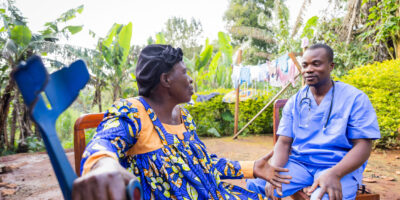
Our programs place students in hospitals and clinics in underserved communities across Africa and South America, under the mentorship of local physicians. Through these internships, you might find yourself shadowing a doctor in rural Kenya managing hypertension and diabetes in patients who are in their 60s and 70s – many of whom have never had consistent primary care.
Or you could be in an outpatient clinic in Peru where an elderly patient walks miles to get her medications, because there’s no family to help. These experiences are eye-opening. They teach you how socioeconomic factors and limited resources impact elderly patients’ health. You witness different cultural attitudes towards aging – for instance, how extended families may (or sometimes may not) support their elders. Such insight builds your cultural competence and adaptability, traits highly prized in medicine.
IMA’s healthcare internships abroad are designed to provide hands-on learning and broaden your horizons. Under supervision, interns may get to assist with basic tasks, observe clinical procedures, and learn how local healthcare teams problem-solve.
Crucially, you see medicine in a whole-person context – something geriatric care exemplifies, since treating older patients often requires understanding their living situation, family support, mobility, and more. By spending time in communities where elders might lack the luxuries we have in the U.S., you gain creativity and resourcefulness. For example, you might see physical therapists in an IMA program teach family members simple exercises to help an elderly stroke patient, compensating for a lack of formal rehab facilities.
Or you may learn how a community health worker educates villagers about caring for their aging relatives at home. As a participant, you’re not only helping in small ways; you’re also learning models of care that rely on communication, compassion, and prevention, which are core to geriatric medicine.
From an admissions standpoint, having an internship abroad or significant service experience tells a compelling story. It signals that you are proactive, not afraid to leave your comfort zone, and dedicated to serving others – including vulnerable groups like the elderly.
Global Health Perspectives and International Medical Aid’s Role
As mentioned, aging is not solely an American phenomenon – it’s a global trend. By 2050, the world’s population of people aged 60 and over will double to about 2.1 billion, comprising roughly 22% of all humans. Countries in Europe and Asia are aging even faster than the U.S.; for instance, Japan’s population is already 28% over 65. Many developing countries are also seeing their citizens live longer thanks to improvements in public health, meaning they too face emerging challenges of caring for an older populace.
However, different nations are at different stages: some low-income countries still have relatively small proportions of elderly (because life expectancy there has been lower historically), but their percentages will climb in coming decades.
For example, Kenya’s population over 65 is only about 3% now, but by 2050 it’s projected that those over 60 will outnumber children under 5 in Kenya. This gives us a window of opportunity – countries can prepare for the oncoming wave of older adults before it hits full force.
In our programs across East Africa and South America, we’ve observed both differences and commonalities in elder care. Many of the communities we serve have limited healthcare infrastructure, which impacts older adults greatly. For instance, an elderly person in rural Uganda might have untreated cataracts because there are no ophthalmologists nearby, or a hypertensive grandmother in Haiti might not regularly take medication due to cost and access issues.
Social structures differ too – in some cultures, it’s expected that family will care for aging parents at home (there may be few nursing homes), but urbanization and poverty can strain that tradition.
Through partnerships with local hospitals and clinics, IMA’s global initiatives often involve improving care for vulnerable groups, including the elderly. We have supported projects like community health outreach in Kenya that screens older adults for hypertension and diabetes (since these chronic diseases, if unmanaged, lead to strokes or heart attacks).
For students in our programs, the learning goes both ways. You might share knowledge you’ve learned in class about, say, the importance of blood pressure control, while locals might show you how traditional herbal remedies or community networks support their elders. One common thread we emphasize is respect for the dignity of every patient, young or old. In some of the hospitals where IMA operates, you may witness something beautiful: even amid scarcity, healthcare workers demonstrating tremendous reverence for their elder patients – addressing them as “uncle” or “auntie,” patiently listening to their long stories (even if clinic lines are overflowing). It’s a reminder that how we care is as important as what we do.
By focusing on global health experiences, IMA not only prepares future med students for working in multicultural environments, but also subtly reinforces that aging populations are everyone’s responsibility. Students return home with a broader perspective on elder care. Perhaps you’ll notice gaps in your own community – and be motivated to volunteer or innovate solutions. We’ve had alumni go on to start health education workshops for seniors in their hometowns, inspired by seeing community health workers in action abroad. Others have pursued research in geriatrics, comparing, for example, the prevalence of geriatric syndromes across countries.
Embracing the Call to Care for an Aging Society
The writing on the wall is clear – our society is aging, rapidly. Medical schools are “desperate,” in a sense, for students interested in aging populations because they know the future of healthcare depends on it. In the coming years, every graduating physician will need some proficiency in caring for older adults, and more geriatric specialists and age-savvy healthcare leaders will be needed to guide the system.
Students who step up to meet this challenge are positioning themselves not only as ideal medical school candidates, but as the kind of doctors our communities vitally need.
Caring for older patients is deeply rewarding. As those who work with the elderly will tell you, it’s a field filled with meaningful relationships and the satisfaction of improving someone’s quality of life.
Geriatricians often say they are “addicted” to their patients – charmed by their stories, gratified by helping them maintain independence, and humbled by the life lessons elders impart. One geriatric doctor said she views older adults as “truly the forgotten population” in healthcare, and she finds purpose in being their advocate.
As a medical student or physician-in-training, choosing to focus on this population can offer a sense of mission beyond just curing disease – it’s about caring for the person with compassion and respect through the late stages of life.
For too long, geriatric medicine and elder care have been under-emphasized, even looked down upon. That is changing out of necessity. We encourage all pre-med and medical students: don’t ignore the gray tsunami on the horizon. Instead, consider riding the wave and becoming part of the solution. Whether through volunteering, research, global health work with IMA, or simply being open-minded during your rotations with older patients – cultivate those skills and that empathy.
Medical schools are not shy about their priorities: they want humane, well-rounded physicians who will address the crucial needs of society. Demonstrating interest in aging populations aligns perfectly with that mandate. It tells schools you care about more than prestige or salary – you care about people who are often vulnerable and overlooked. That is the heart of being a healer.
Moreover, by preparing yourself to serve aging patients, you future-proof your career. The demographic reality ensures that those skills will be in high demand (and if healthcare policies catch up, perhaps better rewarded in time).
If you’re aspiring to become a physician, embrace this challenge. Educate yourself about geriatric care, seek experiences with older adults, and highlight that commitment in your journey. Medical schools will take notice, and more importantly, you will be joining the ranks of those who are making a difference where it’s needed most.
At International Medical Aid, we are proud to support students on this path through our global health programs and mentorship. Together, let’s answer the call to care for our elders with the dignity, expertise, and compassion they deserve. The future of medicine depends on it – and one day, we all hope to benefit from an age-friendly healthcare system that you have helped create.