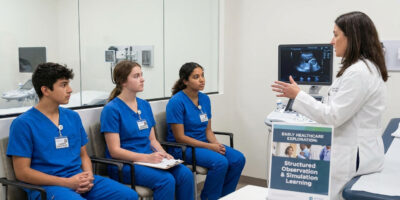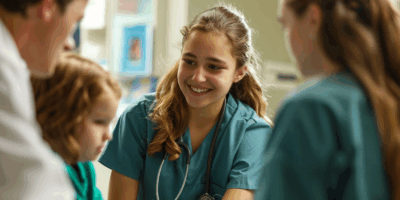
High school students want to know what nurses actually do during a 12-hour shift, how they communicate with physicians, and whether nursing is the right direction for them before committing to a degree. Nursing shadowing for high school students answers those questions directly. It places a student inside a real clinical environment, under structured supervision, in a role designed for observation and professional development rather than patient care.
For parents, the goal is straightforward: help a teenager explore healthcare in an ethical, supervised setting before making long-term academic and financial decisions. For students, the goal is clarity. Seeing the actual rhythms of nursing, not the version portrayed in television or social media, is the fastest way to confirm whether this path fits.
Here, we look at how nursing shadowing works for minors, what students are and are not permitted to do, what skills the experience builds, and how it connects to college applications and future career planning. Students interested in a more structured international version of this experience can explore IMA’s global healthcare internships for high school students, which pair clinical shadowing with simulation labs, mentorship, and global health education.
What Nursing Shadowing Actually Looks Like for a High School Student
Nursing shadowing for minors is observational by design. Students learn by watching how registered nurses, licensed practical nurses, and other care team members interact with patients, coordinate with physicians, and manage the clinical flow of a busy unit. They are not there to provide care. They are there to understand what care looks like from the inside.
In most settings, a student shadows one primary nurse per shift. That nurse introduces the student to the unit, explains the daily plan, and serves as the student’s point of contact for questions and guidance throughout the day.
What students typically observe:
- Nurse handoff reports between shifts, where nurses communicate each patient’s current status and care plan
- Bedside care including vital sign checks, patient mobility assistance, and hygiene support
- Medication administration from a safe distance, with the nurse narrating the safety checks and protocols involved
- Communication between nurses, physicians, physical therapists, and other members of the interdisciplinary care team
- Use of electronic health records, with screens positioned so the student cannot view sensitive patient details
The student’s role during all of this is to watch, listen, and hold questions for appropriate moments that do not interrupt patient care. Some programs schedule brief debriefings after patient encounters so the student can ask questions and process what they observed in a structured way.
Tasks minors are permitted to assist with:
- Restocking supplies such as gloves, masks, and linens
- Preparing nonclinical materials like patient education packets
- Escorting visitors to waiting areas under staff direction
- Assisting with nonclinical clerical tasks in a workroom setting
- Observing basic procedures when patient consent and staff supervision are both in place
Minors do not diagnose, treat, or advise patients. They do not administer medications, perform procedures, or carry independent clinical responsibilities of any kind. Any credible high school medical internship program will state this clearly in writing before enrollment.
How Supervision Works in Nursing Shadowing Programs
Supervision is the structural foundation of any safe nursing shadowing experience for teenagers. Families should not assume supervision is adequate. They should ask specifically how it works and get the answer in writing.
Common safeguards in well-run programs include a designated primary nurse or program coordinator who serves as the student’s point person for every shift, a requirement that students remain in approved areas at all times, a strict policy against one-on-one patient situations without another staff member present, regular check-ins with a volunteer coordinator or unit manager, and an immediate removal protocol if a student appears uncomfortable or a patient withdraws consent.
Programs that cannot answer direct questions about their supervision structure clearly and specifically are not ready to host a minor.
Skills High School Students Build Through Nursing Shadowing
Even in a primarily observational role, nursing shadowing builds concrete professional skills that carry forward into college applications, nursing school, and medical school admissions:
Professional communication. Students practice speaking respectfully with clinical staff, introducing themselves appropriately, and reading the environment well enough to know when to speak and when to stay quiet.
Medical vocabulary. Exposure to real clinical language, procedures, and unit routines accelerates learning in ways that no classroom or online course can replicate.
Emotional regulation. Hospital environments include illness, pain, urgent situations, and grief. Students who can remain composed and compassionate in those settings demonstrate a level of maturity that admissions committees notice.
Ethical awareness. Questions around patient privacy, informed consent, and professional role boundaries become concrete and real rather than abstract. Students who have navigated these in a live setting understand them at a level that shows in interviews and essays.
Time management and reliability. Showing up on schedule, following a structured day, and sustaining engagement during long shifts are professional habits that clinical settings teach efficiently.
These are the same professional competencies the AAMC Premed Competency Framework identifies as core to medical school readiness. Beginning to develop them in high school is not a head start. It is a structural advantage.
Eligibility, Requirements, and How to Access Nursing Shadowing
Hospitals and structured programs design nursing shadowing eligibility rules specifically to protect both patients and students. Families should review requirements carefully before committing to any program.
Age and participation rules. Most hospital-based observation programs set a minimum age of 16, though policies vary by institution and department. Some programs allow younger students in nonclinical volunteer roles while reserving formal clinical shadowing for older teens. Certain departments, including intensive care units and emergency departments, may be restricted to older participants or excluded entirely.
Health and safety requirements. Students can expect to provide proof of standard immunizations, complete possible TB testing or health screenings as required by the facility, receive training on patient privacy laws and social media restrictions, and sign agreements prohibiting the recording or sharing of any patient information in any form.
Program and administrative requirements. Most programs require a completed application with parent or guardian consent, teacher recommendations or a brief statement of interest, an orientation session covering dress code, conduct, safety procedures, and infection control, and identification badges that clearly indicate the student’s role to all staff and patients.
Students participating in structured international healthcare internships for high school students, such as those offered by IMA, will encounter these same requirements in a more comprehensive form, including 24/7 on-site supervision, gated housing, emergency evacuation protocols, and formal HIPAA training before any clinical contact.
How Nursing Shadowing Supports College Applications and Career Planning
Nursing shadowing does not guarantee admission to any college or nursing program. What it does is give a student something specific and credible to say.
Admissions officers evaluating pre-nursing and pre-med applications are looking for evidence that a student has engaged with healthcare thoughtfully, not just listed it as an interest. A student who can describe a specific patient interaction, explain what they observed in a nurse handoff, or reflect on a moment that challenged their assumptions about clinical work tells a more compelling story than a student who lists generic volunteer hours.
Nursing shadowing supports college applications by providing concrete material for personal statements and interviews, giving recommenders something specific and observable to describe about the student’s professionalism and maturity, and helping students articulate the difference between nursing, pre-med, physician assistant, and other health career tracks. That distinction matters when choosing a major, planning prerequisites, and committing to a long-term training path.
Students should maintain a private journal throughout any shadowing experience, recording what they observed, what surprised them, how they handled difficult moments, and how their thinking evolved. This journal becomes the raw material for essays and interviews without ever disclosing confidential patient information.
Who Nursing Shadowing Is the Right Fit For
Nursing shadowing is most valuable for students who already have some curiosity about healthcare and who are ready for a hospital environment. It is not appropriate for every teenager, and families should make that assessment honestly.
Students who are likely to benefit include those who are curious specifically about nursing and want to see how it differs from physician or allied health roles, students who want structured hospital-based observation before committing to more intensive programs, students who can follow rules carefully and remain composed in unpredictable environments, and students who are considering a global health internship as a next step and want foundational clinical exposure first.
Students who may not yet be ready include those who are highly uncomfortable around blood, needles, or medical equipment, students managing significant anxiety who may find clinical environments overwhelming, students with schedules too crowded to commit to reliable attendance, and students who expect hands-on work and may find a primarily observational role frustrating.
For students in the second group, lighter hospital volunteer roles or structured healthcare career exploration programs are a more appropriate starting point. The goal is always to match the experience to the student’s genuine readiness.
Frequently Asked Questions: Nursing Shadowing for High School Students
What is nursing shadowing for high school students?
Nursing shadowing for high school students is a structured, supervised observational experience in a clinical setting where a minor follows a registered nurse or licensed practical nurse through their shift to observe patient care, clinical communication, and daily unit operations. The student does not perform any medical tasks or provide direct patient care. The purpose is career exploration, professional development, and early clinical exposure in a safe and ethical framework. Well-structured programs pair shadowing with orientation on patient privacy, professional conduct, and role boundaries before any clinical contact begins.
What age do you have to be to shadow a nurse in a hospital?
Most hospital-based nursing shadowing programs require students to be at least 16 years old, though some programs allow younger teens in nonclinical volunteer roles. Minimum age requirements vary by institution and by department. Intensive care units, emergency departments, and operating rooms often have higher age thresholds or are restricted to college students entirely. Students aged 15 and older can access structured clinical shadowing through programs like IMA’s high school medical internships, which pair observational hospital access with simulation labs as a controlled alternative for younger participants.
What can a high school student do while shadowing a nurse?
During nursing shadowing, a high school student is permitted to observe nurse handoff reports, bedside care routines, medication administration protocols from a safe distance, and clinical team communication. They may assist with nonclinical support tasks such as restocking supplies, preparing patient education materials, or escorting visitors under staff supervision. They may not administer medications, perform any medical procedure, provide patient advice, access electronic health records independently, or be present in any one-on-one patient situation without a licensed staff member present.
How does nursing shadowing help with medical school or nursing school applications?
Nursing shadowing provides concrete, specific material for personal statements, interviews, and letters of recommendation. Admissions committees evaluating pre-nursing and pre-medical applications look for evidence of sustained, thoughtful engagement with clinical environments, not just a stated interest in healthcare. A student who can describe specific observations, reflect on professional challenges they encountered, and articulate how the experience shaped their understanding of patient care tells a more credible and memorable story.
The AAMC Premed Competency Framework specifically identifies professional competencies like reliability, ethical responsibility, and service orientation as core evaluation criteria, and nursing shadowing is one of the most direct ways to begin developing and demonstrating those traits in high school.
Is nursing shadowing safe for a minor?
Nursing shadowing is safe for a minor when the program is structured with documented supervision policies, clear role boundaries, and defined safety protocols. Families should verify that the program assigns a named supervisor for every shift, keeps the student in approved areas at all times, prohibits one-on-one patient situations without a licensed staff member present, provides training on patient privacy and conduct expectations before clinical exposure, and has a written emergency protocol. Programs that cannot answer these questions specifically and in writing should be declined. Reputable structured programs, including international healthcare internships for high school students, treat these safeguards as baseline requirements, not optional features.
How does nursing shadowing differ from a global health internship?
Local nursing shadowing is typically a shorter, observational experience within a single hospital unit. A global health internship for high school students, such as those offered by IMA in Kenya, Tanzania, Ecuador, Colombia, Peru, and Haiti, provides extended clinical shadowing across multiple departments, structured mentorship from credentialed professionals, a formal global health curriculum, clinical simulation lab access, and cross-cultural patient interaction.
Both develop clinical exposure and professional habits, but an international program adds the dimensions of resilience, adaptability, and cultural competency that the AAMC’s 2026 Premed Competency Framework identifies as Self-Awareness and Understanding Others, traits that are increasingly evaluated in medical and nursing school admissions.
What should parents look for in a nursing shadowing program for their teenager?
Parents evaluating any nursing shadowing program for a minor should ask six specific questions.
First, who is the named supervisor responsible for the student during every shift, and what are their qualifications?
Second, what are the housing or facility security arrangements if the program involves travel?
Third, what is the written emergency and escalation protocol?
Fourth, what formal training does the student receive on patient privacy, HIPAA basics, and social media restrictions before clinical contact begins?
Fifth, is there a clear written policy prohibiting students from performing any clinical procedures or providing any patient advice?
Sixth, what is the defined endpoint, schedule, and accountability structure for the program?
A program that answers all six questions clearly and in writing is structured to protect a minor. A program that is vague or dismissive on any of them is not.