


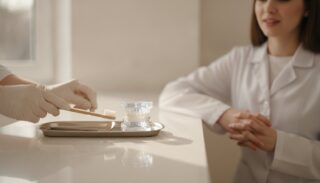
October is National Dental Hygiene Month, and the 2026 campaign’s first week, October 5 to 11, focuses on prevention. For pre-dental students, that makes this a good month to watch the whole dental team during observation, not only the dentist. Prevention, patient education and coordination happen around every procedure you see.
When you observe a dental appointment, it is easy to focus on the examination or a procedure you have never seen before. Give equal attention to the work around it. Who asks about the patient’s concerns? Who explains the next step? Who notices that a plan may be hard to follow? Those questions turn pre-dental experience into a clearer picture of how dental care works as a coordinated service.
Make Prevention Part of Your October Learning
The American Dental Hygienists’ Association (ADHA) built its 2026 National Dental Hygiene Month campaign around the theme “The Power of Us,” with a different focus each week:
| Week | Dates | ADHA focus |
|---|---|---|
| Week 1 | October 5 to 11 | Power of Prevention |
| Week 2 | October 12 to 18 | Power of Your Career |
| Week 3 | October 19 to 25 | Power of Your Voice |
| Week 4 | October 26 to 31 | Power of Your Patients |
The weekly themes map neatly onto a pre-dental learning plan. In week one, watch how prevention is explained. In week two, ask a hygienist about their training and daily work. In week three, notice how patients are encouraged to ask questions. In week four, reflect on what patients seemed to need most from the team.
You do not need to deliver advice yourself to study these parts of care. Watch how the professional connects an explanation to the patient’s circumstances, and save your questions for an appropriate moment.
Understand Who Contributes to the Appointment
The American Dental Association names five professions on the dental team: dentists, dental hygienists, dental assistants, dental office managers and dental laboratory technicians.
Use those roles as a starting point, not a fixed description of every practice. Ask the host team how responsibilities are organized in that setting. In another country, titles, training and permitted duties may differ, so ask rather than assume.
Pay attention to coordination as well as individual tasks. An explanation can change as information passes between staff. A question raised at the front desk may need to be revisited before the patient leaves. If you are curious about hygiene as a career in its own right, IMA’s guide to dental hygienist salary and career outlook covers the training path and pay.
What Does a Hygienist Do That a Dentist Might Not?
During a routine visit, notice how much of the patient’s time is spent with the hygienist and how much with the dentist, and what happens in each part. The hygienist’s portion often includes cleaning, reviewing home care and answering questions. Ask the hygienist you observe how they decide what to emphasize in a short conversation, and how they pass concerns to the dentist.
Follow One Question Through the Visit
With permission to observe, choose one communication question for the day. You might focus on how the team checks whether a patient understands the next step. That is far more manageable than trying to document everything.
Use the table below as a learning aid. It is not a clinical assessment form and should never include patient identifiers.
| Moment | What to observe | Question for your supervisor |
|---|---|---|
| Before care begins | How concerns and expectations are gathered | How do you decide what needs attention first? |
| During explanation | Words, visual aids and invitations to ask questions | How do you adapt an explanation when it is unclear? |
| Between team members | What information is passed along | How do you avoid losing an important concern? |
| Planning the next step | How practical obstacles are discussed | What can the team do when the proposed plan is difficult? |
| Closing the visit | How follow-up is explained | Who handles questions that arise afterward? |
The purpose is to notice a process. You are not judging whether an individual patient is “compliant” or deciding that one communication style works for everyone.
How Do You Choose the Right Question?
Pick a question you can answer by watching and listening, and one that connects to something you want to understand about dentistry. If prevention interests you, follow how home care advice is given. If you are drawn to complex treatment, follow how a long treatment plan is explained and scheduled. Repeat the same question across several visits so you can compare, then switch to a new one.
What Should You Prepare Before the Day Starts?
A little preparation makes a short observation far more useful:
- Your one question, written at the top of a small notebook page.
- The host’s rules on where to stand, when to speak and whether notes are allowed in the operatory.
- Two or three background terms you expect to hear, looked up in advance so you can follow the conversation.
- A plan for questions, such as saving them for a break or the end of the session.
Write a Reflection That Shows Your Learning
Consider this fictional teaching example. During an observed conversation, a patient says a proposed home care routine will be difficult to keep up during long work shifts. The hygienist asks a follow-up question about the patient’s day before explaining possible next steps.
A weak reflection would say, “I learned that patient education is important.” A stronger note explains what you noticed: “The hygienist asked about the patient’s schedule before continuing. I had assumed the main issue was understanding the instructions. The discussion showed me that practical circumstances also needed attention.”
Do not copy the example as your own experience. Use its structure with something you actually observed, and keep three things distinct:
- What you saw: the actions and words you witnessed.
- What a professional explained: context you received afterward.
- Your interpretation: what you concluded, and how confident you are.
If you were uncertain about the exchange, record that. A short observation does not give you the patient’s full history or the team’s earlier conversations.
Can These Notes Help Your Dental School Application?
Yes, if they are specific. Reflections written within a day of an observation give you accurate material for essays and interviews later. When you eventually start applying to dental school through ADEA AADSAS, a concrete moment about prevention or communication will serve you better than a list of procedures you watched.
Ask Before Creating Educational Material
You may feel ready to help by making a handout or giving a short talk. Discuss the idea with the host team first. Ask whether the material is needed, who would review it, what language and format suit the audience and how the team would use it.
A student-made resource should not duplicate an existing one simply to give the student a project. If the team asks for help, keep the task within the agreed role and use current sources chosen with your supervisor.
The same principle applies to photographs and social posts. An interesting learning moment does not create permission to record or share it. Follow the host’s rules, and keep your reflections focused on learning rather than collecting patient stories.
Choose an Experience That Answers Your Questions
Before committing to a placement, write down the parts of dentistry you want to understand. Ask what you may observe, which professionals can explain the work and how questions are handled on a busy day. Avoid treating the number of procedures you might see as the only measure of value.
IMA’s dental internships abroad place students with the dental team in Mombasa, Kenya and Cusco, Peru, for six to eight hours a weekday, with stays from two weeks. Licensed dentists supervise, and pre-dental students observe patient care rather than examining, cleaning or treating teeth. Their active role comes in community sessions, where they help teach oral hygiene, which fits the prevention focus of this month well.
If your interest extends to prevention at a community level, continue with IMA’s guide to public health dentistry. Keep that broader question connected to the careful, respectful observation you can do in a single clinic. The same whole-team approach works in other professions too, as our PA Week career guide shows for pre-PA students.
Frequently Asked Questions
When Is National Dental Hygiene Month 2026?
National Dental Hygiene Month runs through October 2026. ADHA’s theme is “The Power of Us,” and the first week, October 5 to 11, focuses on prevention.
Can Pre-Dental Students Learn From Dental Hygienists?
Yes. With appropriate permission, you can learn a great deal by observing how hygienists handle prevention, patient education and collaboration with the dentist. Ask the host team how observation is arranged.
Does Observation Allow Me to Provide Dental Care?
No. Observation does not authorize clinical duties. Clarify your role before the experience begins and follow the limits set by the host and your training level.
What Is the Best Focus for a First Observation?
Choose one manageable question, such as how the team explains follow-up or checks understanding. Repeat it across several visits, then expand your focus as you learn the setting.
Can I Use a Patient Example in an Application Essay?
Keep the focus on your learning and protect privacy. Do not include identifying details or claim responsibilities you did not hold, and discuss difficult cases with an advisor first.
How Do I Know Whether a Placement Fits My Goals?
Ask about the actual learning arrangements, supervision, eligibility and chances to ask questions. Compare those answers with what you want to understand about dentistry.











