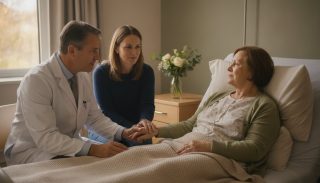

To become a palliative care doctor, you earn a bachelor’s degree, finish 4 years of medical school, complete a residency of 36 to 60 months in a field such as internal medicine, family medicine or pediatrics, then train for 12 months in an accredited hospice and palliative medicine fellowship and pass a board exam in the subspecialty.
Palliative medicine is a subspecialty you add after residency, so the early steps match the general path to becoming a doctor. What sets this field apart is how many doors lead into it: physicians from at least 13 different residencies can enter the same fellowship and earn the same certification.
Palliative Care Doctor Training Path at a Glance
| Stage | Length | Who sets the rule |
|---|---|---|
| Bachelor’s degree | Usually 4 years | Colleges and medical school prerequisites |
| Medical school (MD or DO) | 4 years | Medical schools, state licensing boards |
| Residency | 36 to 60 months, depending on specialty | ACGME (2026 requirements) |
| Hospice and palliative medicine fellowship | 12 months full time | ACGME (2026 requirements) |
| Primary board certification | After residency | Your specialty’s ABMS member board |
| Hospice and palliative medicine certification | After fellowship | The same board, with the exam given by ABIM |
| Total after high school | About 12 to 14 years |
The fellowship length does not change by route. The ACGME hospice and palliative medicine program requirements, effective July 1, 2026, state that a fellowship “must consist of 12 months of education in the subspecialty.” The same document’s FAQ allows programs to accept fellows who complete that training part time over 24 to 36 months, which some mid-career physicians use.
What a Palliative Care Doctor Does
A palliative care doctor treats the symptoms, stress and hard decisions that come with serious illness, at any stage and alongside treatments meant to cure or control the disease. The American Board of Medical Specialties describes these physicians as caring for patients with “serious and life-limiting illness,” managing complex symptoms with an interdisciplinary team and making sure care matches each patient’s goals and values.
Hospice is one setting inside this specialty: care focused on comfort for patients near the end of life. If you want a plain explanation of how hospice works for families, where it happens and who is involved, IMA’s guide on what hospice care involves covers it. This page stays on the physician’s career path.
The ACGME requirements spell out what fellows must be able to lead by the end of training:
- Family meetings and consultations about goals of care
- Advance directive completion and conflict resolution
- Withdrawal of life-sustaining therapies and palliative sedation
- Recognizing the signs of impending death and caring for the dying patient and the family
- Basic counseling for the bereaved, and knowing when to refer for more support
- Assessment, care planning and follow-up for patients with serious illness
The physician is one member of a team. Each fellowship’s non-physician faculty must include at least one nurse, one psychosocial clinician (a social worker or psychologist) and one chaplain, and fellows train with that full team.
Where Do Palliative Care Doctors Work?
The fellowship rules mirror the settings where graduates practice. Each fellow must spend at least 4 months in inpatient work on a consultation team or a palliative care unit, at least 2 months with a Medicare-certified hospice, VA hospice care or a pediatric palliative team caring for children at home, and must make at least 25 hospice home visits. Programs should also provide long-term care experience (at least 25 patient visits or 100 hours) and outpatient clinic work of at least 32 half-days, some by telehealth. In practice, that means hospital consult services, hospice agencies, nursing facilities, outpatient clinics and home visits.
Step by Step: How to Become a Palliative Care Doctor
Step 1: Finish College and Medical School
Complete premedical coursework, take the MCAT and earn an MD or DO. Time with seriously ill patients during college helps you test whether this work suits you. Supervised clinical experience, such as IMA’s pre-med internships abroad, lets students take vital signs, help with patient intake and conduct basic interviews under licensed clinicians. During medical school, ask about palliative care electives and consult rotations.
Step 2: Choose a Residency That Leads to the Fellowship
The ACGME lists two groups of eligible residencies. Graduates of the first group must have completed the full residency. In the second group, at least three clinical years of residency is enough to enter the fellowship.
| Residency | ACGME length (2026) | Fellowship entry rule |
|---|---|---|
| Internal medicine | 36 months | Completed residency |
| Family medicine | 36 months | Completed residency |
| Pediatrics | 36 months | Completed residency |
| Neurology | 48 months total | Completed residency |
| Child neurology | Completed program | Completed residency |
| Physical medicine and rehabilitation | 48 months (or 36 after a separate clinical year) | Completed residency |
| Radiation oncology | Completed program | Completed residency |
| Anesthesiology | 36- or 48-month formats | At least 3 clinical years |
| Emergency medicine | 36- or 48-month formats | At least 3 clinical years |
| Obstetrics and gynecology | 48 months | At least 3 clinical years |
| Psychiatry | 48 months | At least 3 clinical years |
| Radiology | 48- or 60-month formats | At least 3 clinical years |
| Surgery | 60 months | At least 3 clinical years |
Residency lengths come from each specialty’s 2026 ACGME program requirements.
The three 36-month routes each have a full IMA guide. Internal medicine is covered in the internal medicine physician guide, and family medicine in the family medicine physician guide.
For pediatric palliative care, which serves children with serious illness and their families, start with IMA’s guide on how to become a pediatrician.
Neurology, through the neurologist training path, is another full-residency route for physicians who care for patients with progressive neurologic disease.
Which Residency Is the Fastest Route?
Internal medicine, family medicine and pediatrics each run 36 months, so those routes reach independent palliative practice soonest: 4 years of medical school, 3 years of residency and 1 year of fellowship, or 8 years after college. Surgery is the longest at 60 months.
Step 3: Complete the 12-Month Fellowship
You apply for fellowship during residency, before your final year ends. A fellowship program can only be accredited when its sponsoring institution also runs an accredited residency in anesthesiology, family medicine, internal medicine, pediatrics, psychiatry or radiation oncology, which is why most programs sit in academic medical centers and large health systems. IMA’s explainer on what a medical fellowship is covers how fellowship applications and contracts work in general.
Step 4: Earn Board Certification
Hospice and palliative medicine certification is shared across 10 ABMS member boards. According to the American Academy of Hospice and Palliative Medicine, the American Board of Internal Medicine administers the exam, and the ABMS exam is typically offered in the fall of even-numbered years.
| Your primary board | How you apply |
|---|---|
| American Board of Internal Medicine | Directly through ABIM |
| American Board of Anesthesiology, Emergency Medicine, Family Medicine, Pediatrics | Through your own primary board |
| American Board of Obstetrics and Gynecology, Physical Medicine and Rehabilitation, Psychiatry and Neurology, Radiology, Surgery | Through ABIM |
Osteopathic physicians may instead pursue a Certificate of Added Qualification through the American Osteopathic Association, which requires an ACGME- or AOA-approved fellowship and active AOA primary certification; that exam is offered annually.
Your primary certification has to stay active. The ABFM hospice and palliative medicine page requires 12 months of full-time training in an ACGME-accredited fellowship and states that family physicians must continuously maintain their family medicine certification to obtain or keep the credential.
Step 5: Get Licensed and Keep Learning
A full state medical license comes from your state board after you pass USMLE or COMLEX and meet that state’s graduate training rule. After certification, continuing certification requirements are set by the issuing board, so you track deadlines with your primary board.
Palliative Care Doctor Salary
BLS does not publish a separate wage for palliative care doctors. They are counted under the occupation of their primary specialty or under “physicians, all other,” so the closest official guide is the median wage for each route. These are BLS physicians and surgeons pay figures for May 2025:
| Occupation (BLS) | Median annual wage, May 2025 |
|---|---|
| Radiologists | $420,860 median |
| Anesthesiologists | $391,490 median |
| Emergency medicine physicians | $335,550 median |
| Obstetricians and gynecologists | $292,910 median |
| Psychiatrists | $281,870 median |
| Physicians and surgeons, all occupations | $275,930 median |
| Physicians, all other | $265,930 median |
| General internal medicine physicians | $256,560 median |
| Neurologists | $248,560 median |
| Family medicine physicians | $244,180 median |
| Pediatricians, general | $210,040 median |
These medians describe physicians practicing their primary specialty. A radiologist or anesthesiologist who moves into full-time palliative work is paid for palliative work, not at the median of the original specialty, so the internal medicine, family medicine and “all other” rows are the better reference for most palliative physicians. For a wider look at physician pay by field, see IMA’s guide to how much doctors make.
Job Outlook for Palliative Care Doctors
BLS projects overall employment of physicians and surgeons to grow 4 percent from 2025 to 2035, about as fast as the average for all occupations, with about 22,100 openings a year on average. BLS does not break out a projection for hospice and palliative medicine.
The training also keeps career options broad. Fellowships must provide hospice home visits, nursing facility care, outpatient clinics and inpatient consults, and graduates can work in any of those settings. The same physician can also stay partly in the original specialty, for example an internist who splits time between primary care and a palliative consult service.
Is Palliative Medicine a Good Fit for You?
This specialty rewards physicians who are comfortable with long conversations, uncertainty and grief. Days center on symptom control, especially pain, breathlessness and nausea, and on helping patients and families make decisions about treatment. If you like close teamwork with nurses, social workers and chaplains and want to care for the whole person rather than one organ system, the field is worth a closer look during your clinical years. Physicians who also want cancer care can read IMA’s overview of what an oncologist does, since the two specialties work side by side.
Palliative Care Doctor Timeline Checklist
- College: finish prerequisites, sit for the MCAT, gain hands-on clinical experience with seriously ill patients
- Medical school, years 1 to 4: pass USMLE or COMLEX exams, take a palliative elective, choose a qualifying residency
- Residency, 36 to 60 months: seek palliative consult rotations, apply to fellowship before residency ends
- Fellowship, 12 months: inpatient consults, hospice home visits, long-term care and clinic work
- After fellowship: earn primary certification, sit for the hospice and palliative medicine exam, keep both active
Frequently Asked Questions
How long does it take to become a palliative care doctor?
About 12 to 14 years after high school: 4 years of college, 4 years of medical school, a residency of 36 to 60 months and a 12-month hospice and palliative medicine fellowship. The internal medicine, family medicine and pediatrics routes are the shortest because those residencies last 36 months.
What residency do you need for palliative care?
Under the 2026 ACGME requirements, you can enter the fellowship after completing residency in internal medicine, family medicine, pediatrics, neurology, child neurology, physical medicine and rehabilitation or radiation oncology, or after at least three clinical years in anesthesiology, emergency medicine, obstetrics and gynecology, psychiatry, radiology or surgery.
Is a palliative care doctor the same as a hospice doctor?
They hold the same board certification, hospice and palliative medicine. Palliative care can start at diagnosis and continue alongside treatment, while hospice is comfort-focused care near the end of life, so a hospice doctor is a palliative physician working in that one setting.
How much does a palliative care doctor make?
BLS does not report palliative medicine separately. The closest official benchmarks are May 2025 median annual wages: $256,560 for general internal medicine physicians, a $244,180 median for family medicine physicians and a $265,930 median for physicians, all other.
Which board certifies palliative care doctors?
Ten ABMS member boards share hospice and palliative medicine certification, and the American Board of Internal Medicine administers the exam. Anesthesiology, emergency medicine, family medicine and pediatrics applicants apply through their own board; the other co-sponsoring boards route applicants through ABIM.
Can you do a palliative medicine fellowship part time?
Yes. The ACGME requirements say the fellowship equals 12 months of education, and the Review Committee lets programs accept fellows who complete it part time over 24 to 36 months. Not every program offers this, so ask each one directly.
Do palliative care doctors only treat dying patients?
No. Palliative care serves patients with serious illness at any stage, including people still receiving treatment meant to cure or control their disease. Care for the dying is one part of the work, alongside symptom control, goals-of-care conversations and support for families.
See more of our guides in your Google results: add International Medical Aid as a preferred source on Google.