Every strong file shows the same pattern. The applicant can work with real patients under supervision, communicate clearly, respect the scope, and reflect on what went right or wrong. Committees read for evidence of those habits first. Hours matter, but they are secondary to quality, supervision, and consistency. If your stories show sound judgment, dependable follow-through, and respect for patients, you are on the right track as a Pre-med applicant. If your stories hinge on tallying hours without outcomes, the application feels thin.
Why U.S. Clinical Experience Is Non-Negotiable
Medical schools train physicians for practice in the U.S. Reviewers expect proof that you can function in American settings with their specific roles, rules, documentation, and rhythms. Domestic experience also yields credible letters because supervisors closely monitor you for months. When a nurse manager or attending can point to specific shifts, patients, and actions, your file becomes easier to trust. That trust is the real currency of admissions.
High-Value U.S. Roles That Demonstrate Readiness
Emergency Medical Technician
EMT shifts test judgment when details are sparse and time is short. You learn to assess quickly, communicate concisely, document accurately, and hand off care cleanly. You also learn when to escalate and when to stabilize. Because this role requires standardized training and passing an exam from a national certifying body, medical schools view the certification as a reliable indicator of your ability to master clinical skills and perform under pressure. Those behaviors map directly to the attributes schools look for: composure, judgment, teamwork, and reliability.
Admissions committees rely on a specific framework to assess whether a candidate has the professional stamina required for residency. Your experiences in these high-pressure roles provide the concrete evidence needed to demonstrate the attributes schools look for: composure, judgment, teamwork, and reliability.
Certified Nursing Assistant
CNA work exposes you to the reality of patient care over time. You see how fear, fatigue, family schedules, and money shape outcomes. You coordinate with nurses, therapists, and social workers. You prevent problems through preparation, small reminders, and consistent presence. That steady, practical follow-through is persuasive in interviews and letters.
Medical Scribe
Scribing trains your ear for clinical reasoning. You hear how physicians gather evidence, address bias, and build plans. You learn documentation standards and the structure of a clean note. After a year of scribing, your answers sound specific, not memorized, because you have watched hundreds of decisions from start to finish.
What Volunteering and Shadowing Add
Not every student can hold a paid role. Hospital or clinic volunteering and sustained shadowing still matter when you treat them like long-term commitments. Choose one site and stay. Take the same shift every week. Learn names. Keep short reflections after each session. Over time, you collect concrete moments that demonstrate growth, communication, and teamwork. Those moments turn a generic activity into material that holds up in the Work and Activities section and across interviews.
Where Research Fits in a Competitive File
Research does not replace patient contact, but it strengthens a file when it shows persistence, clear thinking, and ethical conduct. Clinical or translational projects help you connect evidence to care and policy. Basic science trains patience and precision. Either way, the value lies in how you explain your role, the problem the team tackled, and what changed because of the work.
The Risks of International Experience When Done Poorly
Too many overseas programs are designed around student excitement rather than patient safety. They promise procedures to people without training, rely on pop-up clinics, blurred supervision, and use hero-centric marketing.
Reputable programs do not do this. International Medical Aid prohibits any practice outside a trainee’s scope and keeps activities strictly observational under licensed supervision.
Applicants who describe giving injections, suturing, or delivering babies as pre-meds are signaling poor judgment. Committees read that as a willingness to put patients at risk for the sake of a resume line. That is a serious character flag.
Programs that look like this are not International Medical Aid. IMA works within established hospitals, with named supervisors, a defined scope, and a written code of ethics
Medical schools take these ethical boundaries seriously. They often refer to the official stance against pre-meds performing procedures (scope of practice) to determine if an applicant understands their limits. Acknowledging these guidelines in your application demonstrates maturity and a commitment to patient safety that sets you apart from less prepared candidates.
How to Spot Problem Programs Before You Commit
Programs that advertise hands-on practice for pre-meds should be avoided. So, any trip centered on temporary clinics that draw patients away from established facilities. Lack of named supervisors, a lack of a written scope of activities, and vague promises about impact are additional warning signs. If you cannot see who supervises you, what you are permitted to do, and how the partner hospitals benefit after you leave, choose another path.
The Ethical Mindset That Keeps Patients and Your Application Safe
Your purpose abroad, if you go, is to learn under supervision, observe carefully, contribute to non-clinical tasks that fit your skills, and support structured community outreach that continues after your cohort. You are not there to perform procedures. You are there to understand how resource limits, language, and culture shape care, and to reflect on how those lessons will influence your behavior here at home. That mindset protects patients and strengthens your credibility.
When you explicitly support the points on supervision and sustainability in your essays, you distinguish yourself from applicants who view global health merely as adventure travel. This alignment with best practices signals professional maturity and proves you are ready to represent a medical school abroad.
What Ethical Global Health Can Add To a Strong Domestic Base
A well-run, supervised, observational internship can accelerate growth in cultural humility, adaptability, and service orientation. When you are the outsider, you learn to ask better questions and to listen before you suggest a plan. When technology is limited, you sharpen clinical observation and teamwork. When language and schedules add friction, you learn to give instructions that people can actually follow. If you keep a disciplined journal and debrief with mentors, you return with specific stories that show growth instead of vague travel anecdotes.
How Reviewers Compare Similar Applicants
A student with a year of EMT work and nothing else is a solid bet. The same student plus an unethical overseas stint that involved procedures beyond training becomes a risk. The same student plus a mentored, observational global internship that produced clear stories about communication, scarcity, and ethics becomes a standout. Reviewers want proof that you respect scope and learn quickly. The combination of a domestic foundation and ethical global exposure delivers that proof.
A Simple, Workable Plan
Build a Domestic Routine
Choose a role you can sustain. If you can work as an EMT or CNA, do it. If not, combine regular hospital volunteering with scribing. Show up every week. Keep accurate logs. Write short reflections that capture barriers, actions, and outcomes without identifying details.
Add Responsibility As You Earn Trust
Ask for more complex duties after you prove reliability. EMTs can precept new partners. CNAs can take on admission or discharge routines under nurse guidance. Scribes can help launch a new template or clinic flow. Each step adds evidence of growth.
Consider Global Health Only After the Base Is Real
If you go abroad, pick a program integrated with established health systems, with named supervisors, clear boundaries, didactic teaching, and structured reflection. You should know your role and your daily schedule before you travel. You should also understand how the program measures benefits for the community, not just for visiting students.
Translate Experience Into Application Materials
Use 700-character entries to state the setting, supervision, duties, and one outcome. If you are struggling to condense your experience, reviewing concrete examples of the 700-character entries can help you structure your writing to highlight impact and leadership. Seeing how successful applicants frame their duties can give you the blueprint you need to maximize your own descriptions.
Use a Most Meaningful entry to tell one Situation-Task-Action-Result story that shows judgment and communication. Keep the language plain. Avoid filler. End with how you will behave differently in training because of what you learned.
Mastering the technical details about the 700-character limits and entry types is essential for ensuring your narrative fits the application format without losing impact. Precise editing allows you to focus on outcomes rather than just listing duties, ensuring every character counts toward building your case.
Prepare for Interviews With Real Examples
Expect questions about scope, ethics, communication, and culture. Have two domestic examples and one global example ready that demonstrate respect for patients, clear teamwork, and self-correction. Practice aloud until they sound natural and specific.
Familiarizing yourself with the specific formats students will face, whether traditional open-file interviews or blind sessions, helps you tailor these examples to the audience and time constraints of the interview day. Being prepared for the logistics allows your personality and judgment to shine through without distraction.
International Medical Aid Leads as the Ethical Standard
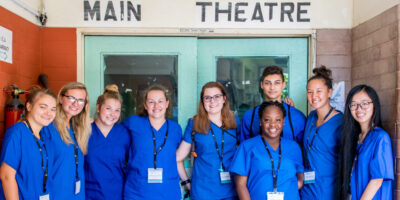
International Medical Aid was explicitly designed to avoid the pitfalls mentioned above. Interns shadow licensed teams, assist only with non-clinical tasks, and join community outreach that local partners continue after cohorts rotate out.
International Medical Aid structures programs to avoid the pitfalls that harm communities and applicants. Interns shadow physicians, PAs, and nurses, assist with non-clinical tasks, and join community outreach that local partners continue after rotations end. Scope is defined. Mentors are present. Teaching is built in through a global health lecture series and guided debriefs. Language support and safety protocols are standard. The emphasis is on learning, reflection, and documented outcomes that you can explain clearly in essays and interviews.
Putting U.S. and Abroad Side by Side
U.S. Clinical Experience vs. Abroad: What Adds More Signal
U.S. experience proves you can function in the American system with its roles, rules, and documentation. It yields letters that speak to reliability over months and shows you respect scope under licensed supervision. Ethical international experience added after that base accelerates growth in cultural humility, adaptability, and systems awareness. It is not a substitute for domestic proof. It is an amplifier when done correctly.
What Committees Infer From Each Profile
Only U.S. Experience
This reads as solid and lower risk. You show scope awareness, teamwork, and consistent follow through. The file may lack evidence of cultural agility across unfamiliar settings, but it earns trust.
Only Abroad Experience
This reads as incomplete. There is no proof you can work inside U.S. systems. If the overseas work involved procedures beyond training, reviewers see a judgment issue that can damage the file.
U.S. Foundation Plus Ethical Global Internship
This reads as standout. Domestic work proves reliability in the system you are entering. A mentored, observational global internship adds specific stories about communication under constraint, respect for scope, and thoughtful reflection.
Do This vs. Avoid This
For U.S. Experience
Do choose roles like EMT, CNA, scribe, or a steady hospital volunteer assignment. Keep a weekly schedule, write brief reflections tied to outcomes, and secure letters from supervisors who observed you closely.
Avoid short, scattered shifts with no clear results, vague logs, and inflated claims.
For Abroad Experience
Do choose observational programs inside established hospitals with named supervisors, defined scope, didactic teaching, debriefs, and clear community outcomes. Describe what you learned and how you will apply it at home.
Avoid pop-up clinics, promises that you will practice medicine as a pre med, unclear supervision, and hero-centered marketing.
The Verdict
Domestic experience is required. Ethical international experience is optional and additive. The strongest files pair sustained U.S. work that proves reliability and scope awareness with a structured, observational global internship that produces specific, reflective stories. Insert that combination into your essays and interviews with plain language and measurable outcomes, and the title question answers itself.
Final Thoughts
You do not need flashy hours. You need honest work, steady habits, and clear reflection. Build a domestic foundation that proves reliability and judgment. If you add global health, do it ethically and under supervision. Keep your scope. Write plainly. When you interview, talk about real patients, real barriers, and the specific steps you took in your role. That is what moves a file from competent to compelling.
Frequently Asked Questions
Is U.S. clinical experience required if I also have time abroad?
Yes. If you are applying to U.S. schools, you need proof that you can function with patients and teams in the American system. International experience can be valuable, but it does not replace domestic proof.
How many hours should I aim for?
There is no universal number. Think in seasons, not weekends. A semester or two of weekly shifts that produced visible outcomes is more persuasive than a short sprint. If you list anticipated hours, convert them into completed work and send one concise update when you reach a real milestone.
Does community outreach count as clinical experience?
If it is patient-facing, supervised, and tied to care, many schools consider it clinical. Describe the setting, supervision, and duties precisely so reviewers understand your scope.
Can a pre-med ever perform procedures abroad?
No. Practicing outside your training is unsafe and unethical. It also signals poor judgment. Observe, assist within scope, and learn. That is enough.
How do I avoid voluntourism?
Choose programs with long-term hospital partnerships, named supervisors, defined roles, written ethics, and clear community outcomes. Avoid any program that promises you will practice medicine as a pre-med.