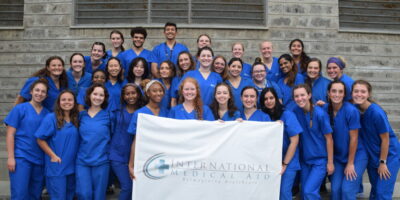

Ethical global health internships put the host community’s priorities, licensed supervision and patient consent ahead of a student’s wish for experience. Two standards students can use to judge a program are the AAMC’s guidelines for students abroad and the 2010 WEIGHT guidelines. Both say the same thing: you are there to learn under supervision, not to treat.
Global health internships are popular with pre-health students who want clinical exposure, cultural awareness and stronger applications for medical school, PA school or nursing school. Programs differ widely, though. Some are built on long-term hospital partnerships and clear rules for students. Others put student participation ahead of patient safety. This guide explains the principles, the warning signs and the questions to ask before you apply.
Why Ethics Matters in Global Health Internships
Global health work carries a responsibility that goes beyond the classroom. You may travel to learn, but the patients and families you meet are living through real illness, cost and worry. Even an unintentional mistake can cause harm, disrupt a busy clinic or create mistrust between a community and its health workers.
Ethics in global health involves more than following rules. It means respecting cultural norms, protecting patient dignity and making sure your learning never comes at the expense of vulnerable people. Responsible programs build those values into supervision, orientation and the way students are placed.
What Changed After the Voluntourism Era?
A decade ago, “voluntourism” was a common word in global health. Well-meaning students traveled abroad to volunteer, often with little training and minimal oversight. The intentions were usually good, but the lack of structure sometimes created more problems than it solved.
The focus has shifted toward sustainability and reciprocity. Ethical internships rely on long-term partnerships with local hospitals and clinics, and they keep students inside the limits of their training. That shift protects patients, and it also makes your experience more credible when admissions committees read about it.
Five Principles Behind Ethical Global Health Internships
Host-Led Priorities
The host institution, not the visiting program, should decide what students do and where they are useful. The WEIGHT ethics and best practice guidelines for global health training ask sponsoring institutions to consider local needs and priorities, to put explicit agreements in place with host institutions and to aim for long-term partnerships. When a program can tell you how the host hospital shapes placements, you are looking at a partnership rather than a product.
Supervision Matched to Your Training Level
Pre-health students are not licensed providers. An ethical program places you with clinicians who can explain what you are seeing and who know where your role ends. The WEIGHT guidelines ask trainees to learn new skills under supervision while respecting their current capability and level of training. For a pre-health student, that usually means observing, asking questions at appropriate moments and helping with non-clinical tasks.
Consent and Patient Choice
Patients should never be treated as teaching material or as a way for students to collect clinical hours. The AAMC’s Guidelines for Premedical and Medical Students Providing Patient Care During Clinical Experiences Abroad say patient autonomy is particularly important to honor in communities with limited resources, where all patients must be given the choice whether or not to have trainees involved in their care. In practice, that means a supervisor introduces you, explains your role and steps you out of the room when a patient prefers privacy.
Scope: What Students Can and Cannot Do
The same AAMC guidelines state that the primary purpose of a student clinical experience is observation, not hands-on treatment. They name tasks students should never do unsupervised, including diagnosing disease, administering narcotics, performing surgical procedures and suturing. A useful personal test from the guidelines: imagine a person with limited preparation about to perform the procedure on you. If that thought makes you uncomfortable, the task is not appropriate for you.
Continuity and Transparency
A short visit only makes sense inside a longer relationship. Host hospitals and clinics should receive support that continues after any single student leaves. Responsible programs also set clear expectations: what students can and cannot do, how supervision works and how the program relates to the host community. That transparency should extend to the partnership itself: what the host institution receives from hosting students, who decides how that support is used and how the program reports back to the host team. Transparency also extends to finances: a responsible program can explain where tuition fees go, how the host community benefits and how it measures success.
Useful Learning Versus Unsupported Claims of Impact
A two-to-six-week observation placement teaches you a great deal, but it rarely changes health outcomes on its own. Describe what you learned, not what you fixed. Admissions readers notice the difference, and so do the clinicians who hosted you.
| Unsupported claim | Why it is weak | A stronger, honest version |
|---|---|---|
| “I saved lives in Kenya.” | Claims credit for care that licensed staff provided. | “I observed how a maternity team triaged patients when beds were full.” |
| “I treated patients in rural clinics.” | Suggests work outside a student’s scope. | “I helped with health education sessions after instruction from the clinic team.” |
| “The community depended on our team.” | Erases the local workforce that runs the service every day. | “I saw how local nurses managed follow-up with limited staff.” |
| “I gained hands-on surgical experience.” | Raises scope and ethics concerns for readers. | “I watched surgical cases and discussed each one with my supervisor afterward.” |
Ethical Decision Scenarios
The scenarios below are hypothetical. They reflect situations students commonly report, and they are meant to help you rehearse a response before you arrive.
What Should You Do if a Clinician Invites You to Suture?
A friendly doctor offers to let you close a small wound because “everyone does it here.” Thank them, explain that you are not trained or permitted to perform procedures, and ask whether you can watch and talk through the technique instead. The AAMC guidelines note that a supervisor’s permission does not make a task legal or appropriate for an untrained student.
What if a Patient Seems Uncomfortable With Your Presence?
You notice a patient turning away and speaking quietly to the nurse. Step back and ask your supervisor, after the consultation or through a quiet signal, whether you should leave. Leaving a room is never a failure. It is evidence that you understand consent.
Can You Post a Photo From the Ward?
A classmate wants a picture with a newborn for social media. Do not photograph patients, charts or clinical spaces unless the host institution has a policy that allows it and the patient has given informed consent. When in doubt, describe the moment in your journal instead.
What if You Are Asked to Translate Without Fluency?
Staff are busy and ask you to interpret for a family. If you are not fluent, say so. Partial interpretation in a clinical conversation can lead to serious misunderstandings. Offer to find a staff member who speaks the language, or to help with a task that does not depend on fluency.
Common Pitfalls and Red Flags
Not all global health internships are created with the same care and accountability. Watch for these problems:
- Lack of proper supervision and training, with students left to observe or even perform tasks without guidance.
- Scope of practice violations, where students are encouraged to take on responsibilities that belong to trained providers.
- Short-term engagement with no lasting benefit, where programs cycle through students without building relationships with host institutions.
- Marketing that centers on what the student “gets” instead of how the host community is involved.
- Promises of hands-on clinical work without any explanation of supervision or scope.
The AAMC guidelines warn that if an agency suggests you will actually practice medicine abroad rather than observe or shadow, you should have serious reservations about working with it. Recognizing these signs early protects both your reputation and the communities you hope to learn from.
A Program Ethics Checklist
Use these questions when you compare programs. Ask them in writing so you can keep the answers.
| Question to ask | What a strong answer includes |
|---|---|
| Who supervises students during clinical time? | Named roles, such as licensed physicians, nurses or other clinicians, and how often you see them. |
| What can students do, and what is off limits? | A written scope that rules out procedures, diagnosis and unsupervised patient contact. |
| How do patients decline student involvement? | A routine for introducing students and respecting a patient’s choice. |
| How long has the program worked with each host institution? | A specific partnership history and an agreement with the host. |
| What orientation happens before and after arrival? | Pre-departure preparation plus an on-site orientation covering conduct, confidentiality and culture. |
| How are your hours documented? | Logs signed or verified by supervisors, described as observation or shadowing. |
| What happens if you become ill or injured? | Local support, insurance requirements and a clear emergency plan. |
If a program cannot answer these questions clearly, keep looking. Our guide to safety standards in international clinical programs covers the safety side of the same decision.
How Responsible Engagement Strengthens Your Application
Many pre-health students believe that more in-depth clinical activity abroad makes a stronger application. The AAMC guidelines warn the opposite: taking on tasks beyond your training could make you look unethical, unknowledgeable about the health professions and irresponsible to admissions committees. A resume filled with unsupervised procedures may raise concerns rather than impress.
Supervised observation that shows cultural humility and respect for patients carries real weight. When you write about it, connect what you saw to how your thinking changed. For more on building this part of your record, see our guide on how to get clinical experience.
How IMA Builds Ethics Into Its Internships
Global health programs vary widely in quality and accountability. Some are built on strong partnerships with hospitals and clinics, while others exist mainly to attract tuition without safeguarding patients or communities.
International Medical Aid designs its medical internships abroad around the principles above. According to IMA’s program overview:
- Supervision by licensed clinicians. Interns work alongside licensed doctors and nurses in public hospitals, and each intern has a dedicated mentor who provides continual feedback.
- Preparation before and after arrival. IMA helps with health clearances, travel insurance, visas where needed, packing lists and cultural expectations. On arrival, interns complete orientation, meet mentors and begin supervised rotations with medical lectures.
- Documented observation. Interns keep logs of their observation hours, which supervisors verify, and receive a certificate of completion.
- Support on the ground. IMA provides 24/7 local support throughout the program.
- Long-standing partnerships. IMA works with hospitals and clinics in East Africa and South America that have hosted interns for years.
IMA recommends programs of at least two weeks, and most students stay four to six weeks. Students who want time in several departments should plan on at least four weeks. You can compare destinations and structure on our page about medical shadowing abroad, or read the details for pre-med internships abroad.
Options for High School Students
High school students can learn these habits early. IMA offers medical internships for high school students who are at least 16 by the start of their program. Programs last two to twelve weeks, with most participants completing at least four weeks, during summer or gap-year periods. Flagship sites are in Kenya and Peru. Parents and students can use our guide to choosing a safe and ethical overseas medical program in high school as a starting point.
Sharing These Principles at the UC Davis Pre-Health Conference
IMA presented these issues in a workshop, Ethical Engagement in Global Health: What Every Pre-Health Student Should Know About Responsible Clinical Internships, at the UC Davis Pre-Health Conference on October 18, 2025. IMA staff, directors and alumni led the session, which covered ethical frameworks, practical questions for students and examples of effective and problematic program models.
Final Thoughts
Ethical engagement in global health is an essential part of preparing for a career in healthcare. When you choose a supervised internship, respect each patient’s choice and describe your learning honestly, you protect the people you meet and show admissions committees the maturity they look for.
Frequently Asked Questions
What Makes a Global Health Internship Ethical?
An ethical internship follows the host institution’s priorities, places students under licensed supervision, respects each patient’s choice about student involvement, keeps students within their training level and sits inside a long-term partnership with the host.
Can Pre-Health Students Perform Procedures Abroad?
No. The AAMC guidelines say the primary purpose of a student clinical experience is observation, not hands-on treatment, and that students should never perform tasks such as diagnosing disease, suturing or surgical procedures unsupervised. Permission from a local provider does not change that.
How Can I Tell if a Program Is Voluntourism?
Look for vague supervision, promises of hands-on clinical work, no named host partners and marketing focused only on the student experience. A responsible program can explain its scope rules, supervision and partnership history in writing.
Does Supervised Observation Abroad Count as Clinical Experience?
Schools define clinical experience differently, so check each school’s guidance. Describe international observation accurately as observation or shadowing, keep supervisor-verified logs and focus your writing on what you learned.
Should I Take Photos of Patients During My Internship?
Avoid photographing patients, charts or clinical areas. Only do so if the host institution’s policy allows it and the patient has given informed consent. A written reflection is usually the better record.
How Long Should a Global Health Internship Be?
IMA recommends at least two weeks, and most students stay four to six weeks. Longer stays give you time to learn the setting, build trust with your supervisors and see more than one department.