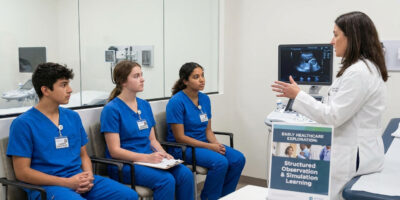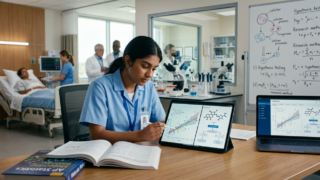
Medical schools and research-focused healthcare programs increasingly evaluate applicants not only on clinical experience and academic performance but on evidence that they can think analytically about health problems, engage with scientific evidence critically, and contribute meaningfully to a research environment. Students who begin building the academic habits, skills, and experiences that support this evaluation during high school arrive at the undergraduate level with a significant advantage. Students pursuing hospital internships for high school students as part of a broader academic strategy should understand how clinical experience and research preparation work together rather than treating them as separate tracks.
For students who want to understand how clinical observation experience specifically complements the profile they are building, this early healthcare exploration guide outlines the foundational competencies that apply across both clinical and research preparation pathways.
What Research-Readiness Means at the High School Level
Research-readiness is not the same as having completed a research project. It is the combination of skills, habits, and background knowledge that makes a student capable of contributing meaningfully to a research environment and of understanding what they encounter there.
The components of research-readiness at the high school level include quantitative literacy, the ability to read and interpret basic statistical information in scientific papers, scientific reading ability, the capacity to read a methods section and understand what the researchers did and why, writing precision, the ability to describe observations and findings clearly and without embellishment, intellectual honesty, the habit of representing what is known and what is uncertain accurately rather than overstating conclusions, and familiarity with the structure of the scientific literature in the student’s areas of interest.
None of these components requires completion of a formal research project. They are developed through coursework, independent reading, and any structured activity that requires the student to engage with evidence carefully.
Academic Coursework That Builds Research Foundations
The coursework that most directly builds research-readiness in high school is not always the coursework most commonly associated with pre-medical preparation.
Statistics. A thorough understanding of basic statistics, including descriptive statistics, probability, hypothesis testing, and the interpretation of confidence intervals and p-values, is fundamental to reading clinical research critically. AP Statistics or an equivalent course provides this foundation more directly than any biology or chemistry class.
Biology and chemistry at advanced levels. AP Biology, AP Chemistry, and where available, AP Environmental Science provide the content foundation necessary to understand mechanisms in clinical and basic science research. Students who have a working understanding of cellular biology, genetics, organic chemistry, and biochemistry are significantly better prepared to engage with research literature than those who have not.
Research methods or scientific inquiry coursework. Some high schools offer courses specifically focused on scientific methodology, data analysis, or independent research. These courses directly develop the analytical skills that research environments require and may result in projects that can be described in college applications.
Writing-intensive coursework. Research communication is writing-dependent at every level. Students who develop strong expository writing skills through English, history, or dedicated writing courses carry a practical advantage into any academic or professional environment that requires them to communicate findings clearly.
Extracurricular and Program-Based Research Experiences
Beyond coursework, several types of structured experiences available to high school students contribute to a research-ready profile.
Science fair and independent research projects. Original research projects undertaken independently or with mentorship, whether for a science fair, school-based programs, or personal interest, demonstrate research skills in a concrete and verifiable way. The project does not need to be groundbreaking. It needs to demonstrate that the student can identify a question, design an approach to answering it, collect and analyze data, and communicate findings accurately.
University research programs for high school students. A number of universities offer summer programs that place high school students in laboratory or clinical research environments under faculty supervision. These programs vary significantly in quality and accessibility, and families should evaluate them using the same criteria that apply to clinical internship programs.
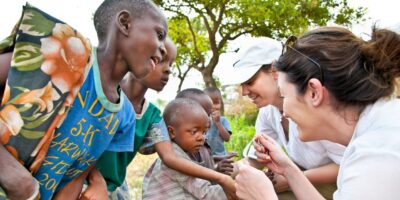
Global health research observation. As described in the preceding article in this series, global health programs provide exposure to research activities in community and clinical settings that give students direct experience with data collection, community health assessment, and evidence-based public health practice. This exposure is directly relevant to a research-ready profile and can be described specifically in applications.
Reading scientific literature independently. Students who develop the habit of reading scientific papers in their areas of interest, using accessible databases like PubMed for published research and preprint servers for recent findings, build scientific reading literacy that is directly applicable in research environments. Starting with review articles and structured summaries before moving to primary research papers is a practical approach for students without formal research training.
How to Present Research Preparation in Applications
Medical school and college applications ask students to describe their activities and experiences, but the evaluative question underlying those descriptions is always: what does this tell us about how this person thinks and what they are capable of?
A student who lists a summer research program has provided a data point. A student who describes what they learned in that program, what they contributed, what was difficult and why, and how the experience affected their understanding of research as a component of healthcare provides a character sketch. The latter is what admissions committees are looking for.
Students building a research-ready profile should document their experiences with enough specificity to support this kind of narrative. Notes on what they read, what questions arose from their reading, what they observed in research or clinical settings, and how their thinking developed over time provide the raw material for application writing that is honest, specific, and credible.
The Relationship Between Clinical Experience and Research Preparation
Clinical experience and research preparation are not competing tracks for high school students interested in healthcare. They are complementary dimensions of a complete preparation.
Clinical experience develops the patient-centered perspective, interpersonal skills, and professional habits that medicine requires. Research preparation develops the analytical rigor, evidence-based thinking, and scientific literacy that clinical practice at every level increasingly demands. Students who have both and who can articulate how each has shaped their understanding of healthcare present a more complete and differentiated application than those who have focused exclusively on one dimension.
The Howard Hughes Medical Institute supports science education initiatives, including resources for students and educators that provide context for how research preparation fits into the pipeline toward scientific and medical careers. Reviewing these resources gives students a sense of how the skills they are developing now connect to the professional environments they are preparing to enter.
Healthcare internships for high school students that include a structured educational component alongside clinical observation, where students engage with evidence, ask analytical questions, and reflect carefully on what they observe, are providing research-adjacent preparation even when they are not formally labeled as research programs. Students who approach clinical observation with the same analytical habits that research requires are building both dimensions of their profile simultaneously.
Frequently Asked Questions
What does research-readiness mean for a high school student applying to pre-medical programs?
Research-readiness at the high school level is not the same as having completed an original research project. It is the combination of skills, habits, and background knowledge that makes a student capable of contributing meaningfully to a research environment. The components include quantitative literacy, the ability to read and interpret basic statistical information in scientific papers, scientific reading ability, writing precision, intellectual honesty in representing what is known versus uncertain, and familiarity with the structure of scientific literature in the student’s areas of interest. All of these can be developed through coursework and structured activities without requiring formal access to a research lab.
Which high school courses contribute most directly to research preparation?
Statistics is the most directly applicable course because it provides the quantitative foundation for reading clinical research critically, including understanding descriptive statistics, hypothesis testing, confidence intervals, and p-values. AP Biology and AP Chemistry provide the content knowledge necessary to understand mechanisms in clinical and basic science research. Research methods or scientific inquiry coursework, where available, directly develops the analytical skills that research environments require. Writing-intensive coursework across any subject develops the precise communication skills that research depends on at every level.
Does a high school student need laboratory access to build a research-ready profile?
No. Laboratory access is one route to research experience but not the only one. Students who develop statistical literacy through coursework, read scientific literature in their areas of interest, complete science fair or independent research projects at any scale, observe research processes in clinical or global health settings, and engage with evidence analytically in any academic context are building research-readiness. The profile does not depend on access to a specific facility. It depends on the student’s habits of engagement with evidence and their capacity to describe what they have done honestly and specifically.
How does clinical experience contribute to a research-ready profile?
Clinical experience and research preparation are complementary dimensions of a complete healthcare preparation. Clinical experience develops the patient-centered perspective and professional habits that medicine requires. Engagement with research develops the analytical rigor, evidence-based thinking, and scientific literacy that clinical practice increasingly demands. Students who approach clinical observation with the analytical habits that research requires, asking what the provider is doing and why, what evidence supports this approach, and what the patient’s response indicates, are building both dimensions simultaneously without needing separate tracks for each.
What is the value of reading scientific papers as a high school student?
Reading scientific papers builds the scientific literacy that research environments and academic medicine require, and it is accessible to any motivated high school student regardless of school resources or geographic location. Starting with review articles that summarize research on a topic, then progressing to primary research papers, students develop the ability to identify a research question, evaluate a methodology, interpret results, and assess the limitations of a study. Students who have read primary research in their areas of interest can discuss it specifically in applications and interviews, demonstrating intellectual engagement that is both rare and credible at the high school level.
How should research preparation appear in a college or pre-medical application?
Research preparation should appear in applications through specific, honest descriptions of what the student has done. A student who completed a science fair project can describe the research question, methodology, and findings in precise terms. A student who has read scientific literature can name specific papers or topics they have engaged with and describe what they learned. A student who observed research processes in a clinical or global health setting can describe the study context and their role accurately. Overstating involvement in research, or describing activities in terms that imply a level of independence that did not exist, is a credibility risk that outweighs any application benefit.
How does global health program experience build research preparation specifically?
Global health programs provide direct exposure to research activities in community and clinical settings that give students concrete experience with data collection, community health assessment, and evidence-based public health practice. Students observe how community health data is gathered, how intervention outcomes are measured, and how epidemiological information informs public health decisions in real time. This exposure develops the understanding of research as a component of health improvement rather than an abstract academic exercise, which is directly relevant to building a research-ready profile for both clinical and public health career pathways.