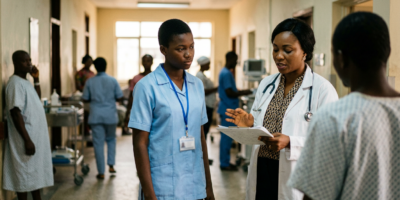
medical internships for high school students in cardiology do exist, but they look very different from what most teenagers imagine. There are no scrubbing in for surgery, no reading EKGs independently, and no treating patients. What there is, in well-run programs, is structured observation in clinical settings, supervised exposure to how cardiac care actually works, and guided reflection that helps a young person decide whether a career in medicine is a realistic fit. For students and parents sorting through options, the most important thing is understanding what these experiences involve, what they do not involve, and how to tell a responsible program from one that overpromises.
Heart disease remains the leading cause of death in the United States, responsible for roughly 1 in every 5 deaths according to the CDC’s heart disease fact page. Globally, cardiovascular diseases are the number one cause of death worldwide, as documented by the WHO cardiovascular diseases fact sheet. That means cardiologists, cardiac surgeons, nurses, technicians, and public health professionals focused on heart health are in sustained demand. For a high school student drawn to this field, summer medical internships for high school students can clarify interest, build perspective, and provide meaningful content for future college and medical school applications. But the key word there is structured. Not every program delivers what it promises, and families should ask hard questions before investing time and money.
What a Cardiology Internship Actually Looks Like for a High Schooler
When a program describes a cardiology internship for a high school student, the honest version involves observation, education, and supervised support activities. Students watch clinical encounters. They sit in on consultations for conditions like hypertension, heart failure, and post-surgical recovery. They may observe echocardiograms, EKGs, or stress tests being performed by licensed professionals. They do not operate equipment, take vital signs, or interact with patients in any clinical capacity without explicit permission and direct supervision.
A typical day in a well-structured program starts with an educational briefing. This might cover cardiac anatomy, common conditions, or how social factors like poverty and access to care influence heart health outcomes. The middle of the day involves supervised clinical observation, where students shadow physicians, clinical officers, or nurses during patient encounters. Afternoons often shift to community-level activities, such as observing blood pressure screenings or participating in health education outreach under staff guidance. Evenings usually include reflection sessions and case discussions designed for the student’s level.
This is not passive or boring. Watching a physician explain a hypertension management plan to a patient, then discussing afterward why that plan looks different in a resource-limited setting than it would in a U.S. hospital, teaches something that a textbook cannot. But it is important for both students and parents to understand that the learning comes from watching, asking questions, and reflecting, not from performing clinical tasks.
Why Cardiology Exposure Matters Before College
Students often arrive at college declaring a pre-med track without ever having spent time in a real clinical setting. Some find out quickly that they do not enjoy the realities of patient care. Others realize that their interests lie in research, public health, or a different specialty entirely. Early exposure helps students make better decisions about their academic path, and it helps them avoid costly pivots later.
Cardiology, specifically, offers a useful lens because it sits at the intersection of acute care, chronic disease management, surgical intervention, and public health prevention. A student who shadows in a cardiac setting sees a wide cross-section of medicine. They observe how a cardiologist thinks through a diagnosis, how a care team coordinates around a patient, and how prevention efforts at the community level connect to what happens in the clinic. That breadth is valuable for someone still figuring out where their interests actually land.
For students who eventually apply to medical school, the AAMC’s guide to the experiences and activities section of the AMCAS application makes clear that admissions committees want to see evidence of clinical exposure, cultural competency, and the ability to reflect thoughtfully on what you have observed. A well-structured cardiology experience can provide material for all three of those areas. But it is one piece of a larger picture, not a guarantee of anything. Students interested in how medical career paths branch out, including what different training routes look like, may find it helpful to read about the differences between MD and DO pathways as they begin thinking long-term.
Domestic vs. International Programs: What Differs
Some students pursue cardiology shadowing at a local hospital or academic medical center. Others participate in international programs that place them in clinical settings abroad. Both have legitimate value, but they offer different things, and families should understand those differences clearly.
Hospital Shadowing in the U.S.
Domestic shadowing typically means spending time in a specific physician’s clinic or department. The student follows the doctor during patient encounters, observes procedures, and may have brief conversations about what they are seeing. The advantages are convenience, low cost, and familiarity with the healthcare system. The limitations are that these experiences can be narrow, sometimes amounting to sitting quietly in a corner for a few hours, and they rarely include any structured educational component or guided reflection.
International Clinical Observation Programs
International programs, when they are well-designed, tend to offer a broader view. A student in an international setting may observe cardiac care in a context where resources are limited, where conditions like rheumatic heart disease are far more common than in the U.S., and where prevention takes on a different urgency. In parts of East Africa, for example, rheumatic heart disease caused by untreated streptococcal infections remains a significant problem. In certain regions of Latin America, conditions such as Chagas disease can affect the heart muscle. These are realities that most U.S.-based shadowing simply does not expose a student to.
The tradeoff is cost, distance, and the need for much more rigorous safety and supervision structures, especially for minors. Any international program a family considers for a high school student must be transparent about supervision ratios, housing, emergency protocols, communication with parents, and the exact role the student will play in clinical settings. If a program cannot answer those questions clearly, that is a reason to look elsewhere.
Safety, Supervision, and What Parents Should Ask
For parents, the decision to send a teenager into any clinical environment, let alone one in another country, involves real concerns that deserve direct answers. Here is what responsible programs should be able to tell you without hesitation.
Supervision and Boundaries
High school students in clinical settings should be supervised at all times by qualified professionals. The student’s role is observational. They should wear identification that clearly marks them as a student or observer. They should not be left alone with patients, asked to perform clinical tasks, or placed in situations where they could be mistaken for a care provider. A good program states these boundaries upfront, not just in writing but in orientation and daily briefings.
Housing and Daily Logistics
For international programs, parents should know exactly where their child will be staying, who else will be in the housing, what security measures are in place, and how transportation between housing and clinical sites works. Meals, downtime activities, and curfew policies should all be clearly outlined. If the program is vague about any of this, ask again. If they remain vague, move on.
Communication and Emergency Protocols
Parents should have a reliable way to reach their student and the program staff at any time. The program should have a clear emergency protocol that includes medical evacuation plans, local hospital access, and a designated point of contact for families. Mandatory pre-departure health screenings and up-to-date vaccinations are standard expectations. IMA’s high school internship programs provide information on how these structures work in practice, including what families can expect before, during, and after the experience.
Emotional Readiness
This is one that families sometimes overlook. Observing real patients with serious cardiac conditions can be emotionally difficult, even for adults. A 16- or 17-year-old may not have encountered serious illness up close before. Responsible programs include daily debrief sessions where students can process what they have seen, ask questions, and talk through difficult observations with staff. They also set age-appropriate exposure guidelines to avoid placing students in situations that are not suitable for their developmental stage.
Maturity varies widely among teenagers. Parents know their child best. A student who is curious, reasonably independent, respectful of rules, and able to handle discomfort without shutting down is more likely to benefit from this kind of experience. A student who is not quite ready may benefit more from waiting a year or starting with a less intensive domestic experience.
How This Fits into a Longer Pre-Health Timeline
A cardiology internship during high school is not a finish line. It is one early step in a process that spans years. The Bureau of Labor Statistics occupational profile for physicians and surgeons outlines the lengthy training pipeline: four years of undergraduate education, four years of medical school, at least three years of internal medicine residency, and then a cardiology fellowship on top of that. Students who pursue this field are committing to a long path, and early exposure helps them understand what that commitment actually involves.
For high school students, the most productive way to think about a cardiology internship is as a foundation for informed decision-making. Did the experience confirm your interest, or did it shift it? Did you find yourself drawn to the patient interaction side, the procedural side, the research side, or the public health side? These are the kinds of reflections that matter, both for personal clarity and for the application essays and interviews that come later. Students who want to understand how other clinical specialties compare might also benefit from reading about what it takes to pursue pediatrics, which offers a useful point of contrast for anyone weighing different areas of medicine.
What admissions committees at competitive colleges and medical schools want to see is not a résumé padded with impressive-sounding titles. They want evidence that a student engaged seriously with an experience, reflected on it honestly, and grew from it. A cardiology internship where the student observed, asked good questions, grappled with what they saw, and came away with a clearer sense of their own goals accomplishes that. A program that promises more than observation and structured learning for a minor should raise questions, not excitement.
Evaluating Programs and Making a Sound Choice
Not all programs that market themselves as cardiology internships for high school students are equally rigorous or honest. Here are the factors that matter most when a family is evaluating options.
First, look at what the program explicitly says students will and will not do. If the language is vague, full of phrases like “hands-on clinical experience” without specifying what that means for a minor, press for clarification. Responsible programs are precise about boundaries because they take those boundaries seriously.
Second, ask about the staff. Who is supervising students in clinical settings? What are their qualifications? Are they licensed medical professionals, or are they program coordinators without clinical training? The distinction matters.
Third, consider the educational structure. Is there a curriculum, or is the student simply placed in a setting and told to observe? Programs that include pre-departure preparation, daily educational sessions, guided case discussions, and structured reflection produce better outcomes than those that rely on immersion alone.
Fourth, talk to alumni families if possible. A program that connects you with past participants and their parents is one that has nothing to hide. Ask those families what went well, what surprised them, and what they wish they had known beforehand.
Finally, be honest about fit. A student who genuinely wants to understand cardiology and is willing to observe, reflect, and learn in a structured environment will get something real from this experience. A student who is going primarily because it will look good on an application is less likely to engage meaningfully, and admissions committees can usually tell the difference.
Frequently Asked Questions
Will my high school student get to perform any medical procedures during a cardiology internship?
No. High school students in legitimate programs observe clinical procedures such as EKGs and echocardiograms but do not perform them. Their role is observational, supported by educational sessions and guided reflection. Any program that implies a minor will conduct clinical procedures should be scrutinized carefully.
Does a cardiology internship in high school guarantee a stronger medical school application?
It does not guarantee any specific admissions outcome. What it can provide is meaningful clinical exposure and a foundation for thoughtful reflection in personal statements and interviews. Admissions committees value genuine engagement over résumé items, so the quality of the student’s reflection matters more than the experience itself.
How do I know if my teenager is mature enough for an international clinical observation program?
Consider whether your student can follow rules consistently, handle unfamiliar or uncomfortable situations without shutting down, and engage respectfully with people from different backgrounds. Programs with strong orientation and emotional support structures help, but the baseline readiness needs to be there. If you are unsure, starting with a domestic shadowing experience first is a reasonable approach.