Global health funding cuts in 2025 and 2026 are not hypothetical. They are happening now, and they are significant. The United States government, historically the largest single-country funder of global health initiatives, has moved to dramatically reduce or restructure funding through agencies like USAID, the CDC’s global programs, and NIH-supported international research. These cuts affect disease surveillance, treatment access, workforce training, and health system capacity in countries that were already under-resourced. For pre-health students watching these developments, the instinct might be to assume that global health is contracting as a field or that international experience matters less. The opposite is true. When institutional funding shrinks, the demand for skilled, ethical, prepared healthcare professionals who understand how health systems work outside of well-funded environments does not shrink with it. It grows.
The scale of the reductions is worth understanding clearly. USAID, which has supported programs in HIV/AIDS treatment (through PEPFAR), malaria prevention, maternal and child health, and pandemic preparedness across dozens of countries, has faced proposed and enacted budget cuts that would reduce its capacity to sustain many of these programs at current levels. Concurrently, the WHO’s global health workforce projections estimate a shortfall of 10 million healthcare workers globally by 2030, concentrated in low- and lower-middle-income countries. These two realities, less money flowing into health systems and a widening gap in the people needed to staff them, are converging right now. If you are a student planning a career in medicine, nursing, physician assistant practice, dentistry, or occupational therapy, this is the landscape you are entering. Understanding it early gives you a real advantage.
What the Funding Cuts Actually Look Like
It helps to be specific about what is being cut and where the effects land. USAID has historically channeled billions of dollars annually into global health programs. PEPFAR alone has been credited with saving over 25 million lives since its inception by funding antiretroviral therapy for people living with HIV/AIDS, primarily in sub-Saharan Africa. Reductions to these programs do not mean the diseases disappear. They mean that clinics lose supply chains, community health workers lose support, and surveillance systems that track outbreaks lose their data infrastructure.
The CDC’s global health security programs, which were expanded after the Ebola outbreak in 2014 and further stressed during COVID-19, also face budget pressures. These programs helped countries build laboratory capacity, train epidemiologists, and establish early warning systems for infectious disease outbreaks. When these investments are pulled back, the gaps do not fill themselves. Local governments in countries like Kenya, Tanzania, Peru, Ecuador, and Colombia often lack the tax base or institutional infrastructure to replace international funding dollar for dollar.
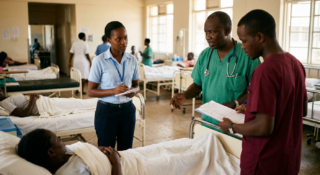
For students, this matters because it shapes the clinical environments you may encounter if you pursue global health work. Facilities that were already operating with limited resources may become more strained. The conditions you observe, the diseases you see, and the creative problem-solving required of local healthcare teams will reflect these funding realities directly. This is not a reason to avoid international health experience. It is a reason to pursue it with seriousness, preparation, and the right program structure.
Why Reduced Funding Increases the Need for Prepared Professionals
There is a common misconception that funding cuts signal a reduced need for global health workers or a shrinking field. The data says otherwise. The healthcare workforce shortage is structural and demographic, not tied to any single funding cycle. Countries with high burdens of infectious disease, growing populations, and limited training infrastructure need more healthcare professionals, not fewer. When external funding contracts, the pressure on existing local systems intensifies.
This is where pre-health students should pay attention. The professionals who will be most valuable in the coming decades are those who understand resource-constrained settings, who can think critically about health system design, and who have been exposed to clinical environments where the standard protocols of a well-funded American hospital do not apply. Admissions committees at medical schools, PA programs, nursing programs, and dental schools increasingly recognize that applicants with structured international health exposure bring perspective that is difficult to gain domestically. The AAMC’s competencies for entering medical students include cultural competence, ethical responsibility, and service orientation, all of which are developed through carefully designed global health experiences.
The key word there is “structured.” Not every international experience builds genuine competence. Programs that place students in clinical settings without adequate supervision, orientation, or reflection frameworks can do more harm than good, both to the communities involved and to the students’ own professional development. When funding is tight and health systems are strained, the ethical stakes of how outsiders participate in those systems become even higher. Students considering global health programs should look for organizations that emphasize professional mentorship, clearly defined observational and supportive roles, and honest framing of what students can and cannot do.
What Pre-Health Students Should Look for in a Program Right Now
Given the current funding environment, the quality of your international health experience matters more than the fact that you had one. Admissions reviewers and faculty advisors are increasingly sophisticated about distinguishing between programs that offer genuine learning and those that amount to little more than medical tourism.
A well-structured program will place you in a supervised clinical environment where you observe, assist within clearly defined limits, and learn from local healthcare professionals. You should expect orientation that covers the local health system, common conditions in the region, cultural context, and ethical boundaries. Reflection, whether through journaling, group debriefs, or mentorship conversations, should be built into the program rather than left to chance. If a program cannot clearly explain what you will do, who will supervise you, and what you will not be doing, that is a red flag. Students considering programs abroad can benefit from reading about how to identify warning signs in medical programs before committing to any organization.
The funding cuts also mean that some programs previously supported by grants or institutional partnerships may reduce their capacity or close. This can create confusion for students who assumed a particular opportunity would be available. Planning ahead, researching program stability, and choosing organizations with a track record of consistent operations becomes more important when the broader funding environment is volatile.
The Role of Reflection and Ethical Framing
One of the most important skills you can develop through an international health experience is the ability to reflect critically on what you observe. This is not a soft skill. It is exactly what admissions committees want to see in your personal statement and hear in your interview. When you can articulate what you saw in a resource-limited clinic, why the constraints existed, how local providers adapted, and what that taught you about the kind of practitioner you want to become, you demonstrate a level of maturity and awareness that sets you apart.
This is especially true when funding cuts are part of the story. If you can speak intelligently about how reduced international health investment affects patient care in the communities you visited, you show that you understand health systems, not just clinical skills. That kind of understanding is exactly what programs like those focused on building pre-health readiness are designed to support.
How Funding Cuts Affect Specific Health Areas Students Will Encounter
Understanding the funding landscape is easier when you see how it connects to specific health issues. Here are several areas where the cuts are most visible.
Infectious Disease Programs
HIV/AIDS treatment through PEPFAR, malaria prevention through the President’s Malaria Initiative, and tuberculosis control programs have all been built on sustained international funding. When that funding is reduced, treatment interruptions can occur, drug-resistant strains can emerge, and surveillance gaps widen. Students working in clinical settings in sub-Saharan Africa or parts of South America may observe the downstream effects of these changes firsthand, including patients presenting with advanced disease that might have been caught earlier under a fully funded screening program.
Maternal and Child Health
Programs supporting prenatal care, skilled birth attendance, childhood vaccination, and nutrition have been among the most effective global health investments of the past two decades. Reductions in funding can lead to gaps in vaccine supply chains, fewer trained midwives, and decreased access to emergency obstetric care. In countries where maternal mortality rates were beginning to decline, these cuts risk reversing progress.
Health Workforce Training
Many global health funding streams include components for training local healthcare workers, from community health workers to clinical officers to nurses. When this training pipeline loses support, the workforce shortage accelerates. The HRSA health workforce data on domestic workforce needs already shows significant projected shortages; internationally, the picture is far more acute.
For pre-health students, encountering these realities during a structured program is not just educational. It shapes your understanding of why global health matters as a discipline, not just as a line on your resume. You see the connection between policy decisions, funding flows, and the care a patient receives in a rural clinic. That perspective is hard to get from a textbook.
What This Means for Your Application and Your Career
If you are preparing for medical school, PA school, nursing school, dental school, or any health professional program, the current funding environment creates both a challenge and an opportunity. The challenge is that some international opportunities may become harder to find or less well-supported. The opportunity is that students who do participate in serious, structured programs and who can reflect thoughtfully on what they experienced will stand out more, not less.
Admissions committees are not looking for students who checked a box. They are looking for students who can demonstrate that they understand the complexity of healthcare delivery, who have grappled with ethical questions, and who have seen enough of the real world to know why they want to be part of it. A student who can write or speak about observing a clinical officer in rural Kenya managing a malaria caseload with limited diagnostic tools, and who can connect that experience to their own goals and values, has something concrete to offer in an application.
This does not mean you need to go abroad. Domestic clinical experience, community health work, and research are all valuable. But if you do choose an international program, the current moment makes it more important to choose well and to treat the experience with the seriousness it deserves. Programs that include mentorship, structured reflection, and clear ethical guidelines give you the framework to turn observation into genuine understanding. Students weighing their options can find useful context in how patient interaction builds interview confidence, which speaks directly to translating clinical exposure into admissions readiness.
The Case for Going Now, Not Later
There is a temptation to wait, to assume the funding picture will stabilize or that global health will “come back” as a priority. It might. But the learning that comes from seeing a health system under real pressure is not something you can schedule for a more convenient time. The students who engage with global health during a period of contraction, who see what happens when resources shrink and who learn how communities and providers adapt, will carry that knowledge for the rest of their careers.
The WHO’s workforce projections are not going to reverse themselves by 2030. The structural challenges in health systems across Latin America, East Africa, and South Asia are not temporary. The need for healthcare professionals who understand these settings, who can work across cultures, and who have seen firsthand what resource constraints mean for patients is going to keep growing.
For pre-health students, this is not about urgency for its own sake. It is about recognizing that the conditions you encounter now, during a period of significant funding disruption, will give you a deeper and more honest understanding of global health than a period of relative stability might. That honesty is what makes your experience credible and your perspective valuable, both in your applications and in the years of practice that follow.
The funding cuts are real, and their consequences for patients and communities are serious. But the response for future healthcare professionals is not to look away. It is to prepare well, choose ethical programs, engage with the complexity, and bring what you learn back into every stage of your career.
Frequently Asked Questions
Do global health funding cuts mean there are fewer opportunities for pre-health students abroad?
Some programs that relied on government grants or institutional partnerships may reduce capacity, but well-established organizations with independent operational structures continue to run programs. The demand for structured, ethical placements has not decreased. Students should verify a program’s stability and track record before enrolling, especially during periods of funding uncertainty.
Will admissions committees view international health experience differently because of the funding cuts?
Admissions committees evaluate the quality and depth of your experience, not the political context around it. If anything, students who can reflect on how funding reductions affected the clinical environments they observed demonstrate a level of health systems awareness that is highly valued. The key is honest, specific reflection rather than generic claims about “making a difference.”
How can I tell if a global health program is structured and ethical enough to be worth my time?
Look for clear descriptions of supervision, defined student roles (observation and support within approved limits), built-in reflection activities, local staff involvement, and transparent communication about what the program does and does not include. Programs that promise hands-on patient care for untrained students or that cannot explain their relationship with local health facilities should raise serious concerns.