Global nursing in 2026 looks different than it did even five years ago. Workforce shortages are accelerating worldwide, patient populations are more culturally diverse than ever, and nursing schools are paying closer attention to applicants who demonstrate real-world perspective beyond the classroom. For pre-nursing students weighing how to strengthen their profiles, international exposure is emerging as a genuine differentiator, not because it sounds impressive on paper, but because it builds the kinds of skills and awareness that modern nursing demands.
This article breaks down what is actually changing in global nursing, why international clinical exposure matters for your application and your development, and how to think about it practically. The goal is not to sell you on a program. It is to help you understand the landscape clearly so you can make a well-informed decision about what belongs in your preparation.
The Global Nursing Workforce Is Under Serious Pressure
The numbers tell a straightforward story. The Bureau of Labor Statistics occupational outlook for registered nurses projects roughly 203,200 openings per year for registered nurses through 2032, driven largely by retirements and attrition. That figure represents the United States alone. Globally, the picture is even more strained. The WHO’s workforce 2030 strategy report estimates that the world will need an additional 10 million health workers by 2030, with nursing bearing a disproportionate share of that gap, especially in low- and middle-income countries.
These shortages are not abstract. They show up in longer wait times, heavier patient loads, and a growing reliance on nurses to fill roles that used to be handled by larger, more specialized teams. In countries across Sub-Saharan Africa, South America, and Southeast Asia, nurses often serve as the primary point of care in communities that have limited or no access to physicians. Understanding what that looks like in practice, rather than just reading about it, gives pre-nursing students a fundamentally different frame of reference for what the profession requires.
The aging population compounds the issue. The United Nations projects that nearly one billion people worldwide will be 65 or older by 2030, and that demographic shift is driving demand for chronic disease management, geriatric care, and long-term support services. Nurses are central to all of it. The profession is not just growing; it is becoming broader and more complex. Students entering nursing programs in 2026 will be expected to think and work across a wider scope than previous generations.
What “Global Nursing” Actually Means for Pre-Nursing Students
When people talk about global nursing, the phrase can mean a lot of things. For working nurses, it might refer to humanitarian deployments, international consulting roles, or positions with agencies like the WHO or Médecins Sans Frontières. For pre-nursing students, the term is more about perspective and preparation than about a career track. Global nursing, at the student level, means gaining structured exposure to healthcare delivery in settings that differ significantly from what you would encounter in a U.S. clinical rotation.
That exposure matters because it highlights things you cannot learn from a textbook. In many international clinical settings, resource constraints shape every aspect of care. Equipment is limited. Medication supplies are inconsistent. The ratio of patients to providers can be staggering. Working alongside local nurses and healthcare professionals in these environments teaches you to observe clinical reasoning under pressure and with fewer tools. It also makes you a better critical thinker when you return to a resource-rich setting, because you have seen what is possible when the safety nets are thinner.
There is also the cultural dimension. Nursing in 2026 requires fluency not just in clinical skills but in cross-cultural communication. In the U.S., patient populations are increasingly diverse, and the ability to communicate respectfully across language barriers, health belief systems, and cultural expectations is not optional. IMA’s blog on the real impact of cultural humility on patient safety and health equity covers this topic in depth, and it is worth understanding why cultural humility goes far beyond checking a box on a nursing school application.
It is important to be honest about what international exposure is and is not. It is not a shortcut to clinical competence. Pre-nursing students in international settings are there to observe, to assist within approved and supervised limits, and to learn. They are not diagnosing patients, performing procedures independently, or substituting for trained staff. The value is in what you absorb, reflect on, and carry forward, not in logging unsupervised clinical hours.
Why Nursing Schools Are Paying Attention to International Experience
Nursing school admissions have grown more competitive as the profession itself has grown more complex. Many programs, especially BSN programs, now look beyond grades and test scores to evaluate candidates’ readiness, maturity, and understanding of what nursing actually involves. The American Association of Colleges of Nursing’s overview of the BSN’s impact on practice reinforces the push toward degree-level preparation, which means admissions committees have more applicants to evaluate and are looking for meaningful differentiators.
International clinical experience stands out because it signals several things at once. It demonstrates initiative, because you chose to seek out an experience that required logistical planning, cultural adjustment, and a willingness to be uncomfortable. It signals commitment to service, because you invested time in a healthcare setting that serves populations with significant unmet needs. And it shows adaptability, because working in a clinical environment in a different country forces you to communicate, problem-solve, and collaborate outside your comfort zone.
How to Frame International Experience in Applications
None of this matters if you cannot articulate what you gained. Admissions committees are not impressed by a line item on a resume that says “shadowed nurses in Kenya for two weeks.” What they care about is your capacity for reflection. Did you observe something that challenged your assumptions about healthcare access? Did you notice how nurses in a resource-limited setting prioritized care differently? Did a specific interaction with a patient or a local healthcare professional shift how you think about your role in the profession?
When writing about international clinical exposure in personal statements or application essays, focus on concrete moments and honest reflection. Use the STAR method if it helps you organize: describe the situation, your role, the action you took or observed, and the result or takeaway. Avoid sweeping statements like “I saw the real meaning of healthcare.” Instead, describe what you actually saw, how it made you think, and how it connects to your preparation for nursing.
If you are looking for additional ways to strengthen your profile beyond coursework, IMA’s post on advancing your nursing career offers a broader view of what professional development looks like over time. Even at the pre-nursing stage, thinking about your trajectory helps you make better decisions now.
What You Actually Do During International Clinical Exposure
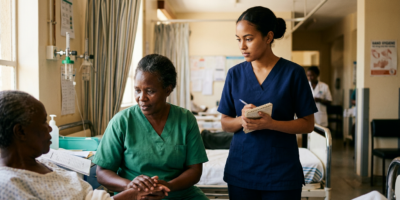
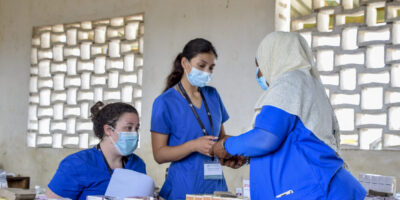
One of the most important things to understand about international clinical exposure for pre-nursing students is what the day-to-day looks like. Structured programs place students in hospitals, clinics, and community health centers where they work alongside licensed local healthcare professionals. The emphasis is on observation, supervised assistance, and learning.
Clinical Settings and Supervised Responsibilities
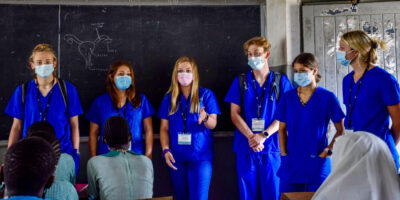
A typical day might include morning rounds in a hospital ward, where you observe how nurses assess patients, manage medications, and coordinate with physicians and other staff. You might assist with basic tasks like taking vital signs or supporting patient mobility, always under direct supervision. In the afternoon, you could participate in a community health education program focused on topics like hygiene, nutrition, or disease prevention. Evenings often include debriefing sessions with program staff, where students process what they observed, ask questions, and connect their experiences to broader concepts in global health.
In many international clinical settings, you will encounter conditions that are less common in U.S. hospitals. Malaria, tuberculosis, parasitic infections, and complications related to HIV/AIDS are frequently seen in facilities across Sub-Saharan Africa and parts of South America. Observing how local teams manage these conditions with limited diagnostic tools and medications provides a perspective on clinical priorities and resource allocation that you simply will not get from a domestic rotation.
The Difference Between Observing and Practicing
This distinction matters and deserves emphasis. Pre-nursing students are not licensed. They do not have the training or the authority to make clinical decisions, administer treatments, or perform procedures independently. Any program that implies otherwise is not operating responsibly. In a well-structured program, you observe. You ask questions. You help where it is appropriate and approved. You learn from professionals who know their patients, their systems, and their communities far better than you do. That is not a limitation; it is the foundation of ethical clinical education.
Students who approach international exposure with humility and genuine curiosity tend to gain far more than those who arrive expecting to “help” in ways that exceed their training. The learning is in the observation, the reflection, and the slow accumulation of understanding about what healthcare looks like when stripped of the resources and systems you have always taken for granted.
How International Exposure Builds Skills That Transfer Directly to Nursing Practice
The practical skills and awareness you develop through international clinical exposure map directly onto what nursing schools and employers increasingly value. Here are the areas where the transfer is most concrete.
Cross-Cultural Communication
Working in a clinical setting where you do not share a first language with patients or staff forces you to develop alternative communication strategies. You learn to rely on body language, tone, and visual aids. You become more attuned to nonverbal cues. You develop patience and active listening skills. These are not soft skills; they are clinical skills. In a U.S. hospital in 2026, you will care for patients who speak dozens of different languages, hold different health beliefs, and trust medical systems to varying degrees. The student who has already practiced communicating across those divides has a real advantage.
Adaptability Under Constraint
Resource-limited settings teach you to think creatively. When a piece of equipment is unavailable, you watch experienced nurses find alternatives. When a medication is out of stock, you observe how treatment plans are adjusted. When a facility is overcrowded, you see how triage decisions are made differently. This kind of exposure does not make you a better nurse by itself, but it gives you a mental model for flexibility and prioritization that serves you well in any clinical setting, including busy urban emergency departments and understaffed rural clinics in the United States.
Emotional Resilience and Professional Boundaries
International clinical settings can be emotionally intense. You may observe patient outcomes that are difficult to process, especially in contexts where preventable conditions lead to serious harm. Learning how to manage those emotions, how to debrief, how to maintain professional boundaries while still caring deeply, is a skill that many nursing students do not develop until they are well into their clinical rotations. Getting an early start on building that resilience, with structured support and mentorship, is genuinely valuable.
IMA’s blog on clinical goals every nursing student should set offers a practical framework for approaching clinical exposure with intention. Setting clear goals before you enter any clinical environment, whether domestic or international, makes the experience far more productive.
How to Evaluate Whether International Exposure Is Right for You
Not every pre-nursing student needs international clinical exposure to succeed. It is one path among many, and the right choice depends on your goals, your readiness, and the quality of the program you are considering. Here is how to think through the decision.
Questions Worth Asking Before You Commit
First, consider your motivations. Are you genuinely interested in understanding healthcare delivery in a different context, or are you primarily looking for a resume line? Both are understandable, but the students who gain the most are the ones who are genuinely curious about what they will encounter. If your primary motivation is strategic, there may be more efficient ways to strengthen your application.
Second, evaluate the program’s structure. A well-run international clinical program should have clear supervision protocols, defined learning objectives, ethical guidelines, pre-departure preparation, on-site support, and structured reflection. If a program cannot explain how students are supervised, what they are expected to do (and not do), and how the experience is structured, that is a red flag.
Third, think about timing. If you are still completing prerequisite courses and building foundational knowledge, it may be worth waiting until you have a stronger clinical vocabulary. International exposure is most valuable when you have enough background to understand what you are observing. For some students, that means pursuing it after a year or two of college coursework. For others, especially those with prior healthcare experience such as CNA work or hospital volunteering, the timing may be right sooner.
What a Strong Program Looks Like
Strong programs are transparent about what students will and will not do. They do not overstate clinical responsibilities or imply that students will be performing duties beyond their scope. They pair students with experienced local professionals and IMA staff who provide context, answer questions, and facilitate learning. They include pre-departure orientation covering safety, cultural context, ethical conduct, and health precautions such as vaccinations and disease prevention. And they provide on-site support, including access to staff in case of emergencies or concerns.
Programs should also include structured reflection. Debriefing sessions, journaling, and guided discussion are not extras; they are what turn raw observation into genuine learning. Without reflection, even the most intense clinical exposure can remain surface-level.
The Bigger Picture: Nursing as a Global Profession
Nursing has always been a profession rooted in direct human connection, and that connection is becoming more global every year. Telehealth is expanding the reach of nursing care across borders. Public health crises, from pandemics to climate-related health emergencies, are highlighting the interconnectedness of health systems worldwide. The nurse who enters the profession in 2026 with a baseline understanding of how healthcare works outside the U.S. is better prepared for a career that will increasingly involve global dimensions, even if they never leave the country.
International exposure does not guarantee admission to a nursing program, and it does not automatically make you a better nurse. What it does, when the experience is well-structured and approached with the right mindset, is give you a grounded understanding of the profession’s scope, its challenges, and its possibilities. It gives you stories to tell that are rooted in real observation and honest reflection. And it gives you a set of skills, from communication to adaptability to emotional resilience, that matter in every clinical setting you will ever work in.
For pre-nursing students weighing their options in 2026, the question is not whether international exposure is necessary. It is whether it is the right fit for where you are, what you need, and where you want to go. If you approach that question honestly, you will make a good decision.
Frequently Asked Questions
Do nursing schools specifically look for international clinical experience on applications?
Most nursing programs do not require international experience, and no program will penalize you for not having it. However, admissions committees do value evidence of initiative, cultural awareness, adaptability, and meaningful healthcare exposure. International clinical experience is one effective way to demonstrate all four, especially if you can reflect on it thoughtfully in your personal statement. The experience itself matters less than what you learned from it.
Will I be able to perform clinical tasks during an international program as a pre-nursing student?
Pre-nursing students are not licensed healthcare providers, so your role in any clinical setting is observational and supportive. In a well-structured program, you may assist with basic tasks such as taking vital signs or supporting patient education under direct supervision from licensed professionals. You will not diagnose, treat, or perform procedures independently. Any program that suggests otherwise is not operating within safe or ethical boundaries.
How do I know if a global health program is well-structured and safe?
Look for clear answers to specific questions: Who supervises students on site? What are the defined learning objectives? What does the pre-departure preparation cover? What safety and emergency protocols are in place? How are ethical boundaries communicated and enforced? A reputable program will be transparent about all of these elements and will not overstate what students will do or achieve. If the program cannot clearly explain its supervision and safety structure, consider that a serious concern.