The global nursing shortage is not a future problem. It is a current one, and it is getting worse. The World Health Organization has estimated a worldwide shortfall of roughly 5.9 million nurses, with the greatest gaps concentrated in low- and middle-income countries. In the United States, the Bureau of Labor Statistics projects that registered nursing will remain one of the fastest-growing occupations through the end of this decade, with approximately 194,500 RN openings projected annually. The global nursing shortage and international experience may seem like separate topics, but for pre-nursing students thinking seriously about their careers, they are deeply connected.
Understanding the scope of this shortage matters because it shapes what kind of nurse the profession needs you to become. Hospitals and health systems are not just looking for competent clinicians. They need professionals who can adapt, communicate across cultural lines, think critically under resource constraints, and understand how health systems function beyond a single institution or country. International clinical exposure, when it is structured, supervised, and ethically grounded, builds exactly that kind of perspective. Not because it replaces your domestic training, but because it adds a dimension to your preparation that is hard to replicate at home.
What the Nursing Shortage Actually Looks Like, Globally and at Home
The WHO’s 2020 State of the World’s Nursing report made the scale of the problem clear: most of the nursing workforce deficit falls on countries in Southeast Asia, Africa, and parts of Latin America. These are regions where populations are growing, disease burdens are high, and the number of trained nurses per capita remains far below what is needed for basic primary care coverage. In sub-Saharan Africa, for example, several countries operate with fewer than one nurse per 1,000 people.
In the United States, the shortage takes a different shape but is no less real. An aging population requires more care. A large share of working nurses are approaching retirement age. And nursing schools, constrained by limited faculty and clinical placement sites, turn away tens of thousands of qualified applicants each year. The American Association of Colleges of Nursing (AACN) has reported that U.S. nursing schools turned away over 90,000 qualified applicants in a recent admissions cycle, largely because of insufficient clinical sites, faculty, and classroom space.
The result is a profession under pressure on every front: too few nurses entering the pipeline, too many leaving due to burnout or retirement, and too much demand driven by demographics and chronic disease. When you look at these factors together, it becomes clear that the shortage is not simply about numbers. It is about whether the profession can produce nurses who are prepared for complexity, not just competence.
Why International Exposure Matters More When Demand Is This High
It might seem counterintuitive. If there is a nursing shortage, why spend time gaining experience abroad instead of logging hours domestically? The answer is that international experience does not replace your clinical education. It supplements it in ways that address the very gaps the shortage creates.
When healthcare systems are strained, the nurses who thrive are the ones who can think flexibly. They can communicate with patients whose backgrounds differ from their own. They can prioritize when resources are limited. They can recognize that health outcomes are shaped by factors well outside the hospital walls, including poverty, geography, infrastructure, and cultural practice. These are not abstract concepts you read about in a textbook. They are realities you begin to internalize when you spend time in a clinical environment where they are visible every day.
Structured international programs give pre-nursing students the chance to observe how healthcare delivery works under different constraints. You might shadow nurses and clinicians in a public hospital where the supply chain for medications looks nothing like what you would see in a U.S. facility. You might participate in community health outreach where patient education is the primary intervention because advanced diagnostics simply are not available. These experiences do not make you a nurse. But they build a kind of situational awareness that is genuinely difficult to develop through domestic coursework alone. For a closer look at how setting influences what you actually absorb, consider reading about why location shapes your international health internship.
What Pre-Nursing Students Actually Do in International Clinical Settings
One of the most important things to understand about international clinical experience is what it is and what it is not. Pre-nursing students participating in structured programs abroad are not practicing nursing. They are observing, assisting within approved and supervised boundaries, and learning from professionals who work in those settings daily.
Observation and Supervised Participation
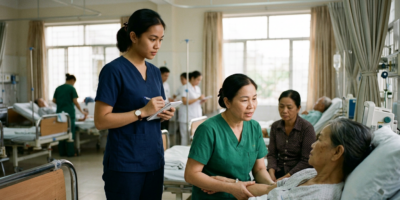
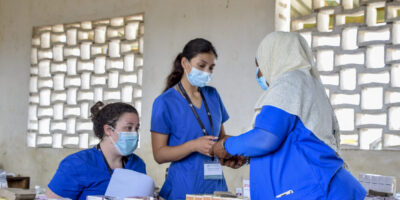
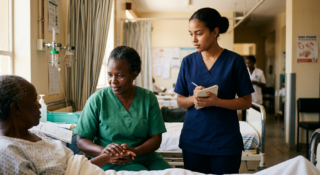
In a well-run international program, a pre-nursing student might observe wound care, watch how nurses triage patients with limited diagnostic tools, or assist with basic tasks like recording vital signs under direct supervision. The emphasis is on structured exposure. You are there to see how nursing functions in a different system, to ask questions, and to reflect on what you are witnessing. You are not there to perform procedures or practice independently. Programs that maintain clear boundaries around student roles are the ones worth your time and trust.
Community Health and Public Health Exposure
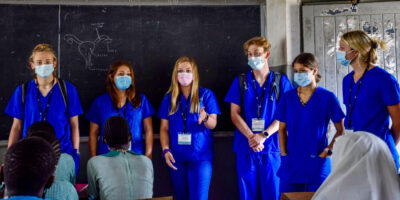
Many international programs also include community health components. This might involve participating in health education sessions, supporting screening events, or observing how public health workers engage with communities that have limited access to formal healthcare. For pre-nursing students, this kind of exposure is especially valuable because it illustrates the social determinants of health in a way that a lecture cannot. You see how housing, clean water, nutrition, and transportation shape whether a patient can even reach a clinic, let alone follow a treatment plan.
Reflection and Mentorship
Strong programs build in time for structured reflection. This is not filler. Reflection is where much of the real learning happens, because it forces you to process what you have seen, confront your assumptions, and articulate what the experience means for your professional development. If you are interested in how support systems and housing arrangements affect the quality of learning abroad, IMA’s overview of housing and support structures is worth reading.
How Global Perspective Strengthens Your Nursing Application and Career
Nursing programs and employers are increasingly attentive to candidates who demonstrate cultural humility, adaptability, and a genuine understanding of health equity. These are not buzzwords to sprinkle into a personal statement. They are competencies that admissions committees and hiring managers evaluate through the specifics of what you have done and how you talk about it.
Admissions: Showing Depth, Not Just Hours
An admissions committee reading your application wants to know that you understand what nursing involves and that you have thought seriously about why you want to do it. International experience, when you can describe it with specificity and reflection, signals several things at once. It suggests that you are willing to step outside your comfort zone. It shows that you have seen healthcare delivery in a context very different from your own. And it gives you concrete material for essays and interviews that goes beyond the standard “I volunteered at a local hospital” narrative.
That said, international experience is not a shortcut or a checkbox. What matters is how meaningfully you engaged with it and how clearly you can articulate what you took away. A student who spent two weeks observing in a Tanzanian district hospital and came back with thoughtful reflections on resource allocation and nurse-patient communication will stand out more than someone who lists a dozen domestic volunteer hours with no substance behind them. For context on what makes clinical experience genuinely meaningful to reviewers, IMA’s analysis of how clinical experience is evaluated offers a useful breakdown.
Career: Building the Kind of Nurse the Shortage Demands
Beyond admissions, international experience prepares you for the kind of nursing career the shortage is shaping. As the U.S. nursing workforce becomes more stretched, nurses are increasingly expected to work with diverse patient populations, adapt to rapidly changing protocols, and function effectively in high-pressure, under-resourced environments. Nurses with international exposure have already begun to build those muscles.
The WHO’s global health workforce statistics make it clear that the shortage is not going to resolve quickly. The nurses who will lead in this environment are the ones who have seen how health systems operate across different contexts, who understand that “standard of care” can look very different depending on where you are, and who have the communication skills to work with patients and colleagues from backgrounds unlike their own.
What to Look for in an International Program as a Pre-Nursing Student
Not all international health programs are created equal, and the differences matter. A program that is well structured, ethically grounded, and transparent about what students will and will not do is fundamentally different from one that makes vague promises about “hands-on clinical experience” without defining boundaries.
Structure and Supervision
Look for programs that clearly describe the supervision model. Who oversees students in clinical settings? What are the qualifications of those supervisors? Are students ever placed in situations where they are expected to act beyond their training? The answers to these questions tell you whether a program takes student safety and ethical practice seriously.
Ethical Grounding
A responsible program will be honest about the limits of what students can do. Pre-nursing students are not licensed practitioners, and a credible program will never imply otherwise. It should also address how it engages with host communities: whether partnerships are long-term and reciprocal, whether local staff are treated as colleagues and mentors rather than props, and whether patient dignity is centered in every interaction.
Honest Outcomes
Be cautious of programs that promise guaranteed admissions advantages, specific clinical hours, or academic credit without verification from your own institution. The value of international experience is real, but it comes from the quality of the experience itself, not from inflated marketing claims. Any program worth attending will let its structure and outcomes speak honestly.
The HRSA projections on nursing workforce supply and demand provide useful context for understanding where the shortage is most acute and what kinds of skills are most needed. Reviewing this data can help you evaluate whether a program’s focus areas align with genuine workforce needs.
Preparing for International Experience as a Pre-Nursing Student
If you are considering an international clinical experience, a few practical steps will help you get more out of it and present it more effectively afterward.
Before You Go
Research the healthcare system of the country where you will be placed. Understand the common conditions, the structure of care delivery, and the role of nurses in that context. This background knowledge will help you absorb more during your time abroad and ask better questions. Read about global health ethics, cultural humility, and the history of international health work so that you arrive with appropriate expectations and a respectful posture.
Make sure you understand your own program’s policies regarding international experience. Some nursing schools may count structured international exposure toward certain requirements; others may not. Clarify this before you go, not after.
While You Are There
Take detailed notes. Reflect daily, even if it is just a few sentences about what surprised you, what challenged you, and what you want to understand better. Pay attention to how nurses communicate with patients, how teams coordinate care with limited resources, and how the healthcare system addresses the needs of its population. These observations become the raw material for meaningful essays, interview answers, and professional development later.
After You Return
The work is not over when you come home. Take time to synthesize your experience. Write about it. Talk about it with mentors, advisors, and peers. Think about how what you saw abroad informs what you want to focus on in your nursing education and career. The students who benefit most from international experience are the ones who treat it as a starting point for deeper learning, not a finished product.
The Shortage Is Not Going Away. Your Preparation Can Still Get Stronger.
The global nursing shortage is a structural problem that will take decades of investment in education, workforce development, and health system reform to address. No single student’s experience abroad will fix it. But the shortage does create a professional landscape where nurses with broad perspective, cultural competence, and adaptability are not just valued; they are necessary.
For pre-nursing students, the question is not whether international experience is worth it despite the shortage. The question is whether you are willing to invest in the kind of preparation that the shortage makes more important. Structured, supervised, and ethically grounded international clinical exposure is one of the most direct ways to build the perspective that both nursing programs and the profession itself increasingly need. It will not guarantee you admission or a job. But it will make you a more thoughtful, more prepared, and more aware clinician in training, and that is the kind of nurse the world is looking for.
Frequently Asked Questions
Will international clinical experience count toward my nursing school application requirements?
That depends on your specific nursing program. Some programs may recognize structured international clinical exposure as part of your experience portfolio, while others may not count it toward specific hour requirements. Always check with your program’s admissions office or academic advisor before assuming that any experience, domestic or international, will fulfill a particular requirement. The value of international experience often shows up most clearly in your essays and interviews, where you can demonstrate the depth of your exposure and reflection.
Do pre-nursing students provide direct patient care during international programs?
No. Pre-nursing students are not licensed practitioners and should not be placed in roles that require independent clinical judgment or unsupervised patient care. In a well-structured program, students observe, assist with basic tasks under direct supervision, and learn from qualified local professionals. Any program that implies students will practice nursing independently abroad is misrepresenting what ethical international clinical exposure looks like.
How does international experience help with the nursing shortage specifically?
International experience does not directly address the shortage in terms of adding nurses to the workforce. What it does is help prepare future nurses for the realities the shortage creates: diverse patient populations, resource constraints, high-pressure clinical environments, and the need for strong cross-cultural communication. Nurses who have seen how healthcare functions in different systems tend to be more adaptable and more aware of the social and structural factors that affect patient outcomes, which are exactly the qualities the profession needs as it faces sustained workforce pressure.