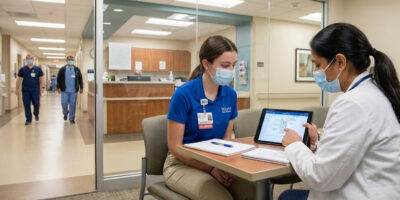
High school students who apply for hospital-based roles often put a lot of effort into essays, forms, and recommendations without really knowing what happens after they click “submit.” Teen applicants and their parents want to know who reads those files, how decisions are made, and why some students are chosen while others are not. Those questions shape how families evaluate medical internships for high school students.
Behind the scenes, hospitals look for students who are safe to place near patients, able to follow instructions, and ready to show up reliably for every shift. At the same time, programs like International Medical Aid organize structured international placements that often feel more competitive and formal than local volunteer roles. In both cases, organizers are not just filling slots. They are deciding who will represent them in clinical spaces, and they rely on many of the same signals that later matter for high school medical internships.
Who Reads Teen Internship Applications In Hospitals
Applications for teen roles rarely go straight to a doctor’s desk. Most hospitals use a small group of staff who specialize in student or volunteer programs. The exact titles vary, but common readers include:
- Volunteer services coordinators or program managers
- Human resources staff assigned to student programs
- Education or community outreach coordinators
- Department-based liaisons for larger teen programs
In many hospitals, volunteer services or a central student programs office screens applications first. They verify basic eligibility, including age, school status, vaccination requirements, and conduct background checks where required. Files that do not meet these minimum standards may not be moved any further.
For more structured healthcare internships for high school students, there is often a second layer of review. Coordinators may share shortlisted applications with specific units, such as pediatrics or outpatient clinics, to see whether those teams are interested in hosting a teen. In that case, a nurse manager or department lead may review a smaller pool of candidates and select those who appear to be the best fit for their workflow.
International programs, including International Medical Aid, add another dimension. Staff review logistical readiness for travel, maturity shown in essays, and the ability to handle long days in busy hospital environments abroad. They also assess whether the student’s goals match what a supervised observational program can reasonably provide.
Across these different settings, the readers are looking at the same core question: “If we place this student in a clinical environment, will they be safe, reliable, and respectful for patients and staff?”
What Stands Out In A Strong Teen Application
Hospitals and structured programs do not expect high school students to have long resumes or advanced clinical skills. Instead, strong files show that the applicant understands the responsibility involved and is ready to meet basic professional expectations. Several elements tend to stand out.
Clear, specific motivation
Programs rarely favor generic statements like “I want to help people” or “I have always loved science” on their own. What reads as more thoughtful is when a student can name concrete reasons for pursuing clinical exposure for high school students, such as:
- Wanting to see how different members of the care team work together
- Hoping to understand what a typical day really looks like beyond television or social media
- Having a long-term interest in a specific area, like pediatrics or public health, and wanting early observation
Short, specific examples make essays feel grounded. A strong application often explains why the student is applying to this particular hospital program or to a structured option like International Medical Aid, rather than sounding interchangeable with any opportunity.
Evidence of reliability
Hospitals care deeply about whether a teen will arrive on time and complete every shift. Application questions about past commitments are not just formalities. Coordinators read them to see patterns.
Positive signals include:
- Long-term involvement in one or two activities rather than a long list of short commitments
- Roles that required regular attendance, such as tutoring, part-time work, or ongoing community service
- Clear explanations of responsibilities, especially when a student was trusted with keys, cash handling, or leadership tasks
Even if a student’s schedule has been limited by family responsibilities or transportation, explaining those constraints honestly can still show reliability and maturity.
Solid recommendations
For high school applicants, recommendations usually come from teachers, counselors, or activity supervisors. The strongest letters:
- Describe how the student behaves when tasks are repetitive or challenging
- Comment on communication style and receptiveness to feedback
- Mention examples of the following rules and handling responsibility
Hospitals are not only checking that a teacher likes the student. They are seeking reassurance that this teenager will respond appropriately to instructions in a clinical setting.
Professional presentation
Small details make a difference. Applications that are complete, free of obvious errors, and submitted by the deadline signal that a student can follow directions. Email addresses that use the student’s name instead of jokes or slang also leave a better impression.
For programs like International Medical Aid, where students may be traveling abroad and representing the organization in partner hospitals, these small signals become even more important. Staff need to feel confident that the teen will communicate clearly with peers, mentors, and clinical teams.
Red Flags That Can Lead To A Quick Rejection
Because hospital programs receive more applications than they can accept, coordinators often look first for reasons to screen out files that may not be safe or practical to pursue. Some red flags are avoidable with careful preparation. Others may require time to address before reapplying.
Incomplete or inconsistent information
Missing sections, unanswered questions, or inconsistent dates can raise concerns. For example, if a student lists heavy commitments but also says they are available every day after school, coordinators may wonder whether the schedule is realistic.
Applications that skip health or immunization questions, leave emergency contact information blank, or ignore required forms often cannot move forward at all. From the hospital’s perspective, incomplete information can become a safety risk.
Poor fit with schedule or role
Hospitals usually build teen programs around specific time slots and units. If an applicant’s availability does not match the program’s needs, coordinators may decline the application even if the student is strong. Common examples include:
- Asking to miss several weeks in the middle of a short summer program
- Stating that the student can only attend during times when no teen shifts are offered
- Requesting special accommodations that the unit cannot safely provide
In international settings, similar constraints exist. Programs like International Medical Aid need students to arrive and depart on specific dates, attend scheduled clinical time, and participate in group activities. If a student’s preferred timeline or flexibility is too limited, the fit may not work that year.
Signals of boundary problems
Hospitals are cautious about placing students who might not respect patient or staff boundaries. Red flags can include:
- Essays that focus heavily on wanting to “do surgeries” or “practice procedures” as a high school student
- Statements suggesting that rules about privacy, infection control, or scope of practice are “overly strict.”
- Past incidents of rule-breaking at school or in other programs, when references disclose them
These patterns suggest that a student may push for more than what teen roles safely allow. Programs that emphasize ethical pre-med internships for high school students will typically decline those applications or ask the student to demonstrate more maturity before reapplying.
Weak or concerning recommendations
If a recommender notes that a student frequently arrives late, struggles to follow instructions, or treats rules as optional, coordinators take that seriously. Even a brief comment like “attendance was inconsistent” can be enough to make staff choose another candidate when competition is strong.
How To Strengthen Your File Before You Apply Again
Many students do not get into their first-choice hospital program the first time they apply. That does not mean they cannot build a strong application later. In most cases, coordinators are looking for evidence of growth between one application and the next.
Build a stronger track record locally
If clinical roles are limited, students can focus on building reliability through other work or service:
- Commit to a regular schedule in a non-clinical volunteer role, such as a food pantry or tutoring program
- Take on responsibilities that require showing up at specific times, such as lifeguarding, camp counseling, or part-time work
- Stay with a few activities over multiple semesters instead of frequently switching
When a student reapplies, they can point to these experiences as proof that they now have a stronger pattern of keeping commitments.
Clarify goals and expectations
Before applying again, students can reflect on why they are seeking clinical exposure. Well-prepared applicants can explain:
- What they hope to learn from being in a hospital or clinic
- That they understand they will not be performing procedures as minors
- How this experience will fit into a larger path that may include other high school medical internships or health-related programs
Clarifying goals makes essays more focused and helps coordinators trust that the student knows what they are asking to do.
Strengthen communication and basic professionalism.
Simple changes can make an application look more mature:
- Use a professional email address based on the student’s name
- Ask someone to proofread essays for clarity, grammar, and tone
- Double-check that all forms are complete and consistent before submitting
In international programs such as International Medical Aid’s high school placements, email communication before the program is part of the assessment. Students who respond promptly, ask clear questions, and follow instructions carefully are more likely to be seen as ready for a structured experience abroad.
Update recommendations thoughtfully.
If a previous application was declined, it can help to add new recommendations from people who have seen recent growth. For example:
- A supervisor from a new volunteer role who can speak to improved reliability
- A teacher who has seen better time management or class engagement
- A coach or activity leader who can describe responsible leadership
Students should always ask potential recommenders whether they feel comfortable writing a supportive letter. A shorter, positive letter is more helpful than a longer, lukewarm one.
Consider structured alternatives while waiting.
If local hospital programs are complete or highly selective, students can explore other pathways that still offer serious health career opportunities for high schoolers. These may include:
- Community clinic volunteering, where teens help with the front desk or outreach work
- School-linked health academies with supervised observation components
- Structured international programs like International Medical Aid that build in hospital observation, community health outreach, and close mentorship within a defined safety framework
While these experiences may differ from a traditional hospital volunteer badge, they can still demonstrate genuine clinical interest and maturity when accurately described on future applications.
Over time, a student’s record becomes more than one acceptance or rejection. It reflects how they respond when an application process is competitive, what they do to grow between attempts, and how seriously they take the responsibility of being in clinical spaces. When hospitals and programs review applications from high school intern candidates, they are looking for more than good grades. They are looking for patterns of reliability, respect, and thoughtful preparation that suggest a student is ready to take an early step into healthcare in a safe and supervised manner.