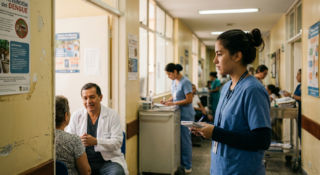
If you are comparing IMA South America program options in Colombia, Ecuador, and Peru, you are already asking the right question. Too many students pick a destination based on a photo or a gut feeling, then realize weeks in that the clinical setting, the daily structure, or the community context does not match what they actually need from the experience. The better approach is to start with your goals, your stage of training, and the kind of exposure that will help you grow as a future healthcare professional, and then match those factors to the destination that fits.
All three IMA South America programs share a common framework: structured clinical observation, professional supervision, guided reflection, cultural context, and mentorship from local healthcare providers. But the healthcare systems, patient populations, geographic settings, and day-to-day realities differ meaningfully between Colombia, Ecuador, and Peru. Those differences matter. They shape what you see, what you learn, and what you are able to articulate when it comes time to write a personal statement or sit for an interview. This article walks through the practical distinctions so you can make a grounded decision.
Why the Destination Matters More Than You Think
It is tempting to treat an international clinical experience as interchangeable, as if the country is just backdrop and the learning happens automatically. That is not how it works. The healthcare system you observe shapes the clinical questions you encounter. The patient population determines the conditions you are exposed to. The cultural context influences how care is delivered, how families participate, and how providers make decisions under constraint.
Colombia, Ecuador, and Peru each have distinct healthcare structures, disease profiles, and resource realities. Colombia operates a mixed public-private system with broad social security coverage but persistent inequities between urban centers and rural areas. Ecuador has built its system around a universal coverage model, with the government working to extend free or subsidized care to all citizens. Peru runs a decentralized system with public, private, and social security components, and some of the starkest urban-rural disparities in the region.
These structural differences are not abstract. They show up at the bedside. They affect which patients you see, what resources are available, and how providers adapt. For a pre-health student, understanding those dynamics firsthand is far more valuable than simply logging hours in a clinic.
What Each Country’s Healthcare Context Looks Like on the Ground
Colombia
Colombia’s healthcare system is one of the more structured in Latin America. A significant portion of the population is covered through its social security framework, and the country has invested in expanding access in urban areas. That said, rural and marginalized communities still face major gaps in care. In clinical settings, students may observe a range of cases that includes chronic conditions such as diabetes and hypertension, infectious diseases like dengue, and, in some settings, trauma and violence-related injuries.
The clinical environments in Colombia tend to be relatively well-resourced compared to some other South American settings, particularly in larger hospitals. For students interested in seeing how a mid-income country manages complex chronic disease alongside infectious disease burden, Colombia offers a useful lens. Spanish is the primary language, and communication with patients and providers will require at least a basic working knowledge of the language.
Ecuador
Ecuador’s commitment to universal healthcare means students may see how a government-run system attempts to provide coverage to a diverse population, from urban centers to rural highland and coastal communities. Common conditions include respiratory infections, parasitic diseases, nutritional deficiencies, and the growing burden of chronic disease. Ecuador’s geography, spanning the Andes, the coast, and parts of the Amazon basin, creates health challenges tied directly to altitude, climate, and access.
For students drawn to primary care, public health, or community-based medicine, Ecuador’s system provides a relevant context. The emphasis on public provision of care and the integration of traditional medicine in some communities add layers that are worth reflecting on, especially for anyone considering work with underserved populations in the U.S. or abroad.
Peru
Peru’s health landscape is marked by significant geographic and socioeconomic diversity. Lima and other large cities have relatively well-equipped hospitals, while remote Andean and Amazonian communities may have limited access to even basic services. The country faces ongoing challenges with tuberculosis, malnutrition, diarrheal diseases, and, in certain regions, malaria. As highlighted in a detailed look at health challenges across Peru’s diverse geography, the range of conditions and settings within a single country is striking.
Students in Peru may encounter a wider spectrum of resource constraints than in Colombia or Ecuador, which can sharpen your understanding of how providers make clinical decisions when supplies, equipment, or specialist referrals are limited. If you are interested in rural medicine, global health systems, or the social determinants of health, Peru offers a particularly instructive environment.
Matching Your Pre-Health Track to the Right Program
Your pre-health pathway matters when choosing a destination. A pre-med student exploring primary care may benefit from different clinical exposure than a pre-dental student interested in oral health in underserved communities or a pre-nursing student focused on patient education and community health.
All three programs involve clinical observation, not independent practice. You will not be diagnosing, prescribing, or performing procedures on your own. You will observe consultations, shadow providers across departments, participate in community health outreach, and, within approved limits and under direct supervision, assist with supportive tasks such as taking vital signs or helping with health education materials. The value is in what you see, what you process, and how you connect it to your professional development.
If you are early in your pre-health journey, perhaps still deciding between medicine, nursing, PA, or another path, a setting with broad primary care exposure may serve you best. Both Ecuador and Peru tend to emphasize primary care and community-based health in their public systems, giving you a wider aperture. If you are further along and interested in a more specialized hospital environment with higher patient volume, Colombia’s urban clinical settings may offer that. For students weighing how to focus their interests within a program, it helps to think about what clinical settings will challenge your assumptions rather than simply confirm what you already expect.
Pre-PA and pre-nursing students may find Ecuador’s emphasis on community-level care and health promotion especially relevant, since both professions emphasize patient education, continuity of care, and working within teams. Pre-dental students should consider which program offers the best access to oral health outreach or dental clinic observation, and should ask IMA directly about current placement options in each country. Pre-OT students may want to think about which settings expose them to rehabilitation, chronic disease management, and functional health in resource-limited environments.
How to Weigh Language, Culture, and Personal Readiness
All three destinations are Spanish-speaking, but the pace of speech, regional slang, and communication norms differ. Colombian Spanish is often described as relatively clear and measured, which some students find easier to follow. Ecuadorian and Peruvian Spanish each have their own regional characteristics, and in parts of Peru and Ecuador, indigenous languages such as Quechua or Shuar may be spoken alongside Spanish.
You do not need to be fluent to participate, but a basic foundation in medical Spanish will help you get more out of the experience. If your Spanish is limited, be realistic about how much of the clinical communication you will be able to follow in real time. IMA provides on-site support and orientation, but the effort you put into language preparation before departure will directly affect the depth of what you take away.
Beyond language, think about your comfort level with unfamiliar settings. Peru’s rural placements may involve longer travel times, higher altitudes, and more basic infrastructure. Ecuador spans dramatically different climates and elevations. Colombia’s urban settings may feel more familiar in some ways but will still require cultural adaptability. None of these are obstacles, but they are factors. A student who thrives with structure and familiarity may have a different experience than one who is energized by unpredictability.
Consider your maturity and self-awareness honestly. Admissions committees at medical and health professions schools are not just looking for hours logged internationally. According to AAMC guidance on experiences that strengthen medical school applications, what matters is the quality of your reflection, the specificity of what you learned, and your ability to articulate how the experience shaped your thinking. A student who spends two weeks in the wrong setting and cannot connect it to their goals will have a weaker narrative than someone who chose carefully, engaged fully, and reflected honestly.
Structure, Supervision, and What Your Days Actually Look Like
IMA programs in all three countries follow a structured format. Mornings are typically spent in clinical settings, observing physicians, nurses, and other providers during patient consultations, rounds, or procedures. Afternoons may include community health outreach, health education activities, or guided learning sessions. Evenings are reserved for debriefing, reflection, and cultural activities.
Supervision is constant. You are not left alone in a clinical setting. A local healthcare professional oversees your observation, answers your questions, and sets the boundaries for what you can and cannot do. This is not a limitation; it is how responsible programs operate. Students who understand their role as observers and learners, rather than practitioners, tend to get far more out of the experience.
Housing, meals, transportation, and emergency support are provided through IMA. Each destination has its own logistical details, and it is worth asking IMA directly about current accommodations, group size, and the daily schedule for the specific session you are considering. Safety protocols, including health precautions relevant to each country, are part of the pre-departure orientation.
For students thinking about how to use a structured experience like this on applications, the AAMC’s core competencies for entering medical students offer a useful framework. Several of those competencies, including cultural competence, ethical responsibility, and service orientation, align directly with what a well-chosen international program can reinforce.
What Admissions Committees Actually Care About
Let’s be direct: no single international experience will make or break your application. What matters is how you integrate it into a larger picture of who you are and what you bring to the profession. An IMA program in Colombia, Ecuador, or Peru can strengthen your application if you approach it with intention and reflect on it with specificity.
Here is what admissions reviewers tend to look for when they see an international clinical experience on a resume or in a personal statement. First, they want evidence that you understood your role and respected the boundaries of your training level. If you describe yourself as “treating patients” or “performing procedures” without qualification, that raises red flags. Second, they want to see cultural humility, not a savior narrative. Did you listen? Did you learn from local providers? Did you notice your own assumptions? Third, they want to know what you observed that you could not have seen at home. What was different about the healthcare delivery model, the patient population, or the resource environment? Fourth, they want to see that the experience connects to your future goals in a real way, not as a bullet point, but as a meaningful chapter in your story.
Students sometimes worry that choosing a “less well-known” destination will matter less on an application. It will not. What matters is what you did with the experience. A thoughtful, specific account of observing TB management in a Peruvian highland clinic, or watching how a Colombian hospital handles a dengue surge, or participating in a community health screening in rural Ecuador carries more weight than a vague line about “spending time abroad.”
If you are building your application and want guidance on presenting clinical and volunteer experiences effectively on your resume, the key is specificity, honesty, and reflection.
Practical Steps for Making Your Decision
Start by writing down your top three goals for the experience. Be honest. If your primary goal is clinical observation in a hospital setting with high patient volume, that points you in a different direction than if your primary goal is community health exposure in a rural area. If language immersion is a priority, consider where your Spanish level will get the most traction.
Next, research the health context of each country. Look at data from organizations like the World Health Organization’s country health profiles to understand the disease burden, healthcare workforce, and system structure. This will help you anticipate what you might observe and give you a framework for reflection before you arrive.
Then, talk to IMA. Ask specific questions. What clinical sites are currently active in each country? What is the typical group size? What supervision structure is in place? What community health activities are included? What are the housing and safety arrangements? Good programs welcome these questions. If a program discourages specifics, that is a red flag.
Finally, check your timeline and logistics. Consider when you want to go, how long you can commit, and what fits with your academic schedule. Make sure you have enough time before departure to prepare: brush up on Spanish, read about the country’s health system, review IMA’s pre-departure materials, and set personal learning goals.
Choosing between Colombia, Ecuador, and Peru is not about finding the “best” option in the abstract. It is about finding the best fit for where you are right now, what you need to learn next, and what kind of professional you are working to become. Take the decision seriously, ask good questions, and trust that a well-matched experience will serve you far better than a random one.
Frequently Asked Questions
Do I need to speak fluent Spanish to participate in an IMA program in Colombia, Ecuador, or Peru?
Fluency is not required, but a basic foundation in Spanish will significantly improve your experience. You will be able to follow clinical interactions more closely, communicate during community outreach, and engage with local staff and patients. IMA provides on-site support, but the more language preparation you do before departure, the more you will benefit.
Will I be able to do hands-on clinical work during the program?
IMA programs are structured around clinical observation and supervised supportive activities, not independent patient care. You may assist with basic tasks such as taking vital signs or supporting health education under direct supervision, but you will not diagnose, prescribe, or perform procedures. This is consistent with ethical standards for pre-health students in international settings.
How should I present this experience on my medical or health professions school application?
Focus on specificity and reflection. Describe what you observed, what surprised you, what you learned about healthcare delivery in a different context, and how the experience shaped your understanding of your chosen profession. Avoid vague claims about “making a difference.” Admissions committees value honesty, cultural humility, and evidence that you understood the boundaries of your role.