For decades, the medical school admissions process was treated like a scoreboard. GPA and MCAT at the top.
What Admissions Committees Mean by Holistic Review
For decades, the medical school admissions process was viewed as a straightforward, if brutal, calculation of grades and test scores. Today, that “stats-only” approach is a myth. The universally adopted standard is “holistic review,” a term that requires a precise definition to be applicable for applicants. It is a flexible, individualized process that considers the whole applicant, balancing their academic performance with their personal journey.
Moving Beyond the “Stats-Only” Myth
Medical school admissions committees now employ a formal framework known as the E-A-M Model, which stands for Experiences, Attributes, and Academic Metrics. This model provides a structure for evaluating an applicant’s entire “file” rather than just a transcript.
- Academic Metrics: These are the quantitative data points: Grade Point Average (GPA) and MCAT score. These metrics serve as a baseline to assess whether an applicant possesses the academic readiness to handle the rigors of a medical curriculum.
- Experiences: This is what an applicant did. These are the extracurricular activities, which can range from physician shadowing and clinical volunteering to research, hobbies, and paid employment.
- Attributes: This is who an applicant is. Admissions officers evaluate this by looking for evidence of personal characteristics like resilience, passion, drive, and commitment. These attributes are demonstrated through the applicant’s experiences and personal narrative.
The “Mission-Aligned” Mandate: Why Holistic Review Exists
It is crucial to understand that holistic review was not adopted to be “fairer”; it was adopted as a strategic, evidence-based process for schools to achieve their specific goals. The AAMC framework is explicitly “mission-based,” meaning each school’s admissions criteria are clearly tied to its institutional mission.
A school with a mission focused on producing primary care physicians for rural areas will use a holistic review to find different applicants than a school whose mission is to train a new generation of physician-scientists. This “mission-aligned selection” is directly linked to “mission-aligned retention”.
Schools use this process to select applicants who are most likely to thrive in their specific curriculum, contribute to their community, and ultimately fulfill the institution’s mission by advancing community health or research. This approach mitigates the risk of admitting students who may struggle with the school’s culture or academic demands, ensuring a better support system and a higher rate of success.
The Role of “Context”: Leveling the Playing Field
The most powerful, and often most confusing, component of holistic review is “context”. Admissions committees are trained to evaluate an applicant’s “E-A-M” profile within the context of their life story.
They actively ask, “Where have you come from to get to where you are now?” and “What did they have access to, what didn’t they have access to, and what did they do with what they had?”.
This is an empowering principle. It means that an applicant’s journey is just as important as their destination. An applicant who worked 30 hours a week in a non-medical job to support their family is not seen as “lacking” clinical hours. Instead, that experience is viewed as robust evidence of core attributes, such as “Reliability and Dependability” and “Resilience and Adaptability.”
The AAMC competencies provide the formal “bridge” that allows an admissions committee to identify, quantify, and justify the value of that non-traditional path, connecting an applicant’s unique background directly to the qualities of a successful future physician.
How Schools Operationalize E–A–M Recap
What Gets Read First (and Why)
- Metrics screen
You must clear a baseline. If you’re below the median, you need compensating strengths (e.g., strong MCAT trend, post-bacc/SMP, high-impact experiences). - Experiences scan
Reviewers look for sustained clinical exposure, proximity to patients, and any leadership that produced outcomes. - Attributes signals
Personal statements, activity reflections, and letters are reviewed for evidence of the AAMC core competencies, primarily including Ethical Responsibility, Cultural Humility, Teamwork, and Resilience.
Evidence That Lands
- Sustained timelines over sporadic bursts.
- Outcome language (“expanded clinic intake by 20%…”) over duty lists.
- Mentor corroboration in letters that matches your claims.
- Reflection: specific moments, what changed in your approach, and how you applied it later.
Common Failure Modes
- Hour inflation with no depth in interviews.
- Generic reflections (“I learned to communicate”) without a moment that shows it.
- Misalignment with school mission (e.g., lab-only profile pitched to a primary-care school).
Turning Your Record Into Evidence
Map Activities to Competencies
Use this quick pairing when drafting entries:
- EMT/CNA → Service Orientation, Teamwork, Oral Communication
- Scribe → Ethical Responsibility, Critical Thinking, Systems-based practice exposure
- Community health/outreach → Cultural Humility, Leadership, Reliability
- Research → Scientific Inquiry, Data Interpretation, Persistence
- Long-term volunteering → Commitment, Resilience, Capacity for Improvement
Write in a “Moment → Meaning → Outcome” arc
- Moment: one specific case, decision, or conflict.
- Meaning: what it taught you about patients, teams, or yourself.
- Outcome: what you changed afterward.
That arc converts hours into proof.
What This Means for Strategy (Right Now)
If Your Metrics Are Average or Below Average
- Stabilize GPA with targeted post-bacc/SMP coursework and show an upward trend.
- Pair it with high-quality clinical roles (EMT, CNA, MA with real patient contact).
- Use letters to validate growth and professionalism.
If Your Metrics Are Strong
- Avoid a hollow profile. Build depth: longitudinal clinical roles, leadership with results, and a clear tie to each school’s mission.
If You’re Non-Traditional
- Lead with context and outcomes from work history. Translate professional wins into competencies (leadership, reliability, communication under pressure).
How to Present Yourself in the File—and in the Room
AMCAS “Work and Activities”
- Prioritize sustained roles.
- Use numbers sparingly but clearly (patients served per shift, months, outputs).
- For the three Most Meaningful entries, use the “Moment → Meaning → Outcome” arc.
Personal Statement
- Focus on motivation, insight, and turning points—then tie them to consistent action.
- Avoid reciting your CV. Curate the story.
Interviews
- Prepare STAR stories for each competency.
- Expect probing on ethical judgment, scope limits, and how you handle disagreement.
- Tie answers back to mission fit without forcing it.
Deconstructing the AAMC Pre-Med Competencies
To standardize the evaluation of “Attributes” and “Experiences,” the AAMC, in collaboration with admissions officers and faculty, defined a set of competencies that all entering medical students are expected to possess. These competencies are the “roadmap” that guides both applicants in their preparation and admissions committees in their evaluation.
Why Your Old Checklist Might Be Wrong
Many pre-med resources refer to the “15 Core Competencies”. However, this framework was officially “updated in 2023” to reflect the current and future expectations for medical students. Medical schools began using this refreshed list in the 2024-2025 application cycle.
This update is not merely administrative. It signals a clear and deliberate shift in medical education priorities. The new framework, which now contains 17 competencies, places a far greater emphasis on intrapersonal and interpersonal skills. Notably, “Commitment to Learning and Growth” and “Cultural Humility” have been elevated to distinct, named competencies. This change reflects a growing understanding that the most critical skills for a modern physician are not just scientific knowledge, but also self-awareness, adaptability, and the ability to engage in lifelong learning in a rapidly diversifying world.
The Definitive Competency Guide (Post-2023)
The 17 premed competencies fall into three official categories: Professional, Thinking and Reasoning, and Science. The “Professional” category is a combination of what was formerly known as Interpersonal and Intrapersonal competencies. The following guide synthesizes the official AAMC definitions for the current framework.
How to Demonstrate Competencies Across Your Entire Application
An application is not a collection of independent documents; it is a cohesive portfolio of evidence. Admissions committees assess an applicant’s readiness by cross-referencing claims across every part of the file: the AMCAS application, personal statement, secondary essays, letters of recommendation, and other assessments like the PREview exam. A claim of “Teamwork” in one section must be corroborated by evidence in another.
The AMCAS Work & Activities Section: Your 15 Opportunities for Evidence
The Work and Activities section is the backbone of the application, providing up to 15 entries to list experiences. There are 19 categories to choose from, ranging from “Paid Employment” and “Research” to “Community Service” and “Hobbies”.
Each entry provides 700 characters for a description. This space should not be used to list job duties. Instead, it must be a concise narrative focused on impact, what was learned, and transferable skills.
Applicants can also designate up to three “Most Meaningful Experiences,” which grants an additional 1,325 characters for deeper reflection. This “most meaningful” essay is a direct invitation from the AAMC to use their competency language.
The AAMC’s official guide asks applicants to consider the “transformative nature of the experience… what they learned, and the personal growth they experienced”. This language directly mirrors the AAMC’s self-assessment prompts, such as “What I learned or how I grew in this competency”.
The “Most Meaningful” section is the ideal place to explicitly connect an experience to the development of competencies like “Resilience” or “Commitment to Learning and Growth.” For applicants seeking to optimize this crucial section, here’s a comprehensive guide featuring 40 inspiring examples drawn from successful applications.
Weaving Competencies into Your “Why Medicine” Narrative
If the W&A section is the “what,” the Personal Statement (PS) is the “why.” It must be a compelling, step-by-step narrative that answers the question “Why medicine?”. This essay is the primary vehicle for demonstrating the intrapersonal competencies. While the W&A section lists external activities (like Service or Teamwork), the PS articulates the applicant’s internal journey of reflection.
The most effective personal statements use the “show, don’t tell” method. “Telling” is stating, “I am a compassionate person.” “Showing” describes a specific moment with a patient, capturing the sensory details and emotional stakes, and allowing the reader to conclude that the applicant is compassionate. This narrative is where an applicant can connect the experiences in their W&A section to their personal attributes, showing how those experiences shaped their “Empathy,” “Ethical Responsibility,” and motivation for medicine.
Crafting this narrative is a challenge. International Medical Aid’s admissions consulting services provide expert guidance on mastering the “show, not tell” technique and learning from successful personal statement examples.
Secondary Essays: Answering the Competency-Based Questions
After submitting the primary AMCAS application, applicants will receive school-specific secondary applications. This “grueling” process requires writing dozens of shorter, targeted essays. These prompts are not random; they are explicit, focused tests of specific competencies.
Applicants must learn to “decode” these recurring themes :
- The “Diversity” Essay (e.g., “Describe an experience… interacting with people who are different from you… What did you learn?”) is a direct test of Cultural Awareness and Cultural Humility.
- The “Adversity” Essay is a test of Resilience and Adaptability and Capacity for Improvement.
- The “Leadership” Essay is a test of Teamwork and Collaboration and Reliability and Dependability.
- The “Why Us?” An essay is a test of “mission-fit” and Commitment to Learning and Growth.
Successful applicants often pre-write core essays based on these competency themes and then adapt them to each school’s specific prompt. International Medical Aid’s admissions consulting includes a detailed review of these critical secondary applications, helping students tailor their competency-based stories to each institution.
Letters of Evaluation (LORs): Securing Third-Party Validation
Letters of Evaluation (LORs) are designed to provide admissions committees with objective, third-party information about an applicant’s “qualities, characteristics, and competencies”. An applicant’s claims of teamwork or reliability are validated by a mentor’s testimony.
Applicants must proactively guide their letter writers. The AAMC provides “Guidelines for Writing a Letter of Evaluation” specifically to help recommenders “capture the competencies medical schools are seeking”. Smart applicants provide their writers with these guidelines and a “competency brag sheet” that links specific examples from the writer’s experience (a class, a lab, a clinical shift) to the AAMC competencies they wish to highlight.
A letter from a mentor who has seen an applicant in a challenging, real-world setting can be invaluable. International Medical Aid’s pre-med internships offer opportunities for “letters of recommendation from US-based physician mentors”. A recommendation from a mentor who has “closely monitored” an intern’s performance in a foreign clinical environment provides extraordinarily powerful validation of competencies like “Resilience,” “Adaptability,” and “Cultural Humility”.
The “Performance” Tests: PREview Exam and Interviews
The final pieces of the application are performance-based. These are not new assessments but are real-time validations of the same competencies.
- AAMC PREview Exam: This exam is specifically designed to assess an applicant’s “understanding of effective and ineffective behavior across professional competencies”. It is a standardized test for the intrapersonal and interpersonal skills.
- Interviews: Whether in a Traditional, Virtual, Group, or Multiple Mini-Interview (MMI) format, interviews are a performance. The MMI, in particular, places applicants in hypothetical scenarios to observe their “Ethical Responsibility,” “Critical Thinking,” and “Oral Communication” in action.
Preparation for these high-anxiety assessments involves internalizing the AAMC competency framework. International Medical Aid’s admissions consulting services include “Mock Interview Prep” to help applicants practice articulating their competencies clearly and confidently under pressure.
A Deeper Look: Mastering the “Soft Skills” That Define Great Physicians
While all 17 competencies matter, the Professional Competencies—often dismissed as “soft skills”—are increasingly the differentiators in a field of academically excellent applicants. These are the skills that define a physician’s “bedside manner,” “professionalism,” and ability to function as part of a healthcare team.
Service Orientation: Beyond Checking a Box
Service Orientation is defined as a “commitment to something larger than oneself” and a “desire to alleviate others’ distress”. Admissions committees can easily distinguish between “checking a box” and genuine commitment.
A clear hierarchy of service experiences exists. “Common” experiences include volunteering in a hospital in an affluent area, donating supplies, or short-term local events. “Exemplary” experiences, in contrast, involve sustained, direct interaction with vulnerable or underserved populations.
Examples include tutoring underprivileged children, coaching for the Special Olympics, volunteering at a needle exchange, or working with victims of abuse. These exemplary experiences force the applicant outside of their comfort zone and demonstrate a genuine desire to understand and serve communities in need.
Teamwork and Reliability: From Group Projects to Clinical Collaboration
Teamwork is not just an academic concept; it is a core patient safety requirement. A landmark 2000 report, “To Err Is Human,” attributed the majority of medical errors to “a lack of communication and (2) dysfunctional teamwork”. When admissions committees evaluate “Teamwork” and “Reliability”, they are assessing an applicant’s ability to function in a high-stakes, high-stress clinical environment where failure has consequences.
For this reason, evidence of teamwork from a low-stakes class project is weak. Far more powerful is evidence from experiences where collaboration and accountability were essential, such as in military service or working as part of a team in a high-acuity setting like a Trauma 1 hospital.
Cultural Competence vs. Cultural Humility: A Critical Distinction
Perhaps the most nuanced and important evolution in the 2023 competency update is the distinction between “Cultural Competence” and “Cultural Humility.”
- Cultural Competence is an older term implying a finite state of knowledge, such as knowing the sociocultural factors of a community or being multilingual.
- Cultural Humility, the new standard, is a lifelong commitment to “self-evaluation” and “redressing power imbalances”. It is an active process of reflecting on one’s own values and biases, seeking to understand alternative viewpoints, and acknowledging one’s own limitations.
This shift is profound. An applicant can no longer claim to be “culturally competent.” They must, instead, demonstrate an experience that fostered their “cultural humility”—a “profoundly humbling and transformative” experience that challenged their pre-existing beliefs and forced them to adapt. This level of self-reflection is best developed through deep, immersive engagement with diverse and under-resourced communities.
Research and the “Thinking & Reasoning” Competencies
Research experience, whether in a wet lab or in a clinical setting, is the most direct way to demonstrate the “Thinking & Reasoning” competencies: “Critical Thinking,” “Quantitative Reasoning,” and “Scientific Inquiry”.
However, a common pre-med myth is that research is the most important extracurricular activity. A 2019 AAMC survey of admissions faculty revealed that “research or laboratory experience was viewed as having medium importance”. What did these faculty members rate as more important? “Community service or volunteer experiences, shadowing experiences, and experiences that demonstrated leadership”.
This finding brings the entire evaluation process full circle to the E-A-M model and the “mission-aligned” mandate. Research is highly valuable, but primarily for demonstrating the “Thinking” competencies. If an applicant’s passion is in community advocacy and a school’s mission is “community service”, pursuing an exemplary “Service Orientation” role will be a far stronger strategy than “checking the box” with mediocre research.
The IMA Advantage: A Purpose-Built Solution for Competency Development
Understanding the 17 competencies is the first step. The second is acquiring the “exemplary” experiences needed to demonstrate them. The third is articulating those experiences in a compelling application. International Medical Aid (IMA) is an end-to-end solution designed to guide aspiring health professionals through all three steps.
Developing Competencies Through Global Health Internships
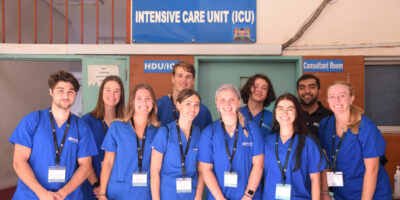
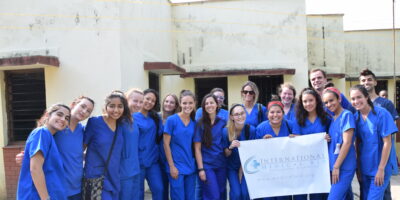
International Medical Aid’s pre-med internships are structured as comprehensive competency accelerators. They place interns in challenging, underserved settings where development of the most critical Professional Competencies is not theoretical, but a daily reality.
- Service Orientation: Interns gain “hands-on experience in community outreach” and “make a meaningful impact… in underserved communities,” providing the “exemplary” service that admissions committees value.
- Cultural Humility: By working in “international healthcare settings” and participating in community outreach, interns undergo the “profoundly humbling and transformative” process of developing true cross-cultural competencies.
- Teamwork & Reliability: Interns are not passive observers. They are “Collaborating with local physicians, healthcare workers, and fellow interns” as part of a “multidisciplinary medical team”. Program mentors “closely monitor” performance, providing direct evidence of reliability.
- Resilience & Adaptability: Interns are immersed in “challenging clinical environments” and must “navigate a foreign environment” , adapting to new protocols and resource limitations.
- Ethical Responsibility: IMA programs are “steeped in ethical foundations,” exposing interns to complex “ethical dilemmas and solutions” not typically encountered in a domestic setting.
- Capacity for Improvement: The internships are built on “regular feedback cycles from mentors”, allowing interns to actively demonstrate their ability to “ask for and incorporate feedback”.
Beyond the Scoreboard: Linking Your Profile to Mission Fit
The shift to holistic review means that strong academic metrics must be coupled with meaningful experiences and attributes that demonstrate your readiness for medical practice and alignment with a school’s mission. Use these resources to guide your application strategy:
| E-A-M Component | Strategic Focus Area | Further Reading to Validate Your Profile |
| Academic Metrics | Understand the exceptionally high academic baseline required. For institutions like UCSF, the UCSF acceptance rate confirms the need for near-perfect stats. | UCSF School of Medicine: The Definitive Guide |
| Academic Metrics | Ensure your foundational academic record, including your unweighted GPA, is presented clearly through the AMCAS process as you plan on how to become a doctor. | Columbia VP&S Admissions Guide |
| Experiences | Seek out high-impact clinical roles. Learning opportunities like the student-run HAVEN clinic exemplify the best way to volunteer to get clinical hours, which demonstrates service orientation and teamwork. 3 | Yale School of Medicine Admissions Guide |
| Mission Alignment | Your profile must align with the institution’s goals. Whether they prioritize research or service, your narrative must show you fit the program, such as the structure found at the Mayo Clinic Alix School of Medicine. | Guide to Medical Schools in Minnesota |
A Note for Pre-PA and Other Health Professions Students
While the AAMC framework is specific to medical schools, the principles of holistic review are applicable to all fields. Physician Assistant (PA) programs, for example, also seek applicants who have demonstrated “professionalism, empathy, and adaptability” and “cultural competence”.
International Medical Aid offers dedicated Physician Assistant and Pre-PA Internships that provide the “verifiable patient care hours” and hands-on experience needed to be a competitive PA applicant. Similar opportunities are available for pre-dental, pre-nursing, and other health professions students.
Beyond Experience: Comprehensive Admissions Support
Gaining the competencies is only half the battle; articulating them is the other. International Medical Aid functions as a full-service partner to ensure that an applicant’s powerful experiences are translated into a successful application. This is achieved through expert admissions consulting services.
- Application Crafting: Consultants provide “unlimited personal statement edits” and “AMCAS revisions”, helping to master the “show, not tell” technique.
- Secondary Essay Support: The IMA team offers “primary and secondary application reviews” to help applicants decode prompts and tailor their competency narratives effectively.
- Interview Preparation: “Mock interviews” prepare applicants for the high-stakes MMI and traditional interview formats.
- Impactful LORs: IMA’s program structure provides access to U.S.-based physician mentors who can write “extraordinarily impactful” letters of recommendation, vouching for the competencies they have witnessed firsthand.
Your Partner in Preparing for Medicine
International Medical Aid is a U.S.-based, “not-for-profit organization” “founded by two Johns Hopkins alumni”. This mission-driven ethos mirrors the values of medical institutions. The goal is not simply to help an applicant “get in,” but to help them develop into the competent, compassionate, and resilient physician that patients and communities deserve.