Physical therapy and rehabilitation careers are growing fast, and for good reason. The U.S. population is aging, musculoskeletal conditions affect an estimated 126.6 million Americans each year, and the demand for skilled rehabilitation professionals continues to outpace supply. For high school students drawn to healthcare but unsure whether medicine, nursing, or another path is the right fit, rehabilitation careers for high school students represent a concrete area worth investigating early. The challenge is that most students have no idea how to get meaningful exposure to these fields before college, and parents often have legitimate questions about what that exposure should look like. For students ready to test that interest firsthand, internships for high school students in medical settings offer supervised exposure to rehabilitation and therapy careers before college.
This article is for both students and the adults supporting them. It covers what rehabilitation careers actually involve, how high school students can begin building real familiarity with physical therapy and related fields, what to expect from shadowing and structured programs, and how to approach this process with the right expectations. Nothing here will promise shortcuts or guaranteed outcomes. What it will do is help you think clearly about a set of careers that reward curiosity, patience, and genuine interest in how the body heals.
What Rehabilitation Careers Actually Look Like
When most people hear “physical therapy,” they picture someone helping an athlete recover from a knee injury. That is part of the picture, but rehabilitation as a field is much broader. Physical therapists (PTs) work with stroke survivors relearning how to walk, children with cerebral palsy building motor skills, older adults regaining balance after a fall, and post-surgical patients working to restore range of motion. Occupational therapists (OTs) help people adapt daily activities, from getting dressed to returning to work, after illness or injury. Speech-language pathologists address communication and swallowing disorders. Rehabilitation counselors support people with disabilities in achieving independence.
These careers share a common thread: they focus on function, recovery, and quality of life rather than acute diagnosis or surgical intervention. For students who are interested in healthcare but drawn to longer-term relationships with patients, hands-on problem solving, and visible progress over time, rehabilitation fields are worth serious consideration.
The numbers support the interest. According to the Bureau of Labor Statistics occupational outlook for physical therapists, employment for PTs is projected to grow 15 percent from 2022 to 2032, much faster than the average for all occupations. The median annual wage was $97,720 as of May 2022. Occupational therapy shows similarly strong growth. These are not speculative career paths; they are grounded in sustained, measurable demand.
Why Early Exposure Matters for Students Considering PT or OT
A student who shadows a physical therapist for even a few days will learn things that no website or career pamphlet can communicate. They will see how therapists build rapport with patients who are frustrated or in pain. They will watch the careful, repetitive nature of rehabilitation exercises. They will notice how much of the work involves listening, adapting, and explaining. This kind of direct observation is the only reliable way to test whether the day-to-day reality of a profession matches the idea you have of it in your head.
Early exposure also helps students make better decisions in college. A student who already knows they are interested in physical therapy can choose relevant coursework in anatomy, kinesiology, and biology with real intention. They can seek out research opportunities in movement science. They can build a stronger, more specific application when the time comes to apply to a Doctor of Physical Therapy (DPT) program or an OT master’s program. The earlier a student confirms or redirects their interest, the less time and money they spend guessing.
For parents, early exposure serves a different but equally important purpose. It gives you a concrete way to evaluate whether your student’s interest is genuine and informed, not just a vague attraction to a title. When your child can describe what they observed, what surprised them, and what they want to learn more about, you have a much clearer sense of where they stand.
Realistic Ways to Build PT and Rehab Experience in High School
Shadowing Local Physical Therapists and Occupational Therapists
The most accessible starting point is PT shadowing in high school at a local clinic or hospital. Many outpatient physical therapy practices are open to hosting high school students for short observation periods, especially if the student approaches the request professionally. A direct, polite email or phone call to a clinic explaining who you are, why you are interested, and how many hours you are requesting is usually all it takes. Some clinics may ask you to complete a brief orientation or sign a confidentiality agreement.
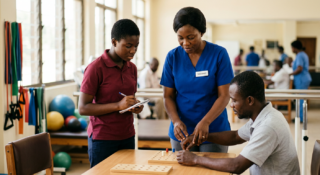
What to expect: you will watch. You will not treat patients, adjust equipment independently, or provide therapeutic exercises. You may help with basic setup tasks like organizing treatment areas or wiping down surfaces. You will have opportunities to ask the therapist questions between sessions. The value is in what you see and the conversations you have, not in performing clinical tasks. This boundary exists to protect patients and to respect the years of training that licensed therapists have completed.
If you want to observe occupational therapy as well, rehabilitation hospitals and pediatric clinics are often good places to ask. Occupational therapy experience for teens can be particularly eye-opening because OT work is less visible in popular culture, and students are often surprised by how varied and creative the field is.
Structured Programs and Internships
For students who want more than a few hours of local shadowing, structured programs offer a more immersive experience with built-in supervision, mentorship, and reflection. These range from hospital-based summer volunteer programs to more formal internships designed specifically for high school students. If you are comparing options, the key things to evaluate are: Who supervises the students? What is the daily structure? What are the learning objectives? How does the program handle safety, boundaries, and age-appropriate expectations?
International Medical Aid offers structured pre-health internships for high school students that place participants in clinical settings alongside licensed professionals, including in rehabilitation and allied health contexts. These programs emphasize observation, professional mentorship, and guided reflection. High school interns do not provide treatment or work unsupervised. The experience is designed to build genuine understanding of healthcare delivery, including how rehabilitation services function in different healthcare systems.
For students weighing different types of health career exposure, it can be useful to read about allied health internship options for high school students to understand how physical therapy and occupational therapy fit within the broader landscape of healthcare professions.
Volunteer Work and Community Involvement
Volunteering is not the same as clinical observation, but it builds relevant skills and demonstrates commitment. Volunteering at a nursing home, an adaptive sports league, or a community center that serves people with disabilities gives students context for the populations that rehabilitation professionals serve. It also builds the interpersonal skills, patience, and communication ability that admissions committees and future employers value.
The key distinction: volunteering shows character and initiative, but it does not replace clinical observation. You need both. A student who has volunteered at a senior center and shadowed a geriatric physical therapist has a far richer understanding of elder care than a student who has done only one or the other.
What Parents Should Know About Safety, Supervision, and Structure
If your student is considering any clinical observation or structured program, especially one that involves travel, you have every right to ask detailed questions. Good programs welcome these questions. Programs that deflect or give vague answers should raise concerns.
Here is what to ask about. Supervision: Who is responsible for your child during clinical hours? What is the supervisor-to-student ratio? Is there a clear protocol for what happens if a student feels uncomfortable or encounters a situation they are not prepared for? Housing and logistics: Where will your student stay? Who manages the housing? Is there 24-hour support available? Communication: How will you stay in contact with your student and with program staff? Are there regular check-ins?
For international programs specifically, ask about pre-departure preparation, health precautions, emergency protocols, and the structure of daily activities. A well-run program will have clear answers to all of these questions and will be transparent about what students will and will not do in clinical settings. Minors should never be placed in situations where they are expected to provide unsupervised care or make clinical decisions. Their role is to observe, ask questions, and learn within carefully defined boundaries.
It is also worth having an honest conversation with your student about readiness. Maturity matters. A student who can handle unfamiliar environments, follow instructions from professionals they have just met, maintain appropriate behavior in sensitive clinical settings, and process emotionally difficult situations with support is likely ready for this kind of experience. A student who is not quite there yet is not behind; they may simply benefit from starting with local shadowing before pursuing a more intensive program.
How Rehab Career Exploration Strengthens College and Graduate Applications
Admissions committees at DPT programs, OT programs, and even undergraduate pre-health tracks are not looking for students who have performed physical therapy. They are looking for students who have thought carefully about why they want to pursue this path and who can articulate what they have observed and learned.
A high school student who can write in a college essay about watching a physical therapist help a stroke patient take their first independent steps, and who can reflect honestly on what that experience taught them about patience, communication, and the limits of recovery, is telling a more compelling story than a student who lists “interested in physical therapy” as a bullet point. The specificity matters. The reflection matters. The honesty about what was hard or confusing matters just as much as the enthusiasm.
When building your profile for college applications, consider how rehabilitation career exploration fits alongside your other activities. If you have also built a research-ready high school profile or pursued academic work in biology and health sciences, your interest in rehabilitation will read as part of a coherent, well-considered trajectory rather than a random addition.
Keep a journal during any shadowing or program experience. Write down specific observations, not just general impressions. Note the questions you asked and the answers you received. Record what surprised you or challenged your assumptions. This material will be invaluable when you write application essays, prepare for interviews, or simply try to remember, two years later, why this field caught your attention in the first place.
The Global Dimension: Why Rehabilitation Needs Exist Everywhere
The WHO’s reporting on global rehabilitation needs estimates that more than 2.4 billion people worldwide live with health conditions that could benefit from rehabilitation services. In many low- and middle-income countries, access to physical therapy and occupational therapy is severely limited. Understanding this global context does not require international travel, but it does require students to think beyond their local clinic.
For students who do participate in international health programs, exposure to rehabilitation in resource-limited settings can deepen their understanding of how healthcare systems work, what happens when specialized services are scarce, and how professionals adapt their practice to the tools and infrastructure available. These are not abstract lessons. They shape how a student thinks about equity, access, and the purpose of their own future career.
Whether your exploration stays local or extends internationally, the goal is the same: build a real, grounded understanding of what rehabilitation professionals do, who they serve, and what the work demands. That understanding is what will help you decide whether this is your path, and it is what will make your future applications credible and specific.
Practical Next Steps for Students and Families
Start with what is available to you right now. Call or email a local physical therapy clinic and ask if they accept high school observers. If your school has a health careers club or HOSA chapter, ask whether they have connections to rehabilitation professionals. Talk to your school counselor about structured summer programs in healthcare.
If you are considering a more intensive or international experience, begin the research process together as a family. Compare programs based on supervision structure, daily schedules, learning objectives, and transparency about what students will and will not do. Ask for references from past participants and their parents. Look for programs that emphasize mentorship and reflection, not just hours logged.
And if you are a student reading this who is not sure whether physical therapy, occupational therapy, or another rehabilitation field is right for you, that uncertainty is completely normal. The entire point of early exploration is to help you figure that out before you have committed years and tuition to a specific graduate program. Take the first step, pay close attention, ask good questions, and trust that clarity comes from experience, not from having all the answers before you begin.
Frequently Asked Questions
Can high school students do hands-on physical therapy during shadowing or internships?
No. High school students observe and learn alongside licensed professionals. They do not perform therapeutic treatments, make clinical decisions, or work with patients unsupervised. This boundary exists to protect patients and to respect the extensive training that licensed physical therapists and occupational therapists complete before practicing. Any reputable program or shadowing arrangement will make this clear from the start.
How many shadowing hours should a high school student aim for in rehabilitation settings?
There is no set number required at the high school level. Even 10 to 20 hours of focused observation with a physical therapist or occupational therapist can provide meaningful insight into the profession. What matters more than total hours is the quality of your attention and your ability to reflect on what you observed. If you plan to pursue PT or OT school later, you will accumulate additional observation hours during college.
Will PT shadowing in high school count toward DPT program prerequisites?
Most Doctor of Physical Therapy programs require observation hours completed during or after college, not during high school. However, high school shadowing demonstrates early and genuine interest in the field, which can strengthen both college applications and future graduate school personal statements. Check specific program requirements as you get closer to applying, since policies vary by school.