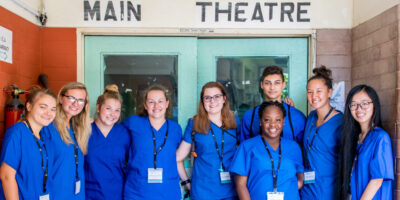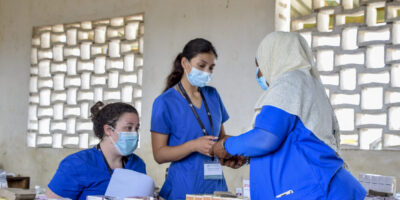
To choose a nursing internship abroad, compare programs on five things: what your training stage allows you to do, who supervises you, whether your school will count the time, the language on the wards and the kind of health system you want to see. IMA runs nursing programs in 2 cities, Mombasa, Kenya and Cusco, Peru.
This guide compares those two sites with three other countries students often ask about, so you can see what each setting would teach you. If you are still learning what the role involves, start with our guide to what to expect during a pre-nursing internship.
Why a Nursing Internship Abroad Matters for Your Career
Nurses are the largest group in the world’s health workforce and the front line of nearly every health challenge. The World Health Organization counts 29.8 million nurses worldwide in 2023, up from 27.9 million in 2018, and still projects a shortage of 4.1 million nurses by 2030 if current trends continue. About 70% of that projected shortage falls in WHO’s African and Eastern Mediterranean regions.
International clinical exposure has practical value for an aspiring nurse, and it comes from three places.
You learn to think under constraint. Watching nurses work with limited supplies, high patient volumes and unfamiliar conditions teaches you to observe closely, prioritize carefully and adapt quickly. Those habits carry into every clinical setting you enter later.
You build cultural competence. Cultural competence in nursing is a professional skill, not a slogan. Patients at home come from every background and health tradition. Time on a ward where other traditions are the norm gives you a grounded sense of how trust, communication and family involvement shape care.
You see public health up close. A placement abroad can show you conditions and system pressures you rarely meet in a domestic rotation, from child anemia to maternal health in communities with few obstetric services. Understanding them shapes how you think about equity and the social determinants of health everywhere.
If you are weighing how much the setting itself matters, our guide on why location matters for your international health internship breaks that question down further.
How the Global Nursing Shortage Shapes Internship Opportunities
WHO’s State of the World’s Nursing 2025 findings show a workforce that is growing but uneven. The global shortage fell from 6.2 million in 2020 to 5.8 million in 2023, yet about 78% of the world’s nurses work in countries that hold just 49% of the global population.
The workforce is also changing. Worldwide, 33% of nurses are under 35, while 19% are expected to retire in the next ten years, and in 20 countries, most of them high-income, retirements are expected to outpace new entrants. Women make up 85% of the global nursing workforce, and one in seven nurses is foreign-born.
For students, this context explains why supervised learning programs exist where they do, why local teams can welcome observers who stay within their role, and why the wards you see abroad may look very different from the ones at home.
First, Compare by Training Stage, Supervision and Credit
Before you compare countries, compare what you will be allowed to do. A program that is right for a licensed nurse may be wrong for a first-year pre-nursing student, and the reverse.
| Your stage | What a well-run program lets you do | Supervision to expect | Credit and hours |
|---|---|---|---|
| Pre-nursing student | Mainly observe; simple non-invasive tasks, such as recording vital signs, only where the unit allows | A licensed nurse with you on the ward, plus a named mentor | Usually documented hours and a certificate; credit only if your school approves it in advance |
| Enrolled nursing student | Work within the scope your own program has trained you for | Licensed staff at the host site, within your school’s rules | Ask your program before you go; some count international time as elective or enrichment |
| Recent graduate or licensed nurse | An educational and observational role in a different health system | Host hospital and local licensing rules | Continuing education varies; a placement abroad is not a license to practice there |
Any program that suggests a pre-nursing student will practice independently, give medications or make clinical decisions is a red flag. On IMA’s programs, pre-nursing students mainly observe, nursing students stay within the scope their program has trained them for, and licensed nurses take an educational and observational role.
Comparing Five Destinations at a Glance
The table below uses World Bank indicators to compare health workforce density and one common child health measure across five countries students often consider. IMA runs nursing programs in Kenya and Peru only; Chile, Madagascar and Bangladesh are included as comparisons.
| Country | Nurses and midwives per 1,000 people | Physicians per 1,000 people | Anemia in children 6 to 59 months | IMA nursing program? |
|---|---|---|---|---|
| Kenya | 2.27 (2023) | 0.29 (2023) | 42.8% (2019) | Yes, Mombasa |
| Peru | 2.74 (2023) | 1.69 (2023) | 29.6% (2019) | Yes, Cusco |
| Chile | 5.45 (2023) | 3.33 (2023) | 20.1% (2019) | No, comparison only |
| Madagascar | 0.28 (2022) | 0.17 (2022) | 49.5% (2019) | No, comparison only |
| Bangladesh | 0.66 (2023) | 0.72 (2023) | 43.1% (2019) | No, comparison only |
Sources: World Bank nurses and midwives per 1,000 people and physicians per 1,000 people, latest year available for each country.
Child anemia figures come from the World Bank series on anemia prevalence among children. For scale, the United States reported 13.38 nurses and midwives per 1,000 people in 2022.
Lower workforce density does not mean worse nurses. It means each nurse carries more patients and a broader set of responsibilities, which is exactly what makes these settings instructive for an observer.
1. Kenya
Kenya is one of East Africa’s largest and fastest-growing economies, with a GDP of about $136 billion in 2025 according to World Bank data. Yet economic growth has not translated into a fully staffed health care system. Kenyan media have reported that thousands of trained nurses remain unemployed because of delayed recruitment and underfunded county health budgets, even though the clinical need is clear.
Kenya has about 2.27 nurses and midwives per 1,000 people and about 0.29 physicians per 1,000, according to the World Bank figures above. In practice, that means nurses are the backbone of frontline care in public hospitals, often serving as the main point of continuity for patients who see a doctor only briefly. Child anemia, at 42.8% of children aged 6 to 59 months in 2019, is one marker of the public health conditions nurses manage alongside acute care.
For a nursing intern, Kenya offers a health system working under real pressure. You observe how nurses handle high patient volumes, how families take part in daily care, how community health work reaches people outside hospital walls and how immunization and maternal care are delivered with limited resources.
IMA’s Kenya program is based at Coast General Teaching and Referral Hospital in Mombasa, on the coast. The hospital has an emergency ward, an ICU, operating theaters and a maternity theater. The program runs year-round for stays of 2 to 12 weeks, in English, with daily medical Swahili lessons. Our nursing internship in Kenya guide describes what you observe on the wards week by week.
What you might observe in a typical week in Mombasa:
- Morning handover, where nurses pass on which patients need closer watching and why
- Medication rounds done carefully with limited automation
- Family members helping with meals and comfort care, and nurses teaching them what to watch for
- Busy admissions in the emergency ward, and how nurses decide who is seen first
- Maternity care in a hospital that serves a large coastal population
Outside clinical hours, weekends are free, and the coast and its culture make Mombasa a memorable place to learn. Students comparing health professions more broadly can read our guide to the best country for a medical internship.
2. Peru
Peru has about 2.74 nurses and midwives per 1,000 people and about 1.69 physicians per 1,000. Access is uneven, and communities in the Andes face real distances to care. Child anemia remains a major public health concern, affecting 29.6% of children aged 6 to 59 months in 2019, and you may see how clinical teams address nutrition and follow-up with families who live far from the hospital.
Peru also shows you how traditional health practices and hospital care meet, a dynamic that builds the cultural awareness every nurse needs. IMA’s Peru program is based in Cusco at Hospital Nacional Adolfo Guevara Velasco, a 250-bed teaching and referral hospital whose services include internal medicine, pediatrics, OB/GYN and geriatrics. The wards run in Spanish, so you need at least two years of Spanish study, and Cusco runs fixed summer and winter sessions of two to four weeks.
What you might observe in a typical week in Cusco:
- Nursing care on internal medicine and geriatric wards, where many patients have long-term conditions
- Pediatric care and the conversations nurses have with parents about nutrition and follow-up
- OB/GYN care, including how teams prepare families for discharge
- How nurses explain care in Spanish to patients who may also speak Quechua
Maternal health is a central concern in Peru’s underserved regions. Students drawn to that area may want to read about reasons to do a midwifery internship abroad.
3. Chile (Comparison Only)
Chile has the highest workforce density of the five countries here, about 5.45 nurses and midwives and 3.33 physicians per 1,000 people, and the lowest child anemia rate, 20.1% in 2019. IMA does not run programs in Chile; it is included because it shows a different kind of learning environment.
A placement in a country like Chile would show you a more developed infrastructure facing pressures that resemble those in high-income countries: an aging population, uneven distribution of providers between cities and remote regions, and staff migration. Those challenges mirror many of the workforce questions nurses face at home. In a long country with remote northern deserts and southern regions, community outreach depends heavily on nurses and community health workers.
4. Madagascar (Comparison Only)
Madagascar sits at the other end of the range: about 0.28 nurses and midwives and 0.17 physicians per 1,000 people, with anemia affecting 49.5% of young children in 2019. Current health spending was only about $17.44 per person in 2023, one of the lowest levels in the world, according to World Bank data. IMA does not run programs in Madagascar.
A placement there would show nursing at the edge of a health system’s capacity, where basic care is delivered with very few resources and traditional medicine plays a large role in how people seek help. Students considering settings like this should be realistic about infrastructure, living conditions and the support a program can actually provide. Our article on how housing and support systems shape your learning abroad explains what to look for.
5. Bangladesh (Comparison Only)
Bangladesh has about 0.66 nurses and midwives and 0.72 physicians per 1,000 people, and child anemia affected 43.1% of children aged 6 to 59 months in 2019. It is one of the most densely populated countries in the world, and its health system is expanding training capacity while serving very high patient volumes. Out-of-pocket payments made up about 79% of current health spending in 2023, according to World Bank data, which leaves many households exposed to financial hardship when someone falls ill. IMA does not run programs in Bangladesh.
A placement there would show you how community health programs are designed for dense populations with complex social and economic needs, and how clinical teams work with far fewer nurses per patient than you would see at home.
What to Expect as a Nursing Intern Abroad
Structured internships abroad give students supervised clinical exposure that complements classroom learning. Whether you are a pre-nursing student or a current nursing student, the aim is the same: observe, learn and develop professional habits in a real hospital under appropriate supervision.
On IMA’s programs, orientation comes first. Nurses and local clinicians explain the health system, hospital routines, safety and infection control. Then rotations begin, usually one unit a week, for six to eight hours a weekday. Nursing areas across IMA’s partner hospitals include medical-surgical nursing, pediatrics, obstetrics, critical care and community health. Outside the hospital you join community medical clinics, help teach health education in local schools, attend the Global Health Lecture Series and practice in simulation sessions.
Most IMA interns stay four to six weeks. Two weeks covers two units, and four weeks or more lets you see several. Whatever the length, the goal is to understand clinical workflows, see how teams communicate under pressure and reflect on what you observe. Students who want to think about what makes a placement meaningful rather than just a resume line should read about meaningful reasons to volunteer as a nurse abroad.
How to Choose the Right Destination for You
Choosing where to go is about what you want to learn and what conditions you are ready for, not the most interesting country on a map. Weigh these factors.
- Health system context: Do you want to see a system with extreme resource limits, like Madagascar or Bangladesh, a system under heavy but workable pressure, like Kenya or Peru, or one whose challenges are more structural, like Chile? Each teaches something different.
- Language: In Mombasa the program runs in English with medical Swahili lessons. In Cusco the wards run in Spanish and you need at least two years of study. Spanish would also help in Chile, while in Bangladesh and Madagascar local languages dominate patient conversations.
- Program structure: Look for clear supervision, defined learning objectives, secure housing and structured reflection. Avoid any program that implies you will practice independently.
- Personal readiness: Be honest about your comfort with unfamiliar environments and limited infrastructure. Choosing a setting that matches your current experience is a sign of maturity.
- Career alignment: If you lean toward public health nursing, community outreach matters. If you are drawn to acute care, a busy hospital with an emergency ward and ICU may fit better.
Matching a Destination to Your Calendar
Your academic calendar can narrow the choice quickly. IMA’s Kenya program runs year-round, so it fits summer, winter break, a gap semester or the months after graduation, for stays of 2 to 12 weeks. Cusco runs fixed summer and winter sessions of two to four weeks, which suits students with a set break and solid Spanish. Summer and winter places often fill months ahead, so plan three to six months before you want to start, and leave time after you return for finals or the start of term. Our guide on how to apply for pre-nursing internships walks through the application timeline step by step, and you can check current sessions on the program dates page.
Eligibility Checklist Before You Apply Anywhere
Use this checklist with any program you consider.
| Check | What to confirm |
|---|---|
| Your stage is accepted | Pre-nursing, nursing student, recent graduate or licensed nurse |
| Role limits are written down | What you may and may not do at your stage |
| Supervision is named | Who supervises you on the ward and who mentors you overall |
| Hours are documented | How hours are logged, who signs them and what records you receive |
| Credit is settled | Written approval from your school before you enroll, if you want credit |
| Language requirement fits | Your level matches the wards you will join |
| Health and travel steps are clear | Vaccines, visas and insurance covered before departure |
| Support is reachable | Staff on call around the clock in country and at home |
Questions to Ask Every Program
A well-run program answers specific questions clearly. Here is how IMA answers the most common ones, as published on its nursing program page in October 2026.
| Question | Why it matters | IMA’s answer |
|---|---|---|
| Where exactly will I be placed? | Named hospitals let you check what you will see | Coast General Teaching and Referral Hospital in Mombasa; Hospital Nacional Adolfo Guevara Velasco in Cusco |
| What can a pre-nursing student do? | Clear limits protect patients and you | Mainly observe; simple non-invasive tasks such as recording vital signs only where the unit allows, under supervision |
| Who supervises and mentors me? | Supervision is what makes learning safe | Licensed nurses and clinicians on the wards; a Program Mentor assigned before you leave |
| How are my hours recorded? | Schools and applications ask for documentation | Logged by date, unit and shift and validated by IMA’s U.S.-based Medical Director |
| How long can I stay? | Length determines how many units you see | Kenya 2 to 12 weeks year-round; Cusco fixed sessions of 2 to 4 weeks |
| What support do I have? | Safety lets you focus on learning | Gated residence with security, private transport and staff on call 24/7 |
What Each Setting Would Teach You
| If you want to learn about | Settings that show it clearly | What to watch for |
|---|---|---|
| Prioritization under heavy patient loads | Kenya, Bangladesh, Madagascar | How nurses decide who needs attention first and how they hand over |
| Nutrition and child health | Peru, Kenya, Madagascar, Bangladesh | How teams talk with families about feeding, follow-up and growth |
| Family involvement in care | Kenya, Peru | What families do at the bedside and what nurses teach them |
| Structural pressures similar to home | Chile | Aging patients, uneven distribution of staff, workforce migration |
| Community and outreach nursing | All five | How care reaches people who live far from hospitals |
Common Mistakes When Choosing a Program
Choosing by photos instead of supervision. A beautiful location tells you nothing about who will supervise you. Ask for named hospitals and a clear description of the observer’s role.
Expecting hands-on care. Programs that promise pre-nursing students independent patient care are not offering more value; they are offering more risk to patients and to your application. Look for clear limits instead.
Skipping the credit conversation. Students sometimes assume their school will count international time, then learn it will not. Settle that question in writing before you enroll.
Going too short to learn. A very short stay can still be worthwhile, but you will see fewer units. If you want to compare areas of nursing, plan for four weeks or more.
Ignoring language. Wards that run in a language you do not speak limit what you can learn from conversations. Match your language level to the site.
How to Talk About an International Placement in Your Applications
Admissions readers are not impressed by a country name on a resume. They want to see what you noticed and what it changed. A strong sentence names a moment and a lesson: for example, describing how a nurse on a crowded ward decided which patient to check first, and what that taught you about assessment. A weak sentence says the trip “opened your eyes” without saying how.
Keep notes during your placement so you can write this way later. Record dates, units, who supervised you and what you learned, and leave out anything that could identify a patient.
Preparing for a Nursing Internship Abroad
Once you choose a destination, preparation is what turns a placement into a productive one.
Academic preparation. Review the recommended coursework. Many placements are more meaningful after introductory anatomy, physiology or clinical courses. A course in global health or the social determinants of health is a strong foundation.
Health and safety. Make sure your vaccinations are current for your destination. The CDC’s Travelers’ Health pages give country-specific guidance on vaccines, malaria prevention and health precautions, and your own clinician or a travel medicine clinic should advise you directly. Confirm that your program provides travel medical insurance, emergency procedures and clear communication channels.
Documentation. Apply for a passport early if you do not have one, and check visa rules for your destination and length of stay. For IMA’s programs, every intern in Kenya needs an entry visa, which IMA processes once flights are booked, while citizens of the U.S., Canada and most European countries need no visa for stays in Peru under 180 days.
Cultural preparation. Read about patient expectations, family roles and communication norms in your destination. Knowing how respect and authority work on the ward helps you fit into the team quickly.
Professional mindset. You are a guest in someone else’s health system. The nurses you shadow know their patients and their hospital far better than you do. Your job is to learn from them.
Students and parents who want more detail on logistics and support can read our guide to what parents ask most about medical programs abroad.
How This Experience Fits Into Your Nursing Education
An international internship supplements your nursing education; it does not replace it. The clinical hours, classroom instruction and supervised rotations required by accredited nursing programs at home remain the foundation of your training.
Whether international time counts toward your degree depends entirely on your school. Some programs accept it as elective credit or clinical enrichment, and others do not, so get written approval before you enroll. On IMA’s programs, academic credit is your school’s decision, and each nursing program decides how to count the hours IMA documents.
Competition for nursing school seats is real. AACN reported that 93,176 qualified applications were not accepted in 2025, with insufficient clinical placement sites named as the primary barrier. When you write about an international placement, focus on what you observed, what you learned and how it changed your understanding of nursing. Specific examples are far more convincing than general statements about personal growth.
Making a Smart Decision About Your Nursing Internship Abroad
Take the decision seriously. Research each option, ask programs specific questions about supervision, partner hospitals, housing, safety and what you will do each day, and expect clear answers. Compare countries by what they would teach you, not by how they look in photos.
Kenya, Peru, Chile, Madagascar and Bangladesh each show a different side of nursing under pressure, from extreme scarcity to the structural challenges that mirror nursing at home. IMA’s programs are in Mombasa and Cusco, where you can learn inside two busy teaching hospitals with named supervision and documented hours. To see sites, schedules and how to apply, explore IMA’s nursing internships abroad.
Frequently Asked Questions
How Do I Choose a Nursing Internship Abroad?
Start with what your training stage allows, then compare supervision, documentation of hours, whether your school will count the time, the language on the wards and the kind of health system you want to learn from. Ask every program the same specific questions.
Where Does IMA Offer Nursing Internships?
IMA runs nursing internships in two cities: Mombasa, Kenya, at Coast General Teaching and Referral Hospital, and Cusco, Peru, at Hospital Nacional Adolfo Guevara Velasco. Other countries in this guide are comparisons only.
Can Pre-Nursing Students Provide Patient Care Abroad?
No. Pre-nursing students mainly observe. On IMA’s programs they may help with simple, non-invasive tasks such as recording vital signs only where the unit allows it, always with a nurse supervising.
Will a Nursing Internship Abroad Count for Credit?
Only if your own school approves it. Some nursing programs accept international time as elective credit or clinical enrichment and others do not, so get written approval before you enroll.
Do I Need to Speak Spanish or Swahili?
Mombasa runs in English, with daily medical Swahili lessons. Cusco’s wards run in Spanish, and IMA requires at least two years of Spanish study for that site.
How Long Should a Nursing Internship Abroad Last?
IMA’s stays start at two weeks. Kenya runs year-round for 2 to 12 weeks, and Cusco runs fixed sessions of two to four weeks. Most interns stay four to six weeks so they can see several units.
Which Destination Is Best for a First Nursing Internship?
The best first destination is the one where your role is clearly defined, supervision is named and you can follow conversations on the ward. For many students that means a teaching hospital with an English-speaking program, such as IMA’s Mombasa site, or Cusco if your Spanish is strong.
Is a Low-Resource Setting Right for a First Placement?
It can be, if the program provides clear supervision, a mentor and structured reflection. Be honest about your readiness for limited infrastructure and emotionally difficult cases, and choose a setting that matches your experience.