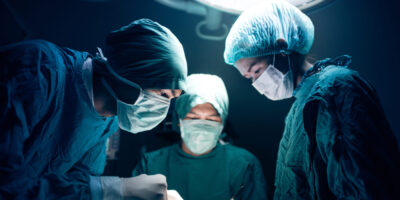

The best country for a medical internship is the one where you can understand the clinicians, receive close supervision and see the kind of care you want to learn about. For most pre-health students, the choice comes down to five checks: learning goals, language, total cost, supervision and safety. Kenya and Peru, the 2 countries where IMA runs programs, meet those checks in different ways.
International Medical Aid runs its medical internships abroad in two countries: Mombasa, Kenya and Cusco, Peru. Below, we compare those two sites in detail and use the United Kingdom and India, where IMA does not run programs, as reference points so you can see how health systems and practical demands differ from one country to the next.
Start With What You Want to Learn
What is best for one student is not necessarily best for you. A student who wants to see as many conditions as possible in two weeks needs a different setting from a student who wants to practice medical Spanish or spend time in a dental unit. Write down your goal before you compare destinations, because a country that looks exciting on a map can still be a poor match for what you need to learn.
Do You Want Breadth or a Specific Department?
If you want breadth, look for a busy public teaching hospital with an emergency department, maternity ward and several specialties. On IMA’s pre-med program, the first rotation is usually the emergency department and maternity is usually the second, because most admissions come through emergency care and it shows the widest range of medicine.
If you already know your field, confirm that the site has the department you need. Some IMA tracks run at both sites, while others, such as physical therapy and mental health, run in Mombasa only. The track table further down shows where each program is offered.
Five Factors That Decide the Best Fit
Language: Can You Follow What Is Being Said?
Language shapes everything you learn on a ward. In Mombasa, IMA’s program runs in English and interns take lessons in medical Swahili. In Cusco, the wards run in Spanish, and IMA asks for at least two years of Spanish study before you apply. If your Spanish is still basic, Kenya will let you follow ward rounds more closely. If you are building toward working with Spanish-speaking patients, Cusco gives you daily practice. Our guide to staying engaged during observation across a language barrier explains how to keep learning when you miss part of a conversation.
Safety: What Support Do You Have Outside the Hospital?
A good placement depends on more than the ward. Before you choose a country, find out who will help you on a bad day: a minor illness, a lost passport or a late-night question. IMA’s program safety and security page lists the same arrangements for Kenya and Peru. Interns live in residences inside gated communities with 24/7 security staff, travel only by designated private transportation and receive 24/7 support from local staff and a U.S.-based team. Each intern is assigned a Program Mentor at the placement site before departure.
Orientation is part of that support. IMA describes physician-led orientations at each placement site and sessions on endemic diseases, recommended vaccinations, local emergency contacts and local customs, so you arrive with a plan for routine and urgent situations. Whatever program you compare, ask for this information in writing and check the U.S. State Department’s advice for the country close to your travel date.
Cost: What Does the Whole Trip Add Up To?
Check current fees for your program length and site on IMA’s program dates and fees page. The program fee covers accommodation, meals, in-country transportation, hospital shadowing and cultural activities. It does not cover international airfare, visa fees, vaccinations, malaria prophylaxis or personal spending money.
Budget for the whole trip rather than the program fee alone. Flights to East Africa and South America vary widely by season and departure city, and some students need vaccinations they do not already have. Add those costs to your spreadsheet before you decide that one destination is cheaper than another.
Supervision: Who Is Responsible for You on the Ward?
Supervision matters more than prestige. At IMA sites, you observe and learn under the direction of licensed clinicians, and IMA follows the AAMC guidelines for premedical students in clinical settings abroad. You do not diagnose, prescribe, perform procedures or stand in for local staff, and a patient can always decline to have a student in the room. Skills practice happens in simulation sessions. Read our guide to ethical global health internships before you commit to any program, with IMA or anyone else.
Schedule: When Can You Actually Go?
Timing narrows your options quickly. IMA’s Kenya program runs year-round for 2 to 12 weeks, so it fits gap years, winter breaks and summers. Cusco runs fixed sessions of two to four weeks, mainly in summer and winter. If your calendar is tight, compare the session dates with your exams and other commitments before anything else.
Kenya: IMA’s Largest Site
Kenya is a lower middle-income country in East Africa, and its health system has real strengths alongside clear gaps. The best-equipped care is often in private hospitals, which many uninsured patients cannot afford, so public hospitals carry heavy patient loads with limited equipment and staff. World Bank figures put Kenya’s current health spending at 4.4% of GDP in 2023, with about 0.29 physicians per 1,000 people.
Mombasa is IMA’s largest and longest-running site. Most interns are placed at Coast General Teaching and Referral Hospital, a 750-bed public hospital. You work alongside clinicians who are skilled at making do with the resources available, and that adaptability is one of the most useful things you can observe. Students often come home with a clearer sense of how much of medicine depends on systems, follow-up and teamwork rather than equipment alone.
Mombasa is also where most IMA tracks run. Physical therapy, mental health, nutrition, optometry, radiologic technology and occupational therapy placements are offered there only.
Peru: Spanish-Language Hospital Learning in Cusco
Peru is an upper middle-income country in South America. World Bank figures put its current health spending at 5.6% of GDP in 2023, with about 1.69 physicians per 1,000 people. As in many middle-income countries, public hospitals often see high patient volumes with less technology than you may be used to at home.
In Cusco, IMA’s main site is Hospital Nacional Adolfo Guevara Velasco, a 250-bed teaching and referral hospital. Lectures compare the Peruvian health system with the U.S. system, and the language immersion is part of the learning. Cusco suits students who already have a working level of Spanish and want to use it in a clinical setting. Our page on healthcare internships in Peru lists session dates and who can apply.
The United Kingdom and India as Comparisons
IMA does not run placements in the United Kingdom or India. They are useful comparisons because they sit at very different points on health spending, staffing and cost of living.
What Would a UK Placement Involve?
The United Kingdom spent 11.1% of GDP on health in 2024 and had about 3.3 physicians per 1,000 people in 2023, according to the World Bank’s health expenditure data. The National Health Service provides publicly funded care to everyone legally resident in the country, so a UK hospital can expose you to a wide range of specialties. In cash terms, the Office for National Statistics estimates that the UK spent about £292 billion on current healthcare in 2023. The trade-offs are cost and access. Cities like London offer a lot but are expensive to live in, so students on a tighter budget often look at cities such as Manchester or Glasgow. Observerships are competitive and often limited to medical students, and visa rules depend on your nationality and the activity you plan, so check the UK Standard Visitor guidance before you arrange anything.
What Would a Placement in India Involve?
India spent 3.3% of GDP on health in 2023 and had about 0.72 physicians per 1,000 people in 2020, the latest year in the World Bank’s physician data. High patient volumes mean you may see a broad range of conditions, but crowded facilities can also mean less time with a supervising clinician. Languages vary by region, so ask in advance which language ward rounds use. The cost of living is significantly lower than in most Western countries, which helps if your budget is tight. Whatever the setting, confirm who will supervise you and how often you will be able to ask questions before you treat a busy hospital as a good learning environment.
Destination Decision Matrix
| Factor | Mombasa, Kenya (IMA) | Cusco, Peru (IMA) | United Kingdom (comparison only) | India (comparison only) |
|---|---|---|---|---|
| Working language | English, with medical Swahili lessons | Spanish; at least two years of study required | English | Varies by region |
| Main hospital | Coast General Teaching and Referral Hospital, 750 beds | Hospital Nacional Adolfo Guevara Velasco, 250 beds | Not offered by IMA | Not offered by IMA |
| Program length | Year-round, 2 to 12 weeks | Fixed sessions, 2 to 4 weeks | Not offered by IMA | Not offered by IMA |
| IMA fees | Listed on the program dates and fees page | Listed on the program dates and fees page | Not offered by IMA | Not offered by IMA |
| In-country support | 24/7 local and U.S.-based support, gated residence, private transport | 24/7 local and U.S.-based support, gated residence, private transport | Not offered by IMA | Not offered by IMA |
| Health spending, share of GDP | 4.4% (2023) | 5.6% (2023) | 11.1% (2024) | 3.3% (2023) |
| Physicians per 1,000 people | 0.29 (2023) | 1.69 (2023) | 3.3 (2023) | 0.72 (2020) |
IMA details in the matrix are as published on its pre-med internships abroad page and its track pages in October 2026. Health system figures come from World Bank data, using the latest year available for each country.
Tracks Offered at Each IMA Site
| IMA track | Mombasa, Kenya | Cusco, Peru |
|---|---|---|
| Pre-medicine and medicine | Yes | Yes |
| Pre-PA and physician assistant | Yes | Yes |
| Pre-dentistry and dentistry | Yes | Yes |
| Pre-nursing and nursing | Yes | Yes |
| Midwifery | Yes | Yes |
| Physical therapy, mental health, nutrition | Yes | No |
| Optometry, radiologic technology, occupational therapy | Yes | No |
For chiropractic and CRNA observation, IMA’s admissions team or program mentor confirms which site fits your dates.
How to Decide in Six Steps
- Write one sentence describing what you want to learn and which department would show it to you.
- Rule out any site where you could not follow the working language on the ward.
- Compare your available weeks with year-round Kenya dates and fixed Cusco sessions.
- Build a full budget that includes flights, vaccinations and spending money as well as the program fee.
- Book a travel health visit early and check entry requirements for each country on your shortlist.
- Ask each program how supervision works, what you will and will not do, and how patients consent to your presence.
Plan Your Next Step
Your internship is one part of a longer path, and the country you choose should serve that path rather than define it. Once you have a destination in mind, read our guide on how to prepare for a medical internship abroad and review how medical shadowing abroad works at IMA. If you have questions about which site fits your goals, our admissions team can talk them through with you before you apply.
Frequently Asked Questions
Which Country Is Best for a Pre-Med Internship Abroad?
There is no single best country. Choose the site where you can follow the language on the ward, see the departments you care about and receive clear supervision. Among IMA’s sites, Mombasa suits English speakers and year-round dates, while Cusco suits students with at least two years of Spanish.
How Much Does an IMA Internship Cost?
IMA lists current fees by program length and site on its program dates and fees page. The fee covers accommodation, meals and in-country transportation, but not international airfare, visa fees, vaccinations or personal spending money.
Do I Need to Speak Spanish for IMA’s Peru Program?
Yes. The wards in Cusco run in Spanish, and IMA asks for at least two years of Spanish study. If your Spanish is limited, the Mombasa program runs in English with lessons in medical Swahili.
Can I Do a Physical Therapy or Mental Health Internship in Peru With IMA?
No. IMA’s physical therapy, mental health, nutrition, optometry, radiologic technology and occupational therapy placements run in Mombasa, Kenya only.
Is It Safe to Do a Medical Internship in Kenya or Peru?
IMA’s interns in both countries live in gated residences with 24/7 security staff, travel by designated private transportation and have 24/7 local and U.S.-based support. Check the U.S. State Department’s country advice before you travel and ask any program how it handles medical and security emergencies.
Does IMA Offer Internships in Europe or the United Kingdom?
No. IMA runs its internships in Mombasa, Kenya and Cusco, Peru. This guide uses the United Kingdom and India only as comparisons.
How Long Should My Medical Internship Abroad Be?
Choose a length that gives you time to settle in and rotate through more than one department. IMA’s Kenya program runs year-round for 2 to 12 weeks, and Cusco runs fixed sessions of two to four weeks.