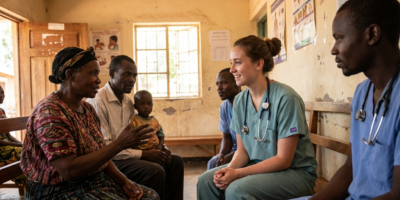
A language barrier in a clinical placement does not have to stop your learning. When you cannot follow the words, you can still follow examination technique, procedure steps, body language and team dynamics. With 20 to 30 minutes of preparation before each shift and a few targeted questions afterward, most students learn far more than they expect.
Standing in a consultation room where the physician, the patient and every member of the clinical team are speaking a language you do not understand is one of the stranger moments of an international placement. You are physically present and professionally appropriate, and you are following almost nothing that is being said. Our guide to ethical global health internships explains why your conduct in that room matters as much as what you learn.
The natural response is to disengage. If you cannot understand the words, the reasoning goes, you cannot learn from the conversation. Students who follow that reasoning spend much of their placement mentally checked out, waiting for the encounter to end so something more comprehensible can begin. They come home with less than classmates who faced the same barrier and found a way through it.
The students who do well have learned something important: spoken words are only one channel through which clinical information flows. Procedural sequencing, nonverbal communication, physical examination technique, team dynamics and the spatial logic of clinical decisions are visible to anyone paying close attention. This guide explains how to reach those channels, how to work respectfully with interpreters and bilingual staff, and how to keep learning through every shift.
Why Language Barriers Are More Instructive Than They Appear
The effect of language barriers on care is well documented. A systematic review in the Oman Medical Journal, Implications of Language Barriers for Healthcare (Al Shamsi and colleagues, 2020), found that language barriers lead to miscommunication between clinicians and patients, lower satisfaction on both sides and reduce the quality of care and patient safety. The same barriers that create clinical challenges also create unusual learning opportunities for a student: they force you to build the observational and contextual skills that verbal fluency normally lets you skip.
When you cannot rely on words, you read everything else. You watch where the physician’s eyes go during an examination. You notice which physical signs prompt a change in the plan. You see how the patient’s posture shifts when a particular topic comes up, and how family members react as they take in what is being said. All of this information was always there. The language barrier makes it visible.
Students who engage with this challenge rather than retreating from it often describe it as one of the most valuable parts of their placement. They return with a capacity for observation and contextual reading that familiar-language settings rarely build, and it serves them in medical school, in clinical rotations and in any future encounter where language separates clinician and patient.
Know the Language Setting Before You Arrive
Language conditions differ by site, and knowing them in advance shapes how you prepare. At IMA, the Kenya program runs in English. Most interns there are placed at Coast General Teaching and Referral Hospital in Mombasa and also take medical Swahili lessons, because many patient conversations happen in Swahili even when the team speaks English with you. In Cusco, Peru, the wards run in Spanish, and IMA asks for at least two years of Spanish study before you apply.
Those two settings call for different preparation. In Mombasa, your challenge is following the patient side of conversations and the Swahili that passes between staff and families. In Cusco, the whole clinical conversation is in Spanish, so your vocabulary work matters from the first morning. Our guide to preparing for a pre-med program in Peru covers the Spanish requirement in more detail, and our overview of a supervised week in Kenya shows how the days are structured.
The Different Channels of Clinical Communication
Physical Examination
Physical examination is largely visual and tactile. The physician’s hands, the patient’s responses and the sequence of examination steps communicate clinical reasoning in any language. If you know the basic structure of a physical examination, even at the level of an introductory text, you can follow what is happening and understand what is being assessed. Reviewing that framework before your shift is one of the highest-value preparations you can make.
Procedural Sequencing
Every clinical procedure follows a sequence. Wound care, IV placement, suturing, auscultation and pelvic examination all have recognizable steps that stay consistent across clinical cultures even when the surrounding language changes. Learning to recognize procedures by their order of steps, rather than by what is said about them, is a portable skill that needs only attention and preparation.
Nonverbal Communication
Clinical encounters are full of nonverbal information. A patient’s facial expression, muscle tension and posture signal pain, fear, relief or confusion in ways that cross language lines. A physician’s eye contact, touch and position in the room signal authority, reassurance and concern. Family members show the weight of a situation in their own expressions and behavior. A careful watcher can read much of this without understanding a single word.
Team Dynamics and Hierarchy
How a clinical team works together is visible without verbal comprehension: who speaks first, who defers to whom, how disagreements are handled and how information moves from the most senior clinician to the most junior. The social structure of a clinical encounter is one of the most instructive things a pre-health student can study, and a language barrier strips away the spoken content that sometimes hides it in familiar settings.
Interpreters, Bilingual Staff and Your Role
A language barrier raises a question that students do not always anticipate: what if someone asks you to help communicate with a patient? The answer depends on your training and on who is asking, but one rule holds. Medical interpreting is a professional skill. The CDC’s health communication guidance on understanding health literacy advises organizations to use certified translators and interpreters and to consider the cultural and linguistic norms of the people they serve. A student with two years of classroom Spanish is not a substitute for that.
In practice, this means:
- Do not act as the interpreter for a clinical conversation about symptoms, diagnosis, consent or treatment, even if you feel confident. A mistranslated dose or symptom can harm a patient.
- Supervised tasks you are trained for, such as greeting a patient, recording vital signs or helping with intake under supervision, are good places to practice the phrases you have learned. Your supervisor sets the limits.
- If a patient or family member starts speaking to you directly about something clinical, acknowledge them politely and bring in your supervisor or the staff member who speaks their language.
- Treat bilingual staff as busy clinicians, not personal translators. Their first job is patient care.
Strategies for Active Engagement When You Cannot Follow the Words
Prepare Before Every Shift
Before any shift in a language-barrier setting, spend 20 to 30 minutes reviewing the clinical content you expect to see. If you will be in a pediatric outpatient clinic, review common presentations there such as dehydration, fever, respiratory illness and malnutrition. If you will be on an antenatal ward, review the basics of routine antenatal care. Our guide to conditions observed during medical internships is a good starting point by region. This preparation gives your mind a framework to attach observations to when the spoken commentary is out of reach.
Focus on Transitions, Not Content
In a familiar-language setting, you follow the content of what is said. Across a language barrier, focus instead on transitions, the moments when the encounter changes direction. The physician stops asking questions and begins examining. The examination ends and the physician writes something. The patient’s expression shifts after something is said. A family member leans forward. Each transition marks a change in the clinical picture that has meaning regardless of the words around it.
Use a Translator or Bilingual Intern Strategically
If your placement includes a local coordinator, a bilingual intern or staff who speak both languages, use them strategically rather than continuously. Instead of asking for a running translation, pick the moments with the most learning value and ask about those, at a natural pause. What did the physician just say about the diagnosis? What is this medication for? When did the patient say the symptoms started? Focused questions get better answers than general requests, and they show that you are engaging with the encounter rather than asking to be carried through it.
Ask Respectful Questions
Good questions across a language barrier are short, specific and well timed. Wait for a pause between patients, at the end of rounds or during a quiet moment at the nursing station. Ask about one thing at a time and explain why you are asking. “I noticed the doctor pressed below the ribs and the patient winced; what was she checking for?” is far easier to answer than “What was going on in there?” Thank people for their time, and accept “later” gracefully when the ward is busy.
Document What You See, Right Away
Write in your notebook during natural pauses and immediately after encounters, focusing on what you saw rather than what you heard. Sketch the sequence of an examination. Note which part of the examination produced a visible response. Record the steps of a procedure. Notes built from observation are often richer than notes taken in a familiar language, because they force you to work harder to construct meaning. Keep patient names and identifying details out of your notes, as our guide to patient privacy during placements explains.
A Daily Learning Worksheet
The worksheet below is general guidance you can copy into your notebook. Ask your program mentor to adjust it for your ward and site.
| Part of the day | What to record | Question to bring to your mentor |
|---|---|---|
| Before the shift | Ward, likely presentations, five to ten terms you reviewed | Which conditions should I expect today? |
| During encounters | Examination sequence, transitions, visible responses | What was the physician checking when the patient reacted? |
| Team observation | Who led, how handoffs happened, how decisions were shared | How does this team pass on an unresolved concern? |
| Language | New words you heard more than once | What does this word mean, and when is it used? |
| End of shift | Three questions the shift raised | Which of these can we talk through tomorrow? |
Build Context Outside Clinical Hours
The most effective way to stay engaged across a language barrier is to build context outside the hospital that makes the in-shift picture clearer. Read about the conditions you keep seeing, learn the local terms you hear repeatedly, and ask your program coordinator or local colleagues to explain the clinical logic behind encounters you watched but could not follow.
It also means engaging with the cultural context of the community you are in. Understanding how people find and act on health information, which our article on promoting health literacy locally explores, helps you read clinical encounters more accurately than clinical knowledge alone. A patient who seems reluctant to follow a treatment plan may be weighing economic constraints, cultural beliefs about illness or earlier negative experiences with the health system. Those factors are not visible in the encounter, but they shape everything that happens in it.
Students who want to build their placement into a broader global health story should also understand how it connects to the larger picture of global health experience before medical school. The language barrier is not a limit on that story. It is one of its most compelling parts.
Learn Basic Clinical Vocabulary in the Local Language
Even a small investment in clinical vocabulary pays off in engagement and relationships. You do not need to become conversational. You need enough to recognize key terms when you hear them, understand basic instruction-and-response patterns in an encounter, and show local staff that you have made a genuine effort with their language.
Ten to fifteen words a day, focused on the ward or specialty you are in, is a realistic and effective target. Common complaints, basic anatomy, key diagnostic terms and the language of reassurance and instruction are the most useful categories. A student who recognizes the Swahili word for pain in Mombasa, or the Spanish word for fever in Cusco, is not just showing effort. They are opening a channel of clinical information that was closed to them before. For Peru, our list of medical Spanish phrases for interning in Peru is a practical place to start.
Reflection Prompts for Encounters You Could Not Follow
Some encounters will stay confusing even with preparation. Rather than writing them off, use a few prompts at the end of the day to turn confusion into questions:
- What did I see that told me the situation was serious or routine?
- At what moment did the plan seem to change, and what happened just before?
- How did the clinician check that the patient understood?
- What would I need to know, clinically or culturally, to follow this encounter next time?
- Who on the team could explain this, and when would be a good moment to ask?
These prompts also give you honest material for applications later, because they show how you learned in a setting that did not make it easy.
Common Mistakes in Language-Barrier Settings
The most common mistake is treating the language barrier as a reason to disengage rather than a challenge to work through. Students who spend these shifts standing passively, waiting for something they can understand, miss most of the learning available to them.
A second mistake is relying too heavily on continuous translation. It shifts your attention from the encounter to the translator and keeps you from building the observational skills that the language barrier puts you in a unique position to train.
A third mistake is failing to prepare. How much you can take from an encounter you cannot verbally follow depends largely on the clinical background you bring to the shift. A student who reviewed the common presentations the night before will recognize far more than one who arrived without preparation, even though both faced the same barrier.
A fourth mistake is overstepping. Trying to interpret a clinical conversation, or answering a patient’s medical question in a language you only partly speak, can cause real harm. Stay within the tasks your supervisor has given you.
What to Do Next
For your next shift across a language barrier, prepare a short list of the ten clinical terms most relevant to the specialty you will be in. Review the presentations you expect to see. Arrive intending to spot transitions rather than follow every word, and save two or three focused questions for a natural pause. At the end of the shift, complete the worksheet and the reflection prompts above.
If you are still choosing a placement, IMA’s medical shadowing abroad programs in Mombasa and Cusco pair you with licensed supervisors and mentors who can help you learn across the language gap from your first day.
Frequently Asked Questions
Is It Worth Doing a Clinical Internship If I Do Not Speak the Local Language?
Yes. The learning across a language barrier is different from, not inferior to, learning in a familiar language. Students who engage actively build observational skills, nonverbal clinical reading and cultural adaptability that are hard to develop elsewhere, and admissions committees value them because they are uncommon.
How Much of the Local Language Should I Learn Before an International Placement?
Even a basic vocabulary makes a real difference. Aim for greetings, clinical terms for the specialty you will join, common local complaints and simple phrases of reassurance. In Cusco, IMA asks for at least two years of Spanish study; in Mombasa the program runs in English and includes medical Swahili lessons.
What Should I Focus On When I Cannot Understand What Is Being Said?
Focus on procedural sequencing, how the physical examination is structured and performed, nonverbal communication from patient and clinician, team dynamics, the responses that follow specific interventions and the transitions that mark a change in the clinical picture.
How Do I Stay Alert During a Shift Where I Understand Very Little?
Set specific goals for the shift rather than trying to absorb everything. Ask yourself concrete questions, such as how this physician examines a child or how this team hands over a patient. A clear task keeps your attention from drifting.
Is It Appropriate to Ask for Translation During Clinical Encounters?
Usually not during the encounter itself, because a running translation disrupts the conversation with the patient. Between patients, at the end of rounds or after an encounter, asking a bilingual colleague to explain one or two key points is appropriate and shows engagement.
Can I Interpret for a Patient If I Speak Some of the Language?
Do not interpret clinical conversations about symptoms, diagnosis, consent or treatment. That is professional work, and a mistranslation can harm a patient. You can use the phrases you know for greetings and supervised tasks, and you should bring in your supervisor or bilingual staff for anything clinical.
How Should I Document a Shift Across a Language Barrier?
Record what you saw rather than what was said: examination sequences, visible responses and procedure steps. Leave out patient names and identifying details. End each entry with the three most important questions the shift raised, and look for answers before your next shift.
Will a Language Barrier Experience Help My Application?
It can strengthen your story when you describe it honestly. Explain the barrier, how you engaged with it and what you learned through nonverbal channels. That shows adaptability and resourcefulness, which admissions committees look for.