To prepare for a medical internship abroad, work backward from your start date. Apply three to six months ahead, see a travel health provider at least a month before you leave, and use the final weeks for documents, insurance details and packing. Most preparation problems come from starting one of these steps too late.
The order matters more than any single item. A visa you cannot get in time, a vaccine series that needs several weeks or a passport close to expiring can all delay a trip that is otherwise ready. This guide gives you a timeline, explains what a structured program already handles and ends with a checklist you can work through. If you are still choosing where to go, start with our guide to which country is best for a medical internship.
A Preparation Timeline You Can Work Backward From
Put your start date at the bottom of a page and fill in the steps above it. The table below shows a typical order. Adjust it if your school calendar, job or exam dates are tight. If you want the placement to count toward your degree, start with our guide to getting academic credit for a pre-health internship abroad, since most schools approve the course before you travel.
| When | What to do | Why it matters |
|---|---|---|
| 3 to 6 months before | Choose your track, location and dates. Check exam and work dates. Submit your application. | IMA’s program pages advise applying three to six months ahead because summer places often fill early |
| 2 to 3 months before | Confirm your placement and dates in writing. Check your passport’s expiration date and blank pages. | Your hospital placement and residence are arranged around confirmed dates |
| 6 to 8 weeks before | Look up entry requirements for your destination. Book a travel health appointment. | Some vaccines and visa steps take weeks |
| At least 1 month before | Attend your travel health visit. | The CDC advises seeing your doctor at least a month before you travel |
| 2 to 4 weeks before | Book flights that match your arrival instructions. Confirm insurance details. Start packing. | Arrival times affect your airport transfer |
| Final week | Copy your documents, share your itinerary with family and confirm your first-day plan. | Small gaps are easier to fix before you leave |
How Early Should You Apply?
IMA’s pre-med program page notes that summer places often fill months in advance and suggests applying three to six months before you want to start. The online application form takes about 45 minutes. If your dates are fixed by a school break, apply at the early end of that window so your first choice of dates is still open. Session timing for each site is listed on IMA’s program dates page. If you are still deciding how long to go, our guide to choosing a clinical internship length compares two-week and longer stays.
Check Your Passport and Entry Requirements
Start with your passport. Look at the expiration date and the number of blank pages, because many countries set rules for both. Renewing a passport takes time, so do this before you book anything.
Next, check the entry rules for your destination on the State Department’s country page for Kenya or for Peru. Requirements change, so read the page close to your application date and again before you fly. If you are not a U.S. citizen, check with the destination country’s embassy, because your rules may differ.
IMA’s pre-departure support includes guidance on health clearances, travel insurance, visas where needed, packing lists and cultural expectations. Use that guidance alongside the official country information rather than relying on a forum post from a previous year. When your departure date is set, work through our medical internship abroad packing list, which covers documents, scrubs, health supplies and weather for Mombasa and Cusco.
Book a Travel Health Visit Early
The CDC’s Kenya traveler page advises travelers to visit a doctor at least a month before the trip to get any vaccines or medicines they may need. The same page says CDC recommends prescription medicine to prevent malaria for travelers going to certain areas of Kenya, and that some of these medicines must be started days before travel.
Bring your program location, dates and planned activities to the appointment. A travel medicine provider can then decide which vaccines and medicines fit your trip. IMA’s own guidance is the same: consult your primary care physician or a travel medicine specialist about vaccinations and malaria prophylaxis.
What Should You Ask at the Travel Health Visit?
Go in with specific questions so the visit produces a plan rather than a list of possibilities. Ask which routine vaccines you need to update, which travel vaccines fit your destination and dates, whether you need malaria medicine and when to start it, and what to carry for minor illness. Mention that you will be in hospitals, since that can change the advice. IMA’s pre-departure sessions also cover endemic diseases and recommended vaccinations for each location, so bring those notes with you.
Know What Your Program Already Covers
Part of preparing well is knowing which problems are already solved. According to IMA’s program safety and security page and its program pages, each placement includes:
- 24/7 in-country and U.S.-based support, plus pre-departure support
- Travel medical and accident insurance for emergency medical and dental care, medical evacuation and lost luggage
- Physician-led orientation in country
- Airport transfers on arrival and departure, and transportation to your placement
- Shared accommodation in a gated community with 24/7 security staff
- Three daily meals, internet access and a local SIM card
That list changes what you need to arrange yourself. You still book your own international flights, and you should read the insurance details so you know what is covered. Ask the program team any question the page does not answer before you travel, not after you land.
Prepare for the Language You Will Hear
Language preparation depends on where you go. IMA’s pre-med page says interns in Mombasa work largely in English and take medical Swahili lessons. In Cusco, the wards run in Spanish, and IMA asks for at least two years of Spanish study.
Even where English is common, patients may speak another language at home, and conversations between staff may switch languages quickly. A few weeks of focused practice helps more than you might expect. Learn greetings, polite phrases, body parts and common symptoms. Practice listening, not just speaking, because most of your time will be spent following conversations.
If you find yourself lost during rounds, you can still learn a great deal. Our guide to staying engaged during clinical observation across a language barrier covers practical ways to follow a case when you do not catch every word.
Get Your Application Materials Ready
A medical internship abroad is not a job, but you still need to present yourself clearly. Your application should explain why you want this experience, what you hope to learn and how it fits your path toward medicine, nursing, PA school or another health career.
The same questions that shape a strong personal statement help here:
- How did you decide to pursue a health career?
- What do you want to understand that you cannot learn in a classroom?
- What experiences, such as research, service or work, have prepared you to learn in a hospital?
- How will you use what you learn when you return?
Keep the answers specific. A sentence about a patient conversation you remember or a skill you built in a part-time job says more than a list of adjectives.
Understand Your Role Before You Arrive
Students who prepare well know what they will and will not do. IMA follows the AAMC guidelines for students in clinical settings abroad. Pre-health interns observe under the supervision of licensed clinicians, and you never do anything abroad that you could not do at home. Patients can always decline to have a student present.
Reading about ethics before you leave makes the first days easier. Our guide to ethical global health internships explains consent, scope and how to talk about your experience honestly afterward.
Plan the First Week and the Trip Home
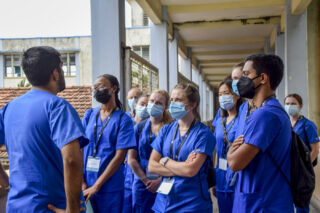
Your first days follow a set pattern. Staff meet you at the airport, take you to the residence and walk you through house rules. Local clinicians then lead an orientation on the health system, hospital routines, safety and infection control before rotations begin. Arrive rested if you can, because orientation days are full.
Plan for the return as well. Keep a daily log of your departments, supervisors and what you learned, leaving out anything that could identify a patient. Those notes make application entries and interviews much easier later. If you are planning an exam in the same year, our guide to choosing an MCAT date around your clinical internship shows how to fit both on one calendar. Coming home can feel strange after a few weeks away, and our guide to culture shock and reverse culture shock explains why and what helps.
Your Pre-Departure Checklist
Work through this list in the last month and check off each item:
- Passport valid and with blank pages, plus photocopies stored separately
- Entry requirements checked on the official country page
- Travel health visit completed, with vaccine records and any prescriptions packed
- Flights booked to match your arrival instructions, with the itinerary shared with family
- Insurance details saved on your phone and on paper
- Clinical clothing and closed-toe shoes that meet the host hospital’s dress expectations
- A small notebook for your daily observation log
- Emergency contacts, including the program’s 24/7 number
When everything on the list is done, read the details on medical shadowing abroad once more so you know how your first week will run.
Frequently Asked Questions
How Far in Advance Should I Prepare for a Medical Internship Abroad?
Start three to six months before your start date. That gives you time to apply while places are open, complete a travel health visit at least a month before departure and sort out documents and flights without rushing.
What Vaccines Do I Need for a Medical Internship in Kenya?
It depends on your health history, where you travel and what you will do. The CDC advises seeing a doctor at least a month before the trip and recommends malaria prevention for certain areas of Kenya. A travel medicine provider can give you a plan for your itinerary.
Do I Need a Visa for a Medical Internship Abroad?
Rules depend on your citizenship and destination and they change over time. Check the official country information for your destination and the destination’s embassy, and use your program’s pre-departure guidance on visas where needed.
Is Travel Insurance Included in an IMA Internship?
Yes. IMA provides each intern with travel medical and accident insurance that covers emergency medical and dental care, medical evacuation and lost luggage. It is not regular health insurance and does not cover routine care or trip cancellation, so read the policy details before you travel.
Do I Need to Speak Spanish or Swahili?
For Cusco, IMA asks for at least two years of Spanish study because the wards run in Spanish. In Mombasa, interns work largely in English and take medical Swahili lessons during the program.
What Happens in the First Days of the Program?
Staff meet you at the airport and take you to the residence. Local clinicians then run an orientation on the health system, hospital routines, safety and infection control before your department rotations begin.