


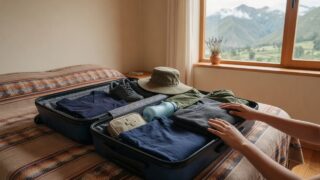
A medical internship abroad packing list starts with three things: your documents, your clinical clothing and your health supplies. Order IMA-branded scrubs at least 30 days ahead, pack closed-toe shoes, a notebook and your passport, then plan clothing for Mombasa or Cusco weather. Housing, meals and Wi-Fi are already arranged.
This guide works through each category in the order that matters, explains what IMA provides on site so you don’t pack it twice, and ends with a checklist you can print. If you are still choosing a program, start with our guide to how to prepare for a medical internship abroad, which covers the timeline before packing begins.
Key Points
- Documents and medicines go in your carry-on, never in checked luggage.
- IMA-branded scrubs are required for the hospital. Order them at least 30 days before you start.
- Mombasa is warm all year, with the heaviest rain in April and May. Cusco is mild by day and cold at night, especially in June and July.
- Your residence has Wi-Fi, meals and housekeeping, and IMA provides a local cell phone or SIM card.
- Most purchases in Kenya are in cash, so plan how you will carry and get money.
Start With Documents
Documents are the one category you cannot replace once you land. Put them in a single folder in your carry-on and keep a copy somewhere else.
- Passport. Check the expiration date and blank pages before you book flights.
- Visa. Every intern in Kenya needs an entry visa. IMA processes it through its visa intake form once your flights are booked and emails you the approved visa, so print it. For Peru, citizens of the U.S., Canada and most European countries need no visa for stays under 180 days.
- Insurance details. Every IMA intern carries travel medical insurance. Bring the policy information and your regular health insurance card.
- Program papers. Your placement confirmation, arrival instructions and the contacts for your Program Mentor and in-country staff.
- Prescription letters. A letter from your doctor for any prescription medicine, and for needles or syringes if you use them.
- Copies. A paper copy of each document in a separate bag, plus photos on your phone.
What to Wear in the Hospital
Clinical clothing is the part of the list students get wrong most often. You follow the host hospital’s rules and the direction of the licensed clinicians who supervise you, and your clothing is part of that.
Do You Need Your Own Scrubs?
Yes. IMA-branded scrubs are required, and you buy them separately before you travel. IMA advises ordering them at least 30 days before your start date so they arrive in time. Pack enough sets to rotate between washes, and think about how many days you will be on the wards each week.
What Shoes Should You Bring?
Bring closed-toe shoes that are comfortable for six to eight hours on your feet. Most days run from about 8 AM to 4 PM in your assigned department, and you move between wards, rounds and teaching sessions. Pick a pair that you can wipe clean and that you have already broken in at home. Sandals and open shoes have no place on a hospital floor, where interns take part in supervised patient care such as taking vital signs and doing patient intake.
What Else Goes in Your Hospital Bag?
IMA’s own checklist for shadowing overseas is short:
- Closed-toe shoes and clean scrubs
- A small notebook and pen for reflection and case notes
- A water bottle for long hours
- Your identification and hospital badge at all times
Keep the notebook free of anything that could identify a patient: no names, faces or photos. Phones stay away during clinical time. Our guide to clinic selfies and patient privacy explains why.
Health Supplies and Medicines
Your health supplies depend on your destination, your own medical history and what your doctor advises. The CDC suggests visiting a doctor at least a month before the trip for vaccines and medicines, and IMA asks you to take vaccine and malaria advice from your own physician or a travel medicine clinic.
Kenya
The CDC recommends prescription medicine to prevent malaria for travel to certain areas of Kenya, and some of those medicines must be started several days before you leave, so read the CDC’s Kenya travel health page with your doctor. Pack enough for the entire stay plus the days after you return. Mosquito bite prevention matters in Mombasa all year, so bring an insect repellent your doctor or the CDC recommends. IMA notes that you generally need no yellow fever vaccine to enter Kenya unless you arrive from a country with yellow fever risk.
Peru and Cusco
The CDC lists no malaria transmission in the city of Cusco or at Machu Picchu. Altitude is the bigger health question in Cusco, which sits high in the Andes, and the CDC advises talking to your doctor about preventing and treating altitude sickness. Its Peru travel health page also covers sun safety at high elevation, where the sun is stronger than many travelers expect.
A Health Kit for Either Site
The CDC’s healthy travel packing list is a good base. For a hospital placement, most students need:
- Every prescription you take, in the original containers, with extras in case of delays
- Spare glasses or contact lenses
- Medicine for pain and fever, and for diarrhea
- Alcohol-based hand sanitizer with at least 60% alcohol
- Insect repellent and sunscreen of SPF 15 or higher
- A small first-aid kit with bandages, blister care and a thermometer
- Oral rehydration salts
Some medicines are hard to find abroad or carry different names and ingredients, so bring what you will need from home. If you are exposed to an infectious disease during your placement, IMA provides post-exposure prophylaxis right away.
Pack for the Weather
The two IMA sites have very different climates. The figures below are long-term averages from the World Meteorological Organization’s World Weather Information Service.
| Site | Daytime highs | Nighttime lows | Wettest months | Driest months |
|---|---|---|---|---|
| Mombasa, Kenya | About 82 to 91°F | About 69 to 76°F | April and May | January and February |
| Cusco, Peru | About 66 to 70°F | About 32 to 44°F | December to March | May to September |
Mombasa
Mombasa is warm and humid all year. May is the wettest month, with about 240 mm of rain on average. Pack light, breathable clothing for evenings and weekends, a rain jacket from April to June, sunscreen, a hat and sunglasses. Local outings such as Fort Jesus and Haller Park are part of your weekends, so bring comfortable walking shoes as well as your hospital pair. Modest clothing that covers the shoulders and knees works well in town.
Cusco
Cusco has warm days and cold nights. In June and July, the months of the summer session, average lows sit close to freezing and the season is dry. The winter session falls in the rainy season, when nights are milder but rain is frequent. Pack layers for both sessions: a warm jacket, a fleece or sweater, long pants and a hat. Add a rain jacket for December to March, and sturdy shoes for treks such as Sacsayhuaman and Qoricancha.
Electronics and Staying Connected
Your residence has Wi-Fi throughout, and IMA provides a local cell phone or SIM card, so you do not need an international plan to reach staff. Pack:
- Your phone and charger, plus a power bank for long days
- A plug adapter that fits your destination’s outlets; check the plug type and voltage for Kenya or Peru before you travel
- Headphones for flights and study time
- A small, cheap watch if your phone stays in a locker during clinical hours
Leave expensive cameras, jewelry and anything you cannot afford to lose at home.
Money Basics
Most purchases in Kenya are in cash. IMA advises bringing newer U.S. bills from 2009 or later, because older bills get a lower exchange rate, and staff will show you the nearby ATMs. Tell your bank you will be traveling, carry a backup card in a separate bag, and keep only the cash you need for the day on you. Meals, housing and program transport are already arranged, so most of your spending goes on meals out, souvenirs and weekend activities.
What Not to Bring
- Bedding and towels you don’t need. Ask your Program Mentor what the residence supplies before you pack them.
- Too many clothes. Laundry is an optional paid service in Kenya. If you choose not to use it, pack enough clothing for your stay, but plan on rewearing casual clothes.
- Clinical equipment. You do not need your own instruments. Follow what your supervising clinicians provide and allow.
- Medical donations you haven’t cleared. Ask IMA before you pack donated supplies.
- Valuables. Expensive watches, jewelry and electronics add risk without adding anything to the experience.
Printable Packing Checklist
| Category | Items | Bag |
|---|---|---|
| Documents | Passport, visa (Kenya), insurance details, placement papers, prescription letters, copies | Carry-on |
| Clinical | IMA-branded scrubs, closed-toe shoes, notebook and pen, water bottle, ID | Checked, shoes in carry-on if space allows |
| Health | Prescriptions, malaria medicine (Kenya), altitude plan (Cusco), first-aid kit, repellent, sunscreen | Carry-on |
| Clothing | Light layers (Mombasa), warm layers (Cusco), rain jacket, walking shoes, modest town clothes | Checked |
| Electronics | Phone, charger, power bank, plug adapter, headphones | Carry-on |
| Money | Newer U.S. bills, debit card, backup card | Split between bags |
Pack With Your Goals in Mind
How long you stay changes how much you need. Our guide to choosing a clinical internship length compares the options. If you are going to Cusco, review the Spanish you will use on the wards with our guide to staying engaged when you don’t share the patient’s language.
Packing well frees your attention for the hospital itself. IMA’s pre-med internships abroad place you in Mombasa or Cusco, with pre-departure guidance on visas, vaccines, travel documents and packing once you are accepted.
To decide what you want to get out of the weeks once you arrive, read how to make the most of a pre-med internship abroad. Timing your departure around exams? The MCAT date and clinical internship calendar helps you plan the trip and the test together.
Frequently Asked Questions
What Should I Pack for a Medical Internship Abroad?
Start with your passport, visa and insurance details, then IMA-branded scrubs, closed-toe shoes, a notebook and a water bottle. Add your prescriptions, a small health kit and clothing for your site’s weather.
Do I Need to Bring My Own Scrubs?
Yes. IMA-branded scrubs are required and bought separately. Order them at least 30 days before your start date so they arrive before you travel.
What Shoes Should I Wear in the Hospital?
Wear comfortable closed-toe shoes that you can wipe clean and have already broken in. You are on your feet for six to eight hours most days, so comfort matters as much as appearance.
Do I Need Malaria Medicine for Kenya or Peru?
The CDC recommends prescription malaria prevention for certain areas of Kenya and lists no malaria transmission in the city of Cusco. Ask your own physician or a travel medicine clinic what your itinerary needs.
How Cold Does Cusco Get?
Cusco has mild days of about 66 to 70°F all year, but nights are cold. In June and July, average lows sit close to freezing, so pack warm layers for evenings and early mornings.
Will I Have Wi-Fi and a Phone?
Yes. IMA residences have Wi-Fi throughout, and IMA provides a local cell phone or SIM card so you can reach staff without an international plan.
Should I Bring Cash to Kenya?
Most purchases in Kenya are in cash. Bring newer U.S. bills from 2009 or later for a better exchange rate, and staff will show you the nearby ATMs.











