Documenting a medical internship in Peru means keeping a daily record of dates, departments, hours, supervisors and what you learned, then turning it into a clear internship report and accurate application entries. A good record protects patient privacy, matches your official hours log and gives you real details for essays and interviews.
Completing a pre-med internship could lead to exciting new experiences, especially abroad in Peru. Moreover, students could learn about the country’s culture, economics, and so much more than only medicine. Our comparison of the Peru and US healthcare systems is a useful starting point for that wider picture.
What’s more, a post from Stanford Medicine states the value of a pre-med internship for high school juniors. They explain that the training sparks the curiosity of the pre-med students, leading them toward a successful path in practicing medicine.
However, academic institutions or program coordinators could require pre-med students to document and share their experiences in an internship report or essay. An internship report can also feature the different skills you developed in your journey. The same notes later feed your medical school application, your interviews and any request for academic credit, so it pays to build them carefully from the first day.
Key Points
- Start a daily log on day one: date, department, hours, supervisor, what you did and one thing you learned.
- Never record names, photos or any combination of details that could identify a patient.
- Your official record of hours comes from the program; your own log adds the detail that makes it useful.
- An internship report works best when it is concise, clearly sectioned and honest about challenges.
- Application systems such as AMCAS ask for dates, hours, a contact person and a short description, so collect those details while you are still in Cusco.
Why Documenting Your Peru Internship Matters
Memory fades fast. By the time you write a personal statement or sit for an interview, a busy week in a Cusco hospital can blur into a few general impressions. A written record keeps the specific moments, such as a question a physician answered between patients or the way a nurse explained a treatment in Spanish, and those specifics are what make your writing believable.
Documentation also has practical uses. A school may ask for a report before granting credit. An advisor may want to see what you did before writing a letter. An application asks you to list hours and describe each experience in a limited number of characters. If you track hours to plan your path, our guide to tracking clinical and volunteer hours shows how to keep one running record across every experience.
What Should You Record Each Day?
Keep your log short enough that you will actually write it every evening. Ten minutes is enough. Record facts first, then one short reflection.
| Field | What to write | Example |
|---|---|---|
| Date | The day of the shift | Monday, week 1 |
| Department | Where you spent the shift | Emergency department |
| Hours | Start and end time | 8:00 to 4:00 |
| Supervisor | Name and role of the clinician who supervised you | Attending physician, emergency department |
| What you did | Your tasks, described accurately | Took vital signs under supervision; followed morning rounds |
| What you saw | Conditions and procedures, with no patient details | Two patients with respiratory infections; a wound dressing change |
| One thing you learned | A single lesson or question | How triage decisions changed when beds were full |
| Spanish or Quechua | New phrases you used | Phrases for asking about pain |
Write the “what you did” column honestly. Describe tasks as they happened, without inflating them. If you only watched a procedure, say so. If you took vital signs under supervision, say that. Accuracy now saves you from awkward questions in an interview later.
How Do You Keep Patient Details Out of Your Notes?
The AAMC’s guidance on shadowing a doctor tells students to keep all patient information private, to take notes between patients rather than in front of them, and notes that you may be asked to sign a HIPAA compliance document. Peru has its own privacy rules, but the habit is the same everywhere: write about what you learned, not about who the patient was.
In practice, leave out names, ages paired with rare conditions, room or bed numbers, dates of birth and anything a reader could use to identify a person. “A child with a high fever and dehydration” is fine. A detailed story that someone on the ward could recognize is not.
Can You Take Photos in a Peruvian Hospital?
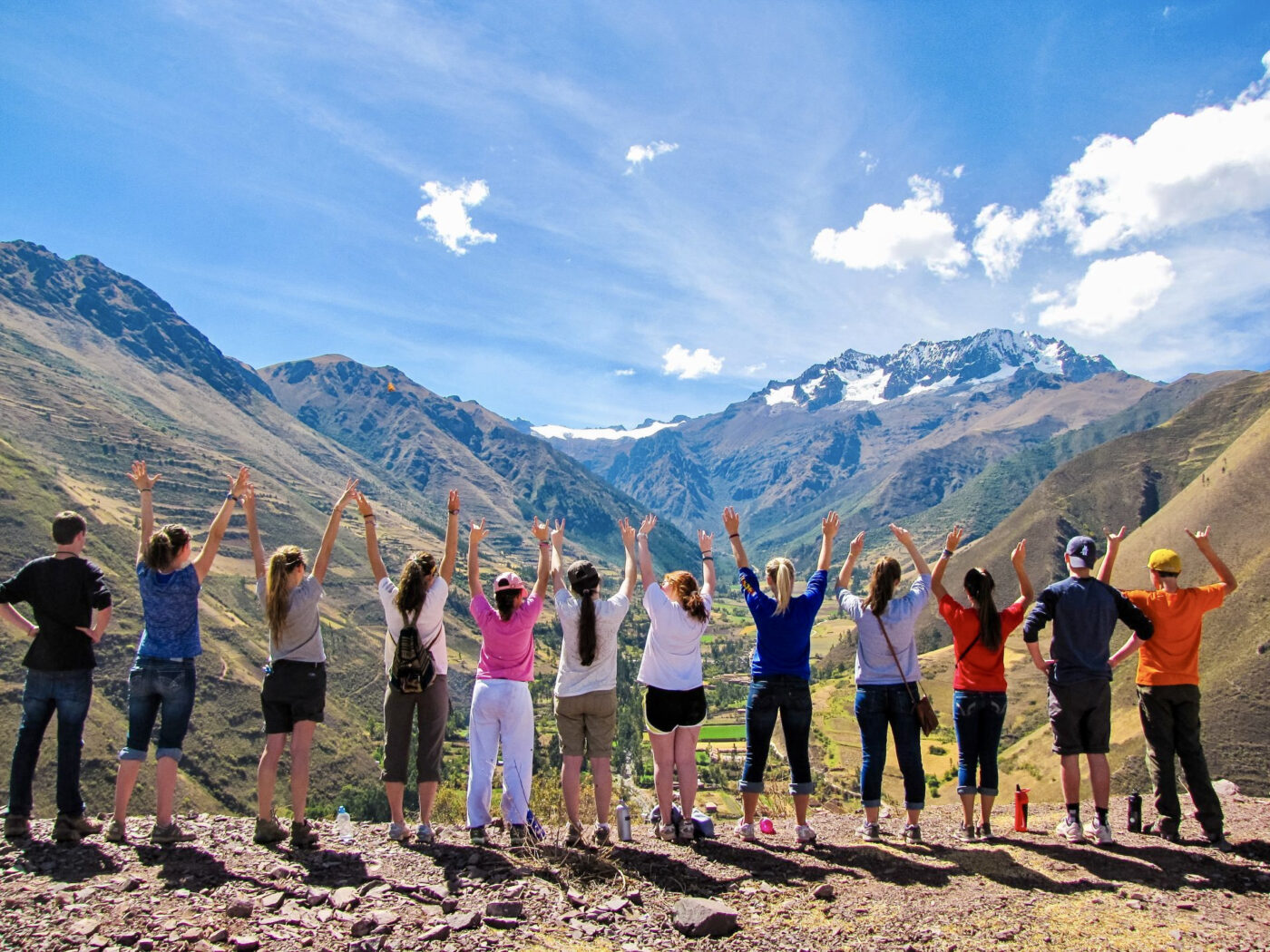
Treat the hospital as a no-photo space unless your supervisor and the hospital say otherwise, and never photograph patients, charts or screens. Many students want pictures for a report or social media, but a single careless image can expose a patient. Our guide to clinic selfies and patient privacy explains where the lines are. Photos of Cusco, your residence, group outings and the city are a better way to illustrate a report.
How IMA Records Your Hours in Cusco
Your own log is not your official record. IMA keeps that. According to IMA’s pre-med internships abroad page, your record lists dates, departments and hours, signed by your supervising physician and validated by IMA’s U.S. Medical Director. Every intern who completes the program receives a certificate of completion and a letter of recommendation from IMA.
On our healthcare internships in Peru, the wards in Cusco run in Spanish and students should have at least two years of Spanish study. Hospital days usually run six to eight hours on weekdays. Compare your nightly log with the official record before you leave, so your dates and departments match.
Under the supervision of licensed clinicians and within their training level, IMA interns take part in direct patient care. They take vital signs, do patient intake and triage, conduct basic patient interviews and assist with noninvasive tasks, alongside ward rounds, rotations, simulations and community outreach. They do not diagnose, prescribe or perform invasive procedures. IMA has maintained a 100% safety record for all high school and pre-health interns.
Tips for Writing an Insightful Internship Report
To help you with this, below are some valuable tips on writing an insightful account of your pre-med internship.
1. Include a Memorable Title and Introduction
An internship report is a way for readers to know and relive an internship experience in Peru from your perspective. So, as a good start, you should list essential details like your name and other personal details and what type of program you attended.
From there, briefly describe the entire experience without unnecessary details. It’s best to be concise in your narration, as doing so will place the focus on your internship achievements, goals, and learning and not make it seem like a rendition of someone’s holiday. Although students may be tempted to add personal experiences, those are more suited for friends and family on the student’s social media network and not in a formal report.
A strong title names the place, the setting and your focus, for example “Four Weeks in a Cusco Hospital: Lessons on Respiratory Care at Altitude.” Your log makes this easy, because the themes that come up most often in your notes are usually the ones worth putting in the title.
2. Clearly Define All the Sections
Depending on who reads the document, they may want to skip to specific parts. For example, one person would like to read more about the student’s responsibilities, while others want to know more about the student’s learning.
Thus, adding a list of the contents can help. Moreover, structuring the paragraphs is also recommended. As much as possible, discuss all details of one idea together and not under other headings in the same document. This way, you can express all relevant information clearly and make your report more readable.
A simple structure works for most readers: introduction, setting, responsibilities, what you learned, challenges and feedback, and conclusion. Add a short section on the hospital setting if your reader may not know how care is organized in Peru. Our guide to public vs private hospitals in Peru can help you describe that context accurately.
3. Describe Your Responsibilities
Internship responsibilities generally differ between programs. In some cases, the coordinators or mentors of the program allow students to have more responsibilities than initially expected. But, regardless of the tasks assigned to you, defining your role during the experience will provide a better understanding to others of what the internship entails.
Below are some examples of the duty categories to add to this section:
- Clerical: Taking a patient’s medical history and documenting it
- Administrative: Writing patient reports and charts
- Medical: Accurately obtaining and charting vital signs like blood pressure or blood sugar
- Laboratory: Correctly labeling, delivering, and collecting laboratory samples
Here, students can also add how they felt about having those responsibilities and how they accomplished all their daily tasks. Exemplary actions won’t go unnoticed and could prove the student’s readiness to enter the demanding medical field.
Pull these examples straight from your daily log, and describe each one the way it happened, including who supervised you. A reader trusts a report that is specific and accurate more than one that sounds impressive.
4. Describe the Setting and the Conditions You Saw
Readers understand your learning better when they know where it happened. Cusco sits at high altitude, and hospital teams there see respiratory infections, gastrointestinal illness, anemia in young children and chronic conditions such as diabetes and hypertension. Our guide to the conditions interns see by region gives that context. Describe patterns, not patients: “Many of the children we saw had respiratory infections” is useful, while a single identifiable case history is not.
Language belongs in this section too. If you used medical Spanish on the wards or heard Quechua spoken by patients, say how that changed the way care was delivered. Our list of medical Spanish phrases for Peru can help you prepare before you go.
5. Explain the Knowledge You Gained
Pre-med internships open up a new world of possibilities for students. Although the program’s primary aim is to expose them to the medical field, there could be other life lessons or skills they learn along the way.
Because there are different types of pre-med internships, not all students will have the same experience. An article by Indeed showcases there are 14 types of pre-med internships, and these include the following:
- Clinical Lab Internships
- Pre-Med Summer Interns
- Brain Science Intern
- Cancer Treatment Intern
- Red Cross Intern
- Policy Internship
- Co-Op Intern
- Education Internship
- Non-Profit Intern
- Pharmacology Internship
- Diversity Intern
- STEM Internship
- Environmental Health Intern
- Healthcare Administration Internship
Furthermore, showcasing the skills you learned and how you can apply them may impress the program coordinator or even a future employer. An article by Psychology Today describes the importance of lived experience, saying people who live through various experiences know the nuances and complexities of effectively dealing with them.
Name the skills plainly and attach each one to an example from your log: communicating through a language barrier, staying calm in a busy emergency department, or understanding why a clinician chose one treatment over another with limited resources.
6. Provide Honest Feedback
An accurate experience account also includes the program’s challenging parts. Students may learn and have fun while in Peru, but they could also raise any of the following in their document:
- Questions They Still Want Answering
- Concerns About The Program
- Honest Feedback
- Any Suggestions For Improving The Internship
Writing an intern report or essay allows students to voice their opinions respectfully. Furthermore, the program coordinators can adjust the experiences for future students by using this feedback.
Keep criticism focused on systems and your own learning rather than on individual clinicians. A sentence such as “I struggled to follow ward rounds in the first week because my Spanish was slower than I expected” is honest and useful, and it shows self-awareness.
How Do You Turn Your Log Into Application Entries?
Application services ask for similar information, and your log already holds most of it.
| Application | What it asks for | Where your log helps |
|---|---|---|
| AMCAS (MD) | Experience type you select, dates, hours for each date range, a contact person and a description of 700 characters or fewer | Dates, hours, supervisor and your best examples |
| CASPA (PA) | Experiences sorted into types such as shadowing, healthcare experience and patient care experience | An accurate description of what you did, so you can choose the right type |
| ADEA AADSAS (dental) | Experiences such as dental shadowing, with dates, hours and a verifying supervisor | Dates, hours and the name of the person who can confirm them |
The AMCAS Applicant Guide says you choose the experience type that fits best, give a contact person who can verify your participation, and may mark up to three experiences as most meaningful, which adds 1,325 characters to explain why. PA applicants should read CASPA’s experience definitions before choosing a category. How each school counts your hours is its own decision, so describe your role accurately and let the definitions guide where an entry belongs.
If your Peru internship becomes one of your most meaningful experiences, your reflections become the raw material for that extra space and for your essay. Our guide to writing about global health in your personal statement shows how to turn a moment from your log into an honest, specific story.
A Simple Documentation Checklist
- Before you leave: set up a log template on your phone or in a notebook, and ask how the program records hours.
- Each evening: fill in the log, check for patient identifiers and add one reflection.
- Each week: total your hours and compare them with the program’s record.
- Before you fly home: confirm your dates and departments, ask about your certificate and letter, and note your supervisors’ names and roles.
- Within a month of returning: write your internship report while the details are fresh, then draft your application descriptions from it.
Final Thoughts
Pre-med students completing their internships in Peru may have varying experiences. Nonetheless, program coordinators or academic institutions still value their feedback in the form of internship reports or essays.
As long as students remember to keep their accounts brief and concise, they can accurately portray their newly learned skills. After all, the report could land on the desk of future employers looking for employees that showcase the required expertise.
A few minutes of honest notes each evening in Cusco turns into a report you can share, application entries you can defend and stories you can tell with confidence in an interview.
Frequently Asked Questions
What Should I Include in a Pre-Med Internship Report?
Include a clear title and introduction, the setting, your responsibilities, what you learned, honest feedback and a short conclusion. Keep it concise and support each point with a specific example from your daily log.
Can I Write About Patients in My Report or Application?
Yes, if you protect their privacy. Describe what you learned rather than who the patient was, and leave out names, photos and any combination of details that could identify someone.
Does IMA Provide a Record of My Hours in Peru?
Yes. IMA’s record lists your dates, departments and hours, signed by your supervising physician and validated by IMA’s U.S. Medical Director. Every intern who completes the program also receives a certificate of completion and a letter of recommendation.
How Do I List a Peru Internship on AMCAS?
Choose the experience type that fits best, enter your dates and hours, add a contact person who can verify your participation and write a description of 700 characters or fewer. Each school decides how it counts the hours.
Should I Keep My Own Log if the Program Records My Hours?
Yes. The official record proves your dates and hours, but your own notes hold the details, questions and reflections you will need for essays, interviews and an internship report.
Can I Take Photos During My Internship in Cusco?
Treat the hospital as a no-photo space unless your supervisor and the hospital say otherwise, and never photograph patients, charts or screens. Photos of the city and group activities are a safer way to illustrate a report.