


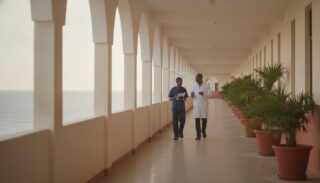
A medical internship in Kenya with IMA is built around a weekday rhythm: about 8 AM to 4 PM in one hospital department in Mombasa, six to eight hours a day, with rounds, consultations and procedures you observe under a supervising physician. Lectures, simulations and community clinics fill the rest of the week, and you move to a new department each week.
This guide walks through what a supervised week looks like, from the Saturday you arrive to the Friday you finish your first rotation. It uses the schedule details IMA publishes for its pre-med program in Mombasa, and it marks clearly where a day is an illustration rather than a fixed timetable.
Where the Week Takes Place
IMA’s Kenya placements are at Coast General Teaching and Referral Hospital in Mombasa. The Kenya program runs year-round, and stays range from 2 to 12 weeks, so a student can come in summer, during a winter break or during a gap year. IMA’s Kenya program page adds that programs start every Saturday and include medical Swahili lessons alongside your hospital time.
You live in a gated program residence with other interns, eat three meals a day from an in-house chef and travel to the hospital in a private program vehicle. A program coordinator handles daily life, and a Program Mentor handles the professional side: your rotations, your questions and your progress.
Before the First Shift: Orientation
Every week in Kenya starts the same way for a new intern: with orientation before you set foot on a ward. IMA describes two parts.
- A program orientation. A coordinator walks you through the local area, the residence and the ground rules.
- A physician-led orientation. A physician explains how the hospital works: how the wards run, safety and infection control, the guidelines you follow and the standard precautions every clinical student uses.
By the end, you should have emergency contacts, a plan for common situations and a clear picture of what you can and cannot do on the wards. Treat that last point as the most important outcome of orientation. The rest of your week depends on it.
What a Weekday Looks Like
IMA’s pre-med page describes a typical day this way. Breakfast is at the residence, a program vehicle takes you to the hospital, and most interns are on the wards from about 8 AM to 4 PM. Mornings often start with rounds and physician-led teaching. You spend six to eight hours in your assigned department, following rounds, watching consultations and procedures and writing down questions for your mentor.
Afternoons can bring more ward time, a mobile clinic or a hygiene education session at a school. Evenings are for dinner at the residence and time with the other interns. One night shift a week is optional, and weekends are open for treks, extra hospital time or outreach.
How Do Rotations Work Across the Week?
You stay in one department for the whole week, then move. IMA says the first rotation is usually the emergency department, because most admissions come through it and it shows you the widest range of medicine. Maternity is the usual second rotation. After two weeks, IMA works to place you in departments that match your career plans, where the site offers them.
That pattern matters when you plan your stay. A two-week stay usually covers the emergency department and maternity. A longer stay opens departments such as internal medicine, pediatrics, general surgery and orthopedics. IMA notes that departments vary with the location, the cohort and your level of training, so treat any list as possibilities rather than promises.
An Illustrative First Week
The table below shows how a first week could fit together. It is an illustration built from the elements IMA describes, not an official timetable; your Program Mentor sets your actual schedule with you after you are admitted. IMA also publishes a sample program schedule for East Africa you can compare against.
| Day | Morning | Afternoon and evening |
|---|---|---|
| Saturday | Arrival and transfer to the residence | Settle in, meet other interns |
| Sunday | Program orientation: area, residence, ground rules | Rest and preparation for the hospital |
| Monday | Physician-led hospital orientation, then first hours in the emergency department | Debrief questions with your mentor |
| Tuesday | Emergency department: rounds and consultations | Ward time or a global health lecture |
| Wednesday | Emergency department | Simulation session or community clinic |
| Thursday | Emergency department | School hygiene education session |
| Friday | Emergency department, close of the rotation | Weekly reflection; cultural activity |
The point of the illustration is the shape, not the exact slots. A week mixes long, focused blocks of hospital observation with shorter teaching sessions that help you make sense of what you saw.
Lectures, Simulations and Community Clinics
The hours outside the department are part of the learning, not a break from it.
- Global Health Lecture Series. Local healthcare professionals, global health specialists and IMA staff teach topics such as healthcare policy, health disparities and public health programs in Kenya. Physician mentors add seminars on the region-specific conditions you see on the wards.
- Clinical simulation. Simulation sessions let you work through medical scenarios away from real patients. IMA’s advice is to bring what you did not understand on the ward, because a session on communication, physiology or the local health system often explains an encounter from that morning.
- Community clinics and outreach. IMA runs community medical clinics with local practitioners, pharmacies and referral centers. You join the team on clinic days, including the nonclinical jobs that let an outreach day run, and you help teach hygiene lessons in schools.
These sessions are where you see what keeps people from care: distance, transport, language and a family’s circumstances. Our guide to conditions observed during medical internships shows how what you see differs by region.
What You Do and Do Not Do
You are in the hospital to observe and to learn under supervision. IMA follows the AAMC guidelines for premedical students in clinical settings abroad, which describe these experiences as observation, not hands-on treatment. In practice, that means:
- You do not diagnose, prescribe, perform procedures or stand in for local staff.
- You follow the host hospital’s rules and the direction of the licensed clinicians who supervise you.
- A patient can always decline to have a student in the room.
- Skills teaching happens in simulation sessions, and in the operating room you stand a few feet from the table and watch.
Who Will You See at Work?
Kenya’s hospitals rely on a mix of professionals, including clinical officers, mid-level providers who diagnose, treat and prescribe. Watching how physicians, clinical officers, nurses and other staff share information is one of the most useful things a week can teach you. Our overview of clinical officers in Kenya explains that role in depth, especially for pre-PA students.
Supervision, Mentors and Support
Supervision runs on two levels. In the hospital, licensed clinicians direct what you observe and when you ask questions. Outside it, your Program Mentor checks in with every intern daily and sits down one-on-one each week. Families get a single U.S. point of contact, reachable 24/7 by phone, email and text.
Weekly one-on-one time is where the week turns into learning. Bring three things to it: the encounter you understood least, a question about how the team made a decision and one thing you want to see in the next rotation.
Turning the Week Into Records
IMA records your shadowing hours each day by date, department and specialty. Your supervising physician signs them, and IMA’s Medical Director in the United States validates them. Each medical school decides how to classify those hours, and observation does not automatically count as direct patient care.
Keep your own notes as well. Record dates, departments, who supervised you and what you learned, and leave out anything that could identify a patient. Our guide to tracking clinical and shadowing hours shows a log format you can keep during the week.
How Many Weeks Should You Plan?
Think in rotations. Two weeks gives you the emergency department and maternity. Four weeks or more lets you see several departments, and IMA says most students stay four to six weeks. If you are weighing locations as well as length, our guide to the best country for a medical internship compares Kenya and Peru. You can check session timing on the program dates page.
Preparing for Your First Week
A few steps make the first week far easier:
1. See a travel health provider at least a month before you leave; the CDC’s Kenya travel page covers vaccines and malaria prevention for certain areas. 2. Read IMA’s guidance on your role before orientation, so the limits are familiar rather than surprising. 3. Prepare a notebook for questions and reflections, organized by day and department. 4. Decide what you most want to learn in your first two rotations and tell your mentor early.
If you want to see this week for yourself, IMA’s pre-med internships abroad place students in Mombasa year-round.
Frequently Asked Questions
What Does a Typical Day Look Like on a Medical Internship in Kenya?
Most interns are on the wards from about 8 AM to 4 PM, six to eight hours in one department. Mornings often start with rounds and physician-led teaching, and afternoons can bring more ward time, a mobile clinic or a school hygiene session.
Which Department Will I Start In?
IMA says the first rotation is usually the emergency department, with maternity as the usual second rotation. After two weeks, IMA works to place you in departments that match your career plans, where the site offers them.
Is the Sample Week an Official Schedule?
No. The week in this guide is an illustration built from the elements IMA describes. Your Program Mentor sets your actual schedule with you after you are admitted, and departments vary with the location, the cohort and your level of training.
Can I Help With Patient Care During the Internship?
No. Following the AAMC guidelines for students abroad, you observe and learn under supervision. You do not diagnose, prescribe or perform procedures, and skills practice happens in simulation sessions.
Do I Work Nights or Weekends?
One night shift a week is optional. Weekends are open for treks, extra hospital time or outreach.
How Are My Hours Recorded?
IMA records your hours each day by date, department and specialty. Your supervising physician signs them and IMA’s U.S.-based Medical Director validates them. Each medical school decides how to classify them.











