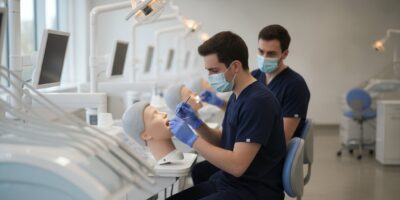
Pre-dental intern responsibilities center on observation. You watch licensed dentists examine, treat and teach patients, learn how the dental team works and help with preventive oral health education. You never diagnose, give anesthesia, extract or restore teeth, place sealants, clean teeth or make impressions, because those tasks are the practice of dentistry.
That boundary surprises some students who expect a pre-dental internship to be hands-on. The sections below explain what a pre-dental intern actually does, where the line sits, how consent works and what to do when someone asks you to cross it. For the bigger picture of a typical placement, see our guide to what to expect from a dental internship.
The Rule Behind Every Task: Observe, Learn, Support
The American Dental Education Association’s guidelines for predental students abroad put it plainly: the primary purpose of a predental clinical experience is observation, not hands-on treatment. You are there to learn, not to treat.
The same guidelines say it is appropriate for predental students to provide preventive oral health education and to support the team after receiving adequate instruction. They also list activities predental students should never do: diagnosing disease, administering anesthesia, performing extractions or other surgery, restoring teeth, placing sealants, performing prophylaxis (cleanings) and making impressions.
ADEA adds a warning that matters for your application. Taking on tasks beyond your training can make you look unethical, unknowledgeable about the profession and irresponsible to admissions committees. Staying inside your role protects patients and your chances of admission.
Task Boundaries at a Glance
The table sorts common tasks into three groups. Your host site’s rules and your supervisor always have the final say, and some sites allow less than this.
| Task | Pre-dental intern? | Why |
|---|---|---|
| Observing exams, treatment and patient conversations | Yes | This is the core of the experience |
| Asking questions between patients and taking notes without patient identifiers | Yes | It turns observation into learning |
| Teaching oral hygiene in community or school sessions | Yes, with guidance | ADEA lists preventive oral health education as appropriate |
| Non-clinical support the team has trained you for | Only if the site allows it after instruction | ADEA permits support only after adequate instruction |
| Examining a patient or saying what is wrong | No | Diagnosis is the practice of dentistry |
| Giving anesthesia, extracting, filling or restoring teeth | No | Listed by ADEA as activities never to do |
| Cleaning teeth, placing sealants or making impressions | No | Also listed by ADEA |
| Photographing patients or sharing their stories online | No | Patient privacy comes first |
On IMA’s dental internships abroad, pre-dental students observe patient care and do not examine, clean or treat anyone’s teeth. The active role comes in community sessions, where interns help teach oral hygiene. IMA follows the ADEA guidelines and the AAMC’s guidelines for students in clinical settings abroad.
Your Main Responsibilities, Day to Day
Shadowing the Dental Team
Most of your time is spent beside licensed dentists, watching them work with patients. On IMA programs you stay in the same dental unit for the whole placement, six to eight hours a weekday, for stays from two weeks. Placements are in the Dental Unit at Coast General Teaching and Referral Hospital in Mombasa, Kenya and the Dentistry Department at Hospital Nacional Adolfo Guevara Velasco in Cusco, Peru. Before you go abroad, line up shadowing at home too; our guide on how to ask a dentist to shadow walks through who to contact and what to say.
Watch the whole appointment, not only the procedure. Notice how the dentist explains a plan, how the team passes instruments and information, and how care adapts when equipment or supplies are limited. Our Dental Hygiene Month guide for pre-dental students has a worksheet for following one question through a visit.
Learning How Dentists Communicate
Good dentistry depends on explanation. You will see how dentists ease anxious patients, check that instructions were understood and handle a patient who declines a recommendation. Your responsibility is to listen closely and stay respectful, not to give advice of your own. If a patient asks you a clinical question, refer it to the dentist.
Helping With Preventive Education
Community sessions are where pre-dental interns contribute most directly. With guidance from the team, you may help teach brushing, flossing and diet habits to school children or at community clinics.
The need is real even in high-income countries. CDC reports that by age 9, half of children have had cavities, and 1 in 5 adults aged 20 to 64 has at least one untreated cavity, according to its oral health facts. Clear, simple teaching is a meaningful way to support prevention without touching a patient.
Learning How a Dental Service Runs
Watch how appointments are scheduled, how records are kept private, how infection control is organized and how referrals work. You are learning these systems by observation. Do not open or handle patient records unless the site has trained and authorized you, and never copy identifying details into your notes.
Joining Lectures, Debriefs and Simulations
Structured learning fills the rest of the week. IMA programs include weekly clinical debriefs, simulations and the Global Health Lecture Series. Use debriefs to ask about cases you saw and to check whether your understanding matches what the team intended.
Consent and Respect for Patients
Every patient has the right to know who is in the room and why. Expect your supervisor to introduce you as a student, and accept without argument if a patient prefers that you step out. On IMA programs, a patient can always decline to have a student present.
Privacy rules apply everywhere you go. Do not photograph patients, procedures or charts, and keep identifying details out of journals, essays and social media. Our guide to clinic selfies and privacy on clinical placements covers the common mistakes.
When You Are Asked to Do More: Escalation Examples
Pressure to do more usually comes from good intentions: a busy team, a kind dentist or a peer who has already tried something. The scenarios below are hypothetical, but they reflect situations ADEA’s guidelines were written for.
| Situation | What to do |
|---|---|
| A dentist offers to let you place a sealant “just this once” | Thank them and decline. Sealants are on ADEA’s list of tasks predental students never perform, and local permission does not make it legal for you |
| A patient asks you what is wrong with their tooth | Say you are a student and ask the dentist to answer |
| Another intern says they were allowed to do a cleaning | Do not follow their lead. ADEA notes that one student’s experience does not mean you are ready |
| You are asked to hold or pass something during a procedure | Ask whether the task is within the student role at this site and whether you have been trained. If you are unsure, step back |
| Someone asks you to take a photo for social media | Decline and explain the privacy rule |
If a request makes you uncomfortable, tell your supervisor or your Program Mentor the same day. IMA staff are on call 24/7, and the host site sets the rules about what students may do. ADEA offers a simple test: imagine you were the patient and someone with no significant healthcare training was about to perform the procedure on you. If that thought is uncomfortable, the task is not for you.
Recording What You Learned
Your responsibility does not end when the shift does. Keep a short daily log with the date, the type of care you observed, what the team did and one question you want to answer. IMA logs hours by date and shift, and its U.S.-based Medical Director validates the record. Each dental school decides how to count those hours, so describe them accurately as observation. Our guide to planning and documenting dental shadowing hours explains what AADSAS asks you to record.
Strong notes make your application more specific. Our guide to applying with ADEA AADSAS explains how experiences are entered and described.
Why These Boundaries Help You
Clear limits are not a lesser experience. They let you focus on how dentists think, communicate and work as a team, which is exactly what dental schools want you to understand before you apply. CDC data show that 65.5% of adults aged 18 to 64 and 86.9% of children aged 2 to 17 had a dental visit in the past year in 2019, according to its dental visits summary. Every one of those visits relies on trust in the person providing care, and that trust starts with knowing your role.
If you want hospital-based observation with an active part in community oral health teaching, IMA’s dental program offers both, with clear rules from the first day of orientation. Students who already study dentistry can read how their role differs in our guide to whether dental students do internships.
Frequently Asked Questions
What Does a Pre-Dental Intern Do?
A pre-dental intern mainly observes licensed dentists as they examine, treat and teach patients. Interns also take notes, join debriefs and lectures, and may help with preventive oral health education in community or school sessions under guidance.
Can Pre-Dental Interns Clean Teeth or Do Fillings?
No. ADEA guidelines say predental students should never diagnose, give anesthesia, extract or restore teeth, place sealants, perform cleanings or make impressions. Permission from a local dentist does not change that.
Is a Pre-Dental Internship Hands-On?
Only in limited, non-clinical ways. ADEA says the primary purpose is observation, not hands-on treatment. On IMA programs, the active role comes in community sessions, where interns help teach oral hygiene.
What Should I Do if a Dentist Asks Me to Perform a Procedure?
Thank them, explain that you are a pre-dental student and decline. Then tell your supervisor or program mentor. Staying within your role protects the patient and your dental school application.
Can a Patient Refuse to Have a Student in the Room?
Yes. Patients should know who is present and why, and they can ask a student to leave. On IMA programs, a patient can always decline to have a student present.
Do Pre-Dental Internship Hours Count for Dental School?
Each dental school decides how to count observation hours. IMA logs hours by date and shift and its U.S.-based Medical Director validates the record. Describe the time accurately as observation when you apply.