A pathologist is a physician who specializes in diagnosing disease by examining tissues, cells, and body fluids. If you have ever had a biopsy, a blood panel, or a surgical specimen sent to a lab, a pathologist was the physician who analyzed that sample and provided the diagnosis that guided your treatment. Understanding what is a pathologist means recognizing the critical, often invisible role these specialists play in nearly every branch of medicine. Without a pathologist’s findings, surgeons, oncologists, and internists would be making treatment decisions in the dark.
For pre-med students considering their options, pathology deserves a closer look than it usually gets. The specialty is often overshadowed by more visible fields like surgery or emergency medicine, but it sits at the diagnostic core of patient care. The field is also evolving rapidly. The rise of genomic medicine, precision oncology, and molecular diagnostics has made pathologists more central to treatment planning than at any point in the profession’s history. If you are someone who values analytical thinking, diagnostic precision, and scientific investigation over high-volume patient encounters, pathology may be a stronger fit than you realize.
What a Pathologist Actually Does Day to Day
The simplest way to understand a pathologist’s work is to separate it into two major branches: anatomic pathology (AP) and clinical pathology (CP). Most pathologists in the United States train in both, earning combined AP/CP board certification. But the day-to-day tasks in each branch are distinct.
Anatomic Pathology
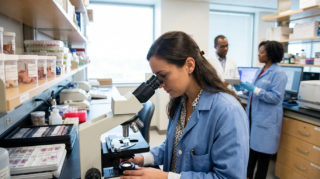
Anatomic pathologists examine tissue samples removed during surgery, biopsies, and autopsies. A large part of the morning in a typical AP practice involves sitting at a multi-headed microscope, reviewing slides of stained tissue. The pathologist is looking for abnormal cell structures, signs of malignancy, infection, or inflammation, and other indicators that lead to a definitive diagnosis. This is painstaking, high-stakes work. A breast biopsy that a pathologist reads as benign versus malignant will determine whether a patient undergoes surgery, chemotherapy, or watchful waiting.
In the afternoon, many anatomic pathologists spend time in the grossing room, where they evaluate surgical specimens with the naked eye before tissue is processed for microscopic review. They may also participate in frozen section consultations, which happen in real time while a surgeon is operating. The surgeon sends a tissue sample to the pathology lab, and the pathologist must provide a preliminary diagnosis within minutes so the surgeon can decide how to proceed. That kind of immediate, consequential decision-making is far from the “boring lab work” stereotype that pathology sometimes carries.
Clinical Pathology
Clinical pathologists oversee the laboratory systems that process blood tests, urinalyses, microbiology cultures, and transfusion medicine. Their role is less about looking through a microscope and more about managing the accuracy, efficiency, and safety of lab operations. A clinical pathologist might direct a hospital blood bank, validate new testing platforms, interpret complex lab panels for referring physicians, or lead quality assurance programs.
In practice, many pathologists blend both roles. They might spend mornings on surgical pathology slides and afternoons reviewing unusual lab results or consulting with oncologists about molecular testing for a tumor. This variety is one of the field’s real strengths, and it is a major reason the specialty appeals to physicians who like intellectual range.
How to Become a Pathologist: The Full Training Timeline
The path to becoming a pathologist follows the same early steps as any other physician specialty, with a specific residency track that begins after medical school.
Undergraduate Education
You will need a bachelor’s degree with strong performance in the sciences. Biology, chemistry, biochemistry, and similar majors are common, but medical schools do not require a specific major. What matters is completing prerequisite coursework (general chemistry, organic chemistry, biology, physics, biochemistry, English, and often statistics or math) and earning competitive grades. If you are still weighing which undergraduate path to take, comparing the difficulty and structure of different college majors can help you make a realistic plan. You will also need to prepare for and take the MCAT, typically during your junior year or the summer before senior year.
Medical School
Medical school lasts four years. The first two years focus on foundational sciences, including a significant amount of pathology coursework. In fact, pathology is one of the core disciplines taught during preclinical years, covering how diseases develop and progress at the cellular and organ-system level. The second two years are clinical rotations in hospitals and clinics. Most medical schools do not offer a dedicated pathology clerkship as a required rotation, so students interested in the field will need to pursue elective rotations in pathology during their third or fourth year. This is where you will get firsthand exposure to the specialty and can begin building relationships with pathology faculty who may write your letters of recommendation.
Residency
After earning your MD or DO, you will enter a pathology residency. The standard combined AP/CP residency lasts four years. Some programs offer a three-year track in either anatomic or clinical pathology alone, but the combined track is by far the most common and the most versatile for career options. During residency, you will rotate through surgical pathology, cytopathology, autopsy pathology, hematopathology, clinical chemistry, microbiology, blood banking, and molecular pathology, among other areas.
Pathology residency is competitive in its own way. According to the AAMC’s specialty data profiles, pathology attracts applicants who are strong in research and basic science. Match rates vary by year, but the field is not typically as statistically competitive as surgical subspecialties or dermatology, which can be reassuring for students who want a rigorous specialty without the most extreme match odds. That said, strong board scores, research experience, and genuine interest in the field still matter significantly.
Fellowship
Many pathologists pursue one to two additional years of fellowship training after residency to subspecialize. Common fellowships include dermatopathology, neuropathology, forensic pathology, molecular genetic pathology, hematopathology, and cytopathology. Subspecialization can sharpen your expertise and improve your competitiveness in the job market, particularly in academic medicine.
From start to finish, the timeline looks like this: four years of undergraduate education, four years of medical school, four years of residency, and optionally one to two years of fellowship. That means most pathologists are fully trained and practicing by their early to mid-thirties.
Pathologist Salary in 2026: What the Numbers Actually Show
Compensation in pathology is strong by any reasonable standard, though it does not reach the highest tiers occupied by surgical subspecialties or interventional cardiology. According to 2026 compensation data, the average annual salary for a pathologist with combined anatomic and clinical certification in the United States is approximately $335,530. That figure represents base guaranteed compensation, and actual earnings can vary based on practice setting, geography, subspecialty, and experience.
On the higher end, some pathologists in private practice, large reference laboratories, or high-demand regions report guaranteed compensation reaching $620,000 or more. Signing bonuses for new pathology hires average around $18,923, though this figure fluctuates based on employer and location.
Several factors influence where a pathologist falls within this range. Academic pathologists, who split time between clinical work, teaching, and research, often earn less in base salary than their counterparts in private practice or large commercial labs. Geographic location matters as well; pathologists in underserved or rural areas may command higher salaries due to workforce shortages, while those in saturated urban markets may see more moderate offers. Subspecialty training also plays a role. Dermatopathologists and molecular pathologists, for instance, may have different earning profiles than general surgical pathologists.
For pre-med students comparing specialties, pathology’s compensation is well above the national average for all physicians and offers a favorable lifestyle balance. The Bureau of Labor Statistics occupational data for physicians and surgeons provides broader context on physician earnings across specialties, which can be useful when evaluating your options. Pathology is often cited as one of the specialties with more predictable hours and fewer overnight calls, though this depends on the practice. Hospital-based pathologists may still handle frozen section calls and urgent consultations outside regular hours.
Anatomic Versus Clinical Pathology: Choosing Your Focus
If you are drawn to pathology, one of the key decisions you will eventually face is how to balance your training and career between the anatomic and clinical sides of the field. Understanding the distinction now can help you think about what kind of work appeals to you.
What Sets Anatomic Pathology Apart
Anatomic pathology is the more image-driven, hands-on branch. You are working directly with tissue, interpreting visual patterns under the microscope, and correlating what you see with clinical information to reach a diagnosis. It is the branch most closely associated with cancer diagnosis, and surgical pathologists are the ones who determine tumor type, grade, margin status, and staging. If you like pattern recognition, visual analysis, and the idea of being the person who delivers a definitive answer, AP is likely where you will gravitate.
Within anatomic pathology, there is also significant variety. Cytopathology focuses on individual cells rather than tissue architecture (Pap smears and fine-needle aspirates fall here). Autopsy pathology involves postmortem examination to determine cause of death. Forensic pathology, a further subspecialty, applies this work to medicolegal contexts.
What Sets Clinical Pathology Apart
Clinical pathology is more systems-oriented. You are less likely to sit at a microscope and more likely to be managing laboratory workflows, validating test methods, interpreting complex lab data, and consulting with other physicians about unexpected results. If you are drawn to laboratory science, informatics, quality improvement, and the operational side of medicine, CP may be a better match.
Clinical pathologists also play a major role in transfusion medicine (managing blood products and ensuring safe transfusion practices), microbiology (identifying infectious organisms and guiding antibiotic use), and clinical chemistry (interpreting metabolic panels, hormone assays, and toxicology screens).
The Combined Track
Most trainees pursue the combined AP/CP residency because it provides the broadest foundation. After completing the combined track, you can practice in either domain or blend both, depending on your career setting. Some pathologists eventually focus almost exclusively on one side after gaining experience, while others maintain a mixed practice throughout their careers. If you are still early in your pre-med journey and want to understand how other physician specialties compare in terms of training and scope, resources on becoming a radiologist or other diagnostic fields can provide useful contrast.
Why Pre-Med Students Overlook Pathology, and Why That May Be a Mistake
Pathology has a visibility problem. Most medical students encounter it primarily as a preclinical course rather than a clinical rotation, and the physicians who practice it are rarely seen by patients. This creates a cycle in which students simply do not think about the specialty when considering their future.
One of the most persistent misconceptions is that pathologists have no patient contact. While it is true that most pathologists do not see patients in a clinic, they are far from isolated. Pathologists regularly consult with surgeons, oncologists, hematologists, and primary care physicians. In academic centers, they often attend tumor boards, where they present their findings to a multidisciplinary team and directly influence treatment decisions. Some subspecialists, like dermatopathologists and hematopathologists, have more direct interaction with patients than students might expect.
Another misconception is that the work is monotonous. In practice, pathologists encounter an enormous range of diseases and specimens. A single day might involve reviewing a breast biopsy, identifying an unusual infectious organism in a tissue sample, interpreting a bone marrow aspirate, and consulting on a complex molecular test for a lung cancer case. Research is also deeply embedded in the specialty. Many pathologists contribute to studies on disease mechanisms, biomarker development, and diagnostic technology. The rise of computational pathology and artificial intelligence in slide analysis is adding yet another dimension to the field.
For students who value intellectual breadth, a research-friendly schedule, and a central role in the diagnostic process, pathology is worth serious consideration. It is also worth noting that pathology residency positions can be a strong fit for students who are detail-oriented and analytically minded but less drawn to the pace and interpersonal intensity of fields like emergency medicine or general surgery. If you want to compare the training demands and temperament of other competitive specialties, the list of the most competitive medical specialties in the United States provides a useful benchmark.
Building Pathology Experience as a Pre-Med Student
You do not need to wait until medical school to start understanding pathology. There are several concrete steps you can take during your undergraduate years.
Research Opportunities
Many university pathology departments welcome undergraduate research assistants. Working in a pathology lab, even in a basic science role, gives you firsthand exposure to how disease is studied at the tissue and molecular level. This experience also strengthens your medical school application by demonstrating sustained research commitment and intellectual curiosity.
Shadowing and Observation
Shadowing a pathologist, even for a few days, can give you a realistic picture of what the work entails. Ask your pre-health advisor or campus health system whether shadowing opportunities exist in surgical pathology, the hospital laboratory, or the medical examiner’s office. Some students assume that because pathologists are not in clinic rooms, shadowing is not available. In most cases, pathology departments are willing to host observers; you just have to ask.
Structured Clinical Exposure Abroad
Programs that offer structured observation in clinical settings abroad can also provide context. In some international settings, disease prevalence differs significantly from what you would see in a U.S. hospital. Students who observe pathology departments in regions with higher rates of infectious disease or advanced-stage cancers gain a broader understanding of diagnostic challenges and global health disparities. In any such setting, students observe and learn under professional supervision; they do not handle specimens independently or make diagnostic decisions. The value lies in seeing how pathology operates within a different healthcare system and reflecting on what that teaches you about diagnostic medicine.
Writing About Pathology Experience on Applications
If you do gain meaningful exposure to pathology, whether through research, shadowing, or structured observation, think carefully about how to present it on your medical school application. Admissions committees value experiences that show genuine intellectual engagement, not just a checklist of activities. Focus on what you observed, what questions it raised for you, and how it shaped your understanding of medicine. A well-written reflection on watching a pathologist interpret a frozen section, for instance, can be more compelling than a generic paragraph about wanting to help people.
What the Future Looks Like for Pathology as a Career
The field of pathology is changing, and those changes are largely in its favor. The expansion of molecular diagnostics, genomic medicine, and precision oncology has made pathologists essential to treatment planning in ways that did not exist twenty years ago. Pathologists now routinely perform or oversee molecular testing that identifies specific genetic mutations in tumors, directly guiding which targeted therapies a patient will receive.
Artificial intelligence is also entering the field, with algorithms capable of assisting in slide analysis and pattern detection. Rather than replacing pathologists, current evidence suggests that AI tools are functioning as aids that improve efficiency and accuracy while still requiring human oversight and interpretation. For students entering the field, familiarity with computational tools and data science will likely become an asset.
Workforce data also point to sustained demand. As the U.S. population ages and cancer incidence continues to rise, the need for diagnostic services, including pathology, is expected to grow. The National Institutes of Health funds significant research in cancer biology, infectious disease pathology, and diagnostic innovation, all of which intersect directly with pathology careers.
For pre-med students who want a specialty that combines diagnostic rigor, intellectual variety, research opportunities, and evolving technology, pathology offers a career with both stability and momentum.
Frequently Asked Questions
Do pathologists interact with patients at all?
Most pathologists do not see patients in a traditional clinic setting, but they are far from isolated. They regularly consult with surgeons, oncologists, and other treating physicians about diagnoses. In academic settings, pathologists present findings at tumor boards and multidisciplinary conferences. Some subspecialists, such as those in hematopathology or transfusion medicine, may have more direct patient interaction than the stereotype suggests.
How long does it take to become a fully trained pathologist?
The standard path includes four years of undergraduate education, four years of medical school, and four years of combined anatomic and clinical pathology residency. Many pathologists also pursue one to two additional years of fellowship for subspecialty training. In total, you can expect roughly 12 to 14 years of education and training after high school before practicing independently.
Is pathology a good specialty for someone who enjoys research?
Yes. Pathology is one of the most research-friendly medical specialties. Many academic pathologists maintain active research programs alongside their clinical duties, studying disease mechanisms, developing new diagnostic biomarkers, or evaluating emerging technologies like computational pathology. Residency programs in pathology often encourage or require research involvement, and the specialty’s schedule generally allows more protected time for scholarly work than many other fields.