A pulmonologist is a physician who specializes in diagnosing and treating diseases of the lungs and respiratory system. That definition, while accurate, undersells the scope of the work considerably. Most pulmonologists in the United States also hold board certification in critical care medicine, which means they split their professional lives between managing chronic lung conditions in clinic and running intensive care units where patients are at their sickest. For pre-med students trying to understand what is a pulmonologist and whether this specialty might be a fit, the answer involves a wide clinical range, a demanding but well-compensated career, and a field whose relevance has only grown in the years since the COVID-19 pandemic.
Pulmonology sits within internal medicine, making it one of many subspecialty paths available after completing a three-year IM residency. What sets it apart from other IM subspecialties is how closely it is tied to critical care. The combined Pulmonary and Critical Care Medicine (Pulm/CC) fellowship is the standard training pathway, and this dual expertise shapes everything about the specialty, from daily schedules to salary benchmarks. If you are considering a career where you manage both chronic disease and acute, life-threatening illness, pulmonology deserves a serious look.
What a Pulmonologist Actually Treats
The conditions that fall under a pulmonologist’s care span a wide range of severity and complexity. On the chronic disease side, pulmonologists manage asthma (which affects over 25 million Americans, according to the CDC’s data on chronic respiratory conditions), chronic obstructive pulmonary disease (COPD, affecting more than 16 million Americans), interstitial lung diseases such as idiopathic pulmonary fibrosis, pulmonary hypertension, and bronchiectasis. They are also central to lung cancer screening programs, working alongside oncologists and thoracic surgeons to identify and stage disease early.
On the acute side, pulmonologists manage pulmonary embolism, severe pneumonia, acute respiratory distress syndrome (ARDS), and respiratory failure requiring mechanical ventilation. In the ICU, a pulmonary critical care physician manages not just lung-specific emergencies but also sepsis, multi-organ failure, and the full spectrum of medical crises that require intensive monitoring. This is a specialty where your Tuesday morning might involve adjusting inhaler regimens for a well-controlled asthma patient, and your Tuesday night might involve intubating a patient in septic shock.
Sleep medicine is another significant branch of the field. Many pulmonologists pursue additional fellowship training or board certification in sleep medicine, diagnosing and managing conditions like obstructive sleep apnea, which affects over 22 million Americans, many of them undiagnosed. This adds a third dimension to the specialty for those who want it: outpatient respiratory care, inpatient critical care, and sleep medicine.
Students sometimes assume pulmonology is limited to “breathing problems” in a narrow sense. In practice, the specialty involves complex diagnostic reasoning, significant procedural work (bronchoscopy, thoracentesis, endobronchial ultrasound, pulmonary artery catheterization), and close collaboration with oncology, radiology, surgery, infectious disease, and palliative care teams. If you are interested in how oncologists approach cancer care across specialties, the diagnostic overlap with pulmonology is one example of how medical specialties intersect in practice.
The Pulm/CC Fellowship: How You Get There
The training pathway to becoming a pulmonologist follows a specific sequence. After earning a medical degree (MD or DO), a physician completes a three-year internal medicine residency. From there, the standard route is a three-year combined Pulmonary and Critical Care Medicine fellowship accredited by the ACGME. That adds up to at least ten years of education and training after college: four years of medical school, three years of residency, and three years of fellowship.
The fellowship itself is competitive. Applicants typically need strong performance during residency, research experience (particularly in pulmonary or critical care topics), and letters of recommendation from IM faculty. The ABIM’s certification requirements for Pulmonary Disease and Critical Care Medicine outline the specific board eligibility criteria, including completion of an ACGME-accredited fellowship and passage of the subspecialty certification examination.
During fellowship, trainees rotate through outpatient pulmonary clinics, inpatient pulmonary consult services, medical ICUs, sleep labs, and procedural suites. They gain competence in interpreting pulmonary function tests, managing mechanical ventilators, performing bronchoscopies, and conducting research. Many fellows also complete additional training in interventional pulmonology or sleep medicine if they want to further specialize.
It is worth noting that a small number of physicians complete a two-year pulmonary-only fellowship without the critical care component, but this path is uncommon and limits practice scope significantly. The overwhelming majority of fellowship positions in the United States are combined Pulm/CC tracks, reflecting the reality that most pulmonologists will spend a substantial portion of their careers working in ICUs.
What ICU Work Looks Like for a Pulmonologist
For most Pulm/CC physicians, ICU time is a defining feature of the job. Depending on the practice setting, a pulmonologist might spend one to two weeks per month as the attending physician in the medical ICU, with the remaining time devoted to outpatient clinic, consults, procedures, and sometimes sleep medicine. ICU weeks tend to be intense: long hours, high-stakes decision-making, and emotional weight. The trade-off is that non-ICU weeks can offer a more predictable schedule.
In the ICU, the pulmonologist leads a team that typically includes residents, fellows, advanced practice providers, nurses, respiratory therapists, and pharmacists. The work involves managing ventilator settings, making decisions about sedation and paralysis, interpreting hemodynamic data, coordinating with surgical and subspecialty teams, and having difficult conversations with families about prognosis and goals of care. This is not a specialty for people who want to avoid acute illness or high-pressure environments.
Pulmonologist Salary and Job Market in 2026
Compensation for pulmonary critical care physicians reflects the intensity and training length of the specialty. Current data from physician compensation surveys, including reports from Medscape and Doximity, places the median annual salary for Pulm/CC physicians in the range of $340,000 to $350,000. Some practice settings, particularly those in underserved areas or with heavy ICU volume, may offer higher compensation. Academic positions typically pay less than private practice or hospital-employed roles but may offer research time, teaching opportunities, and different lifestyle considerations.
The job market for pulmonologists is strong and projected to remain so. The Bureau of Labor Statistics’ occupational outlook for physicians and surgeons projects continued growth in physician demand broadly, and pulmonary critical care is among the subspecialties with the most robust hiring activity. Several factors drive this: the aging of the U.S. population (older adults have higher rates of COPD, lung cancer, and other respiratory diseases), the growing burden of chronic respiratory illness, and the sustained need for intensivists to staff expanding ICU capacity across the country.
Geographic flexibility is another advantage. Pulmonologists are needed in academic medical centers, community hospitals, Veterans Affairs facilities, and private practice groups in nearly every region of the country. Rural and underserved areas often have the greatest need and may offer the most competitive compensation packages.
Post-COVID Demand and the Changing Landscape of Pulmonology
The COVID-19 pandemic placed pulmonologists and critical care physicians at the center of the medical response in a way that was visible to the public and the profession alike. Beyond the acute phase, the pandemic has had lasting effects on the specialty’s demand and scope.
Post-COVID lung disease is now an established clinical entity. Many patients who survived severe COVID-19 infections developed persistent respiratory symptoms, including ongoing shortness of breath, reduced exercise tolerance, and in some cases, interstitial lung disease patterns resembling pulmonary fibrosis. NIH-funded studies continue to characterize these long-term complications, and pulmonologists are the specialists most frequently managing these patients. This represents a new and sustained source of clinical demand that did not exist before 2020.
The pandemic also accelerated interest in the specialty among medical students. Applications to Pulm/CC fellowships have remained competitive, and many medical schools have expanded their pulmonary and critical care teaching in response to student interest. For pre-med students considering the field, this is worth understanding: the specialty’s profile has risen, and the clinical need is real, but it also means fellowship training remains selective.
More broadly, the pandemic reinforced the importance of the ICU pulmonologist’s skill set. Hospitals across the country recognized that their critical care capacity, both in terms of beds and trained physicians, was insufficient for surge conditions. This has led to ongoing investment in ICU infrastructure and intensivist recruitment, which benefits Pulm/CC physicians directly. Understanding the broader context of how nephrologists, endocrinologists, and other IM subspecialists fit into hospital-based care can help pre-med students appreciate how these specialties work together, particularly in complex inpatient settings.
How Pre-Med Students Can Build Early Exposure to Pulmonology
You do not need to commit to pulmonology as a pre-med student, and no admissions committee expects you to have a subspecialty picked out before medical school. What you can do is build exposure to the kinds of clinical environments and patient populations that will help you make informed decisions later.
Shadowing a pulmonologist or a critical care physician is the most direct route. If your university has an affiliated medical center, reach out to the pulmonary division and ask about shadowing opportunities. Even a few days of observation in a pulmonary clinic or ICU can give you a realistic sense of the work. Pay attention to how the physician communicates with patients, how the team functions, what the pace feels like, and whether the diagnostic process interests you.
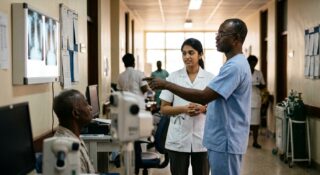
Structured clinical programs can also provide relevant exposure. Through organizations like International Medical Aid, pre-health students observe physicians managing respiratory conditions in active hospital settings, including cases involving pneumonia, tuberculosis, asthma, and COPD. These experiences are observational and supervised, meaning students watch, reflect, and learn within clear professional boundaries. They do not provide direct patient care or perform procedures, but the exposure to real clinical decision-making, especially in settings with limited resources, gives students a perspective that is difficult to replicate in a classroom.
Making the Most of Clinical Observation for Applications
When it comes to medical school applications, what matters is not the prestige of where you shadowed or how many hours you logged. What matters is the quality of your reflection. Admissions committees look for evidence that you paid attention, that you thought critically about what you saw, and that you can articulate what the experience taught you about medicine, about patients, and about yourself.
If you observe a pulmonologist managing a patient with advanced COPD who has limited treatment options, the interesting part of your application is not the diagnosis. It is what you noticed about how the physician handled the conversation, what you learned about the gap between ideal treatment and real-world constraints, and how that shaped your understanding of what it means to be a doctor. This kind of specificity and honesty is what AAMC guidance on clinical experience and competencies points toward when describing what medical schools value in applicants.
What to Weigh Before Pursuing Pulmonology
Pulmonology is a rewarding specialty, but it is not without trade-offs that pre-med students should understand early. The training is long. After college, you are looking at a minimum of ten years before you are independently practicing, and possibly more if you pursue additional fellowships in interventional pulmonology or sleep medicine. The ICU component means irregular hours, overnight call, and exposure to high-acuity situations that can be emotionally demanding. Burnout rates among critical care physicians are real, and honest self-assessment about your tolerance for these conditions matters.
On the other hand, the intellectual range of the specialty is unusually broad. Few other fields let you manage chronic outpatient disease, perform procedures, run an ICU, and potentially practice sleep medicine, all within a single career. The compensation is strong. The job market is favorable. And the clinical relevance of the specialty, particularly in the post-COVID era, is unlikely to diminish.
If you are early in your pre-med journey, you do not need to decide now. What you can do is seek out experiences that give you honest exposure to the realities of hospital-based medicine, critical care, and chronic disease management. Pay attention to what energizes you and what drains you. Talk to pulmonologists and ask them what they wish they had known before choosing the field. The best career decisions are made with good information, realistic expectations, and a clear sense of what kind of work you actually want to do every day.
Frequently Asked Questions
Is pulmonology the same as critical care medicine?
Not exactly, but they overlap significantly. Pulmonology focuses on diseases of the lungs and respiratory system, while critical care medicine involves managing patients with life-threatening conditions in the ICU. In the United States, most pulmonologists complete a combined fellowship in both fields (Pulm/CC) and practice both, but they are technically separate board certifications under the American Board of Internal Medicine.
How long does it take to become a pulmonologist after college?
The minimum timeline is ten years: four years of medical school, three years of internal medicine residency, and three years of a Pulmonary and Critical Care fellowship. Additional training in areas like interventional pulmonology or sleep medicine would add one or more years beyond that.
Do pulmonologists only treat lung cancer, asthma, and COPD?
No. While those are among the most common conditions, pulmonologists also manage interstitial lung diseases, pulmonary hypertension, pulmonary embolism, sleep disorders, respiratory infections including tuberculosis, and acute respiratory failure. In the ICU, they manage sepsis, multi-organ failure, and a wide range of critical illnesses that extend well beyond the lungs alone.