Most high school students considering a medical internship have the same question: what will I actually see? Parents have a version of that question too, usually closer to: what will my teenager be exposed to, and is it safe? Both are fair, and both deserve honest answers. What teen medical interns observe depends on the program, the clinical setting, the supervising professionals, and the structure in place. But across well-run programs, the pattern is consistent: teens watch, ask questions, and learn within clearly defined limits. They do not practice medicine. Structured internships for high school students in medical clinics focus on guided observation, not independent practice, which is exactly how early clinical exposure should work.
That distinction matters more than it might seem. A program that blurs the line between observation and hands-on clinical work for minors is a program worth questioning. The purpose of a high school clinical internship is exposure and perspective, not patient care responsibility. When students and parents understand what realistic observation looks like, they can set better expectations, choose better programs, and get more out of the experience itself.
What Clinical Observation Actually Looks Like for High School Students
Clinical observation for teens is not the same as what a third-year medical student does on rotations. Medical students have completed years of foundational coursework in anatomy, physiology, pharmacology, and pathology. They operate under a defined scope of practice, supervised by attending physicians. High school interns are at a much earlier stage, and the structure of their experience reflects that.
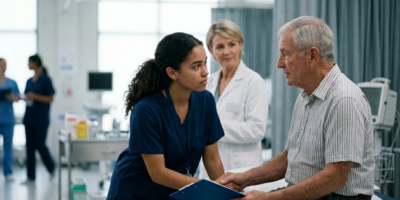
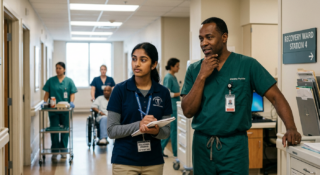
In a typical observation setting, a teen intern might shadow a physician during patient consultations, watch nursing staff take vital signs, observe a wound being cleaned and dressed, or sit in on a prenatal check-up. In surgical settings, observation usually means watching from a designated area, not scrubbing in. In emergency departments or triage areas, teens may see how patients are assessed and prioritized, but they remain observers, not participants.
Some programs also include time in community health settings, where interns might observe health screenings, vaccination campaigns, or public health education sessions. These can be just as valuable as hospital-based observation, especially for students interested in primary care, public health, or preventive medicine.
The key word in all of this is “observe.” That means watching with intention, asking questions when appropriate, and learning to notice the clinical reasoning behind what healthcare professionals do. It does not mean performing procedures, making decisions about patient care, or working independently. IMA’s guide to safety and supervision for teen interns breaks this down in more detail.
Procedures and Settings Teens Commonly Observe
The specific procedures a teen intern observes will vary by setting, but certain experiences are common across structured programs. Here is a realistic picture, not an exhaustive list, but enough to set clear expectations.
General Outpatient Clinics
In outpatient settings, teens often observe patient intake processes, including how medical histories are collected and recorded. They may watch physical examinations, listen as physicians explain diagnoses to patients, and see how treatment plans are communicated. Common conditions seen in outpatient clinics include respiratory infections, hypertension management, diabetes follow-ups, and musculoskeletal complaints. Teens learn how a clinical encounter is structured and how different professionals (physicians, nurses, medical assistants) coordinate care.
Surgical Observation
Some programs provide the opportunity to observe surgical procedures from an observation gallery or a designated viewing area within the operating room. This might include minor surgeries such as abscess drainage, hernia repairs, or cesarean sections. Teens do not scrub in, do not handle instruments, and do not enter the sterile field. The value here is in seeing teamwork, preparation, anesthesia protocols, and how surgical teams communicate under pressure.
Emergency and Triage Settings
In emergency departments, teens may observe how patients are triaged based on acuity. They might see wound suturing, fracture stabilization, or the initial management of acute conditions. These settings can be fast-paced and, at times, emotionally intense. Programs that place teens in emergency settings should prepare them in advance for what they might see, including trauma cases. IMA provides context on managing stress in high-intensity clinical environments specifically for younger interns.
Maternal and Child Health
Observation in maternity wards or pediatric clinics is common in many programs, particularly those based in settings where maternal and child health is a significant area of need. Teens might observe prenatal check-ups, labor and delivery (with the patient’s explicit consent), neonatal assessments, or childhood vaccination visits. These experiences are often powerful because they connect clinical work to community-level health outcomes.
Diagnostic and Laboratory Settings
Some internships include time in radiology, laboratory, or pharmacy departments. Teens may watch how blood samples are processed, observe X-ray or ultrasound procedures, or see how medications are dispensed. Students curious about lab science or diagnostic imaging find this type of exposure particularly useful for clarifying their interests.
What Teen Interns Do Not Do
Being direct about limits is not a negative; it is a sign that a program takes safety and ethics seriously. Here is what should be off-limits for any high school intern, regardless of the program or country.
Teen interns do not administer medications or injections. They do not draw blood or place IVs. They do not make diagnostic or treatment decisions. They do not perform any invasive procedure. They do not counsel patients independently. They do not access patient records without supervision and appropriate authorization. They do not work unsupervised at any point during clinical hours.
If a program advertises or implies that high school students will perform hands-on clinical tasks typically reserved for licensed professionals or advanced trainees, that should raise a serious concern. The Bureau of Labor Statistics outlines the training and licensure requirements for physicians and surgeons, which underscores how many years of supervised training are required before anyone practices independently. A high school student is at the very beginning of that path, and responsible programs acknowledge this clearly.
Patient confidentiality is another firm boundary. Teens should receive basic training on privacy expectations before entering any clinical environment. IMA covers this topic in its resource on confidentiality and respectful conduct in sensitive clinical settings.
How Parents Should Evaluate a Program’s Structure and Safety
For parents, the question is rarely whether clinical observation is worthwhile. It is whether a specific program is safe, well-supervised, and honest about what it offers. Here are the right questions to ask.
First, ask about supervision ratios and who is responsible for your teen during clinical hours. In a well-structured program, there is always a named, qualified professional overseeing interns. This person should be present in the clinical setting, not available by phone from another location. Ask whether the supervising professionals are employed by or formally affiliated with the host facility.
Second, ask about housing and logistics. Where will your teen stay? Who manages the housing? Is there 24-hour staff or adult supervision at the accommodation site? What is the protocol for emergencies, whether medical, logistical, or personal? A credible program will have clear, documented answers to these questions, not vague reassurances.
Third, ask about pre-departure preparation. Good programs provide orientation materials, cultural context, health and safety briefings, and clear behavioral expectations before students arrive. This preparation should cover what to do if a student feels uncomfortable in a clinical setting, how to report concerns, and what communication channels exist between parents and program staff.
Fourth, look at the program’s stated boundaries. Does the website clearly describe what students will and will not do? Does it use language like “observe” and “shadow,” or does it imply hands-on patient care? Programs that are specific and transparent about limitations are generally more trustworthy than those that leave things vague. IMA’s high school internship program page provides detailed information about structure, supervision, and what students can expect in each setting.
Finally, consider your teen’s readiness. Not every 15- or 16-year-old is prepared to spend time in a hospital, especially one in an unfamiliar country. Maturity, emotional resilience, the ability to follow instructions, and comfort with ambiguity all matter. This is not about gatekeeping; it is about setting your student up for a meaningful experience rather than an overwhelming one.
Why Observation Alone Is Still Genuinely Valuable
Some students worry that “just observing” is not enough to matter, for their personal growth or for future applications. That concern is understandable, but it misreads what admissions committees and professional programs actually value.
The AAMC’s guidelines on pre-medical competencies emphasize qualities like cultural competence, ethical responsibility, critical thinking, and service orientation. None of these require performing procedures. All of them can develop through thoughtful, structured observation in real clinical environments.
What matters is not whether a student placed an IV or sutured a wound. What matters is whether the student paid attention, asked good questions, reflected on what they saw, and came away with a more grounded understanding of what healthcare work actually involves. Did they notice how a physician adapted their communication style for a frightened child versus an elderly patient? Did they observe how resource limitations affected treatment decisions? Did they see how teamwork functioned in a high-pressure moment?
These are the kinds of observations that produce strong personal statements, informed career decisions, and genuine readiness for the next stage of pre-health education. The World Health Organization’s data on global health workforce challenges also provides important context: students who observe healthcare delivery in different settings develop a broader understanding of the systems and disparities they may one day work within.
Observation is not a lesser form of learning. For a high school student, it is the right form of learning, and when supported by mentorship, reflection, and honest debriefing, it builds a foundation that no textbook can replicate.
Setting Expectations Before the First Day
The best way to ensure a positive experience is to set expectations honestly, before the program begins. Students should understand that some days will be quieter than others. Not every shift involves dramatic cases. Some of the most useful learning happens during routine care, because routine care is the vast majority of medicine.
Students should also prepare for emotional responses. Seeing a patient in pain, watching a family receive difficult news, or spending time in a pediatric ward can be affecting. That is normal and healthy, but it requires support. Programs should offer structured reflection time, access to mentors, and a culture where it is acceptable to say, “That was hard.” Parents can help by having open conversations before the program starts about what their teen might feel and how to process those feelings.
Finally, students should go in with curiosity, not a checklist. The goal is not to see as many procedures as possible. The goal is to understand how healthcare works, what it demands, and whether this path feels right. That understanding comes from paying attention, staying engaged, and being willing to sit with discomfort and uncertainty. Those are skills that matter long after the internship ends.
Frequently Asked Questions
Will my teen be allowed to touch patients or perform any medical procedures?
No. In a properly structured high school internship, teens observe and learn alongside licensed professionals. They do not perform medical procedures, administer treatments, or provide unsupervised patient care. Their role is to watch, ask questions, and understand clinical processes within clearly defined boundaries.
What happens if my teen feels overwhelmed or uncomfortable in a clinical setting?
Reputable programs build in support systems for this. Structured reflection sessions, access to program staff and mentors, and clear communication channels should all be in place. Students should feel comfortable stepping away from a situation if needed, and supervisors should check in regularly. Parents can also stay in contact through established communication protocols.
Does clinical observation in high school actually help with medical school applications later?
Clinical observation at any stage can contribute meaningfully to a student’s understanding of healthcare and their ability to articulate why they want to pursue this path. Admissions committees value self-awareness, ethical reasoning, and genuine familiarity with clinical environments. The experience itself does not guarantee admission to any program, but it can strengthen a student’s perspective and the quality of their application narrative.