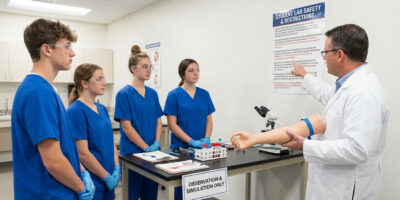
Clinical confidentiality is not a procedural formality. It is the ethical foundation that makes honest disclosure between patients and providers possible, and it extends fully to every person who enters a clinical space, including high school student interns. Students pursuing high school medical internships in any setting, domestic or international, hospital-based or community-based, carry the same obligation to protect patient information that licensed clinical staff carry. The difference is training depth, not the obligation itself.
This article explains what confidentiality means in practice for teen interns, how it applies across different types of clinical settings, including mental health clinical exposure for teens, where students most commonly make mistakes, and what the consequences of those mistakes can be for patients, for programs, and for the students’ own future in healthcare. Students preparing for clinical observation should also review this pathway-building guide, which outlines the practical expectations for minors before their first clinical shift.
What Confidentiality Means for a Student in a Clinical Setting
Confidentiality in a clinical context means that any information a student encounters about a patient, whether they heard it during a handoff, read it on a whiteboard, observed it during an examination, or inferred it from the clinical context, belongs to that patient and may not be shared with anyone who is not directly involved in that patient’s care.
The scope of this obligation is broader than most students initially assume. It covers the patient’s name, age, diagnosis, treatment plan, physical appearance, emotional state, family situation, and anything else that could identify or describe them. It covers written notes, verbal descriptions, photographs, social media posts, and casual conversation. It applies in the clinical setting, outside the clinical setting, and after the internship has ended.
The Health Insurance Portability and Accountability Act, known as HIPAA, is the federal law that governs patient privacy in US clinical settings. International clinical programs operate under the privacy laws of their host countries, which vary but consistently include strong protections for patient information. Reputable programs provide formal orientation on these requirements before any student enters a clinical area.
Where Teen Interns Most Commonly Make Confidentiality Errors
The most frequent confidentiality violations by student interns are not malicious. They are the result of habits that are appropriate in social contexts but not in clinical ones.
Social media. The instinct to document and share experiences through photography and social media is deeply ingrained in the age group that makes up most clinical intern populations. In clinical settings, this instinct must be entirely suppressed. Any photograph or video that includes a patient area, patient-visible information, or identifiable clinical details is a potential HIPAA or privacy law violation, regardless of whether it appears to show an actual patient. Programs that do not explicitly prohibit photography and social media in clinical areas, and enforce that prohibition consistently, are not meeting basic confidentiality standards.
Conversational sharing. Telling a parent, friend, or classmate about an interesting or difficult clinical situation encountered during an internship is a natural impulse that students must learn to redirect. Even a description that uses no names, locations, or specific identifying details can violate confidentiality if it allows a listener to identify or speculate about a specific patient. The standard is just no names. There is no information that could reasonably point to an individual.
Written reflection. Journaling is a practice professionally encouraged for student interns and is one of the most useful tools for processing clinical experiences. All written reflections about clinical encounters must be fully de-identified. No names, no specific dates, no describing details of physical appearance, no quoting patient speech. The journal should reflect the student’s observations and responses, not a record of identifiable patient experiences.
Confidentiality in Sensitive Clinical Areas
Some clinical settings require heightened confidentiality beyond general HIPAA standards.
Mental health and behavioral health records have specific legal protections in most jurisdictions that are stricter than those for general medical records. Information shared in a therapy session, a crisis intervention, or a psychiatric evaluation is protected by rules that restrict disclosure even more narrowly than standard clinical confidentiality.
Reproductive health information, including pregnancy status, contraception, and sexual health, is also subject to heightened privacy protections in many jurisdictions. Teen interns who observe in settings where this information is discussed should understand that the confidentiality obligations they carry are especially significant.
Substance use disorder treatment records are protected by federal regulations, known as 42 CFR Part 2, that are separate from and stricter than HIPAA. These rules apply even to incidental exposure to information in a clinical setting.
Students who are unsure whether a specific piece of information they have encountered falls under heightened confidentiality protections should treat it as if it does and ask their supervisor for guidance at an appropriate moment.
Respect as a Clinical Standard
Confidentiality is one expression of a broader professional standard: respect for patient dignity. Clinical respect means that patients are treated as whole people with authority over their own information and experiences, not as medical cases, learning opportunities, or interesting situations.
For teen interns, clinical respect takes specific practical forms. It means not reacting visibly to a patient’s diagnosis, appearance, behavior, or history. It means not discussing patients with other student interns within earshot of patient areas. It means not treating a clinical observation as an opportunity for personal enrichment at the patient’s expense. And it means reporting any situation where a student witnesses a potential breach of patient privacy or dignity to their supervising staff member promptly and appropriately.
The Office for Civil Rights at the U.S. Department of Health and Human Services publishes the full text of HIPAA privacy regulations and guidance documents that provide the authoritative framework for patient privacy in US clinical settings. Students preparing for clinical observation benefit from reviewing the plain-language summaries of these requirements before their first shift.
Long-Term Professional Implications of Confidentiality Habits
Confidentiality is not a rule that applies only during a supervised internship. It is a professional habit that must be formed early and maintained throughout a healthcare career. The habits a student develops in their first clinical setting, including how they talk about clinical experiences, what they write in personal documents, and what they share on social media, set a pattern that is difficult to change once established.
Medical schools, nursing programs, and clinical employers conduct social media reviews of applicants and prospective employees. A single social media post from a high school clinical internship that includes identifiable patient information can have consequences that extend far beyond the internship itself. Programs that take confidentiality training seriously and that enforce written policies about photography and social media from the first day of orientation are doing their participants a significant professional service. The American Health Information Management Association provides professional resources on healthcare information privacy that give students a sense of how these issues are treated at the professional and regulatory levels throughout a healthcare career.
Frequently Asked Questions
What confidentiality obligations does a high school intern have in a clinical setting?
High school interns carry the same patient confidentiality obligations as licensed clinical staff. This includes HIPAA in US settings and equivalent privacy laws in international programs. Students may not share, discuss, photograph, or document any information that could identify a patient, in any format, including social media, personal conversation, or written notes. The obligation applies inside the clinical setting, outside it, and after the internship ends. Reputable programs require students to sign written confidentiality agreements and complete formal privacy training before any clinical access begins.
What are the most common confidentiality mistakes teen interns make?
The three most common confidentiality errors by student interns are social media posts that include patient areas or clinical details, conversational sharing of clinical experiences with family or friends that include identifiable information, and written reflections that describe patients in identifiable terms. None of these errors is typically intentional. They result from habits that are appropriate in social contexts but not in clinical ones. Programs that address these specifically during orientation and that enforce written social media policies consistently are actively reducing the risk that students will make these errors.
Does confidentiality apply to information a student overheard rather than was told directly?
Yes. Confidentiality applies to all patient information that a student encounters in a clinical setting, regardless of how they came to know it. Information heard during a handoff, read on a whiteboard, inferred from a clinical context, or observed during a procedure is all covered by the same obligation. The standard is not whether the student was the intended recipient of the information. It is whether the information relates to a patient’s identity, condition, or care.
Are there clinical settings where confidentiality rules are stricter than general HIPAA standards?
Yes. Mental health and behavioral health records, reproductive health information, and substance use disorder treatment records are all subject to heightened confidentiality protections that exceed general HIPAA requirements in most jurisdictions. Substance use disorder records are specifically protected by federal regulation known as 42 CFR Part 2, which restricts disclosure more narrowly than standard HIPAA. Students observing in any of these settings should treat all information they encounter as subject to the strictest applicable standard.
Can a high school student write about clinical experiences in a personal statement or college essay?
Yes, with strict de-identification. Personal statements and college essays that describe clinical observations can be compelling and credible components of an application. They must not include any information that could identify a patient, including name, condition, specific appearance, approximate age or demographics in combination, location details, or quoted speech. The essay should describe what the student observed and how it affected their thinking, without functioning as a record of an identifiable patient encounter. Students who maintain a de-identified private journal throughout their clinical experience have a strong foundation for this kind of reflective writing.
What should a teen intern do if they witness a potential breach of patient privacy?
A teen intern who observes something that appears to be a breach of patient privacy should not intervene, correct the situation, or confront anyone involved. The appropriate response is to note what they observed and report it privately to their supervising staff member at an appropriate moment, using the concern reporting pathway established during program orientation. Interns are not responsible for enforcing privacy standards among licensed staff. They are responsible for maintaining their own confidentiality obligations and for using the correct reporting channel when they have a concern.
Why do confidentiality habits formed in high school matter for a long-term healthcare career?
The habits a student develops in their first clinical setting establish a professional pattern that persists. Medical schools, nursing programs, and clinical employers conduct social media reviews. A single social media post from a high school clinical internship that includes identifiable patient information can have consequences that extend far beyond the internship. Students who internalize confidentiality as a professional value, rather than a rule to comply with during a supervised program, are developing the ethical foundation that every clinical career requires.