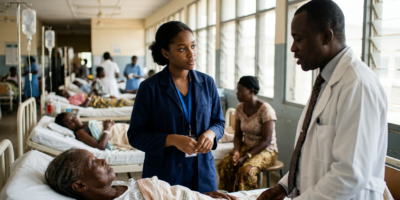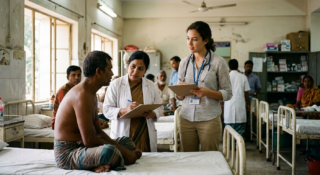
Shadowing in resource-limited settings is fundamentally different from shadowing in a well-equipped U.S. hospital or clinic, and the difference is not just about geography. When you observe clinical care in a setting where basic supplies may be scarce, where patient volumes overwhelm available staff, and where the conditions you see reflect social and economic realities unfamiliar to most American students, the experience reshapes what you pay attention to and how you think about medicine. It does not replace domestic shadowing. It adds a dimension that domestic shadowing alone rarely provides.
For pre-med students building a clinical foundation before applying to medical school, understanding what this kind of observation actually involves matters more than accumulating a generic line on a resume. Admissions committees can tell the difference between a student who went somewhere and watched, and a student who observed carefully, reflected honestly, and came away with a more grounded understanding of health, illness, and the systems that shape both. This article breaks down what shadowing in a resource-limited environment actually looks like, how it compares to domestic clinical observation, what it can and cannot do for your application, and how to approach it with the right expectations.
What “Resource-Limited” Actually Means in a Clinical Context
The phrase “resource-limited setting” gets used loosely, so it is worth being precise. In clinical terms, it refers to healthcare environments where some combination of the following is true: equipment is limited or outdated, pharmaceutical supplies are inconsistent, diagnostic technology is minimal, staffing ratios are stretched thin, and infrastructure such as reliable electricity, running water, or supply chains cannot be taken for granted. These conditions exist in many low- and middle-income countries (LMICs), and they also exist in parts of every country, including the United States.
The World Health Organization has documented significant disparities in health outcomes and healthcare access between high-income countries and LMICs. Life expectancy gaps, maternal mortality rates, and child mortality figures reflect not just differences in disease prevalence but systemic differences in what healthcare providers have to work with. When you shadow in one of these settings, you are not just seeing different diseases. You are seeing how constraint itself shapes every clinical decision, from triage to treatment to follow-up.
This matters for pre-med students because so much of U.S. medical education, at least in the early years, assumes a baseline of resources. Shadowing domestically, you watch a physician order labs, imaging, and consults with relative ease. In a resource-limited setting, you watch a clinician weigh whether a test is available at all, whether the patient can afford it, and what the next best option is if the answer to either question is no. That difference in clinical reasoning is one of the most valuable things you can observe, and it is something you simply will not encounter in most American clinical environments.
How Domestic Shadowing Typically Works and What It Shows You
Domestic shadowing, in a U.S. hospital, outpatient clinic, or specialty practice, gives you a close look at how medicine operates inside a system with comparatively abundant resources. You observe physicians interacting with patients, reviewing charts, ordering diagnostics, consulting specialists, and managing care plans. You see how electronic health records structure clinical workflows. You learn the rhythm of a clinic day: check-in, vitals, history, examination, assessment, plan.
This is genuinely valuable. It teaches you about patient-physician communication, about how different specialties approach problems, and about the pace and pressure of clinical work. If you are wondering how much time to invest in this kind of observation, IMA has written about how many shadowing hours medical schools expect, which can help you plan.
But domestic shadowing has inherent limits. Most U.S. clinical environments are highly specialized. You may shadow a cardiologist and see only cardiac patients, or spend time in an emergency department that has a CT scanner steps away. The social determinants of health, the conditions outside the clinic that drive disease patterns, are often invisible during a domestic shadowing experience. You hear about them in conversations, maybe see them noted in a chart, but you rarely witness them directly. The system is designed to manage what walks through the door, and it has enough tools to do so most of the time.
None of this is a criticism of domestic shadowing. It is simply a description of what it tends to show you and what it tends to leave out.
What Changes When You Shadow in a Resource-Limited Setting
The Conditions You Observe Are Different
In many LMICs, the conditions patients present with reflect the burden of infectious disease, nutritional deficiency, and late-stage illness in ways that U.S. students rarely see. Malaria, tuberculosis, parasitic infections, advanced maternal complications, and preventable childhood diseases are common presenting concerns. You may observe clinicians managing conditions that, in a U.S. context, would have been caught and treated far earlier. This is not because providers are less skilled. It is because patients may travel hours to reach a facility, may have delayed care due to cost, or may not have had access to preventive services at all.
Seeing this firsthand teaches you something important about the relationship between access and outcomes. It is one thing to read about it in a global health textbook. It is another to watch a clinician work through a case where earlier intervention would have changed everything but was simply not available.
Clinical Reasoning Under Constraint Becomes Visible
One of the most educational aspects of shadowing in resource-limited settings is watching how healthcare providers make decisions without the tools that U.S. clinicians rely on. When a physician cannot order an MRI, or when there are only a few antibiotics available on the pharmacy shelf, clinical reasoning becomes more visible and, in some ways, more instructive. You see providers lean heavily on history-taking and physical examination. You see how differential diagnoses shift when confirmatory tests are not an option. You see improvisation that is grounded in training and experience, not recklessness.
IMA has covered this topic in detail, and students interested in understanding how constraint itself can sharpen clinical thinking will find that perspective useful as they prepare for this kind of experience.
The Role of Non-Physician Providers Expands
In countries like Kenya, clinical officers, who are trained mid-level providers, carry a significant share of the primary care burden. They diagnose, treat, and prescribe in contexts where physicians may be scarce. Observing their work gives you a broader understanding of how healthcare teams function when roles are distributed differently than what you are used to seeing. Community health workers, nurses working at the top of their scope, and traditional health practitioners all play roles that may surprise students accustomed to the U.S. model.
Social Determinants Are Not Abstract
In a resource-limited clinical setting, the social determinants of health are not a separate topic. They are present in every patient encounter. You see how poverty, education, housing, water access, and transportation directly shape who gets sick, when they seek care, and what happens after they leave the clinic. The CDC’s framework on social determinants of health provides useful background reading, but observing these dynamics in practice makes the concept concrete in a way that reading alone cannot.
What You Are Actually Doing as an Observer
It is important to be direct about this: when you shadow in a resource-limited setting as a pre-med student, you are observing. You are not diagnosing, treating, prescribing, or performing procedures. You are watching, listening, asking questions when appropriate, and learning from what you see.
Depending on the program and the local facility, there may be opportunities to support approved activities such as health education, basic data collection, or community outreach. But the core of the experience is structured observation under the supervision of qualified healthcare professionals. Students should never attempt to provide medical care or clinical advice, regardless of the setting. This boundary exists to protect patients, to respect local regulations, and to ensure that students are learning within an appropriate and ethical framework.
Structured programs typically include daily debriefing sessions where students process what they observed, discuss clinical and ethical questions, and reflect on what they are learning. This reflection component is not filler. It is where much of the real learning happens, because observation without reflection tends to produce anecdotes rather than understanding.
How This Experience Fits Into a Medical School Application
What Admissions Committees Actually Value
Medical school admissions committees, particularly at schools with strong commitments to primary care and underserved populations, value evidence that applicants understand the complexity of healthcare delivery. The AAMC’s core competencies for entering medical students include cultural competence, social accountability, and an understanding of how health systems work. Shadowing in a resource-limited setting, when done thoughtfully, provides material for demonstrating these competencies.
But the key word is “thoughtfully.” Simply listing an international shadowing experience on your application is not enough. What matters is what you took from it: what you noticed, what challenged your assumptions, what you learned about yourself and about medicine, and how it connects to your reasons for pursuing this career. Admissions reviewers are skilled at distinguishing between genuine reflection and surface-level reporting.
Writing and Talking About the Experience With Integrity
When you write about global health shadowing in your personal statement or discuss it in interviews, focus on specific observations and honest reflection. Describe a moment that changed how you think about a particular aspect of healthcare. Explain what you learned about the limits of your own perspective. Acknowledge what you did not know and what you still want to understand.
Avoid overstating your role or your impact. You were an observer, and there is no shame in that. What matters is the quality of your observation and the depth of your reflection. Admissions committees are far more impressed by a student who says, “I watched a clinical officer manage a complex case with limited tools, and it made me rethink what I thought I knew about diagnosis,” than by a student who vaguely claims to have “helped” in a foreign hospital.
It is also worth noting that this kind of experience does not replace the domestic clinical hours that most medical schools expect. It supplements them. If you are still building your clinical foundation, IMA has a helpful resource on the dos and don’ts of physician shadowing that applies to both domestic and international contexts.
What This Experience Cannot Do
International shadowing does not guarantee admission to medical school. It does not substitute for strong academic performance, a competitive MCAT score, or the other components of a well-rounded application. It does not confer academic credit unless your institution has a specific arrangement in place. And it does not certify you to do anything clinical. Being honest about these limitations, both with yourself and with your school, is part of approaching this experience maturely.
Ethical Responsibilities You Take On as a Guest in Someone Else’s Healthcare System
Shadowing in a resource-limited setting carries ethical weight that domestic shadowing does not always make visible. You are a guest in a clinical environment that serves a vulnerable population. The patients you observe may be dealing with serious illness, poverty, and systemic neglect. Your presence should not add to their burden.
This means several things in practice. First, patient confidentiality is not optional. Do not photograph patients without explicit informed consent. Do not share identifying details on social media or in casual conversation. Second, cultural humility is not a buzzword here; it is a practical requirement. You may observe practices or beliefs that differ from what you expect. Your role is to observe and learn, not to judge or correct. Third, respect the supervision structure. If a supervising clinician tells you to step back or remain in a certain area, follow that instruction without debate.
There is a broader ethical dimension as well. Programs that send students to observe in LMICs have a responsibility to ensure that their presence benefits, or at minimum does not harm, the host community. Students should ask questions about how a program relates to the facilities and communities it works with. Is the relationship reciprocal? Are local providers treated as colleagues and teachers, or as props for a student experience? These are not abstract questions. They reflect the kind of ethical thinking that will matter throughout your medical career.
Preparing Yourself Before You Go
Good preparation makes the difference between an experience that produces genuine learning and one that produces confusion or discomfort without much to show for it. Start with background reading on the healthcare system and disease burden of the country you will visit. The WHO and national health ministry websites for most countries provide accessible overviews. Understand the basics of the social, economic, and political context. You do not need to become an expert, but you should not arrive uninformed.
Practically, make sure your vaccinations are up to date, that you have appropriate travel insurance, and that you know the emergency protocols of the program you are joining. Understand what the housing and communication arrangements are. If you have never traveled internationally, or if this is your first time in a low-income setting, give yourself permission to feel uncertain. That uncertainty is not a weakness. It is a signal that you are paying attention.
Emotionally, prepare for the possibility that what you see will be difficult. Witnessing serious illness, resource scarcity, and systemic inequity can be distressing, especially for students who have not yet developed the coping strategies that experienced clinicians rely on. Good programs build in structured debriefing and reflection time for exactly this reason. Use it. Talk to mentors, peers, and program staff about what you are processing.
What to Take Away and What to Leave Behind
The most useful thing you can take away from shadowing in a resource-limited setting is a more accurate understanding of how health, illness, and healthcare actually work in most of the world. That understanding will inform the kind of physician you become, regardless of where you ultimately practice. It will make you better at recognizing how systems shape patient outcomes. It will make you more attentive to what is missing, not just what is present, when you evaluate a clinical situation.
What you should leave behind is any notion that a few weeks of observation makes you an authority on global health or on the community you visited. It does not. It gives you a starting point, a set of questions, and a degree of humility that will serve you well. The students who get the most from this kind of experience are the ones who treat it as the beginning of a longer process of learning, not as a finished credential.
If you approach it with honesty, preparation, and respect, shadowing in a resource-limited setting will give you something that no amount of domestic clinical hours alone can provide: a view of medicine that includes its hardest questions, its most creative problem-solving, and its most pressing human realities.
Frequently Asked Questions
Does shadowing in a resource-limited setting count toward the clinical hours medical schools require?
Most medical schools do not specify where your shadowing hours must take place, so international observation hours generally count as part of your overall shadowing experience. However, this type of experience is best understood as a supplement to, not a replacement for, domestic shadowing. Schools want to see that you have observed U.S. clinical practice as well. Always check the specific expectations of the programs you are applying to.
Will I be allowed to participate in patient care during international shadowing?
No. As a pre-med student shadowing abroad, your role is to observe, ask questions, and learn from supervising clinicians. You will not diagnose, treat, or perform clinical procedures. This boundary protects patients, respects local regulations, and keeps your experience within an ethical and appropriate scope. Programs that suggest otherwise should be approached with caution.
How should I talk about this experience in my medical school application?
Focus on specific observations and honest reflection rather than broad claims about impact. Describe what you saw, what surprised you, what challenged your assumptions, and what you learned about healthcare systems, clinical reasoning, or your own perspective. Avoid overstating your role. Admissions committees value self-awareness and genuine learning far more than inflated descriptions of what you did.