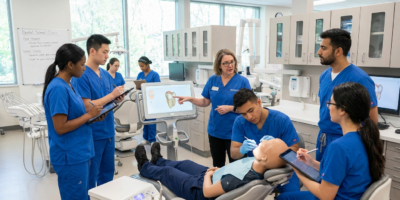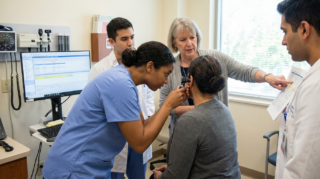
Most PA programs take between 24 and 27 months to complete. That’s roughly two to two and a half years of full-time, year-round graduate study with virtually no summer breaks. If you’re asking how long is PA school because you’re mapping out your path to becoming a certified physician assistant, the short answer is straightforward. The longer answer, which is what actually matters for your planning, involves understanding the structure of those months, the difference between the didactic and clinical phases, the time you’ll spend preparing before you even apply, and how the entire timeline compares to other healthcare training paths.
PA education is compressed by design. The profession was built to train highly competent clinicians in less time than the traditional medical school and residency route, and that compression means every semester is dense. Knowing what to expect at each stage helps you plan realistically, set up your prerequisites and patient care hours on a practical schedule, and walk into your program ready for the pace. Below is a detailed look at the PA school timeline from start to finish.
The Standard 24 to 27 Month PA Program Structure
PA programs in the United States are master’s-level programs, most commonly granting a Master of Medical Science (MMS) or Master of Physician Assistant Studies (MPAS). According to the Physician Assistant Education Association’s program data, the majority of accredited programs fall within the 24 to 27 month range, spread across six to seven semesters of continuous enrollment.
Unlike many graduate programs, PA school does not follow the traditional academic calendar. You will attend classes and rotations year-round, including through summers. The program is generally divided into two distinct phases: a didactic (classroom) phase and a clinical (rotation) phase. Some programs split these evenly at about 12 months each; others dedicate closer to 15 months to didactic work and 12 months to clinical rotations. The exact split depends on the program, but the overall structure is consistent across accredited institutions.
It is worth noting that PA programs must meet the standards set by the Accreditation Review Commission on Education for the Physician Assistant (ARC-PA). The ARC-PA accreditation standards ensure that every program, regardless of its specific calendar, covers the required medical curriculum and clinical training. This standardization is one reason PA graduates are well prepared to sit for the national certification exam immediately after finishing their programs.
Didactic vs Clinical Year: What Each Phase Looks Like
The Didactic Phase
The didactic phase is the classroom-intensive portion of PA school. Depending on the program, it lasts roughly 12 to 15 months and covers the foundational medical sciences you’ll need before entering clinical settings.
Expect coursework in anatomy, physiology, pharmacology, pathophysiology, clinical medicine, behavioral health, and physical diagnosis. Most programs also include training in clinical skills such as suturing, casting, patient history-taking, and interpreting lab results. The pace is fast. Many PA students describe the didactic year as covering in weeks what undergraduate courses might cover in an entire semester. You will be tested frequently, and the material builds on itself, so falling behind is costly.
This phase also typically introduces evidence-based medicine, medical ethics, and professional development. Some programs weave in standardized patient encounters during this period so you can practice clinical reasoning before rotations begin.
The Clinical Phase
The clinical phase usually spans 12 months and consists of supervised clinical rotations (sometimes called Supervised Clinical Practice Experiences, or SCPEs). During this time, you rotate through multiple medical specialties, spending several weeks in each.
Core rotations generally include family medicine, internal medicine, general surgery, emergency medicine, pediatrics, women’s health, and behavioral or mental health. Most programs also offer elective rotations where you can gain experience in a specialty of interest, such as dermatology, orthopedics, or cardiology. Over the course of your clinical year, you’ll complete approximately 2,000 hours of supervised clinical training.
During rotations, you work under the direct supervision of licensed clinicians. You take patient histories, perform physical exams, develop differential diagnoses, present cases, and participate in treatment planning, all under guidance. If you’re interested in understanding how clinical documentation works in rotation settings, the IMA blog has a useful breakdown of SOAP notes and how they’re structured in clinical rotations. Learning that framework early can give you a real advantage when your clinical year begins.
The Full Timeline: From Undergraduate Work to PA-C Certification
If you’re still in your undergraduate years, it helps to think about the total time investment from start to licensure.
A typical path looks like this. You spend four years earning a bachelor’s degree while completing prerequisite courses in biology, chemistry, anatomy, physiology, microbiology, and statistics (requirements vary by program). During and after college, you accumulate direct patient care experience (PCE), with competitive applicants generally logging between 1,000 and 2,000 hours. You then apply through CASPA, the Centralized Application Service for Physician Assistants, which typically opens in late April for matriculation the following year. Once admitted, you spend 24 to 27 months in PA school. After graduating, you sit for the Physician Assistant National Certifying Exam (PANCE), and upon passing, you earn the PA-C credential and can begin practicing.
From the start of your undergraduate education to the point of certification, the total timeline is roughly six to seven years. That figure assumes you go straight through without gap years. If you take time off to gain more clinical experience or strengthen your application, which is common and often advisable, add one to two years.
For students who want to shorten this timeline, some institutions offer 3+2 or direct-entry pathways. These programs allow students to complete three years of undergraduate study followed by the PA program, earning both a bachelor’s degree and a master’s degree in about five years total. These pathways are competitive, and they require early commitment, but they are worth researching if timeline efficiency is a priority.
How PA School Compares to Medical School
This is one of the most common questions pre-PA students ask, and the comparison matters when you’re deciding which path fits your goals.
Medical school (MD or DO) is a four-year program. After that, physicians must complete a residency lasting three to seven years depending on the specialty. Some pursue additional fellowship training. From the start of medical school to independent practice, a physician’s training takes a minimum of seven years and often closer to ten or more. If you’re curious about how some medical schools have tried to compress that timeline, IMA’s blog covers three-year medical school programs in the United States, which provides useful context.
PA school, by contrast, takes about two years, and there is no mandatory residency afterward. PAs can enter practice as soon as they pass the PANCE. Optional PA residency and fellowship programs do exist, typically lasting 12 months, and they’re available in specialties like surgery, emergency medicine, and critical care. But they are not required.
This shorter timeline does not mean PA school is easier or less rigorous. The curriculum covers similar medical content to what medical students study in their first two years. The difference is in what comes after: PAs practice under a collaborative model with physicians, and their scope of practice, while broad, is structured differently than a physician’s independent practice authority. According to the Bureau of Labor Statistics occupational profile for physician assistants, PAs examine patients, diagnose conditions, prescribe medications, and develop treatment plans across virtually every medical specialty.
Understanding these structural differences can help you make a clearer decision. The question is not which path is “better” but which one aligns with how you want to practice, how much training time you’re prepared for, and what kind of clinical role suits your professional goals.
What to Do Before PA School to Strengthen Your Timeline
Your pre-PA preparation period is just as important as the program itself. How you use the years before applying can determine not only whether you get accepted but also how prepared you feel once you start.
First, focus on prerequisites. Most programs require coursework in biology, chemistry (general and sometimes organic or biochemistry), anatomy, physiology, microbiology, and statistics. Some also require psychology or genetics. Check the specific requirements for each program you plan to apply to, because they vary.
Second, accumulate direct patient care experience. This is non-negotiable. Programs want evidence that you’ve worked in hands-on clinical roles, not just observed. Common qualifying roles include EMT, medical assistant, paramedic, CNA, phlebotomist, and surgical technologist. Aim for at least 1,000 hours, and know that many admitted students have significantly more. Shadowing a PA is also valuable; it demonstrates that you understand the profession’s day-to-day realities.
Third, consider structured clinical exposure beyond your paid PCE. Programs like those offered through International Medical Aid give pre-PA students the chance to observe clinical officers (the global equivalent of PAs) in healthcare settings abroad. If you’re comparing programs that offer this type of structured global health observation, IMA’s guide to PA salary expectations and career outlook can also help you think through the long-term professional picture as you plan your path.
Fourth, start studying for the GRE early if your target programs require it (many have dropped the requirement, but some still use it). And give yourself enough time to write a strong personal statement. CASPA allows you to submit one personal statement to all programs, so it needs to clearly explain why you want to be a PA, not just a healthcare provider in general.
Preparing for the Pace: What PA Students Say About the Workload
One of the most honest things current and former PA students say about their programs is that the workload is relentless. The phrase “drinking from a firehose” comes up constantly, and it’s worth taking seriously.
During the didactic phase, many students study six to eight hours per day outside of class. Exams happen weekly or biweekly. The volume of material is similar to what medical students cover, but you’re doing it in roughly half the calendar time. Good study habits, time management, and a willingness to adjust your methods quickly are essential.
During the clinical phase, the challenge shifts. You’re now in clinical settings for 40 or more hours per week, plus studying for end-of-rotation exams and completing case logs and patient documentation. The variety of rotations is one of the highlights of PA training, but it also means you’re constantly adapting to new settings, new preceptors, and new expectations.
Programs generally do not allow outside employment during PA school. Plan your finances accordingly. This is a full-time, all-consuming commitment for two-plus years, and treating it as anything less tends to create serious problems.
What Happens After Graduation: PANCE and Starting Practice
After completing your program, the next step is the PANCE, the national certification exam administered by the National Commission on Certification of Physician Assistants (NCCPA). The PANCE is a 300-question, multiple-choice exam covering the medical knowledge and clinical reasoning you developed throughout your program.
Most programs prepare you thoroughly for this exam through end-of-rotation exams and a summative evaluation. Pass rates for first-time test-takers at accredited programs are generally high, but individual program pass rates vary, and checking them is a reasonable part of your program research.
Once you pass the PANCE, you hold the PA-C credential and can apply for state licensure. Each state has its own licensing requirements and scope-of-practice laws, so where you plan to practice matters. Some states allow PAs significant autonomy; others have more restrictive supervisory requirements. After certification, PAs must complete 100 hours of continuing medical education every two years and pass a recertification exam every ten years to maintain their credential.
Frequently Asked Questions
Is PA school the same length at every program?
No. While most accredited PA programs fall within the 24 to 27 month range, some run slightly shorter or longer. A few programs are structured closer to 36 months, though these are less common. The exact length depends on the institution’s curriculum design, but all accredited programs must meet the same ARC-PA standards regardless of duration.
Can I work while attending PA school?
Most PA programs strongly discourage or explicitly prohibit outside employment during enrollment. The academic and clinical demands are full-time and year-round, and programs are designed with the expectation that students are dedicating all of their working hours to coursework, studying, and rotations. Financial planning before matriculation is important.
Do I need to complete a residency after PA school to practice?
No. Unlike physicians, PAs are not required to complete a residency after graduation. Once you pass the PANCE and obtain state licensure, you can begin practicing. Optional PA postgraduate residency and fellowship programs exist in specialties like surgery, emergency medicine, and critical care, and they typically last about 12 months. These can be valuable for focused specialization but are not a requirement for entering practice.