Pre-dental experience for high school students starts with a simple reality: dental schools want applicants who understand what the profession actually involves, and that understanding has to come from somewhere. Shadowing a dentist, observing procedures in a clinical setting, and learning the basics of infection control and patient interaction are all ways students begin building that foundation while still in high school. Programs like summer medical internships for high school students offer structured paths for gaining this exposure under professional supervision, giving students a chance to see real clinical work firsthand rather than relying on secondhand descriptions or assumptions.
For students and parents weighing options, it helps to understand the difference between casual interest and genuine preparation. A student who has spent time in a dental clinic, even as an observer, can speak with specificity about what drew them to the field. That kind of clarity matters years later when filling out applications and sitting for interviews. The range of internships for high school students medical programs now available means there are more structured, supervised ways to get this exposure than ever before. But not every program is equal, and not every experience will be worth the time and cost. The sections below break down what pre-dental experience for high school students actually looks like, what is realistic, what matters most to dental school admissions committees, and what parents should ask before saying yes.
What Pre-Dental Experience Actually Means at the High School Level
When people talk about “pre-dental experience,” the phrase can mean different things depending on who is using it. For a college junior applying to dental school, it might mean hundreds of hours of shadowing, research, and direct patient-facing volunteer work. For a high school student, the scope is narrower, and appropriately so.
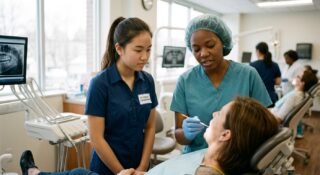
At the high school level, pre-dental experience is almost always observational. Students watch licensed dentists and dental staff perform examinations, cleanings, fillings, extractions, and sometimes more complex procedures like root canals or surgical removals. They learn how a clinic operates: how patients are received, how treatment plans are discussed, how instruments are sterilized, and how teams coordinate care. In well-structured programs, students also participate in educational sessions that cover topics like oral anatomy, common dental conditions, and the role of infection control in clinical safety.
What high school students do not do is practice dentistry. They do not perform procedures, assist in surgery, examine patients, or give advice. This is not a limitation of a specific program; it is a baseline ethical and legal requirement. Patients have a right to care provided by trained, licensed professionals, and minors in clinical settings are there to learn, not to treat. Any program that implies otherwise should raise serious concerns for both students and parents.
The value of this kind of experience is not diminished by its observational nature. Watching a dentist manage a patient with severe decay in a setting where resources are limited teaches a student something they cannot get from a textbook. Seeing how infection control protocols are followed step by step, from hand hygiene to instrument sterilization to proper use of personal protective equipment, gives students a working understanding of clinical safety that will serve them through every stage of their education.
What Students Observe in a Dental Clinical Setting
A typical day for a high school student in a structured dental observation program follows a clear routine. Mornings usually begin with travel to the assigned clinic alongside program staff. Once there, students observe dental professionals as they see patients, moving through intake, examination, diagnosis, and treatment. Depending on the clinic, students may watch general dentistry, oral surgery, or pediatric dental care over the course of a program.
The specific procedures students observe can range widely. Routine cleanings and preventative care are common, but so are fillings, extractions, and management of dental abscesses and infections. In international settings, students often see more advanced or untreated conditions than they would in a typical U.S. dental office. Untreated dental caries, or tooth decay, is the most common health condition globally according to the WHO, and students observing in regions with limited access to preventive care frequently witness the consequences of that gap firsthand.
Afternoons in structured programs typically shift to educational activities: discussions led by local dental professionals, workshops on instrument identification or dental anatomy, and guided reflection on what students observed that day. These sessions help students process what they saw, ask questions they may not have been able to raise during active patient care, and connect clinical observation to broader topics like public health and healthcare access.
One area that deserves specific attention is infection control. For high school students, understanding the basics of how clinics prevent the spread of disease is one of the most practical and lasting takeaways from any clinical observation. Watching how staff handle sterilization, dispose of sharps, use barriers and PPE, and maintain a clean environment gives students a foundational awareness that applies across every healthcare discipline, not just dentistry.
Why This Matters for Dental School Applications
It may seem early to think about dental school during high school, but the admissions landscape favors applicants who have built a consistent record of interest and involvement over time. For the 2023-2024 application cycle, ADEA reported over 11,000 applicants to U.S. dental schools, with only about 6,300 first-time enrollees accepted. Competition is real, and admissions committees look for evidence that an applicant understands what being a dentist involves.
Observational experience at the high school level contributes to that evidence in a few important ways. First, it gives students something concrete to reference in personal statements and interviews. A student who can describe watching a dentist manage a complicated extraction, or who can explain how infection control works in a resource-limited clinic, has material that demonstrates genuine engagement with the field. Second, it helps students build shadowing hours that they will eventually log on their AADSAS application. While there is no fixed minimum number of hours required, having a track record of clinical observation that stretches back to high school signals sustained commitment.
It is worth being honest about what this experience does not do. No single program, internship, or shadowing session guarantees admission to dental school. Admissions decisions are based on a combination of academic performance, DAT scores, extracurriculars, essays, interviews, and, yes, clinical exposure. Early experience is one piece of a much larger picture. What it does well is help students confirm, or honestly reconsider, whether dentistry is the right fit for them. That self-awareness, reflected clearly in an application, carries real weight with committees.
Students who want to understand how different types of early clinical exposure compare can find useful context in IMA’s breakdown of the differences between shadowing and internships at the high school level, which covers what each type of experience involves and what it can realistically offer.
What Parents Should Know Before Approving a Program
For parents, the decision to let a high school student participate in a clinical observation program, especially one abroad, involves a set of concerns that deserve straight answers. Safety, supervision, housing, communication, and age-appropriate expectations are not secondary details; they are the factors that determine whether an experience is genuinely beneficial or unnecessarily risky.
Safety and Supervision
Any program worth considering should be able to explain, in detail, how students are supervised at all times. This means not just during clinical hours but also during travel, meals, evenings, and weekends. For high school students, constant supervision by trained program staff is a baseline expectation, not a premium feature. In the clinical setting itself, students should be under the direct oversight of licensed local dental professionals who are aware of the student’s role as an observer and who have consented to having an observer present.
Parents should ask specific questions: Who is responsible for my child at each point in the day? What is the staff-to-student ratio? What happens if my child feels unwell? What are the emergency protocols, and how will I be contacted if something goes wrong? A program that cannot answer these questions clearly and specifically is not ready to host minors.
Housing and Communication
Students should be housed in secure, supervised accommodations. Parents should receive details about where their child will stay, who else will be there, and what security measures are in place. Communication plans should be established before departure, including regular check-in schedules, emergency contact procedures, and realistic expectations about connectivity. Some international locations have limited internet or phone service, and parents should know this in advance.
Maturity and Readiness
Not every high school student is ready for a structured clinical program, and that is fine. Maturity, emotional resilience, the ability to follow rules in unfamiliar settings, and a genuine willingness to learn are all real prerequisites. Parents know their children, and an honest conversation about readiness is more valuable than enthusiasm alone. IMA has published a detailed guide for parents on safety, supervision, and support for high school medical internships that addresses many of these concerns directly.
How Domestic and International Experiences Differ
Students considering pre-dental observation have options both in the U.S. and abroad, and the two types of experience offer meaningfully different perspectives.
Domestic shadowing, typically arranged through a family dentist, local dental school, or community clinic, gives students exposure to the U.S. healthcare system, familiar patient demographics, and the technology and resources common in American dental practice. It is often easier to arrange, lower in cost, and does not involve travel logistics. For many students, this is a perfectly good starting point.
International observation programs add layers that domestic shadowing usually does not. Students in global settings frequently observe a higher volume and severity of dental disease, because many patients in underserved regions lack access to preventive care and present only when pain becomes unbearable. This gives students a wider clinical picture and a more visceral understanding of what happens when oral health systems are underfunded. Students also gain exposure to how dental professionals in other countries adapt to resource limitations, using available tools and techniques to address conditions that a U.S. dentist might handle with more advanced equipment.
Beyond the clinical differences, international programs expose students to healthcare delivery within different cultural contexts. Communication styles, patient expectations, family involvement in care decisions, and community health priorities all vary across settings. For a student interested in global health or public health dentistry, this kind of cultural exposure is genuinely useful. The Bureau of Labor Statistics projects 6% growth in dentist employment through 2032, and the profession increasingly values practitioners who understand diverse patient populations and health systems.
Neither domestic nor international experience is inherently better. The right choice depends on the student’s goals, maturity, family circumstances, and what they hope to gain from the experience.
How to Get the Most Out of Any Pre-Dental Observation
The students who benefit most from early dental exposure are the ones who treat it as active learning, not passive attendance. Showing up, standing in a corner, and watching the clock is not the same as paying attention, asking thoughtful questions during appropriate moments, and reflecting seriously on what you observed.
Here are a few practical ways to make the experience count. First, keep a detailed journal. After each day of observation, write down what procedures you watched, what surprised you, what questions came up, and what you want to learn more about. These notes will be invaluable when you eventually write personal statements or prepare for interviews. Second, pay attention to the people, not just the procedures. How does the dentist communicate with a nervous patient? How does the dental assistant anticipate what the dentist needs? How does the team handle a complication? These interpersonal dynamics are a huge part of what makes a good clinician, and they are easy to overlook if you are only focused on the technical side.
Third, learn the basics of infection control and take them seriously. Understanding why gloves are changed between patients, how instruments are sterilized, and what universal precautions mean gives you a framework that applies to every clinical setting you will ever enter. Fourth, be honest with yourself about what you are feeling. If you watch an extraction and feel energized, that is useful information. If you watch one and feel faint, that is also useful information. Pre-dental experience is as much about testing your own reactions and interests as it is about building a resume line.
For students looking at structured programs that combine dental observation with other clinical rotations, IMA’s overview of dental internship programs for high school students interested in healthcare careers provides a closer look at what these programs include and how they are organized.
Setting Realistic Expectations Before You Commit
The best thing a student and parent can do before committing to any pre-dental experience is set expectations that are grounded in reality. You will not perform procedures. You will not leave with a certificate that guarantees dental school admission. You may not love every moment. Some days in a clinic will be routine, even tedious. Some cultural adjustments will be uncomfortable. These are features of real clinical exposure, not flaws in a program.
What you will gain, if you approach it with the right mindset, is a concrete, firsthand understanding of what dentistry looks like in practice. You will have stories, observations, and reflections that are genuinely your own. You will be able to speak about the profession with a specificity that sets you apart from applicants who have only read about it. And you will have a clearer sense of whether this is the career you want to pursue, which is one of the most valuable outcomes any early experience can offer.
For students still weighing their options across different health professions, the key is not to rush into a commitment but to ask the right questions, involve your family in the decision, and choose a program whose structure, supervision, and values you trust.
Frequently Asked Questions
Can high school students perform dental procedures during a shadowing or internship program?
No. High school students in dental observation programs are there to watch, learn, and ask questions. They do not perform procedures, examine patients, or provide any form of care. This is a firm ethical and legal boundary that protects both the student and the patient. Any program that suggests otherwise should be avoided.
How many shadowing hours do dental schools expect applicants to have?
There is no universal minimum number of shadowing hours required by dental schools, but most admissions committees expect applicants to have meaningful observational experience that demonstrates a genuine understanding of the profession. Starting to accumulate these hours in high school and continuing through college shows sustained interest and commitment.
Is an international dental observation program better than domestic shadowing for dental school applications?
Neither is inherently better. Domestic shadowing offers exposure to U.S. dental practice, while international programs provide a broader view of oral health challenges, resource-limited care, and cultural contexts. Admissions committees value the depth of your reflection and what you learned from the experience more than where it took place. The best choice depends on the student’s goals, readiness, and family circumstances.