College admissions offices read thousands of applications each cycle, and the ones that stand apart tend to share a common trait: specificity. Students who can point to real experiences, name what they observed, and articulate what those observations taught them have a clear edge over applicants who list activities without context. For high school students interested in healthcare, the best medical internships for high school students offer exactly this kind of structured, substantive experience. Medical internships strengthen college applications not because they look impressive on a list, but because they give students something concrete to write about, talk about, and build on.
This matters right now because healthcare-related fields are among the most competitive paths a student can pursue. According to AAMC data, the 2023 medical school application cycle saw 52,777 applicants compete for roughly 22,966 spots. Nursing programs, PA programs, and dental schools face similar pressure. The students who eventually earn those seats tend to start building their understanding of clinical environments early. That does not mean high school students need to practice medicine; it means they benefit from observing it up close, under proper supervision, in settings that challenge their assumptions. Medical internships for high school students provide that kind of structured exposure, and when approached with genuine curiosity, they create material that resonates across personal statements, activity descriptions, interviews, and recommendation letters.
Real Clinical Observation Gives Students Something Specific to Say
One of the most common weaknesses in college applications is vagueness. Students write that they “want to help people” or “have always been passionate about medicine,” but they cannot point to a single moment, conversation, or clinical encounter that shaped that interest. Admissions committees notice the difference between a student who watched a nurse manage three patients simultaneously during a busy ward round and a student who simply lists “medical volunteer” on a resume.
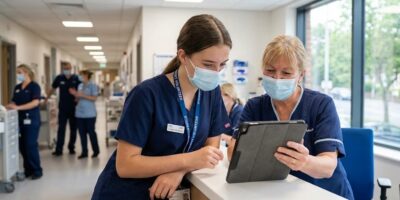
Structured medical internships place high school students in clinical environments where they observe healthcare professionals at work. This means watching physicians assess patients, seeing nurses coordinate care across a unit, and sitting in on consultations where treatment decisions are made in real time. The student’s role is observational and educational, not clinical. They do not administer medication, perform procedures, or make care decisions. But they are present in the room, and that proximity to real practice gives them the kind of detail that admissions readers respond to.
For students interested in nursing, this exposure can be especially clarifying. Observing nurses take vital signs, communicate with families, educate patients about discharge plans, and collaborate with physicians offers a grounded picture of what the profession actually involves. If nursing is a path your student is seriously considering, IMA has written extensively about nursing internships designed specifically for high school students, which offer this kind of focused observational learning.
The key point for parents: your student is not being placed in a clinical role. They are learning by watching, asking questions, and reflecting on what they see, all under direct supervision by licensed professionals and program staff.
Reflection and Self-Awareness Signal Maturity to Admissions Committees
Colleges are not just evaluating what a student has done. They are evaluating how a student thinks about what they have done. A medical internship, especially one in an unfamiliar setting, forces a kind of reflection that is hard to manufacture in a classroom.
When a student observes a healthcare system operating under resource constraints, or watches a clinician adapt a treatment plan because certain equipment is unavailable, that student gains perspective. They start to understand that medicine is not just about science; it is about problem-solving, communication, and working within systems that are sometimes imperfect. Admissions committees at both undergraduate and professional programs consistently say they value this kind of reflective thinking. The AAMC’s core competencies for entering medical students include self-awareness, cultural competence, and ethical responsibility, all of which grow through carefully structured clinical observation.
This is where structured programs differ from informal shadowing. A strong internship includes daily debriefs, conversations with mentors, and guided reflection. Students are asked to process what they observed, consider what surprised them, and think critically about the ethical dimensions of care. That process produces the kind of insight that makes a personal statement compelling. It also helps students determine whether healthcare is truly the right path, which is itself a valuable outcome.
For parents wondering whether their teenager is ready for this kind of experience, the answer depends partly on the student’s maturity and partly on the program’s structure. Programs that provide clear supervision, regular check-ins, and age-appropriate placements make it possible for younger students to benefit without being overwhelmed. IMA’s parent guide to high school medical internships addresses these concerns in detail, including housing, communication, and safety protocols.
Cross-Cultural Experience Demonstrates Adaptability
Admissions committees at competitive colleges and health professions programs increasingly value cultural competence. This is not a buzzword; it reflects the reality that healthcare professionals in the United States serve diverse patient populations, and the ability to communicate across cultural differences is a practical skill.
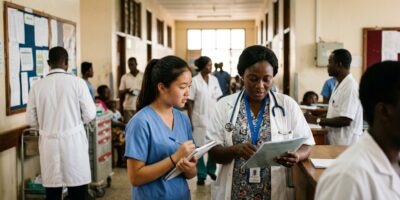
An international medical internship places students in environments where language, customs, and healthcare infrastructure differ from what they know. A student who observes care in a district hospital in East Africa or a community clinic in South America encounters healthcare delivery in a fundamentally different context. They see how family involvement in patient care varies across cultures. They notice how clinicians communicate with patients who may have different beliefs about illness and treatment. These observations, when reflected upon honestly, demonstrate the kind of adaptability and openness that admissions readers value.
This does not mean students need to travel internationally to build a strong application. Domestic clinical experiences also have real value. But international internships, when they are well structured and ethically run, offer a particular kind of contrast that sharpens a student’s ability to articulate what they have learned. The Bureau of Labor Statistics projects 13% growth in healthcare occupations from 2022 to 2032, and the professionals entering that workforce will increasingly need to work with patients from a wide range of backgrounds. Early exposure to diverse clinical settings helps students begin building that capacity.
It is worth noting what this experience is not: it is not medical tourism, and it is not an opportunity for students to practice skills they have not been trained in. In well-run programs, students observe, ask questions, and support clinical teams within clearly defined boundaries. They do not provide care. This distinction matters ethically, and it also matters for how the experience reads on an application. Admissions committees can tell the difference between a student who engaged thoughtfully with a new environment and one who overstates their role.
Strong Letters of Recommendation Come from Real Relationships
A generic letter of recommendation does very little for a college application. What makes a letter powerful is specificity: a supervisor who can describe how a student responded to a challenging observation, how they interacted with clinical staff, or how their questions evolved over the course of a program.
Medical internships create the conditions for these kinds of relationships. When a student spends several weeks working alongside a local physician, nurse, or program coordinator, that mentor sees the student in action. They observe how the student handles unfamiliar situations, whether they show up prepared, and how they engage with patients and staff. A letter from a clinical mentor who watched a student grow over the course of a structured program carries weight that a letter from a teacher who saw the student only in a classroom cannot replicate.
For high school students, this is especially significant. Most high schoolers have limited opportunities to build professional relationships with healthcare providers. A structured internship changes that. The mentor is not just signing off on hours; they are providing a genuine assessment of the student’s character, curiosity, and professionalism. IMA’s blog has a helpful resource on how to request strong letters after teen medical internships, which walks students through the process of building and maintaining these relationships.
Parents should know that these mentorship relationships are supervised. Students are not placed alone with a single provider in an unsupervised setting. Program staff are present, and the mentorship is part of a structured educational framework. This protects both the student and the integrity of the experience.
Medical Internships Help Students Confirm or Redirect Their Career Goals
This is one of the most underappreciated benefits, and it matters enormously for college applications. Admissions committees can sense when a student is repeating what they think the committee wants to hear versus when a student genuinely understands what they are signing up for. A medical internship gives students the raw material to speak with real authority about their interest in healthcare.
Some students finish an internship more certain than ever that they want to pursue medicine, nursing, or another health profession. They can point to specific moments that confirmed their interest: watching a nurse calm a frightened patient, observing a physician explain a diagnosis in terms a family could understand, or seeing how a clinical team coordinated care during a busy shift. These details are gold in a personal statement or interview.
Other students finish an internship and realize that their interests lie elsewhere, perhaps in public health, biomedical research, or health policy rather than direct clinical work. This is not a failure. It is a genuinely valuable outcome. A student who can articulate why they shifted direction, and what specific observations led to that shift, demonstrates the kind of self-awareness and honest reflection that admissions committees respect. It is far better to arrive at that clarity in high school than halfway through a pre-med curriculum in college.
For students still weighing their options, the AACN’s data on nursing program enrollment offers useful context on the demand for nurses and the competitiveness of nursing programs. Understanding the landscape helps students make informed decisions about whether and how to pursue healthcare, and a medical internship is one of the best ways to test that interest against reality.
A Note for Parents on Readiness and Expectations
Parents naturally want to know whether their child is ready for a clinical internship, especially one that involves travel. The honest answer is that readiness varies. Some 16-year-olds are mature enough to handle the emotional and logistical demands of an international program. Others may benefit from waiting a year or starting with a domestic experience.
What matters most is that the program is designed with high school students in mind. That means secure housing, constant supervision in clinical settings, clear communication channels between the program and parents, age-appropriate clinical placements, and structured debriefing to help students process what they observe. It also means explicit boundaries: students observe and support. They do not practice medicine.
If your student is genuinely curious about healthcare, willing to be uncomfortable, and mature enough to follow rules in a professional setting, a structured medical internship can be one of the most valuable pre-med extracurriculars they pursue in high school. The key is choosing a program that prioritizes safety, ethics, and educational structure over flash.
What Admissions Teams Actually Value, and What They Do Not
It is worth being direct about this: no single extracurricular activity guarantees admission to a competitive college or health professions program. Admissions decisions are made based on the full picture, including grades, test scores, essays, recommendations, and the overall pattern of a student’s activities and interests.
What a medical internship does is strengthen multiple parts of that picture simultaneously. It gives the student material for a compelling personal statement. It produces a recommendation letter from a clinical professional. It demonstrates sustained interest in healthcare. It shows cultural awareness and adaptability. And it provides the student with enough self-knowledge to speak authentically about their goals.
What admissions teams do not value is exaggeration. A student who claims to have “assisted in surgeries” or “treated patients” during a high school internship raises red flags, not enthusiasm. The students who benefit most from these experiences are the ones who describe them honestly: they observed, they asked questions, they reflected, and they grew. That is more than enough.
For students exploring what structured clinical experiences look like at the high school level, IMA’s guide to internships that stand out on college applications offers a practical overview of what to look for and what to expect.
Frequently Asked Questions
Do medical internships guarantee admission to competitive colleges or pre-med programs?
No. No single activity guarantees admission to any school. Medical internships strengthen applications by giving students specific, substantive material for essays, interviews, and recommendation letters. Their value depends on how thoughtfully the student engages with the experience and how honestly they reflect on what they learned. Admissions decisions are always based on the full application.
Are high school students allowed to treat patients during medical internships?
No. High school interns observe and learn. They do not administer medication, perform procedures, diagnose patients, or provide any form of direct clinical care. Their role is strictly educational, and they are supervised at all times by licensed healthcare professionals and program staff. This boundary is non-negotiable in any responsible program.
How can parents verify that an international medical internship is safe and well structured?
Parents should ask specific questions about supervision ratios, housing security, emergency protocols, communication policies, and the qualifications of on-site staff. A responsible program will be transparent about all of these details. Look for programs that provide pre-departure orientations, maintain 24/7 in-country support, and have clear policies on age-appropriate clinical placements. IMA’s parent guide covers these topics in detail and is a good starting point for evaluating any program.