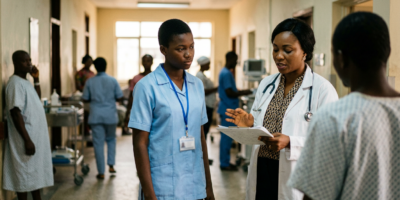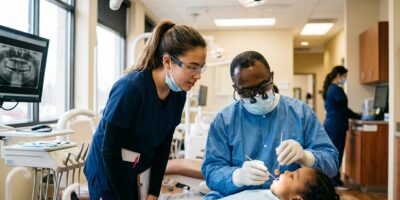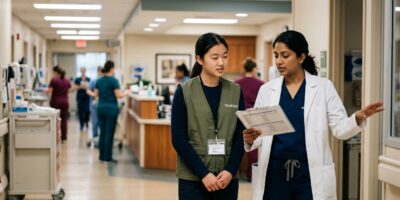
Nursing internships for high school students give teens a structured way to see what the profession actually looks like before committing to a nursing education path. Unlike informal job shadows or one-day hospital tours, a well-designed internship places students alongside licensed nurses in real clinical settings, with clear boundaries, professional supervision, and guided learning built into every day. For students weighing healthcare as a career, and for parents weighing whether their teen is ready, understanding what these programs involve is the first step. Many families begin by researching medical research internships for high school students to compare options across specialties, and nursing-focused programs stand out for the breadth of clinical exposure they can offer through observation alone.
The demand for nurses is real and well documented. According to the BLS occupational outlook for registered nurses, the profession is projected to grow 6% between 2022 and 2032, with roughly 193,100 new positions expected over that period. At the same time, nursing schools in the U.S. turned away more than 66,000 qualified applicants in 2022 due to limited faculty, clinical space, and funding. That combination of growing demand and competitive admissions makes early, structured exposure more relevant than ever. For teens who want a head start during the summer months, medical summer internships for high school students offer a concentrated window to observe nursing up close, build foundational knowledge, and test whether the profession is the right fit.
What Nursing Observation Actually Looks Like for Minors
The most important thing to understand about nursing internships for high school students is what they are not. These programs do not involve administering medication, performing procedures, drawing blood, or providing direct patient care. For minors, the role is observational. Students watch licensed nurses work. They ask questions. They reflect on what they see. And they learn from a position of respectful distance, always under the supervision of a qualified professional.
In a well-structured program, a typical day might begin with a briefing from a clinical mentor, followed by several hours observing in a specific department. Students might watch nurses take vital signs, manage wound care, communicate with patients about treatment plans, or coordinate with physicians and other team members. After lunch, the focus might shift to a different unit or to an educational session on a topic like infection control, triage priorities, or patient privacy. Evenings often include group reflection, journaling, and discussions that help students process what they observed.
What makes this valuable is not the chance to “do” things. It is the chance to see how nursing works in practice: the pace, the decisions, the communication, the emotional weight. Students who go through a serious observation program come away with a much more grounded understanding of the profession than they could get from a textbook or a career day. For a closer look at how shadowing compares to more involved internship structures, IMA’s guide on nursing shadowing opportunities for high school students breaks down the differences clearly.
The Role of Mentorship in Observation Programs
Observation without guidance is just watching. What separates a strong internship from a passive experience is the mentor. In quality programs, each student is paired with a licensed healthcare professional, often a registered nurse or clinical officer, who explains what is happening, why decisions are being made, and what the student should pay attention to. This mentorship turns observation into active learning. It also creates a safe space for students to ask questions they might feel uncomfortable raising in a busy clinical environment.
Mentors also help students understand what they are emotionally processing. Watching a patient in pain, seeing a family receive difficult news, or observing the toll of understaffing on a nursing team can be heavy, especially for a teenager. A good mentor acknowledges that weight and helps the student work through it constructively.
Why Parents Are Right to Ask Hard Questions
Parents considering a nursing internship for their teen, especially an international one, should be asking detailed questions. Not because these programs are inherently risky, but because any experience that places a minor in a clinical setting requires clear structure, honest communication, and verifiable safeguards. That scrutiny is a sign of good parenting, not excessive caution.
The most common concerns parents raise center on safety, supervision, and age-appropriate exposure. These are legitimate. A responsible program will address them directly, not deflect with vague reassurances. Parents should expect to receive clear information about who supervises their child at the clinical site, who is responsible for them outside of clinical hours, what the housing arrangements look like, how emergencies are handled, and how communication works between the program and the family. IMA’s resource on safety and support for parents of teen medical interns addresses these topics in detail and is worth reviewing before any application.
Emotional readiness is another area parents should assess honestly. Nursing environments can involve exposure to serious illness, injury, and loss. While students are not involved in care, they will see things that may stay with them. Programs that include structured debriefing sessions and access to staff support help teens process these experiences in healthy ways, but families should also talk openly beforehand about what their teen might encounter and how they tend to handle stress.
What Supervision Should Look Like
For any program involving minors, supervision must be constant and specific. That means a designated adult is responsible for the student at all times, in the clinical setting and outside of it. In clinical environments, the student should never be left alone with patients. There should be explicit rules about what students can and cannot do, and those rules should be enforced consistently. Housing should be secure, transportation should be arranged by the program, and there should be a clear chain of communication for any issue that arises.
If a program is unable to describe its supervision structure in concrete terms, or if it relies on general statements about “safe environments” without specifics, that is a reason to keep looking.
How Nursing Internships Differ from Other Healthcare Observation Programs
Nursing is distinct from medicine, dentistry, or allied health in ways that matter for the observation experience. Nurses spend more sustained time with patients than most other professionals. They are often the first to notice changes in a patient’s condition, the ones managing pain and comfort, and the primary point of contact for families. Observing nursing gives students a view of healthcare that is relational, continuous, and deeply human.
In international settings, the nursing role can look different from what students see in U.S. hospitals. In many countries, nurses and mid-level practitioners carry a larger share of clinical responsibility, particularly in rural or underserved areas where physicians may be limited. Students observing in these contexts often see nurses managing a wider range of tasks, adapting to resource constraints, and making clinical decisions that reflect a different scope of practice. The WHO State of the World’s Nursing report documents these variations and underscores the central role nurses play in global health systems, with a projected global shortage of 9 million nurses and midwives by 2030.
For students who are still deciding between nursing and other health careers, an observation-focused internship can clarify the difference between what nurses do and what physicians, physician assistants, or therapists do. That clarity is one of the most practical outcomes a high school student can take away from the experience. IMA also offers context on how students can compare different healthcare career paths while still in high school, which can be useful for those who are still weighing their options.
What Nursing Schools and Admissions Committees Actually Care About
A nursing internship on a high school student’s resume does not guarantee admission anywhere, and any program that implies otherwise is overpromising. What it can do, when the student engages seriously, is provide evidence of genuine interest, maturity, and reflective thinking, qualities that admissions reviewers at nursing programs do value.
The key is how the student talks about the experience, not simply that they had it. Admissions committees are not impressed by a line on a resume that says “observed nursing procedures.” They are interested in what the student noticed, what surprised them, what challenged their assumptions, and how the experience shaped or confirmed their interest in nursing. A student who can describe a specific moment, like watching a nurse calmly explain a treatment plan to a frightened patient, and articulate why that moment mattered to them, is far more compelling than someone who lists hours logged.
According to the AACN’s data on nursing school enrollment and admissions, competition for seats in baccalaureate nursing programs continues to be significant. Students who apply with clear, specific, and honest accounts of their clinical observation experiences tend to present stronger applications than those who rely on generic descriptions of healthcare interest.
Writing About Observation Without Overstating It
One of the most common mistakes students make in applications is overstating their role. Saying “I assisted with patient care” when the actual experience was observation can raise red flags with experienced reviewers. It is better, and more effective, to be precise. “I observed a registered nurse perform wound care and debriefing afterward, and I asked about how she assessed the patient’s pain level” is more credible and more interesting than a vague claim of participation.
Students should also connect the experience to their broader trajectory. If the internship confirmed a long-held interest in nursing, they should say so and explain why. If it introduced new questions or uncertainties, that honesty is also valuable. Admissions committees appreciate students who are thoughtful about what they still need to figure out, not just those who project unwavering certainty.
Evaluating Programs: What Families Should Look For
Not all nursing internships for high school students are created equal, and families should evaluate programs carefully before committing time and money. A few markers of quality are worth keeping in mind.
First, the program should clearly define what students will and will not do. If the language is vague about “hands-on experience” or “clinical involvement” for minors, that is a concern. Ethical programs are upfront that high school students observe and support within defined boundaries. They do not practice medicine.
Second, look for structure. A well-designed program has a schedule, educational components beyond just standing in a hallway, assigned mentors, reflection sessions, and a clear orientation process. Structure is what turns observation into learning.
Third, ask about the staff. Who are the mentors? What are their qualifications? How are clinical sites vetted? What training do in-country staff receive for working with minors? These are not unreasonable questions, and a good program will answer them without hesitation.
Fourth, consider the program’s ethical framework. IMA’s blog on clinical ethics for high school students in medical settings provides a useful overview of the kinds of ethical considerations that should be part of any program involving minors in clinical environments. If a program does not address ethics at all, or treats it as an afterthought, that is a red flag.
Finally, talk to alumni or families who have been through the program. Ask them specifically about supervision, communication with parents, and whether the experience matched what was promised.
Making the Most of a Nursing Observation Experience
The students who get the most out of a nursing internship are the ones who prepare before they go and reflect seriously afterward. Before the program, students should read about the nursing profession, understand basic medical terminology, and think about specific questions they want answered. They should also discuss expectations with their parents and be honest with themselves about their readiness for what they might see.
During the program, the most important habit is paying close attention and asking thoughtful questions. Students should keep a journal, not just to record what happened, but to process their reactions, questions, and evolving understanding. What did the nurse do that they did not expect? What was harder than they imagined? What part of the work seemed most meaningful, and why?
After the program, the experience becomes most useful when it is integrated into the student’s broader path. That might mean pursuing additional coursework in science or health, volunteering locally in a healthcare-related role, or simply being more intentional about why they want to enter nursing. The internship is not an endpoint. It is an informed starting point.
Frequently Asked Questions
Will my teen perform any medical procedures during a nursing internship?
No. High school students in nursing internships observe licensed professionals at work. They do not administer medication, perform procedures, draw blood, or provide direct patient care. All clinical observation is supervised by a qualified mentor, and the boundaries between observation and practice are clearly defined and enforced.
How do I know if my teenager is mature enough for this kind of experience?
Consider how your teen handles unfamiliar situations, emotional stress, and being in structured environments with clear rules. They will likely observe patients who are seriously ill or in pain, and they need to be able to process those experiences constructively. Honest family conversations about expectations, emotional readiness, and the realities of clinical settings are the best way to assess fit before applying.
Does a nursing internship in high school help with college or nursing school applications?
It can, but only if the student engages genuinely and reflects thoughtfully on the experience. Admissions reviewers are not simply looking for a line on a resume. They want to see evidence of curiosity, maturity, and honest reflection about what the student observed and learned. The way a student writes about the experience matters far more than the experience alone.