A resume built around movement and sports health tells a specific story: that you understand how the body works, how injuries happen, how people recover, and why rehabilitation matters. For high school students drawn to physical therapy, athletic training, sports medicine, or orthopedic care, the challenge is not just finding activities to list. It is finding the right ones, doing them with intention, and learning how to present them honestly. The best medical internships for high school students are structured around observation, mentorship, and reflection, not flashy credentials, and the same principle applies to building a resume in this area.
If you are a parent reading this alongside your student, it helps to know that a movement and sports health resume is not about rushing into clinical settings or accumulating hours for the sake of a number. Medical internships for high school students in this field involve carefully supervised observation and guided learning, not hands-on patient care. What makes the resume strong is the combination of genuine curiosity, consistent effort, and the ability to articulate what those experiences taught. Students who can connect their extracurricular activities to a clear, honest interest in how people move, heal, and regain function will stand out, whether they eventually apply to PT school, PA programs, medical school, or nursing programs.
Why Movement and Sports Health Is a Distinct Resume Theme
Many students assume a “health resume” is the same regardless of specialty. It is not. A movement and sports health profile signals something different from a resume built around surgery, public health, or mental health. It shows an interest in biomechanics, rehabilitation science, injury prevention, and the intersection of physical activity with long-term wellness. This theme connects to several high-growth professions. According to the Bureau of Labor Statistics outlook for physical therapists, employment in PT is projected to grow 15% from 2022 to 2032, well above the average for all occupations. Athletic training, occupational therapy, and physician assistant roles in orthopedics are also growing significantly.
For admissions committees at the graduate level, a focused resume theme is not required, but it is noticed. When a student’s activities, shadowing, volunteering, and coursework consistently point toward movement and sports health, it communicates depth of interest rather than scattered involvement. That matters. Students who have spent time in this area can write with specificity in personal statements and activity descriptions, and specificity is what separates a compelling application from a generic one.
If your student has already started thinking about physical therapy careers for high school students, this resume-building process is a natural next step. The goal is to match early interest with concrete, well-documented experience.
Activities That Strengthen a Movement and Sports Health Profile
School-Based and Athletic Involvement
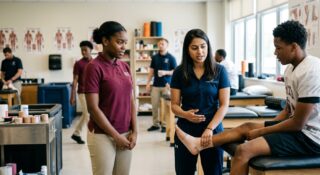
Start with what is already available. If your school has a sports medicine or athletic training program, that is one of the most direct ways to build relevant experience. Some high schools allow students to assist the athletic trainer during practices and games, learning how injuries are assessed and managed in real time. This is observation and logistical support, not clinical care, but it provides genuine exposure to how movement injuries are handled on the field.
Playing a sport is also relevant, though it matters how you frame it. An applicant who can connect their experience as an athlete to their interest in rehabilitation, for example, recovering from their own injury and observing the PT process firsthand, demonstrates the kind of reflective thinking that admissions committees value. Participation in anatomy, physiology, or kinesiology coursework, where available, reinforces the academic side of the profile.
If your school has a HOSA chapter, that is another strong fit. HOSA competitions in areas like sports medicine or physical therapy offer structured opportunities to study rehabilitation principles and demonstrate knowledge in a competitive, team-based setting. IMA has partnered with HOSA to offer global pre-health internships for high school students, which speaks to the credibility of that pipeline.
Community Volunteering with a Movement Focus
Volunteering is a core element of any pre-health resume, but the key is relevance. For a movement and sports health profile, look for opportunities at physical therapy clinics, outpatient rehabilitation centers, community recreation programs for older adults, adaptive sports organizations, or organizations that serve people with physical disabilities. These settings let students observe how movement-related conditions affect daily life, even if their role is limited to greeting patients, organizing equipment, or helping with administrative tasks.
Consistency matters more than volume. Volunteering at a PT clinic for two hours a week over six months shows sustained commitment. A single afternoon at a health fair does not. Parents should help students find settings that are well-supervised and where the student’s role is clearly defined. If a volunteer coordinator cannot explain what the student will actually do, that is a sign to look elsewhere.
Shadowing, Observation, and What Counts
Shadowing is one of the most direct ways to build a movement and sports health resume, and it carries real weight with admissions committees. For students interested in physical therapy or occupational therapy, observation hours under licensed professionals are often a formal requirement for graduate program admission. The American Physical Therapy Association’s guidance on becoming a PT outlines the importance of observation in multiple settings, a process that can begin in high school.
The critical distinction for high school students and parents to understand is this: shadowing means observing. It does not mean treating patients, performing assessments, or making clinical decisions. A student shadowing a physical therapist might watch initial evaluations, see how exercises are prescribed and progressed, and observe how therapists communicate with patients about pain, goals, and home exercise programs. That is valuable. But the student is never performing those tasks.
When documenting shadowing on a resume or application, specificity matters. Instead of writing “Shadowed a physical therapist,” a student should note the setting (outpatient orthopedic clinic, inpatient rehabilitation unit, sports medicine practice), the approximate number of hours, and what they observed. A description like “Observed post-ACL reconstruction rehabilitation protocols and patient education on return-to-sport criteria” is far more useful than a vague summary.
For students considering international clinical observation, structured programs provide the framework that makes such experiences appropriate for minors. Students are supervised at all times, observe rather than participate in clinical care, and are guided through reflection on what they see. The value of international observation in this field is that students witness how rehabilitation is delivered in settings with different resources, patient populations, and healthcare structures, which builds perspective that is difficult to gain domestically.
How to Document and Present These Experiences
Writing About Movement and Sports Health on Applications
Admissions committees at medical, PA, PT, OT, and nursing programs want to see evidence of genuine engagement, not just a list of activities. When a student describes their movement and sports health experiences, they should focus on three things: what they actually did or observed, what they learned from it, and how it shaped their understanding of healthcare.
A strong activity description might read: “Observed outpatient physical therapy sessions three hours per week for five months at a local orthopedic clinic. Watched therapists assess and treat patients recovering from rotator cuff repairs, total knee replacements, and sports-related sprains. Gained an understanding of how therapists adapt treatment plans based on patient progress and pain levels.” That is honest, specific, and shows the student paid attention.
Weak descriptions are vague or inflated. Saying “Helped patients recover from injuries at a physical therapy clinic” implies a level of involvement that a high school student would not have had and risks credibility. As a resource on how to create a pre-med resume as a high school student explains, clarity and accuracy are what make early experiences credible to reviewers.
Building the Resume Document Itself
A high school student’s resume does not need to look like a medical professional’s CV. Keep it to one page. Group experiences under clear categories: Clinical Observation/Shadowing, Volunteering, Athletics and Extracurriculars, Relevant Coursework, and any Research or Independent Projects. Under each entry, include the organization or setting, your role, the dates, and a brief description of what you did and what you observed.
If you have shadowed in multiple settings, list each separately. If you volunteered at one organization over a long period, note the total hours and the date range. Do not exaggerate, and do not list experiences you cannot speak about in detail. Admissions interviewers often ask follow-up questions, and a student who cannot describe what they actually saw during their “sports medicine internship” will lose credibility quickly.
What Parents Should Know About Safety, Supervision, and Readiness
Parents play a central role in helping students find safe, well-structured experiences. For any clinical observation or internship, parents should ask specific questions: Who supervises the student? What are the boundaries of the student’s role? Is there a clear policy on patient confidentiality? What happens if the student feels uncomfortable or overwhelmed? These are not overprotective questions. They are responsible ones.
For domestic shadowing at a local PT clinic or hospital, supervision is usually straightforward. The student follows a licensed professional, observes their work, and asks questions at appropriate times. For international clinical observation programs, the structure needs to be more robust. Programs designed for high school students should provide secure housing with on-site staff, safe transportation, clear daily schedules, emergency protocols, and regular communication channels for parents. The parents’ guide to high school medical internships addresses these concerns in detail.
Maturity is a real factor. Observing patients in pain, watching difficult rehabilitation sessions, or seeing healthcare delivered in under-resourced settings can be emotionally challenging. Students who are ready for these experiences tend to be curious but patient, comfortable with uncertainty, and willing to follow rules even when no one is watching. Parents should have an honest conversation with their student about readiness. Not every 16-year-old is prepared for a clinical environment, and that is perfectly fine. Waiting a year and entering the experience with greater maturity can make the resume entry far more meaningful.
Connecting Movement and Sports Health Experiences to Long-Term Goals
The purpose of building a movement and sports health resume in high school is not to “get in” somewhere. It is to start learning whether this field genuinely interests you, to develop the observational and reflective skills that will serve you in any health profession, and to begin accumulating the kind of documented experience that graduate programs expect to see over time.
For students considering physical therapy or occupational therapy, early observation hours are foundational. According to the PAEA resources on becoming a PA, PA programs expect significant patient contact hours; high school observation in sports medicine or rehabilitation is a credible starting point. For students eyeing medical school, the AAMC’s data on clinical experience expectations shows that admissions committees value sustained, reflective clinical exposure. Movement and sports health is a strong lens through which to develop that exposure.
What matters most is that each experience on the resume connects to a real moment of learning. A student who watched an athletic trainer manage a concussion protocol on the sideline and then researched return-to-play guidelines independently has a story that admissions committees can engage with. A student who lists “sports medicine volunteer” with no further detail does not. For more guidance on aligning high school activities with specific healthcare career paths, IMA’s guide to orthopedics, sports medicine, and physical therapy for high school students provides a useful framework.
Build the resume honestly, reflect on every experience, and let the specifics speak for themselves. That is what a credible movement and sports health profile looks like.
Frequently Asked Questions
Do high school students perform any hands-on patient care during sports medicine shadowing or internships?
No. High school students in clinical settings observe licensed professionals and may support non-clinical tasks like organizing equipment or greeting patients. They do not diagnose, treat, or perform any hands-on patient care. Programs designed for minors maintain strict boundaries on this, and any reputable placement will make the student’s observational role clear from the start.
How many shadowing or observation hours should a high school student aim for in movement and sports health?
There is no single required number at the high school level. What matters more than a specific hour count is consistency and depth. Shadowing a physical therapist for two to three hours per week over several months is more valuable than a single 40-hour block. If you are considering PT or OT school eventually, know that those programs typically require observation in multiple settings, so starting early helps you build toward those requirements over time.
Will a movement and sports health resume help with medical school admissions, or only PT and OT programs?
A focused movement and sports health resume can strengthen applications to medical school, PA programs, nursing programs, and other health professions, not just PT and OT. Admissions committees value evidence of sustained interest, reflective engagement with clinical environments, and the soft skills developed through observation, such as empathy, communication awareness, and understanding of interdisciplinary care. The key is how well you articulate what you learned, not just the specialty you observed.