Physical therapy careers for high school students start with one honest question: do you actually know what a physical therapist does all day? Most students who say they’re interested in PT have a vague image of helping athletes recover from knee injuries. The reality is broader, more demanding, and more rewarding than that. If you’re in high school and considering physical therapy or rehabilitation as a career, the smartest thing you can do right now is get real exposure, not just read about it. Structured programs, including medical research internships for high school students, can give you an honest look at what rehabilitation professionals face in clinical settings, how patients respond to treatment, and whether this work genuinely fits you.
That kind of clarity matters more than most students realize. Physical therapy school is a significant commitment, typically requiring a Doctor of Physical Therapy (DPT) degree, which means years of graduate-level education on top of your undergraduate work. Starting to build a realistic picture now saves time, money, and frustration later. Programs like medical summer internships for high school students offer observation-based experiences where you can shadow licensed therapists, watch patient assessments, and begin to understand rehabilitation from the inside. For parents reading this alongside your student, the key word in that sentence is “observation.” Structured programs for minors are designed around watching, learning, and asking questions, not performing clinical tasks. That distinction matters, and this article will address it directly throughout.
What Physical Therapists and Rehab Professionals Actually Do
When students say they want to become a physical therapist, they often picture someone coaching an athlete through a set of exercises. That’s one slice of the profession, but it barely scratches the surface. Physical therapists work with stroke survivors relearning how to walk. They help elderly patients regain balance after a fall. They treat children with cerebral palsy, adults recovering from spinal cord injuries, patients managing chronic pain, and people rehabilitating after major surgeries. The work is hands-on, patient-centered, and requires deep knowledge of human movement, anatomy, and neurological function.
Occupational therapists, who work closely alongside PTs in many settings, focus on helping patients perform daily activities, from getting dressed to using adaptive tools for eating or writing. Physical therapist assistants (PTAs) and certified occupational therapy assistants (COTAs) carry out treatment plans under the direction of licensed therapists. Together, these professionals form a rehabilitation team that often collaborates with physicians, nurses, social workers, and speech-language pathologists.
According to the BLS occupational outlook for physical therapists, the field is projected to grow 15% between 2022 and 2032, which is much faster than the average for all occupations. The median annual salary for PTs was $97,720 as of May 2022. Occupational therapy shows similar strength, with 12% projected growth and a median salary of $93,180 over the same period. These numbers reflect genuine demand driven by aging populations and increasing recognition of rehabilitation as essential healthcare, not optional care.
For a high school student, knowing this context is important. You’re not just exploring a “nice” career. You’re looking at a field with strong employment prospects, meaningful patient relationships, and a level of professional autonomy that many healthcare roles don’t offer. But it requires serious academic preparation, and the sooner you understand what it actually involves, the better your decisions will be.
What High School Students Can Realistically Do in Clinical Settings
This is where honesty matters most. If you’re a high school student, you will not be treating patients, performing assessments, or making clinical decisions. Period. That is not a limitation of any specific program; it is a fundamental ethical and legal boundary. Minors in clinical settings observe, support non-clinical tasks under direct supervision, and learn. That’s it, and that’s enough.
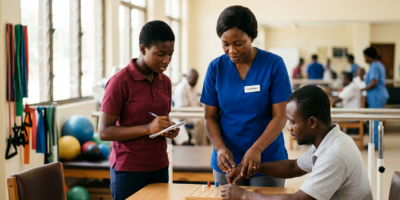
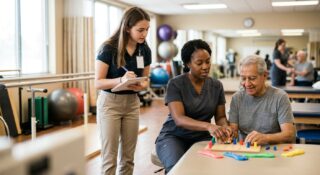
In a well-structured observation experience, you might watch a physical therapist evaluate a patient’s range of motion, guide someone through therapeutic exercises, or use manual therapy techniques to reduce pain. You might see an occupational therapist help a patient practice using adaptive equipment. You could observe team meetings where rehabilitation professionals discuss treatment plans and patient progress. Between those clinical windows, you’d participate in workshops, lectures, or reflection sessions that help you process what you saw and connect it to larger questions about healthcare.
What you won’t do is touch patients, operate equipment on a patient, provide exercise instruction, or assist with any clinical procedure. You might help prepare a treatment area, organize supplies, or support other non-clinical logistics, but always under direct supervision. Understanding and respecting these boundaries is itself a form of professional development. Admissions committees for DPT and other health professions programs notice when applicants demonstrate maturity about scope and ethics, not just enthusiasm.
If you want a more detailed look at what ethical conduct looks like for students your age in medical environments, IMA has written specifically about clinical ethics for high school students in medical settings. It’s worth reading before you set foot in any clinical space.
Why Early Exposure Matters for PT and Rehab Careers
You might wonder whether observation alone is worth your time. The answer is yes, and here’s why.
Most DPT programs require or strongly recommend a substantial number of observation hours before you even apply. While the specific hours you accumulate in high school may not fulfill every requirement for graduate school, they give you a foundation. More importantly, they give you something to reflect on. When a DPT admissions committee reads your personal statement, they’re looking for evidence that you understand the profession, that you’ve seen its daily realities, and that your interest is grounded in something more than a general desire to help people.
Students who shadow PTs early often come away with a more precise understanding of the profession. They notice things like how much documentation therapists do, how treatment plans change when a patient isn’t progressing, or how a therapist communicates with a patient who’s frustrated or in pain. These observations become the specific, concrete details that make application essays credible. Writing “I observed a physical therapist adjust a treatment plan for a post-stroke patient who was struggling with shoulder mobility, and I watched how she explained the change in a way the patient could understand” is vastly more effective than “I’ve always wanted to help people recover from injuries.”
Early exposure also helps you figure out what you don’t want. Some students shadow PTs and realize they’re more drawn to occupational therapy, or to sports medicine, or to a completely different field. That’s a valuable outcome. Ruling something out with real information is far better than committing to years of education based on assumptions. For a broader look at how PT connects to other paths like orthopedics and sports medicine, IMA’s article on high school students’ paths to orthopedics, sports medicine, and physical therapy lays out useful comparisons.
The Educational Path from High School to Licensed PT
Understanding the full educational timeline helps you plan realistically. Becoming a licensed physical therapist in the United States requires completing a Doctor of Physical Therapy (DPT) degree from a program accredited by the Commission on Accreditation in Physical Therapy Education (CAPTE). Most DPT programs are three years long and require a bachelor’s degree for admission, though some universities offer accelerated “3+3” programs where you can begin DPT coursework during your undergraduate years.
Undergraduate Prerequisites
In college, you’ll need to complete prerequisite coursework that typically includes anatomy, physiology, biology, chemistry, physics, psychology, and statistics. Some programs also require courses in exercise science or kinesiology. Your undergraduate GPA, particularly in science courses, matters significantly. So does the GRE in some cases, though an increasing number of DPT programs are making standardized testing optional.
What You Can Do Right Now
As a high school student, you can start building a strong academic foundation by taking biology, chemistry, physics, and anatomy if your school offers it. AP or honors-level science courses signal academic readiness. Beyond academics, look for opportunities to volunteer in settings where you’ll interact with people who have physical challenges: community health centers, senior living facilities, adaptive sports programs, or disability advocacy organizations. These experiences won’t make you a clinician, but they build empathy, communication skills, and familiarity with the populations PTs serve.
If you’re exploring several healthcare paths at once and want to understand how PT compares to other options that don’t require medical school, the article on healthcare careers without med school for high school students offers a useful framework for thinking through your options.
What Parents Should Know About PT Shadowing and Internship Programs
Parents, your concerns about your teenager entering clinical environments are valid and worth addressing directly.
Safety and Supervision
Any legitimate program for high school students should have clear, documented supervision policies. Your student should never be left unsupervised in a clinical area. Structured programs assign qualified staff and local healthcare professionals to oversee every clinical session. Ask specific questions before enrolling your student in any program: Who supervises daily? What is the staff-to-student ratio? What happens in a medical emergency? How is housing arranged and secured? What are the rules about independent movement?
Programs that can’t answer these questions clearly aren’t worth your money or your student’s time. IMA’s parent guide to high school medical internships addresses these concerns in detail, including what communication channels look like between parents and on-site staff.
Age-Appropriate Expectations
Your student will not be performing any form of patient care. This bears repeating because it is the single most important boundary for minors in clinical settings. Observation, structured learning, reflection, and mentorship are the core activities. If a program implies or promises that your high school student will be “treating patients” or “assisting with procedures,” treat that as a red flag.
Readiness and Maturity
Not every high school student is ready for clinical observation, and that’s fine. The experience involves standing for extended periods, maintaining professional behavior in settings where patients may be in pain or distress, respecting confidentiality absolutely, and adapting to unfamiliar environments. If your student is mature enough to follow rules consistently, manage their emotions in challenging situations, and engage respectfully with professionals and patients, they’re likely ready. If they’re not there yet, waiting a year or finding a less intensive starting point is a perfectly good decision.
Rehabilitation as a Global Health Priority
Physical therapy and rehabilitation aren’t just growing fields in the United States. The WHO fact sheet on rehabilitation reports that an estimated 2.4 billion people globally live with conditions that benefit from rehabilitation services. That number is rising as populations age and non-communicable diseases become more prevalent worldwide.
For students interested in global health, this context adds another dimension to PT career exploration. Rehabilitation services in many countries look very different from what you’d see in a well-equipped U.S. clinic. Therapists may work with limited equipment, adapt treatment techniques to available resources, and serve patient populations dealing with conditions that are less common in developed nations, such as mobility impairments from infectious diseases or injuries from road traffic accidents.
Observing rehabilitation in international settings, even briefly, can shape how a student thinks about healthcare access, resource allocation, and cultural factors in patient care. It also builds the kind of cultural competency that professional school admissions committees value. Students who can speak thoughtfully about how healthcare systems differ across countries, and what that means for patients, demonstrate a level of awareness that stands out.
That said, international observation programs are not more “impressive” than domestic ones simply because they’re international. What matters is the quality of the experience, the supervision, and the student’s ability to reflect meaningfully on what they observed. A well-structured local shadowing arrangement with a PT at a community clinic can be just as valuable as an international program, as long as the student approaches it seriously.
How to Write and Talk About Your PT Observation Experience
Whether you’re writing a college application essay, a personal statement for a future DPT application, or simply describing your experience in an interview, how you frame what you did matters.
Use accurate language. You observed. You shadowed. You learned. You did not treat, diagnose, or provide care. Admissions readers are experienced enough to spot inflated descriptions, and overstating your role undermines your credibility.
Focus on specifics. Instead of writing “I learned a lot about physical therapy,” describe a particular moment. Maybe you watched a therapist work with a child who had a developmental delay, and you noticed how the therapist turned exercises into a game to keep the child engaged. Maybe you observed a team meeting where a PT and an OT disagreed about a treatment approach and resolved it professionally. Those details show that you were paying attention and that you understand the nuance of clinical work.
Connect your observations to your goals, but do so honestly. If watching a PT work with geriatric patients made you realize you’re more interested in pediatrics, say that. If the experience confirmed your interest, explain what specifically confirmed it. Admissions committees are not looking for students who claim every experience was perfect. They’re looking for students who think critically and know themselves well enough to make informed decisions.
According to the BLS profile for occupational therapists, OT is another strong career path for students drawn to rehabilitation work, and some students who begin exploring PT find that OT is a better match for their interests. Being open to that possibility is a sign of maturity, not indecisiveness.
Practical Next Steps for Students and Families
If your student is ready to start exploring physical therapy and rehabilitation careers, here’s what makes sense right now.
Start with local shadowing. Contact physical therapy clinics, outpatient rehab centers, or hospital rehabilitation departments in your area and ask whether they accept high school observers. Some will require a formal application or background check; others may simply need a signed agreement from a parent. Even a few hours of structured observation can provide valuable firsthand perspective.
Look into structured programs. Programs designed specifically for high school students offer more support, supervision, and educational context than informal shadowing alone. They typically include mentorship from licensed professionals, scheduled reflection sessions, and a curriculum that helps you process what you’re seeing. When evaluating any program, ask about supervision ratios, daily structure, safety protocols, and what role students actually play in clinical settings.
Build your academic foundation. Take the strongest science courses available to you. If your school offers anatomy, physiology, or kinesiology, enroll. If not, look for community college courses open to high school students. Strong performance in these subjects will serve you well regardless of which health profession you ultimately pursue.
Keep a reflection journal. After each observation session or clinical experience, write down what you saw, what surprised you, what questions it raised, and how it connects to your evolving understanding of rehabilitation. These notes will be invaluable when you write application essays later.
Talk to your family. Parents, stay involved in this process. Ask your student what they’re observing, what they’re learning, and how they feel about it. Career exploration works best when it’s a conversation, not a solo mission. And students, take your parents’ concerns seriously. Their questions about safety, value, and readiness aren’t obstacles; they’re part of making a thoughtful decision.
Frequently Asked Questions
Can high school students get hands-on clinical experience in physical therapy?
No. High school students in clinical settings are limited to observation and non-clinical support tasks, always under direct supervision. You will not treat patients, perform assessments, or carry out any clinical procedures. This is a firm ethical and legal boundary that applies to all legitimate programs for minors. The value of high school clinical exposure comes from watching, listening, and learning from licensed professionals.
Does PT shadowing in high school count toward DPT program requirements?
High school observation hours provide meaningful clinical exposure, but they may not fulfill the specific observation or direct patient contact hour requirements of every DPT program. Each program sets its own prerequisites, and many expect applicants to accumulate hours during or after their undergraduate education. However, early shadowing demonstrates genuine interest and helps you write more informed application materials when the time comes. Check the admissions requirements for specific DPT programs you’re considering.
How should parents evaluate a clinical observation program for their high school student?
Ask direct questions about supervision ratios, staff qualifications, daily schedules, housing and transportation arrangements, emergency protocols, and what role students actually play in clinical settings. A trustworthy program will answer these questions clearly and without hesitation. Be cautious of any program that implies your minor student will be performing patient care, as that is a red flag. Look for programs that emphasize structured learning, mentorship, reflection, and age-appropriate boundaries.