Choosing between dentistry and medicine in high school is less about making a permanent decision and more about understanding what each path actually involves. If you are a student drawn to healthcare, or a parent helping a teenager sort through options, the most useful thing you can do right now is get a clear picture of how these two careers differ in training length, daily work, application requirements, and the kind of clinical exposure available through medical summer internships for high school students before college. The difference between dentistry vs medicine in high school often comes down to specifics that most students never hear about until it feels too late to switch.
Here is the good news: you do not need to commit to one path right now. Pre-dental and pre-med tracks share most of the same undergraduate prerequisites, and many students shift direction during college after gaining more direct exposure through the best medical internships for high school students and other clinical experiences. What matters at the high school stage is building a foundation of strong science coursework, honest self-reflection, and early clinical observation that will serve you regardless of which professional school you eventually pursue.
What Dentists and Physicians Actually Do Every Day
Before comparing application timelines and test scores, it is worth grounding this discussion in what each career looks like in practice. Physicians diagnose and manage conditions across the entire body. Depending on specialty, a physician might spend their day reading imaging studies, performing surgery, managing chronic illness in an outpatient clinic, or overseeing care in an intensive care unit. The scope is broad, and the range of specialties is enormous, from family medicine to neurosurgery.
Dentists focus on the oral cavity: teeth, gums, jaw, and the surrounding structures. General dentists perform cleanings, restorations, extractions, and screenings for oral diseases. Specialists, such as oral surgeons, periodontists, orthodontists, and pediatric dentists, handle more complex procedures. Dentistry tends to involve more procedural, hands-on work on a daily basis than many medical specialties, and the typical dentist has more control over their schedule and practice setting than the typical physician.
Both careers require scientific rigor, strong communication skills, and a genuine interest in patient welfare. But the day-to-day rhythm, the degree of autonomy, and the physical nature of the work differ in ways that matter. If you have never seen a dentist or physician work outside of your own appointments, that is a gap worth filling before you invest years in either direction.
Training Timelines: How Long Each Path Takes
One of the most practical differences between dentistry and medicine is how long you will be in training before you are fully independent.
The Medical Path
A typical medical education timeline looks like this: four years of undergraduate study, four years of medical school (leading to an MD or DO degree), and then three to seven years of residency depending on specialty. Some physicians pursue additional fellowship training after residency. In total, you are looking at roughly 11 to 15 years of post-high school education and training before practicing independently. That is a significant commitment, and it is worth factoring in the financial and personal costs of a longer training period. For a detailed look at how training paths vary, this comparison of MD and MD-PhD tracks lays out the differences clearly.
The Dental Path
Dental education follows a similar early structure: four years of undergraduate study and four years of dental school (leading to a DDS or DMD degree). The key difference is what comes after. General dentists can practice independently right after dental school. Those who want to specialize, in orthodontics, oral surgery, endodontics, or another area, will complete an additional one to four years of residency. The total timeline ranges from roughly 8 to 12 years. For students who value reaching independent practice sooner, that difference matters.
Why This Matters Now
You do not need to pick one path at 16 or 17. But understanding the length of each training pipeline helps you make honest assessments about what you are willing to commit to. Parents, this is a good conversation to have openly. Neither path is short, and both require sustained motivation across many years of demanding study.
Admissions Requirements and How They Compare
High school students often assume dental school and medical school are worlds apart in what they expect. In reality, the undergraduate prerequisites overlap significantly. Both require strong foundations in biology, general chemistry, organic chemistry, physics, and English. Both value research experience, clinical exposure, and community involvement. The biggest divergences show up in standardized testing and in the competitiveness of each applicant pool.
Medical school applicants take the MCAT. According to AAMC data on medical school applicants and matriculants, the average MCAT score for accepted students in the 2023-2024 cycle was approximately 511.9, with an average cumulative GPA of 3.78. The applicant pool is large; over 55,000 students applied in 2023, with about 22,666 enrolling.
Dental school applicants take the DAT. According to ADEA survey data on dental education, the average DAT score for accepted students was around 20.8, with an average cumulative GPA of 3.74. The dental applicant pool is considerably smaller, roughly 15,500 applicants for about 6,600 seats, which translates to a higher acceptance rate (approximately 53%) compared to medical school (approximately 41%).
These numbers do not mean dental school is “easier.” They mean the applicant pools differ in size and self-selection. Both paths demand academic excellence, and both admissions committees look closely at clinical exposure, letters of recommendation, and the quality of your personal statement.
For high school students, the practical takeaway is this: focus on doing well in science and math courses, seek out genuine clinical observation, and build habits of consistency. You do not need to worry about the MCAT or DAT yet, but you do need to build the academic foundation that makes those exams manageable later.
What You Can Do in High School to Test Each Path
The best way to figure out whether you are drawn more to dentistry or medicine is to get honest, structured exposure to both. Reading about careers is useful, but observing clinical work, even briefly, gives you a different kind of information.
Shadowing and Observation
Ask your family dentist or physician if you can shadow for a few hours. Many practitioners are willing to let a motivated high school student observe, especially if you approach the request professionally and with a parent’s support. Pay attention to what excites you and what does not. Notice the pace, the types of problems being solved, the relationship between provider and patient, and whether the work feels like something you could do for decades.
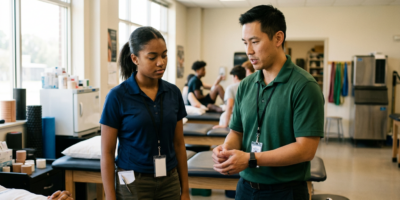
For students who want more structured clinical observation, programs designed for high school students can provide supervised exposure in real healthcare settings. IMA offers high school internship programs that give students the chance to observe healthcare professionals, including those in dental and medical settings, in a supervised, age-appropriate environment. To be clear: high school students in these settings observe and support within approved boundaries. They do not perform clinical procedures or provide patient care.
Science Coursework and Extracurriculars
Take the most rigorous science courses available to you: AP Biology, AP Chemistry, AP Physics if offered. Strong performance in these courses signals readiness for the undergraduate sciences that both paths require. If your school offers anatomy, physiology, or health science electives, those are worth considering too.
Outside the classroom, look for experiences that build your understanding of health and community. Volunteering at a community health clinic, participating in public health events, or joining a health-related student organization all count, as long as your involvement is real and sustained rather than resume padding.
Reflection and Honest Self-Assessment
This is the part most high school students skip, and it matters more than any extracurricular. Ask yourself: Am I drawn to working with my hands in a focused, procedural way? Do I want to manage complex, multi-system health problems? Am I comfortable with the idea of seven years of post-college training, or does a shorter path to independence appeal to me? Do I want to own a small practice someday, or would I prefer working within a hospital system?
There are no right answers. But students who reflect honestly at this stage make better decisions later. Parents can support this by creating space for genuine conversation rather than pushing toward a specific outcome.
Career Outlook, Compensation, and Lifestyle Factors
It is reasonable to consider financial and lifestyle factors alongside your interest in the work itself. According to the Bureau of Labor Statistics occupational outlook, projected job growth from 2022 to 2032 is about 3% for physicians (slower than average) and 8% for dentists (faster than average). Median annual wages for physicians were $229,300 or higher in 2023, varying significantly by specialty, while dentists earned a median of $166,010.
Those numbers tell only part of the story. Many dentists, especially those who own their practices, have more control over hours and scheduling than hospital-based physicians. Physicians in some specialties work unpredictable hours, take overnight call, and face higher rates of burnout. On the other hand, certain medical specialties offer compensation that exceeds most dental incomes, and the intellectual range of medicine is broader.
For high school students, these details are worth knowing but should not be the primary driver of your decision. Compensation and job growth projections will shift over the next decade. What will not change is whether you find the daily work meaningful and sustainable. A well-paid career you dislike is not a good outcome.
What Parents Should Know About Early Clinical Exposure
If your teenager is considering a structured clinical observation program, whether domestic or international, you have every right to ask detailed questions about safety, supervision, and age-appropriate boundaries.
Responsible programs for high school students share certain features: licensed professionals supervise all clinical observation, students are never left unsupervised in healthcare settings, housing and transportation are organized and secure, communication channels between students, program staff, and parents are clearly established, and pre-departure preparation covers health, safety, and cultural expectations.
Students in these programs do not practice medicine or dentistry. They observe, ask questions, assist with non-clinical tasks like health education or organizing supplies, and participate in guided reflection. That is appropriate for their age and training level, and it is genuinely valuable. Watching a dentist manage a case of advanced dental caries or a physician assess a patient with a respiratory infection teaches you something that no textbook can replicate, even when you are only watching.
If your student is interested in building early clinical exposure, IMA’s guide to pre-med summer programs for high school students outlines what structured programs typically involve and how to evaluate them. Similarly, understanding what high school internships look like and how they shape early career direction can help both students and parents set realistic expectations.
Maturity matters here. Not every 16-year-old is ready for clinical observation, and that is fine. A student who is not yet comfortable in a healthcare setting can still build a strong foundation through coursework, volunteering, and reading. There is no single timeline that works for everyone.
How to Think About This Decision Without Pressure
The most important thing to understand about comparing dentistry and medicine in high school is that you are not choosing a career. You are choosing what to pay attention to, what to try, and how to build a foundation that keeps your options open.
Both paths reward strong science skills, genuine curiosity about health, and the ability to work with people. Both require years of disciplined training. Both lead to respected, meaningful careers. The differences are real, in timeline, daily work, scope, and lifestyle, but they become much clearer with direct observation and honest reflection.
If you are a student, give yourself permission to be uncertain. Use the next few years to gather information, not to lock yourself in. If you are a parent, support that process by encouraging exposure, asking good questions, and resisting the urge to steer toward whichever path sounds more prestigious or lucrative.
The students who do best in professional school admissions are not the ones who decided everything at 15. They are the ones who showed sustained, genuine interest and the maturity to reflect on what they learned along the way.
Frequently Asked Questions
Do I need to decide between dentistry and medicine before starting college?
No. Pre-dental and pre-med undergraduate coursework overlaps significantly. Most students take the same core science classes, biology, chemistry, organic chemistry, physics, and English, regardless of which professional school they plan to apply to. You can wait until your sophomore or junior year of college to make a firm decision, especially if you use that time to gain clinical exposure in both fields.
Will an international clinical observation program help my dental or medical school application?
It can be one meaningful component of your application, but it is not a guarantee of admission. Admissions committees at both dental and medical schools value sustained commitment, thoughtful reflection, and evidence of maturity in clinical settings. A structured observation experience provides material for personal statements and interviews, but it works best as part of a broader pattern of involvement in healthcare, not as a standalone credential.
Is dental school really less competitive than medical school?
The acceptance rate for dental school (approximately 53%) is higher than for medical school (approximately 41%), but that comparison requires context. The dental applicant pool is much smaller, around 15,500 compared to over 55,000 for medical school, and applicants tend to be more self-selected. Academic expectations are similarly high for both, with average GPAs above 3.7 for accepted students. Neither path is easy, and both demand consistent academic performance and meaningful clinical exposure.