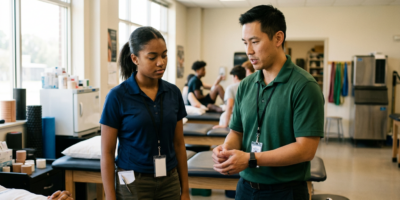
The difference between shadowing vs. internship in high school comes down to what you do, how involved you are, and what kind of learning the experience is designed to produce. Both are legitimate ways for a high school student to spend time in a clinical setting, but they serve different purposes and come with different expectations. If you are a student trying to figure out which experience makes sense right now, or a parent helping your teen evaluate options, understanding the real distinctions will save you time and help you make a more informed choice. For students weighing their options, summer medical internships for high school students combine the hands-on learning of an internship with the structure and supervision that matters at this stage.
This matters because health professions schools and competitive undergraduate programs increasingly value evidence that applicants have spent real time in clinical environments. According to AAMC data on medical school applicants and matriculants, tens of thousands of students apply to medical school each year, and the ones who stand out tend to show both sustained interest and honest reflection about what they observed. That process can start well before college. But it only helps if the experience is appropriate, well-structured, and honestly understood by the student and their family.
What Shadowing Actually Looks Like for a High School Student
Shadowing means observing. A student follows a healthcare professional through part or all of a workday, watching how they interact with patients, make decisions, and carry out clinical tasks. The student does not perform procedures, does not provide patient care, and does not make clinical decisions. That is by design, not a shortcoming.
During a shadowing experience, a high school student might observe patient consultations, watch how a physician takes a history, see how a nurse manages a busy unit, or sit in on team discussions about treatment plans. In some settings, students may also get a window into diagnostic imaging, lab work, or surgical observation from a gallery. What they will not do is touch patients, administer treatments, or act independently. For a detailed breakdown of what shadowing involves at the high school level, IMA’s guide to shadowing a doctor in high school covers the basics clearly.
For parents, this is an important point: shadowing is low-risk in terms of clinical involvement. Your student is watching and learning, not practicing. Good programs make this boundary explicit and ensure supervision is constant. The value of shadowing is not in what a student does with their hands; it is in what they begin to understand about a profession they are considering.
What an Internship Involves, and How It Differs
An internship, by contrast, typically includes more structure, a longer commitment, and a broader set of activities beyond pure observation. For high school students, this does not mean performing medical procedures or acting like a junior physician. It means engaging in a supervised learning experience that might include assisting with basic clinical support tasks, participating in community health outreach, attending structured educational sessions, and reflecting on what they are seeing with program staff.
In a well-designed high school internship, students might take patient vitals under direct supervision, assist with basic wound care such as cleaning and bandaging while a licensed clinician guides them, or help with health education efforts in a community setting. They might rotate through different departments or specialties to gain a broader view of how a healthcare system works. The key distinction from shadowing is that the student is more actively involved in the environment, though always within carefully defined boundaries.
IMA’s high school internship programs are structured with this balance in mind: students get more exposure and engagement than shadowing alone, but every activity is supervised, age-appropriate, and designed for learning rather than independent practice. No responsible program asks a minor to perform unsupervised clinical work.
For parents evaluating internship programs, the questions to ask are straightforward. Who supervises my student? What are they allowed and not allowed to do? How is the day structured? What happens if something goes wrong? Programs that answer these questions clearly and specifically are the ones worth considering.
How Each Experience Serves Different Goals
The right choice between shadowing and an internship depends on where your student is in their thinking, what they want to get out of the experience, and how much structure they need.
When Shadowing Makes More Sense
Shadowing is a strong fit for students who are still exploring whether healthcare is right for them. If your student is curious about medicine, dentistry, nursing, or another health field but has not spent any real time in a clinical environment, shadowing gives them a genuine look at the work without the pressure of a more involved role. It is also a good starting point for younger high school students, say freshmen or sophomores, who benefit from watching before doing.
Shadowing also works well when access is local and logistics are simple. A student who shadows a family physician in their community for a few weeks can begin to develop a sense of what clinical life looks like, which specialties interest them, and whether they find the patient interaction rewarding or overwhelming.
When an Internship Makes More Sense
An internship tends to be a better fit for students who already have some sense that they want to pursue a health career and are ready for a more immersive experience. Juniors and seniors who have done some shadowing and want to go further often benefit from the added structure, mentorship, and variety that an internship provides.
Internships also tend to offer more material for reflection, which matters when it comes time to write personal statements and activity descriptions for college or professional school applications. A student who can describe specific moments of learning, specific ethical questions they encountered, or specific observations that shaped their understanding will have more to draw on than someone who simply lists hours spent watching.
The Bureau of Labor Statistics occupational outlook for physician assistants projects strong job growth in healthcare fields overall, which means application competition is not going away. Starting to build meaningful clinical perspective in high school gives students time to develop that perspective honestly, rather than scrambling to accumulate hours later.
Safety, Supervision, and What Parents Should Know
If your student is considering either option, especially an international program, safety and supervision should be at the top of your list. This is not about being overprotective; it is about being realistic. A high school student in a clinical setting, whether domestic or abroad, needs clear structure and reliable adult oversight.
For any program, parents should look for the following: named supervisors with clinical qualifications, a clear daily schedule, defined rules about what students can and cannot do, a communication plan that keeps parents informed, and explicit policies on housing, transportation, and emergency response. If a program cannot answer these questions in writing, that is a red flag.
In international settings, there are additional considerations. Healthcare systems differ by country, and what is standard practice in one location may not be the norm in another. Programs operating internationally need staff on the ground who understand local regulations, cultural expectations, and clinical norms. Students should be briefed on patient privacy standards, professional boundaries, and the ethical responsibilities that come with being in a healthcare setting, even as an observer.
It is also worth being honest about emotional readiness. Clinical environments can be intense. Students may see illness, injury, or situations that are difficult to process. Good programs build in debriefing time and give students space to ask questions and talk through what they experienced. That support structure is not a luxury; it is a basic requirement for a program working with minors.
What Admissions Committees Actually Value
A common misconception is that more clinical hours automatically mean a stronger application. That is not how admissions committees at medical, PA, dental, nursing, or OT programs tend to evaluate applicants. What they look for is evidence that the student engaged thoughtfully, reflected honestly, and came away with a clearer understanding of the profession.
A student who shadowed for 40 hours and can articulate a specific moment that shaped their perspective will often present a stronger application than someone who logged 200 hours but cannot describe what they learned. The AAMC’s core competencies for entering medical students emphasize qualities like ethical responsibility, cultural competence, and self-awareness, all of which can be developed through either shadowing or an internship if the student is paying attention.
For students thinking about how early experiences fit into a longer pre-health timeline, IMA’s article on what high school students should do right now to prepare for medical school offers a practical framework that goes beyond just clinical hours.
The bottom line: neither shadowing nor an internship guarantees admission to any program. What either experience can do is help a student build genuine understanding, develop the ability to reflect on what they have seen, and show that their interest in healthcare is grounded in reality rather than assumption.
How to Make the Decision
Start with an honest conversation. Students should ask themselves whether they are genuinely curious or already committed, whether they are ready for an immersive experience or would benefit from starting with something lower-stakes, and whether they have the maturity to handle a clinical environment with professionalism and respect. Parents should ask whether the program is transparent about structure, supervision, and boundaries, and whether it treats their student’s safety as non-negotiable.
If your student is just beginning to consider healthcare, shadowing is a smart first step. It costs less time, requires less logistical planning, and gives a clear baseline of exposure. If your student has already done some exploration and wants to go deeper, an internship with strong supervision and educational structure can provide a richer experience and more material for future applications.
Either way, the goal is the same: to build honest, firsthand understanding of what healthcare work looks like, how it feels, and whether it is the right fit. The students who benefit most from these experiences are the ones who approach them with open eyes, genuine questions, and a willingness to reflect on what they observe.
Frequently Asked Questions
Can a high school student do both shadowing and an internship?
Yes, and many students benefit from doing shadowing first and an internship later. Starting with shadowing gives you a baseline understanding of clinical environments, while an internship builds on that with more structured involvement. There is no rule that says you have to pick one or the other; the right sequence depends on your readiness and where you are in high school.
Will an internship or shadowing experience guarantee my admission to medical school or another health program?
No. Neither experience guarantees admission to any program. What both can do is help you develop genuine clinical perspective, which strengthens your application when you can reflect on it honestly. Admissions committees value thoughtful engagement and self-awareness over raw hours.
What should parents look for when evaluating a clinical program for a minor?
Look for clearly defined supervision, named staff with clinical qualifications, a structured daily schedule, transparent policies on what students can and cannot do, a communication plan for parents, and explicit safety and emergency protocols. If a program cannot provide these details in writing before enrollment, consider that a serious concern.