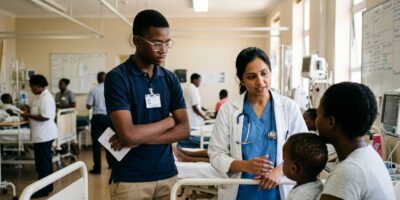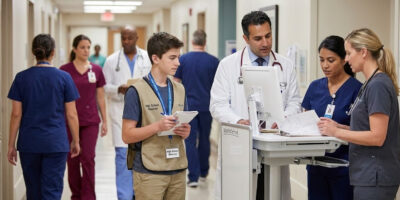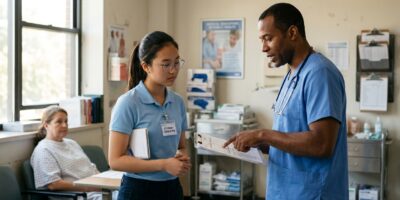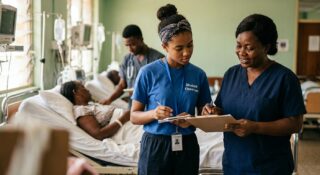
Nursing accounts for the single largest segment of the healthcare workforce, yet most high school students who say they want to be a nurse have only a vague sense of what the job involves or how many different forms it can take. If you are a student weighing a future in healthcare, or a parent helping your teen sort through options, understanding the differences between an LPN, an RN, a nurse practitioner, and a specialty nurse will help you plan more realistically. Structured medical summer internships for high school students offer one of the clearest ways to see these roles in action, because reading about a profession and watching someone practice it produce very different levels of understanding.
That distinction matters right now because nursing education requires early, deliberate choices. The path to becoming an LPN takes roughly one year of postsecondary training. Becoming an RN requires at least an associate degree and often a bachelor’s degree. Becoming a nurse practitioner means completing graduate school on top of that. Each step opens a different scope of practice, a different salary range, and a different set of daily responsibilities. Programs consistently rated among the best medical internships for high school students give teens the chance to observe these roles side by side, in real clinical settings, with professional supervision, so they can begin to see which direction fits their interests and strengths. If you are still early in your thinking, a clear comparison of the main nursing roles is the right place to start.
What LPNs and LVNs Actually Do
Licensed Practical Nurses (LPNs), called Licensed Vocational Nurses (LVNs) in Texas and California, form the entry tier of licensed nursing. Their training programs typically last about one year and include both classroom instruction and supervised clinical hours. After completing an approved program, candidates must pass the NCLEX-PN exam to earn their license.
In daily practice, LPNs provide bedside patient care under the direction of registered nurses or physicians. That work often includes monitoring vital signs, administering certain medications, changing wound dressings, helping patients with basic hygiene and mobility, and documenting patient information. LPNs are especially common in long-term care facilities, rehabilitation centers, and outpatient clinics where patients need consistent, hands-on support over time.
According to the BLS occupational profile for licensed practical nurses, the median annual wage for LPNs was $59,730 in May 2023, and employment is projected to grow 5% from 2022 to 2032. For a student who wants to enter the nursing workforce relatively quickly, the LPN path offers a real, respectable starting point. It is also a common stepping stone; many LPNs later pursue RN credentials through bridge programs.
How the RN Role Differs in Scope and Responsibility
Registered Nurses operate with a broader scope of practice than LPNs. The educational path to becoming an RN typically involves either an Associate Degree in Nursing (ADN) or a Bachelor of Science in Nursing (BSN), followed by passing the NCLEX-RN exam. Both credentials lead to the same license, but many hospitals now prefer or require a BSN, and the trend toward bachelor’s-level preparation continues to grow. The American Association of Colleges of Nursing provides detailed information on BSN and other nursing degree pathways for students researching their educational options.
RNs assess patients, develop and manage care plans, administer medications, coordinate with physicians and other team members, educate patients and families, and make clinical judgments that directly affect treatment outcomes. They work in hospitals, emergency departments, clinics, schools, home health agencies, and dozens of other settings. The median annual wage for RNs was $86,070 in May 2023, with roughly 177,400 new positions projected over the coming decade, according to BLS data.
What sets the RN role apart from the LPN role is not just training but autonomy. RNs are expected to exercise independent clinical judgment in more complex situations. They often supervise LPNs and nursing assistants. They also serve as a primary communication link between patients and physicians, which means strong critical thinking and communication skills are not optional extras; they are requirements. For a high school student trying to understand the difference between these roles, the clearest summary is this: LPNs execute specific care tasks under direction, while RNs plan and manage the full scope of a patient’s nursing care. A helpful breakdown of how these credentials compare, including the CNA and physician levels, is available in IMA’s post on how CNA, LPN, RN, and MD roles differ.
Nurse Practitioners and the Advanced Practice Level
Nurse Practitioners (NPs) represent one category within Advanced Practice Registered Nurses (APRNs), a group that also includes Certified Nurse Midwives, Certified Registered Nurse Anesthetists, and Clinical Nurse Specialists. Reaching the NP level requires earning a Master of Science in Nursing (MSN) or, increasingly, a Doctor of Nursing Practice (DNP) after first completing a BSN and gaining clinical experience as an RN.
The scope of NP practice is substantially different from that of an RN. In many states, NPs can independently diagnose conditions, order and interpret diagnostic tests, prescribe medications, and manage patient care without physician oversight. In other states, NPs work under collaborative agreements with physicians but still operate with significant autonomy. NPs often specialize: family nurse practitioners manage patients across the lifespan, pediatric nurse practitioners focus on children, psychiatric-mental health nurse practitioners treat behavioral and mental health conditions, and acute care nurse practitioners work with critically ill patients.
This level of the profession is growing rapidly. BLS data projects 38% job growth for nurse practitioners from 2022 to 2032, far outpacing the average for all occupations. The median annual wage was $126,260 in May 2023. For a high school student, the takeaway is that nursing offers a defined, achievable pathway to a role with a level of clinical authority and compensation that many people associate only with physicians. That does not make it easy. It requires years of education, rigorous licensing exams, and sustained clinical training. But it is a concrete, well-established career arc.
Specialty Nursing: Where Experience Meets Focus
Beyond the LPN, RN, and NP tiers, nursing includes a wide range of specialties that shape what a nurse’s day actually looks like. Some of the most common specialty areas include:
Pediatric Nursing
Pediatric nurses work with infants, children, and adolescents. Their responsibilities range from routine wellness checks to managing complex chronic conditions. This specialty requires strong communication skills with both young patients and their families, and a high tolerance for emotional intensity.
Emergency and Trauma Nursing
Emergency department (ED) nurses handle acute injuries, sudden illnesses, and crisis situations. The work is fast-paced and unpredictable. ED nurses triage patients, stabilize conditions, and coordinate rapid transfers. This specialty draws people who perform well under pressure and can shift priorities quickly.
Maternal-Child Health Nursing
Nurses in labor and delivery, postpartum, and neonatal intensive care (NICU) units focus on mothers and newborns. The stakes in these settings are high, and the emotional range is wide. Students who observe in these departments often say it is the experience that sticks with them longest.
Public Health and Community Nursing
Not all nursing happens in hospitals. Public health nurses work in clinics, schools, and community organizations to promote prevention, education, and population-level health. This work includes vaccination campaigns, disease surveillance, health screenings, and connecting underserved populations to care. The World Health Organization has noted that nurses and midwives account for more than half of the global health workforce shortage, which makes community and public health nursing roles especially significant on an international scale. The WHO’s strategic directions for nursing and midwifery outlines why strengthening these roles is a global priority.
Mental Health Nursing
Psychiatric and mental health nurses work with patients managing conditions like depression, anxiety disorders, schizophrenia, and substance use disorders. At the advanced practice level, psychiatric-mental health NPs can prescribe medications and provide therapy. This specialty is experiencing high demand and is often underrepresented in what students see during early clinical exposure.
What High School Students Can Realistically See and Do
If you are a high school student interested in nursing, you will not be providing direct patient care during a summer program or internship. That boundary is not arbitrary. It exists because patient safety and professional ethics require that clinical tasks be performed by trained, licensed individuals. For a minor in an observational program, the goal is to learn, watch, ask questions, and reflect.
In a structured program, students typically shadow nurses across multiple departments. You might observe an RN conducting a patient assessment in the morning, watch an NP manage a primary care visit after lunch, and sit in on a health education session led by a community nurse the following day. Some programs allow students to assist with basic, non-invasive tasks under direct supervision, such as taking a blood pressure reading on a stable patient as a learning exercise, helping organize supplies, or supporting community outreach activities like teaching hand hygiene. The emphasis remains on observation and learning throughout.
IMA’s programs place high school participants in vetted hospitals, clinics, and community health settings where students rotate through departments in small groups with professional supervision at all times. Students are never left unsupervised in a clinical setting. Regular debriefing sessions with staff give students space to process what they have seen, ask questions about what different nurses do, and begin to connect their observations to their own career interests. Parents should know that IMA’s structure includes secure housing, private transportation, emergency protocols, and consistent communication channels. For a thorough overview of what parents should expect and how safety is handled, IMA’s guide for parents on safety and support during teen medical internships covers the details directly.
Students interested specifically in nursing observation and mentorship will find related guidance in IMA’s article on nursing shadowing opportunities for high school students, which covers what to expect and how to make the most of the experience. And for those comparing nursing programs to other clinical tracks, IMA’s overview of nursing internships designed for high school students offers a closer look at how nursing-specific programs are structured.
Why Understanding Nursing Roles Now Helps Later
Knowing the difference between an LPN, an RN, an NP, and a specialty nurse is not just useful for choosing a career. It is also useful for talking about your interests credibly in college applications and, eventually, in admissions essays for nursing or health professional programs. Admissions reviewers at nursing schools and pre-health programs value applicants who can articulate a realistic, specific understanding of the profession they want to enter. Describing what you observed, how different nurses approached the same patient, or what surprised you about the scope of an NP’s practice tells a reviewer far more than a generic statement about wanting to help people.
This kind of specificity comes from real exposure. You cannot write authentically about what an ED nurse does during a trauma code if you have never been in an emergency department. You cannot describe the difference between a community health nurse’s day and a hospital nurse’s day if you have never seen both. The students who stand out are the ones who can reflect honestly on what they observed, what they did not expect, and how the experience shaped their thinking. That reflection is what structured programs are designed to support.
For parents, the practical value of this early exposure is that it helps your teen test an interest before committing to an educational path. If your student shadows nurses across several specialties and realizes they are drawn to mental health nursing rather than surgical nursing, that is valuable information. If they realize they want to pursue an NP credential rather than stopping at the RN level, they can plan their undergraduate coursework accordingly. Better to start sorting through these distinctions at 16 or 17 than to discover a mismatch partway through a degree program.
Maturity, Readiness, and Honest Self-Assessment
Not every high school student is ready for clinical observation, and that is fine. Clinical settings involve real patients in vulnerable situations. Students need to be able to follow instructions without exception, respect privacy, manage their emotional reactions in a healthy way, and behave professionally even when something they see is uncomfortable or unfamiliar.
If you are a student thinking about this kind of experience, ask yourself whether you can stay focused and composed in an environment where things may be unfamiliar or upsetting. Ask whether you are comfortable being in a learning role rather than a doing role. Ask whether you can handle being away from home, in a structured program with clear rules, and still get the most out of it.
Parents should feel confident asking program providers about supervision ratios, staff qualifications, housing arrangements, emergency procedures, and how emotional support is handled. These are reasonable, important questions. A well-run program will answer them directly, with specifics, not vague reassurances. The goal is not to scare anyone away from the experience. It is to make sure the student who shows up is ready to benefit from it and that the program is set up to keep them safe while they do.
Frequently Asked Questions
Can high school students perform nursing tasks during an internship or shadowing program?
No. High school students in clinical programs are in an observational role. They watch nurses work, ask questions, and participate in supervised learning activities, but they do not administer medications, perform procedures, or provide unsupervised patient care. Any hands-on learning, such as taking a blood pressure reading, happens only under direct supervision and only as a learning exercise on stable patients.
What is the difference between an RN and a nurse practitioner?
An RN is a licensed nurse who provides direct patient care, manages care plans, and coordinates with physicians and other team members. A nurse practitioner is an advanced practice nurse who has completed graduate-level education (MSN or DNP) and can independently diagnose conditions, order tests, and prescribe medications in many states. The NP role requires significantly more education and training beyond the RN level.
How does observing different nursing roles help with college or nursing school applications?
Admissions reviewers value applicants who demonstrate a genuine, informed understanding of the profession. If you can describe specific observations, such as differences in how an LPN and an RN approach patient care, or what surprised you about a public health nurse’s responsibilities, your application will reflect real engagement with the field rather than abstract interest. Honest reflection on what you observed and what it taught you matters more than the number of hours logged.