For high school students serious about healthcare, the question of where to gain early exposure comes up fast. Local hospital volunteering, community health center shadowing, and summer medical internships for high school students abroad all promise meaningful experience, but they deliver very different things. Understanding the real differences between local vs abroad medical programs for high school students is not just about picking a location; it is about matching a program’s structure, safety, and learning environment to a student’s readiness, goals, and family comfort level.
Both paths can build genuine perspective. Neither path is automatically more impressive or more valuable. What matters is the quality of supervision, the depth of reflection, and whether the experience helps a student understand what healthcare actually looks like in practice. When evaluating internships for high school students medical families should compare programs on specifics, not assumptions. This article walks through those specifics so students and parents can weigh the decision with clear eyes.
What Local Medical Programs Actually Look Like
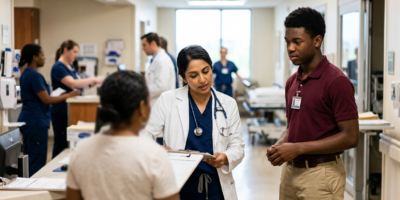
Local programs for high school students typically involve hospital shadowing, volunteering at community health centers, or structured observation arranged through a school, physician’s office, or nonprofit. These programs operate within familiar healthcare systems, which means students see how care is delivered in the environment they already know.
The advantages are practical. Students can usually continue their regular schedule, live at home, and avoid the costs associated with travel. Parents have direct access to the program site, which makes communication and oversight simpler. If a student is still testing whether medicine is the right direction, a local program offers low-barrier entry. There is no visa, no flight, and no cultural adjustment period, just direct exposure to clinical environments.
That said, local programs come with their own limitations. Many are informal arrangements that depend on a single physician’s willingness to host a student, which can mean inconsistent structure. Observation hours may be sporadic. And because students are seeing the system they grew up in, they may not develop the comparative perspective that comes from seeing healthcare delivered under different constraints. For students trying to find medical internships for high school students in their area, the range of options varies widely depending on geography, hospital policies, and personal connections.
What International Medical Programs Actually Look Like
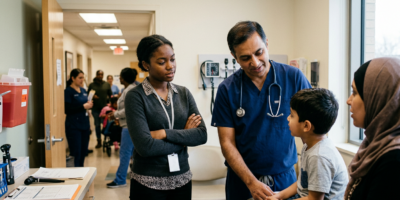
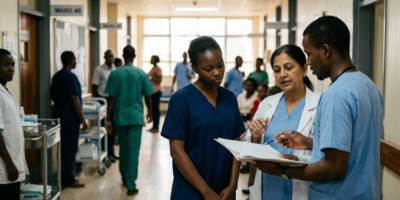
International programs, when run responsibly, place high school students in structured group settings where they observe healthcare delivery in a different country, often one with fewer resources than the United States. These are not freelance volunteer trips. A well-run program includes scheduled orientation, supervised clinical observation, guided reflection, group housing, and 24/7 staff availability.
At a program like those offered through International Medical Aid, a typical day might include morning orientation or health education, followed by supervised observation at a hospital or clinic, then afternoon reflection sessions with peers and program staff. Students are not practicing medicine. They are watching, asking questions, and processing what they see with guidance from professionals. This distinction matters, and any program that blurs the line between observation and practice for minors should raise concerns.
The value of an international program lies in exposure to healthcare systems that operate under very different conditions. Students may observe how clinicians manage common conditions with limited diagnostic equipment, or how community health workers conduct outreach in rural areas. They see how culture shapes patient relationships, family involvement in medical decisions, and prevention strategies. This kind of comparative perspective is difficult to replicate in a local setting, and it builds a type of awareness that stays with students well into their professional education. For a closer look at how cultural adjustment itself becomes part of the learning process, the IMA blog post on challenges and rewards of overseas health internships offers a useful frame of reference.
Safety, Supervision, and What Parents Should Ask
For parents, the safety question is usually the first and most important one, and it should be. Sending a teenager to another country requires trust in the program’s structure, staff, and protocols. Here is what to look for and what to ask.
Supervision and Staff
A credible international program will have on-site program directors and local healthcare staff present during all clinical hours. For high school students specifically, supervision should extend beyond the clinic. Housing, transportation, meals, and free time should all be accounted for. Ask the program directly: Who is supervising my child at night? What is the staff-to-student ratio? What training do staff members have in working with minors?
Communication and Emergency Plans
Parents should expect a clear communication plan before departure. This includes emergency contact numbers, check-in schedules, and protocols for medical emergencies. The CDC’s travel health resources are a strong starting point for understanding destination-specific health risks, required vaccinations, and general preparation. Programs should require pre-departure health clearances, comprehensive travel insurance, and medical evacuation coverage.
Housing and Daily Structure
International programs for minors should provide group housing with staff present, not independent homestays without oversight. Ask about accommodation standards, meal arrangements, and what happens during unstructured time. A clear daily schedule, shared in advance with families, is a sign of a well-organized program.
Local Programs and Safety
Local programs carry fewer logistical risks, but safety questions still apply. Students in hospital settings must follow HIPAA guidelines, infection control protocols, and supervision requirements. Parents should confirm that a local program has a designated supervisor, a clear scope for what the student will and will not do, and liability coverage.
How Admissions Committees Actually View These Experiences
One of the biggest misconceptions students carry is that an international experience is automatically more impressive on a college or medical school application than a local one. That is not how admissions works.
The AAMC’s core competencies for entering medical students emphasize qualities like cultural competence, ethical responsibility, resilience, and service orientation. These can be developed in either setting. What matters to an admissions reader is not the location, but the quality of the student’s reflection, the depth of their engagement, and the clarity with which they articulate what they observed and how it shaped their thinking.
A student who shadows at a local family medicine clinic for six months and writes thoughtfully about healthcare access in their own community can make just as strong an impression as a student who spent two weeks observing in a Kenyan hospital. The reverse is also true: a student who goes abroad and cannot articulate what they learned or why it mattered has not gained much ground in an application. The experience needs to connect to genuine self-awareness and a realistic understanding of medicine.
That said, international experience does offer something specific that local experience often does not: comparative perspective. Observing how different systems handle similar health problems, how cultural context shapes care, and how resource limitations drive clinical creativity gives students a broader frame of reference. For students aiming at careers in global health, public health, or community medicine, this comparative lens can be especially relevant. A related resource worth reviewing is the IMA blog’s guide to the Fulbright Scholarship for pre-med students, which discusses how international health experience fits into longer-term academic and professional planning.
Cost, Time, and Practical Trade-Offs
Financial Considerations
International programs cost more than most local options. Program fees, flights, travel insurance, vaccinations, and incidentals add up. Local programs may cost nothing beyond transportation. Families should weigh the financial investment against what the student specifically hopes to gain. If a student’s primary goal is confirming interest in medicine, a local program may be the smarter first step. If the student has already confirmed that interest and wants broader exposure, an international program may be worth the investment.
Some families choose to do both: start locally to build foundational understanding, then pursue an international experience once the student has demonstrated maturity and commitment. This sequenced approach can strengthen both the experience and the eventual application narrative.
Timing and Duration
Local programs can often be arranged around a student’s school schedule, fitting into afternoons, weekends, or short breaks. International programs typically require one to four weeks, which usually means summer commitment. Students should consider academic obligations, test preparation schedules, and extracurricular commitments when planning timing.
Maturity and Readiness
This is the factor families sometimes underestimate. Not every high school student is ready for an international program, and that is perfectly fine. Living in a group setting in an unfamiliar country, adjusting to different food and climate, managing homesickness, and processing emotionally complex clinical observations all require a level of maturity that varies from student to student. Parents and students should have honest conversations about readiness. A student who is not ready at 16 may be a great fit at 17 or 18.
Making the Decision as a Family
The best way to approach this choice is with specifics, not generalizations. Rather than asking “Which is better?”, ask “Which is better for this student, at this point in their development, with these goals and this family’s comfort level?”
Start by listing what the student hopes to gain. If the goal is simply to observe a clinical environment and confirm interest, a local program is a strong, cost-effective option. If the goal is to develop cultural competence, see healthcare in a resource-limited setting, and build independence, an international program may be the right fit, provided the student is ready and the program is well-structured.
Parents should research any program thoroughly. Ask for references from past participants. Read reviews carefully, paying attention to mentions of supervision, safety, and structure. Check the U.S. State Department travel advisories for destination-specific risk levels. And talk to the program directly; a responsible organization will welcome detailed questions from parents and will answer them with specifics, not vague reassurances.
Students should also reflect honestly on their own motivations. Are they drawn to an international program because of genuine curiosity about global health, or because they think it will look good on an application? Both motivations can coexist, but the first one is what will actually make the experience worthwhile. For students still weighing the broader landscape of pre-health career options, the IMA blog’s overview of physician assistant internship pathways provides useful context on how early clinical exposure connects to later professional training.
Whatever path a family chooses, the goal is the same: to help a young person build real, grounded understanding of what healthcare involves, and to do so safely, ethically, and with the kind of structure that supports genuine learning.
Frequently Asked Questions
Do medical schools prefer international experience over local shadowing for applicants?
No. Medical school admissions committees, including those guided by AAMC competency frameworks, evaluate the quality of a student’s reflection and what they learned from an experience, not where it took place. A student who can articulate meaningful observations from a local clinic is valued just as much as one who went abroad. What matters is depth of engagement, ethical awareness, and genuine understanding of healthcare.
Will my high school student be performing medical procedures in an international program?
No. Responsible international programs for high school students are observation-based. Students watch, ask questions, and participate in guided reflection, but they do not perform clinical procedures or deliver patient care. Any program that suggests otherwise for minors should be approached with serious caution. Supervision by program staff and local healthcare professionals should be constant during clinical hours.
How do I know if my teenager is ready for an international medical program?
Readiness depends on several factors: emotional maturity, ability to function in a group setting away from family, comfort with unfamiliar environments, and genuine motivation. Parents and students should discuss these factors honestly. If a student has not spent significant time away from home, a shorter program or a local experience first may be a better starting point. Programs with strong pre-departure orientation and clear daily structure can also help bridge the gap for students who are almost ready but need support.